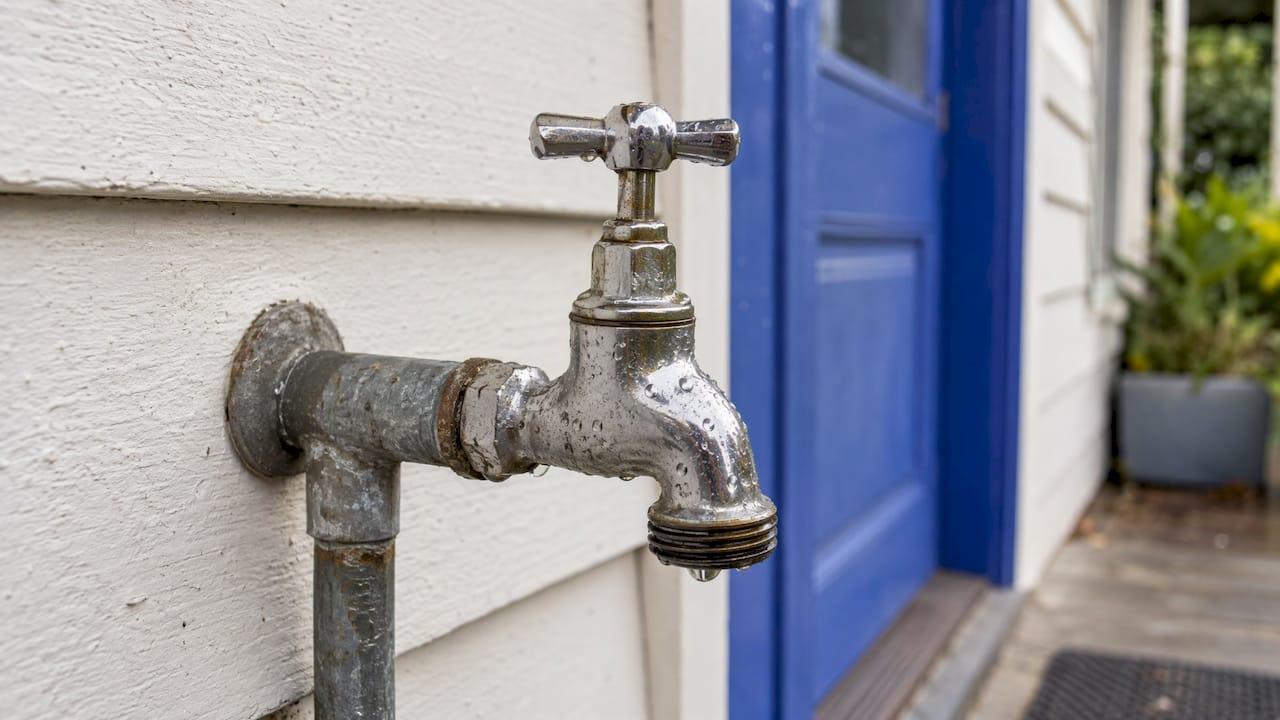
A tingle or shock from a tap is a warning sign of an electrical fault, not a plumbing quirk. Stop touching taps and other metal fittings, then call your electricity distributor and a licensed electrician. On the Mornington Peninsula the distributor is United Energy. Treat it as urgent even if the sensation was faint, and even if it only happened once.
This guide explains why taps can become live, what to do in the first few minutes, who to ring, what a proper investigation involves, and what aged care, retirement village and disability care operators need to think about on top of the household steps.
TL;DR
- A tingle or shock from a tap, shower or other metal fitting can point to a degraded or broken neutral connection, which can make earthed metal objects live.
- Avoid touching taps, the switchboard, the meter box and metal appliances. Call your electricity distributor, then a licensed electrician.
- Do not attempt electrical repairs yourself. In Victoria, major electrical work must be done by a licensed electrician.
- See a doctor after any electric shock, even a small one. Call Triple Zero (000) for loss of consciousness, abnormal breathing or an irregular heartbeat.
- Care facility operators have extra duties, including reporting serious electrical incidents to Energy Safe Victoria.
Table of Contents
- Why a tap can tingle or shock you
- What to do straight away
- Who to call on the Mornington Peninsula
- What a proper investigation looks like
- Why you should not fix it yourself
- After a shock: when to see a doctor
- Aged care, retirement villages and disability care homes
- Our perspective
- Need an electrician on the Mornington Peninsula?
- Other warning signs to take seriously
- FAQ
- Sources
Why a tap can tingle or shock you
Taps are metal, they connect to metal pipes, and in most homes those pipes are bonded to the earthing system. Normally that is a safety feature. If something goes wrong with the wiring that feeds the house, the same bonding can carry unwanted voltage to the places your hands and feet touch.
The most commonly cited cause is a problem with the neutral connection. The Western Australian Government explains that a degraded or broken neutral connection can cause a voltage rise in the earthing system, making pipes, gas fittings, taps and appliances live at hazardous levels. The neutral is the return path for current. When it fails, electricity looks for another route, and that route can include you.
A few things shape how strong the sensation feels. Master Electricians Australia's chief executive told the ABC that water, resistance to ground and whether the neutral is fully or only partly broken all affect how severe the shock is. That is why a bathroom or laundry, where you are wet and in contact with metal, is a common place to notice it.

Other faults that can cause the same symptom
The neutral is not the only suspect. The WA Government's electric shocks factsheet lists incorrect or deteriorated household wiring, faulty appliances, exposed wires and electrical equipment contacting water among the common causes. The Housing Industry Association adds that a tingle can come from broken wiring, loose or degraded connections, or an overloaded and poorly maintained installation.
For outdoor taps, the National Electrical and Communications Association's WA director pointed to pests chewing cable insulation, poor DIY wiring, non-compliant products and damage from earlier repair work. Only a licensed electrician with test equipment can tell you which one applies to your property.
How common is it?
It is not rare enough to dismiss. In one six-month period, Western Australia received 99 reports of shocks caused by neutral faults across roughly one million network connections. Those are only the ones people reported, which is a good reason to report yours.
What to do straight away
The aim is simple: keep people away from the hazard and get the right people on the way. Follow these steps in order.
- Stop touching metal fittings. Do not use the tap, shower, metal appliances or gas fittings. Keep children and other household members away from them too.
- Do not touch the switchboard or meter box. The Queensland Electrical Safety Office advises staying clear and not touching the meter box, switchboard, appliances or metal fixtures until the property has been made safe. The same logic applies in Victoria.
- Call your electricity distributor. Energy Safe Victoria advises that if you get tingles or shocks from water taps, you should call your electricity company immediately and have a licensed electrical contractor check the wiring.
- Call a licensed electrician. Ask for an urgent attendance and tell them exactly what you felt and where.
- Note the details. Which tap, what time, whether lights were dim or flickering, and whether anyone was wet or barefoot. It helps the electrician and the distributor.
- Look after anyone who was shocked. See the medical section below.
If a person is still in contact with an electrical source, do not grab them. Healthdirect advises that bystanders should not touch the victim and should only turn off the power if it is safe to do so.
Should you switch the power off at the main switch?
Some fault reports suggest turning the main switch off, but that decision is not a safe default for everyone. Energy Safe Victoria's advice for dull or flickering lights, brown-outs or low voltage is to avoid touching the switchboard or anything metal and call the distributor. If you are unsure, do not go near the switchboard. Leave the house if you feel unsafe and make the call from outside.
It also helps to know that a safety switch will not necessarily save you here. The WA factsheet notes that RCDs do not protect against problems with the incoming neutral or faults upstream of the RCD. A working safety switch is still essential, but a tingle means the problem needs investigating, whatever your switchboard looks like. Our guide to why electrical safety switches trip covers what they do and do not do.
Who to call on the Mornington Peninsula
Victoria has five electricity distributors, and the one you call depends on where the property is. The Victorian Government's Find your energy distributor page lists them: Powercor, AusNet Services, United Energy, CitiPower and Jemena. United Energy covers the southern suburbs and the Mornington Peninsula, so that is the network most of our customers sit on.
Your electricity retailer, the company that sends the bill, is not necessarily your distributor. If you are not sure, use that government page with your address. The distributor owns the poles, wires and service connection up to your property, which is where many neutral faults begin. Energy Safe Victoria notes that restoring power after a fault is the electricity supply company's job, while the occupant must not attempt DIY fixes.
Distributor first, electrician too
These two calls do different jobs. The distributor checks and repairs its own network and service line. The electrician checks everything on your side of the connection: switchboard, neutral and earth connections, circuits, appliances and outdoor cabling. A tingle can come from either side, so calling only one can leave the risk in place. Our electrical team handles the property side.

What a proper investigation looks like
Expect a licensed electrician to work through the installation methodically. Without promising any particular finding, a visit like this typically covers:
- Inspecting the switchboard and the main neutral and earth connections for looseness, heat damage or corrosion.
- Testing voltage between earthed metal, such as pipes and taps, and a known reference.
- Checking for faults in circuits and appliances, including outdoor power and pool or garden equipment.
- Looking at older or altered wiring where previous work may have been done poorly.
- Recommending repairs and, where required, issuing the right compliance paperwork.
If you would like to understand the process before the electrician arrives, our guide on how an electrical wiring inspection works walks through it, and what an electrical safety inspection is in Victoria explains the regulatory side.
Why a real case matters
In 2022 an electrician in Nedlands, Western Australia, was fined $5,000 after leaving the main neutral conductor at a switchboard disconnected, and an occupant received a shock from a shower tap that evening. The investigation found that without a neutral connection, circuit protection does not work and earthed metal can be exposed to hazardous voltage. It shows how a single connection can turn a tap into a hazard, and why this is work for licensed people who test their results.
Why you should not fix it yourself
Taps and pipes tempt people to think this is a plumbing problem. Changing a tap washer will not fix a voltage on the pipework, and opening a switchboard without a licence is both dangerous and illegal. Energy Safe Victoria states that major electrical repairs must be handled by a licensed electrician and that DIY electrical work is unsafe and illegal.
One practical point for Victorian homes: if plumbing work is also planned, let the licensed plumber and electrician coordinate. Metal pipework is part of the picture, and having both trades involved is more efficient than chasing the problem from one side. That is one reason we run plumbing and electrical under one roof.
After a shock: when to see a doctor
A tingle is easy to shrug off. Medical advice is not to. Healthdirect says that even a small shock can cause internal damage or changes in heart rhythm, and recommends seeing a doctor or going to an emergency department as soon as possible. The WA factsheet agrees: seek medical attention for any shock, however minor it seems, because effects may not appear straight away.
Call Triple Zero (000) for an ambulance if the person lost consciousness, is breathing very fast or very slowly, has a very fast, very slow or irregular heartbeat, or has fallen from height. Otherwise, see your GP or an emergency department the same day, and tell them it was an electric shock. Children, older people and anyone with a heart condition should be checked without delay.
Western Australia's Director of Energy Safety has put it bluntly in a consumer bulletin: there is no such thing as a minor electric shock.
Aged care, retirement villages and disability care homes
Facility managers carry the household steps plus legal duties. Residents may be less able to react quickly, may have heart conditions, and may use mobility equipment or powered beds near wet areas. A tingling tap in a shared bathroom is a reason to act the same hour, not the same week.
Protect people first
Take the affected taps, showers and fittings out of use, post clear signage, and move residents away. Brief staff so nobody tries to test the fitting by hand. Our guide to emergency electrical situations sets out what to do first in a range of scenarios.
Report it
Energy Safe Victoria requires mandatory reporting of any electrical incident that caused, or could have caused, death, injury or significant property damage. Serious incidents are reported by calling 1800 000 922. A serious electrical incident includes any electric shock related to a worker's duties, with the report form due within 20 business days. Under the Electricity Safety (General) Regulations 2019, employers and workplace managers who meet the conditions must report accidental contact or electric shock in writing within 20 business days. Check with Energy Safe Victoria or your legal adviser on how this applies to your facility.
Keep equipment under control
Good practice is to run visual risk assessments, have electrical equipment inspected and tagged by a qualified electrician, and have clear policies to remove unsafe items. That is the approach in Queensland guidance for working safely in people's homes, and it is a sensible model for any care setting. One Victorian residential care provider's handbook, for example, requires resident-owned items to be approved by a qualified electrician and tagged, and removed immediately if found unsafe.
A scheduled inspection program is how most facilities stay ahead of this. See the benefits of regular electrical inspections for Victorian properties and the guide to electrical compliance certificates.
Our perspective
Most calls about tingling taps start the same way. Someone has felt something odd, told themselves it was static, and waited. We would rather be called early. A faint tingle is the cheapest warning you will ever get, and it deserves a licensed electrician with proper test equipment, not a guess.
What we see as a mixed-trade business is how often these problems sit between trades. The symptom shows up on a tap or a shower, so people ring a plumber. The cause is electrical. Because we offer plumbing, electrical and heating and cooling together, one team can look at the whole picture instead of passing the job around.
For aged care, retirement villages and disability care homes, we think prevention is the answer. Scheduled maintenance and compliance checks mean faults are found on a calm Tuesday, not during a late-night emergency. And when the emergency does happen, our 24/7/365 emergency availability means you are not searching for someone to call.
Mike
Need an electrician on the Mornington Peninsula?
If you have felt a tingle, call your distributor first, then call us. DualFlow Services provides emergency call-out, scheduled maintenance and compliance checks across plumbing, electrical, and heating and cooling for homes, businesses, aged care, retirement villages and disability care homes on the Mornington Peninsula and surrounding Melbourne suburbs. Our team is available around the clock for emergencies.
You can book through our electrical page or start from the DualFlow Services home page.
Other warning signs to take seriously
A tingling tap rarely arrives alone. Look for these signs and mention them to your electrician:
- Lights that flicker, dim or brighten when appliances start. Our article on lights flickering when the aircon starts covers the common causes.
- Repeated safety switch or breaker trips, explained in circuit breaker trip causes.
- Buzzing, warm or discoloured power points, or a burning smell.
- Outages at only your property. Our power outage checks separate a street-wide outage from an internal fault.
- Mild shocks from appliances or metal door frames, not just taps.
Water and electricity also meet outdoors. Pools and garden areas call for the same attention to protective devices, and this overview of pool area lighting safety shows why regular testing matters. For a broader review, our electrical safety checklist for homeowners is a good place to start.
FAQ
Why am I getting shocked from my water taps?
The usual cause is voltage on the earthing system, often from a degraded or broken neutral connection. Faulty wiring or appliances can also be responsible. Stop using the tap and call your distributor and a licensed electrician.
Is a small tingle from a tap dangerous?
Yes, treat it as a warning. Healthdirect notes that most shocks do not cause injury but they can be life-threatening, and internal effects may not be visible. See a doctor, and have the property checked.
Who do I call first in Victoria?
Call your electricity distributor straight away, then a licensed electrician. On the Mornington Peninsula that is United Energy. If you are unsure, the Victorian Government's Find your energy distributor page will confirm it from your address.
Can I turn off the water or power myself?
Avoid touching the switchboard, meter box or any metal fittings until the property is made safe. Do not attempt electrical repairs yourself. If someone is in contact with a live source, do not touch them, and call 000.
Do care facilities have to report a shock?
In Victoria, electrical incidents that caused or could have caused serious harm must be reported to Energy Safe Victoria, and workplace shocks have a written reporting deadline of 20 business days. Confirm the details for your facility with Energy Safe Victoria.
Sources
- Commissioner's Blog: Don't ignore shocks and tingles
- Electric shocks factsheet, Western Australian Government
- Warning after near-fatal electric shock, ABC News
- Neutral Voltage Rise, Housing Industry Association
- Shocks and tingles, Queensland Electrical Safety Office
- Storms and energy safety, Energy Safe Victoria
- Electric shocks and burns, Healthdirect
- Find your energy distributor, Victorian Government
- Power outages and energy safety, Energy Safe Victoria
- Electrician fined for poor supervision at hazardous Nedlands house
- Take urgent action on all shocks and tingles, Consumer Protection WA
- Lodge an incident report, Energy Safe Victoria
- A Grade electricians, Energy Safe Victoria
- Electricity Safety (General) Regulations 2019, reg 402
- A guide to working safely in people's homes
- Resident handbook, Mercy Place East Melbourne
- Pool area lighting safety