
An electrical compliance certificate is a licensed electrician's legal declaration that specific electrical work was tested and is safe at the time of issue. In Australia, the document goes by different names depending on where you live: it's a Certificate of Compliance for Electrical Work (CCEW) in NSW, a Certificate of Electrical Safety (COES) in Victoria, and a certificate of testing and compliance in Queensland. The immediate action after any electrical job: request the certificate and verify it through your state's portal, whether that's the BCNSW eCert portal, Energy Safe Victoria's ESVConnect, or WorkSafe Queensland's records.
Table of Contents
- 1. What each state calls the certificate
- 2. Which jobs actually require a certificate?
- 3. How to get your certificate after the job
- 4. What the certificate legally proves and why it matters
- 5. Penalties for missing or unlodged certificates
- 6. How to verify a certificate and how long to keep it
- 7. What affects cost and how long it takes
- 8. Your practical checklist before, during and after electrical work
- Key takeaways
- Why I always insist on the certificate before I leave the site
- Dualflowservices: certified electrical work on the Mornington Peninsula
- Useful sources
1. What each state calls the certificate
The name on the document matters because it tells you which regulator to contact if something goes wrong.
| State | Certificate name | Official portal / regulator |
|---|---|---|
| NSW | Certificate of Compliance for Electrical Work (CCEW) | BCNSW eCert portal |
| Victoria | Certificate of Electrical Safety (COES) | Energy Safe Victoria / ESVConnect |
| Queensland | Certificate of testing and compliance / certificate of testing and safety | WorkSafe Queensland |
| Northern Territory | Certificate of Compliance (CoC) | NT WorkSafe |
Victoria adds a layer that other states don't. A COES combines the installer's certificate of compliance with, for prescribed electrical installation work, a separate certificate of inspection issued by a licensed electrical inspector under the Electricity Safety Act 1998. If your Victorian job is classified as prescribed work, you should receive both documents. If you only get one, ask why.
Queensland splits the certificate type by the nature of the work: a certificate of testing and compliance covers installation work, while a certificate of testing and safety applies to electrical equipment. Both are issued by the contractor.
- NSW: CCEW lodged through the BCNSW eCert portal (mandatory from 1 July 2026; handwritten or PDF forms are no longer accepted)
- Victoria: COES lodged via ESVConnect; prescribed work also requires an inspector's certificate
- Queensland: certificate issued by the contractor; copies kept for five years per regulation
- Northern Territory: CoC submitted to NT WorkSafe; online form or hard-copy book for mutual-recognition licence holders
Pro Tip: Ask your electrician whether they lodge through a portal or hand you a printed copy. In NSW from 1 July 2026, a printed or handwritten certificate is not legally sufficient — only an eCert portal submission counts. In Victoria, ask for your ESVConnect reference number.
2. Which jobs actually require a certificate?
Not every electrical task triggers a formal certificate, but the threshold is lower than most homeowners expect.
Work that typically requires certification includes new wiring, switchboard upgrades or replacements, installation of new circuits, connection or reconnection to the mains supply, major alterations to existing installations, and meter or main service work. EV charger installations fall into this category too — if a licensed electrician runs a new circuit to your garage for a home charger, that work needs a certificate. You can read more about EV charger permit requirements and what happens when the compliance steps are skipped.
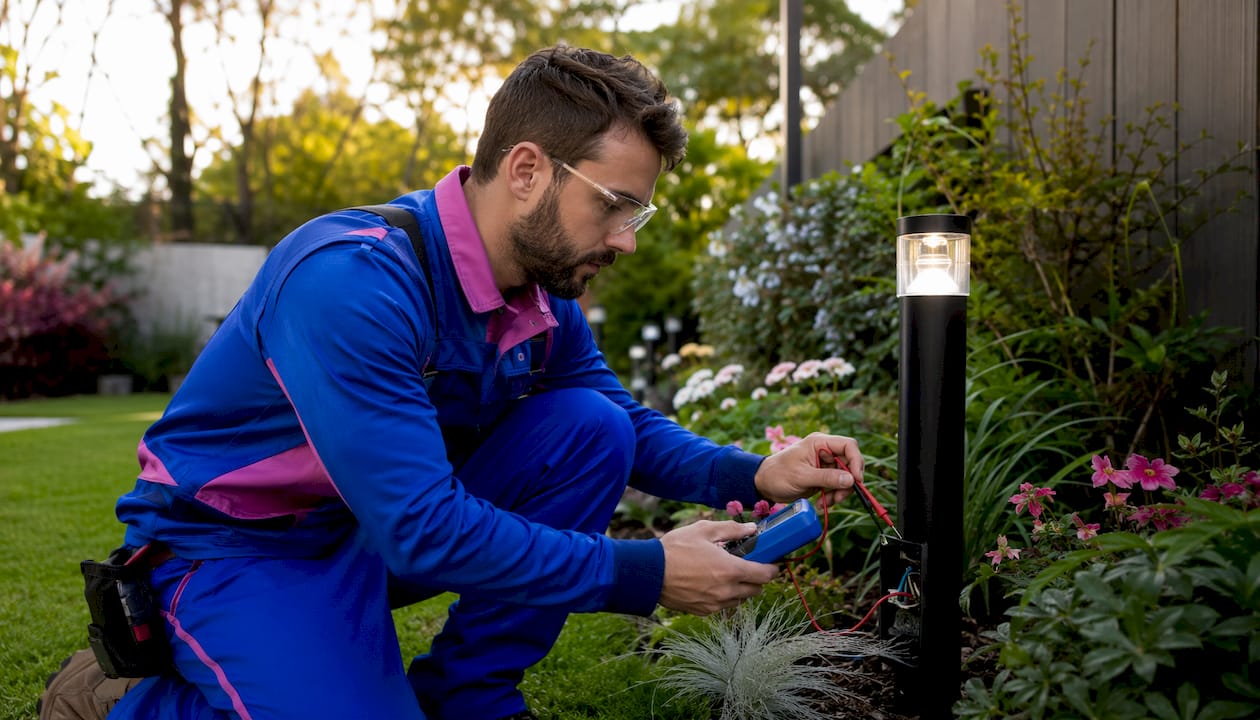
Minor like-for-like repairs are where homeowners often get confused. Replacing a faulty power point with an identical unit, for example, may not require a certificate to be handed to you, but the electrician is still obliged to test the work and retain internal records. The certificate obligation doesn't disappear just because the job is small.
Timing matters too. The electrician must provide or lodge the certificate as soon as practicable after completing the work, not weeks later when you follow up. If you're waiting more than a day or two for confirmation of lodgement, that's worth a direct conversation.
3. How to get your certificate after the job
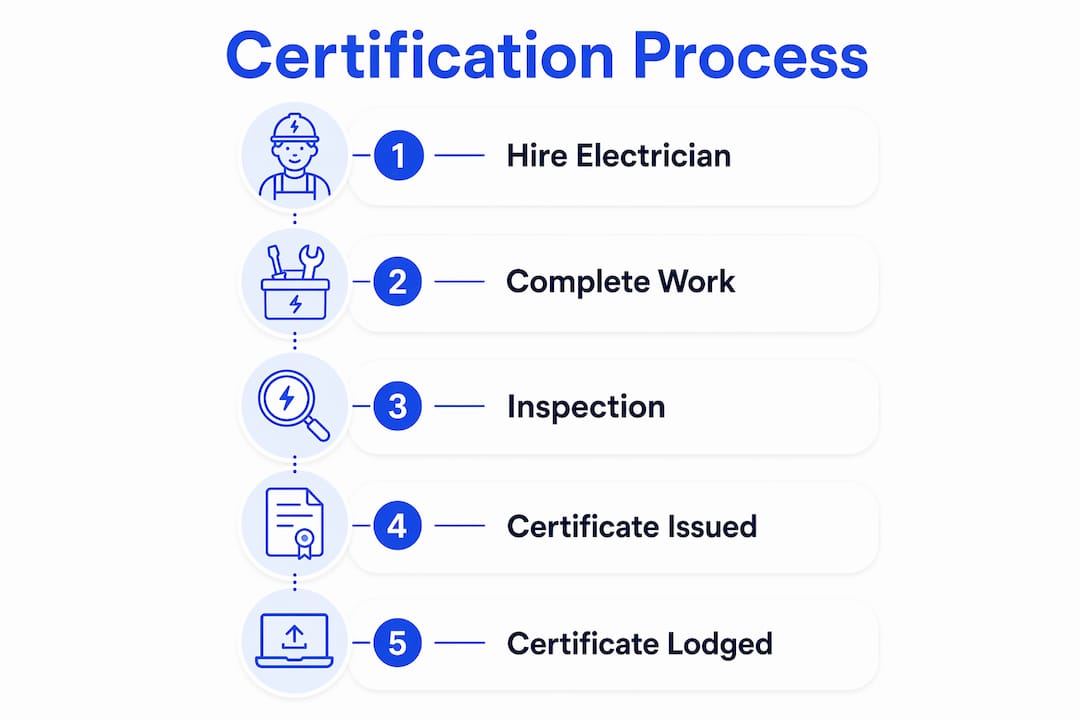
Getting the certificate is straightforward when you know what to ask for. Here's the sequence:
- Before work starts: Verify the electrician's licence number through your state regulator's public register. Ask whether the job requires a certificate and which portal they use for lodgement.
- Get a written scope: A written quote that lists the specific work, testing tasks, and certification obligations protects you if there's a dispute later.
- At job completion: Ask the electrician to confirm lodgement through the relevant portal (eCert, ESVConnect, or WorkSafe QLD) and request a copy of the certificate for your records.
- Confirm the reference: Portal submissions generate a digital reference number or email receipt. That reference is your proof of lodgement — more reliable than a paper copy.
- Check the certificate details: Per WorkSafe Queensland's guidance, a valid certificate must include the name and address of the person for whom the work was done, details of the installation or equipment tested, the test date, and the contractor's licence number. Check all four.
What if the electrician says they don't provide certificates? That's a red flag. Electricians are legally required to certify work they perform and test. They cannot sign a certificate for work they didn't personally test, and they will not certify pre-installed or unlicensed work — which is actually a protection for you. If someone offers only a handwritten note or says "we don't do that," contact your state regulator before paying the final invoice.
- Ask for the portal reference or digital receipt, not just a printed copy
- Cross-check the licence number against your state's public register
- For Victorian prescribed work, confirm you receive both the installer's certificate and the inspector's certificate
- Keep a copy in both digital and physical formats
4. What the certificate legally proves and why it matters
The certificate is not a receipt. It's a legal declaration that the work was tested and met applicable standards at the time of issue. That distinction carries real weight.
When an electrician signs the certificate, they stake their licence on it. Professional liability for the certified work shifts to them. If the installation later fails and causes damage, the certificate is your evidence that the work was compliant when completed. Without it, insurers and conveyancers have no independent record to rely on.
The insurance and sale implications are practical, not theoretical. Missing certificates can complicate insurance claims for electrical fires or damage. During a property sale, a conveyancer or buyer's solicitor may request evidence of compliant electrical work, particularly for recent renovations. If you can't produce the certificate, you may need to commission a fresh inspection, which adds cost and delay.
- The certificate proves work was tested and safe at the time of issue
- Liability shifts to the licensed electrician for certified work
- Insurers may rely on certificates when assessing claims for electrical damage
- Conveyancers and buyers may request certificates during property transactions
- Energy Safe Victoria's COES rules make non-compliance an offence under the Electricity Safety Act
Understanding why electrical inspections matter for Victorian properties puts this in context — the certificate is the formal record that an inspection actually happened.
5. Penalties for missing or unlodged certificates
Regulators treat the failure to issue or lodge a certificate as a serious offence, not an administrative oversight.
In NSW, on-the-spot fines up to $1,000 apply for each instance of non-submission through the eCert portal. For technical non-compliance with electrical safety standards, penalties can be as high as $550,000. From 1 July 2026, handwritten or PDF certificates are no longer accepted in NSW at all — only eCert portal submissions satisfy the legal requirement.
In Victoria, failing to follow the COES rules is an offence under the Electricity Safety Act 1998. Energy Safe Victoria has enforcement powers including licence suspension and prosecution.
- Report to your state regulator: If you suspect uncertified or non-compliant work, contact BCNSW (NSW), Energy Safe Victoria (VIC), or WorkSafe Queensland (QLD) directly.
- Withhold final payment: Until you have confirmation of portal lodgement or a valid certificate, you have grounds to hold the final payment. Put this in writing.
- Request an independent inspection: Your state regulator can direct an inspection of work you believe is unsafe or uncertified.
- Document everything: Keep your written quote, any correspondence with the electrician, and photos of the completed work. These support a formal complaint.
6. How to verify a certificate and how long to keep it
Verification is a two-step process: check the document itself, then confirm it against the regulator's records where possible.
| State | What to verify | Recommended homeowner retention |
|---|---|---|
| NSW | eCert portal reference number; electrician's licence via Service NSW | Keep indefinitely; at minimum for the life of the installation |
| Victoria | ESVConnect reference; licence via Energy Safe Victoria register | Keep indefinitely; at minimum for the life of the installation |
| Queensland | Certificate details (name, address, test date, licence number); contractor records kept 5 years per regulation | Keep for at least 5 years; longer for major installations |
For contractors, Queensland regulations require records to be kept for five years. Homeowners should treat that as a floor, not a ceiling. For a switchboard replacement or new wiring that will outlast a renovation, keeping the certificate for the life of the installation is the sensible approach.
Portal lookups are the highest-trust form of verification. A digital lodgement system creates a government-maintained, traceable record that is far harder to fake than a paper copy. If your electrician lodged through eCert or ESVConnect, you can cross-reference the portal reference against the regulator's records.
Pro Tip: Store a digital copy in cloud storage (Google Drive, iCloud, or similar) and keep a physical copy in your property file. For property managers handling multiple properties, a simple spreadsheet logging the certificate reference number, date, scope of work, and electrician's licence number for each property saves significant time during audits or sales.
7. What affects cost and how long it takes
Certification is not a separate service you pay for on top of the electrical work — it's part of the job. That said, several factors affect the total cost of compliant electrical work.
- Job complexity: A simple circuit addition costs less to test and certify than a full switchboard replacement.
- Inspector involvement: In Victoria, prescribed work requires a licensed electrical inspector in addition to the installer. That inspection is an additional cost.
- Emergency call-outs: After-hours or emergency work typically carries a higher labour rate, which flows through to the total invoice including certification.
- State portal fees: Some states charge a lodgement fee; confirm this with your electrician before work starts.
- Travel and location: Tradespeople working in regional or remote areas may factor in travel time, which affects the overall quote.
Ask for a written quote that itemises testing and certification as separate line items, not bundled into a single "labour" figure. That way you can see exactly what you're paying for and confirm the electrician has included the cost of portal lodgement. Lodgement should happen the same day or within the regulator's specified timeframe after job completion — not weeks later.
8. Your practical checklist before, during and after electrical work
A simple checklist prevents most of the problems homeowners encounter with uncertified or poorly documented electrical work.
Before the job:
- Verify the electrician's licence number through your state regulator's public register.
- Get a written scope of work and quote that includes testing and certification tasks.
- Ask whether the job requires a certificate and which portal the electrician uses for lodgement.
- For Victorian prescribed work, confirm whether an electrical inspector is also required.
- Check whether an EV charger or other specialist installation needs a permit alongside the certificate.
During the job:
- Check the electrician's ID and licence card on arrival.
- Ask about test results as work progresses, particularly for switchboard or mains work.
- Request immediate confirmation of lodgement or a certificate copy at job completion.
After the job:
- Verify the portal reference number or digital receipt.
- Cross-check the licence number on the certificate against the public register.
- Store the certificate in both digital and physical formats.
- Note the date, scope, and certificate reference in a property log.
For property managers, an electrical safety checklist is worth keeping alongside your tenancy records. When a tenant reports an electrical fault, having a clear record of the last certified work helps you respond quickly and demonstrates due diligence.
Key takeaways
An electrical compliance certificate is a licensed electrician's legal declaration that tested work met applicable standards, and every Australian homeowner should request one and verify portal lodgement at job completion.
| Point | Details |
|---|---|
| Certificate names vary by state | NSW uses CCEW, Victoria uses COES, Queensland uses certificate of testing and compliance. |
| Portal lodgement is mandatory in NSW from 1 July 2026 | Handwritten or PDF certificates are no longer accepted; only eCert portal submissions satisfy the legal requirement. |
| Liability shifts to the electrician | The certificate is a legal declaration; the electrician stakes their licence on the work being tested and safe. |
| Keep records for the life of the installation | Queensland contractors must retain records for five years; homeowners should keep certificates indefinitely for major work. |
| Dualflowservices handles lodgement as part of the job | For Mornington Peninsula homeowners and property managers, Dualflowservices provides certified electrical work with portal lodgement included. |
Why I always insist on the certificate before I leave the site
The paperwork side of electrical work is where a lot of tradespeople cut corners, and homeowners pay for it later. Not at the time of the job — usually years later, when they're selling a property or making an insurance claim and someone asks for proof that the work was done properly.
What most guides don't tell you is that the certificate protects the homeowner as much as it protects the electrician. When a licensed electrician signs off on a job, they're putting their licence on the line. That means they won't certify work they didn't personally test, and they won't sign off on something that doesn't meet the standard. That refusal is actually a quality signal. If an electrician is reluctant to provide a certificate, the question to ask is why.
The shift to mandatory portal lodgement in NSW from July 2026 is a good development. Paper certificates are easy to lose, easy to fake, and hard to verify years after the fact. A portal reference tied to a government record is none of those things. Victoria's ESVConnect has operated this way for years, and the traceability it creates is genuinely useful when a property changes hands.
For property managers in particular: treat the certificate the way you treat a smoke alarm compliance record. It's not optional, it's not a formality, and the cost of not having it is always higher than the cost of asking for it upfront.
Dualflowservices: certified electrical work on the Mornington Peninsula
Getting compliant electrical work done shouldn't require you to chase paperwork after the fact.
Dualflowservices is a licensed electrical, plumbing, and heating/cooling trade service covering the Mornington Peninsula and surrounding Victoria. Every electrical job includes testing, certification, and portal lodgement as part of the work, not as an afterthought. Whether you need a switchboard upgrade, new circuits, EV charger installation, or an emergency call-out, the certificate is lodged before the van leaves your driveway.
Property managers handling multiple properties can request scheduled maintenance visits that include compliance documentation for each site. Aged care, retirement village, and disability care facility managers can also access specialist compliance support. To book an inspection or request a quote with certification included, visit the Dualflowservices website and get in touch with the team directly.
Useful sources
These are the primary regulator pages used throughout this article. Use them to verify lodgement, check licence numbers, or lodge a complaint.
- NSW — BCNSW eCert portal: NSW Government electrical compliance requirements — verify CCEW lodgement, read eCert requirements from 1 July 2026, and access the portal.
- Victoria — Energy Safe Victoria: Certificates of Electrical Safety (COES) — COES guidance for consumers, ESVConnect lodgement information, and licence verification.
- Victoria — COES Fundamentals: Energy Safe Victoria COES Fundamentals guide — detailed obligations for registered electrical contractors and licensed electrical workers.
- Queensland — WorkSafe Queensland: Issuing certificates of compliance — certificate requirements, record-keeping obligations, and contractor guidance.
- Northern Territory — NT WorkSafe: Certificate of Compliance requirements — CoC requirements under the Electrical Safety Act 2022, online form access, and exemption details.