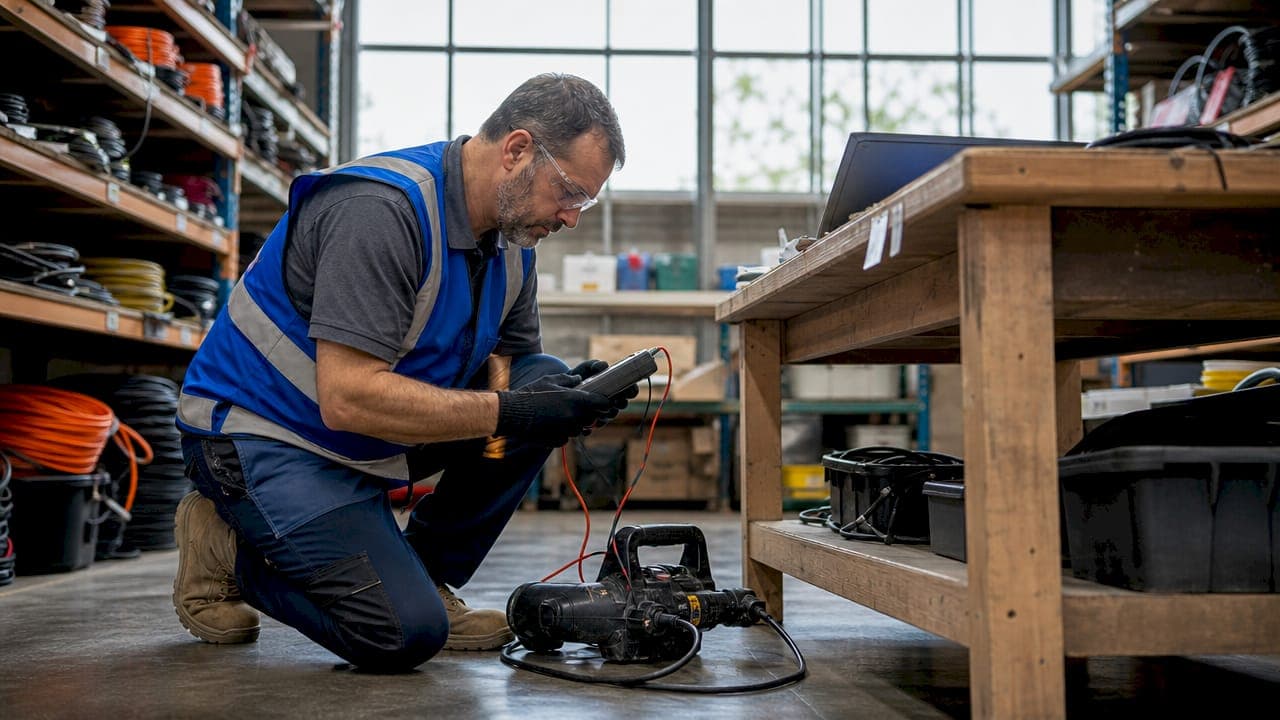
Electrical tagging and testing is a regulated safety procedure that confirms portable electrical equipment in Australian workplaces is safe to use. The formal industry term is "test and tag," and it is governed by AS/NZS 3760:2022, the Australian and New Zealand Standard for in-service safety inspection and testing of electrical equipment. Understanding why electrical tagging testing is required matters directly to you as a business or property manager in Victoria, because the consequences of non-compliance include electric shock injuries, workplace fires, equipment failure, financial penalties, and invalid insurance. This article explains the standard, the legal obligations, and the practical steps you need to take.
What does AS/NZS 3760:2022 require for electrical tagging and testing?
AS/NZS 3760:2022 mandates a structured, two-part process for every item of in-service portable electrical equipment in a workplace. The standard applies across Victoria and the rest of Australia, and it sets the minimum requirements for how testing must be carried out, by whom, and how often.
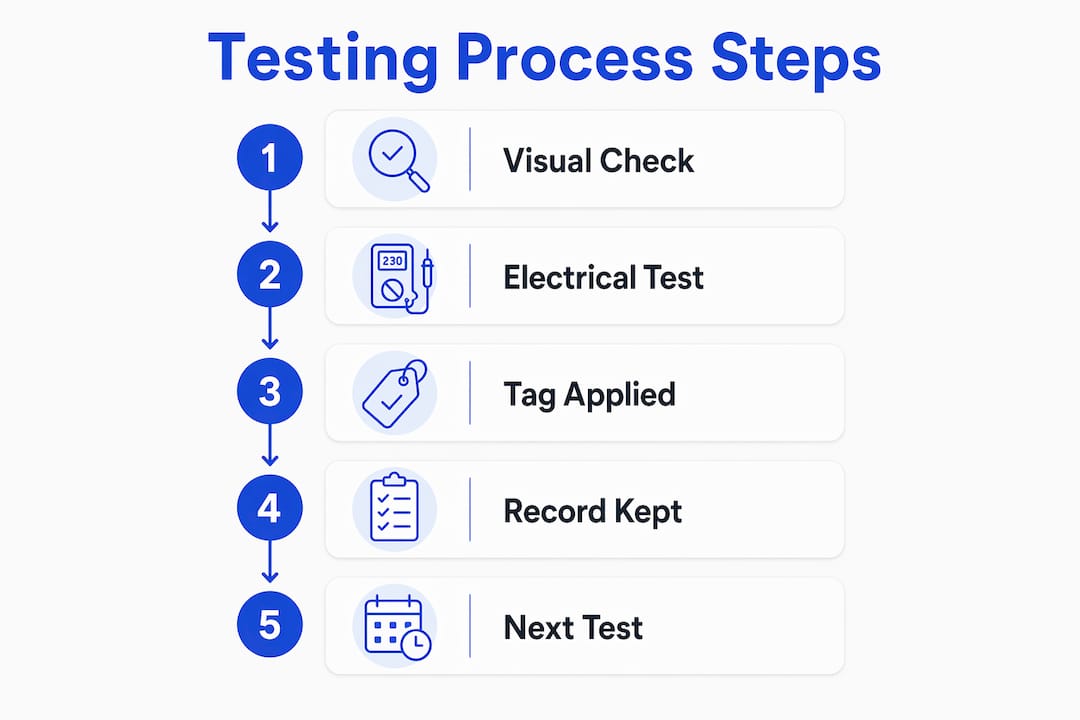
The two-part testing procedure
Every test and tag inspection involves two distinct steps:
- Visual inspection: The technician checks the equipment for obvious physical damage, including frayed cords, cracked plugs, damaged casings, and signs of overheating or moisture ingress.
- Electrical testing: Instruments measure earth continuity, insulation resistance, and leakage current. These tests detect faults that are completely invisible to the naked eye, such as insulation breakdown inside a cord or a failing earth connection.
Both steps must be completed by a competent person. Under AS/NZS 3760:2022, a competent person holds the relevant qualifications and training to carry out the inspection and interpret the results correctly. A general maintenance worker or office manager does not meet this requirement.
Documentation and tagging requirements
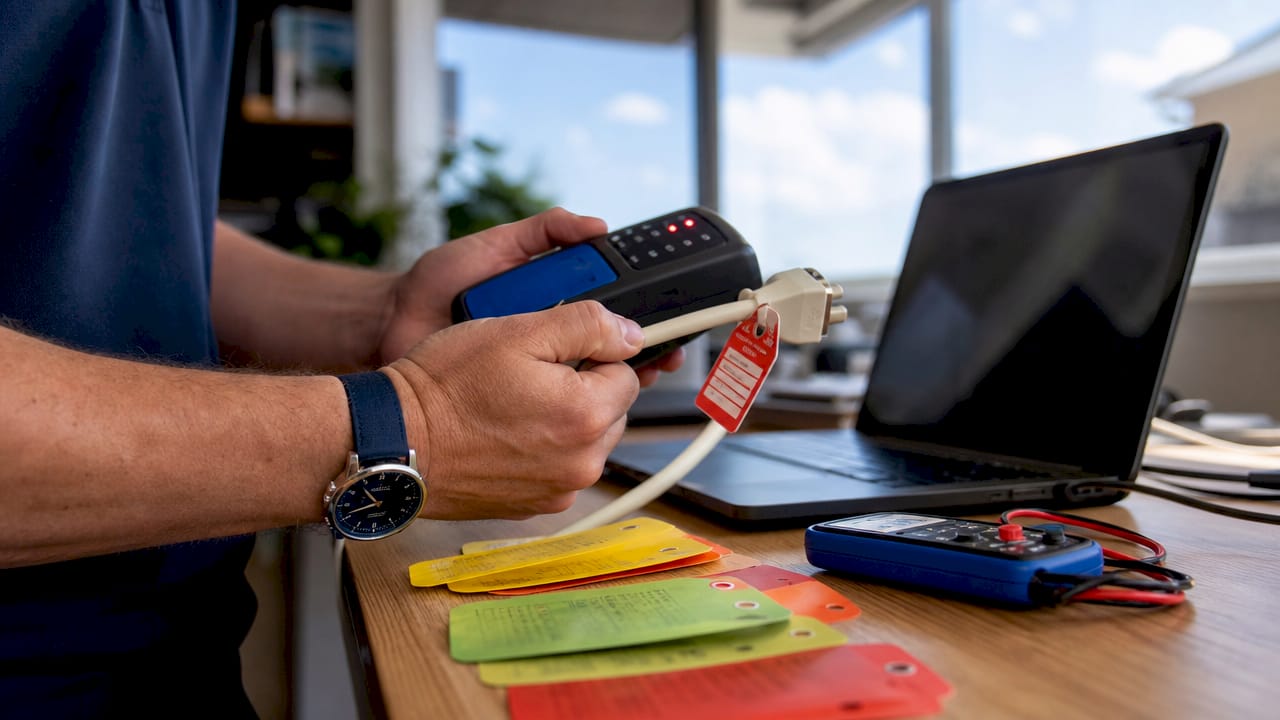
After testing, every item receives a durable tag showing the test date and the next scheduled retest date. The tag is not the full record. Test reports and records provide the auditable log that regulators and insurers actually examine. A tag on a power board tells you it was tested. A logbook tells you it passed, who tested it, what the results were, and when the next test is due.
Testing frequency under the standard
Testing frequency is risk-based, not universal. High-risk environments such as construction sites require testing as frequently as every 3 months. Office environments typically operate on longer cycles. The standard provides documented schedules for different risk levels, and your testing programme must reflect the actual risk profile of your premises.
Pro Tip: AS/NZS 3760:2022 also advises that new appliances be tested and recorded before first use. Manufacturing defects and transit damage can create hazards in brand-new equipment that looks perfectly fine out of the box.
Why is electrical tagging and testing required for business and property managers?
Business and property managers in Victoria carry direct legal responsibility for the safety of electrical equipment on their premises. This responsibility does not transfer to tenants, contractors, or equipment manufacturers once the equipment is in use in your workplace.
Legal liability and penalties
Employers remain liable for injuries caused by unsafe electrical equipment, particularly when no documented safety regime exists. Under Victoria's Occupational Health and Safety Act 2004, a failure to maintain safe plant and equipment can result in significant financial penalties and, in serious cases, criminal prosecution. The absence of test and tag records is treated as evidence of negligence, not simply an administrative oversight.
Insurance implications
Insurance policies for commercial and investment properties commonly include conditions requiring compliance with relevant Australian Standards. A claim arising from an electrical fire or injury may be denied if you cannot demonstrate that equipment was tested and tagged in accordance with AS/NZS 3760:2022. This is not a theoretical risk. It is a documented reason why claims are rejected.
Safety risks that testing addresses
The core safety case for test and tag rests on three hazards:
- Electric shock: Faulty insulation or a broken earth connection can make equipment live. A person touching that equipment may receive a fatal shock.
- Fire: Wiring faults and overloaded insulation generate heat. That heat can ignite surrounding materials, particularly in older buildings or high-density workplaces.
- Equipment failure: Undetected faults cause unexpected breakdowns, which create operational downtime and costly emergency repairs.
"Testing reveals whether protective measures remain effective and if exposure risk has increased since the last test." This principle, drawn from electrical safety practice, explains why a visual check alone is never sufficient. Equipment can look completely normal and still be dangerous.
The misconception about apparent condition
Many managers assume that equipment which looks fine is safe. Routine testing identifies hidden faults such as insulation breakdown and internal wiring faults that visual inspection cannot detect. A power lead with a perfectly intact outer sheath can have degraded internal insulation that creates a serious shock or fire risk. Testing replaces that assumption with objective evidence.
How is testing frequency determined and applied in Victoria?
There is no single universal testing schedule that applies to all Victorian workplaces. In Victoria, testing intervals are set by risk-based assessment and must be documented in a way that is auditable on inspection.
The following table shows typical testing intervals by environment type under AS/NZS 3760:2022:
| Environment type | Typical testing interval |
|---|---|
| Construction sites and demolition | Every 3 months |
| Factories and workshops | Every 6 months |
| Hire equipment | Before each hire or every 3 months |
| Offices and retail premises | Every 12 months |
| Residential aged care and disability care | Every 12 months |
These intervals are starting points. A risk assessment may shorten them based on how equipment is used, how often it moves, and the vulnerability of the people using it. Aged care and disability care environments, for example, often warrant more frequent checks given the vulnerability of residents.
Building an auditable testing register
Property managers must maintain records showing test dates and next inspection schedules on durable tags, but the register behind those tags carries equal weight. Your register should include the asset description, serial number or identifier, test date, result, tester's name and licence number, and next due date. This register is what a WorkSafe Victoria inspector will request if an incident occurs.
Pro Tip: Schedule your testing programme at least 4 weeks before the due date. This gives you time to arrange a competent tester, address any failed items, and update your register without a compliance gap.
What practical benefits do businesses gain from proper test and tag?
Compliance is the floor, not the ceiling. Businesses that treat test and tag as a genuine maintenance tool gain measurable operational and financial benefits beyond simply meeting their legal obligations.
Early fault detection and cost savings
Testing allows early identification of minor problems such as damaged plugs, frayed cords, and loose terminals. These faults can be repaired and the item retested, rather than replaced. The cost of repairing a damaged cord is a fraction of replacing the appliance it is attached to. Testing is diagnostic, not simply pass or fail. A failed item is often a cheap repair, not a write-off.
Operational continuity
Unexpected equipment failure disrupts operations. A faulty power tool on a construction site or a failed appliance in a commercial kitchen creates downtime that costs money. Electrical testing should be viewed as an efficiency tool that prevents costly downtime and expensive replacements. Scheduled testing catches problems before they become failures.
Legal defence through records
Systematic test records do more than satisfy regulators. They demonstrate a proactive safety culture to insurers, clients, and courts. Test records provide a key legal defence showing ongoing safety management. If an incident occurs and you can produce a complete, up-to-date testing register, your position is fundamentally different from a manager who cannot.
Workplace safety culture
Employees notice when equipment is tagged and maintained. Visible test tags signal that management takes safety seriously. This builds confidence in the workplace and reduces the likelihood of staff using equipment they suspect is faulty without reporting it. A culture where safety is visible is a culture where hazards get reported early.
Key takeaways
Electrical tagging and testing under AS/NZS 3760:2022 is a legal requirement for Victorian businesses that protects against electric shock, fire, equipment failure, and liability, while also delivering measurable cost and operational benefits.
| Point | Details |
|---|---|
| Legal obligation | AS/NZS 3760:2022 requires testing by a competent person with documented results and visible tags. |
| Risk-based frequency | Testing intervals range from 3 months for construction to 12 months for offices, set by risk assessment. |
| Records over tags | An auditable test register carries more weight than tags alone for compliance and legal defence. |
| Hidden faults | Testing detects insulation breakdown and wiring faults that visual inspection cannot reveal. |
| Cost management | Early fault detection enables cheap repairs and extends equipment life, reducing replacement costs. |
What I've learned from years of electrical testing in the field
The most common mistake I see property managers make is treating test and tag as a box-ticking exercise. They get the tags applied, file the paperwork, and forget about it until the next cycle. That approach misses the entire point.
Testing is diagnostic. When a competent tester works through a building's equipment register, they are not just confirming that items pass. They are building a picture of how equipment is ageing, which items are approaching failure, and where the risk profile of the building is shifting. A tag tells you an item passed on a given date. A full logbook tells you whether that item has been trending toward failure over successive tests.
I have seen situations where a property manager produced a stack of current tags during a WorkSafe inspection and still faced serious scrutiny because the underlying register was incomplete. Inspectors prioritise seeing a full, auditable test log over physical tags. Tags fade, fall off, and get replaced. Records do not lie.
The other thing I would push back on is the assumption that new equipment is automatically safe. New appliances must be tested and recorded before use because manufacturing defects and transit damage are real. I have personally seen brand-new equipment fail insulation resistance tests straight out of the packaging. Never assume a new purchase is safe without verification.
Treat your testing programme as a risk management asset, not an administrative burden. The businesses that do this well spend less on emergency repairs, have fewer incidents, and carry far less legal exposure than those that do the minimum.
— Mike
Dualflowservices: electrical testing and tagging for Victorian businesses
Staying on top of your test and tag obligations takes more than good intentions. It takes a qualified technician, a reliable schedule, and records that will hold up under scrutiny.
Dualflowservices provides electrical testing and tagging for business owners, property managers, aged care facilities, retirement villages, and disability care homes across the Mornington Peninsula and Victoria. The team carries the qualifications required under AS/NZS 3760:2022 and delivers complete documentation you can rely on for compliance audits and insurance purposes. Whether you need a one-off assessment or a scheduled maintenance programme, Dualflowservices can set up a testing cycle that fits your premises and risk profile.
FAQ
What is electrical tagging and testing?
Electrical tagging and testing is a two-step safety process involving a visual inspection and electrical tests (earth continuity, insulation resistance, and leakage current) performed on portable electrical equipment. It is governed by AS/NZS 3760:2022 and must be carried out by a competent person.
How often does electrical equipment need to be tested in Victoria?
Testing frequency depends on a risk-based assessment of the environment. Construction sites require testing every 3 months, while office and retail premises are typically tested every 12 months under AS/NZS 3760:2022 guidelines.
Does new electrical equipment need to be tested before use?
Yes. AS/NZS 3760:2022 advises that new appliances be tested and recorded before first use, as manufacturing defects and transit damage can create hazards in equipment that appears undamaged.
What happens if I don't comply with test and tag requirements?
Non-compliance exposes business and property managers to legal penalties under Victoria's Occupational Health and Safety Act 2004, potential denial of insurance claims, and personal liability for injuries caused by unsafe equipment.
Are tags alone sufficient proof of compliance?
Tags are not sufficient on their own. Regulators and insurers require an auditable test register showing test dates, results, tester credentials, and next due dates. Tags confirm testing occurred; records confirm it was done correctly and consistently.