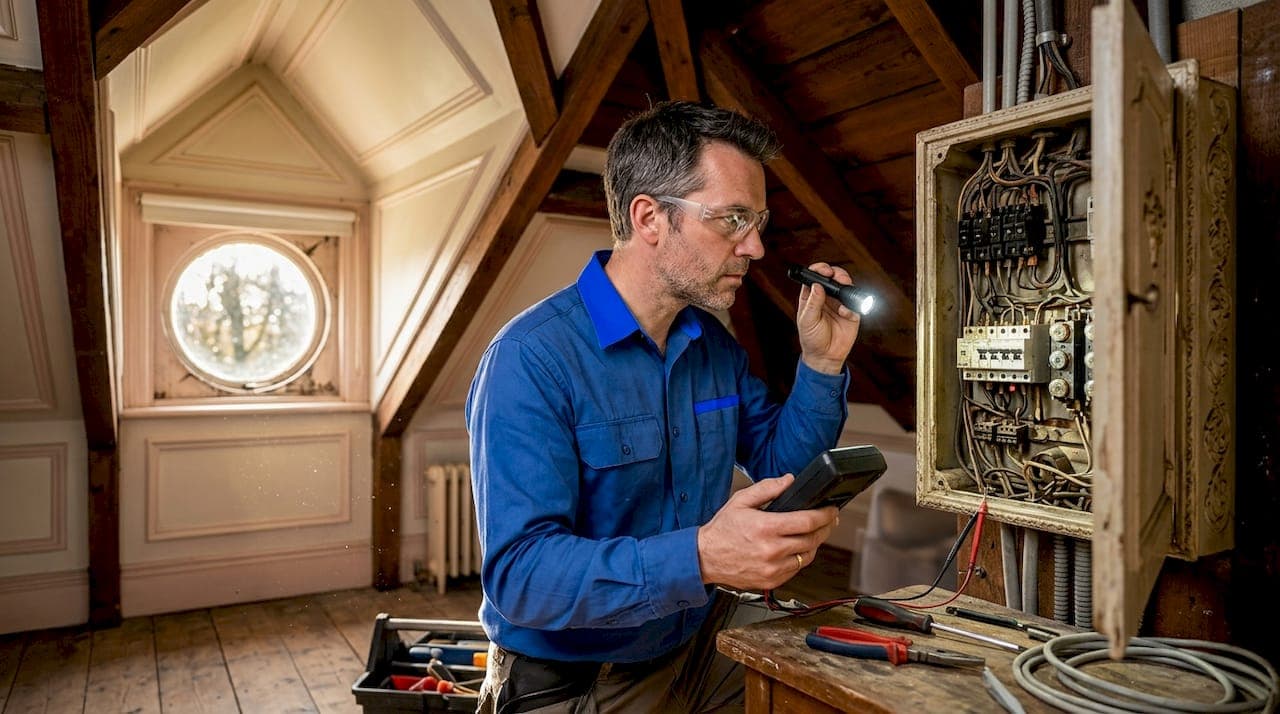
Regular electrical inspections are defined as formal safety assessments carried out by a licensed electrician to verify that a property's wiring, switchboards, and protective devices meet Australian Standards AS/NZS 3000 and Victorian regulatory requirements. The benefits of regular electrical inspections extend well beyond ticking a compliance box. They protect lives, prevent fires, reduce repair bills, and keep insurance cover intact. For home and business owners on the Mornington Peninsula and across Victoria, scheduling routine checks with a qualified team like Dualflowservices is one of the most cost-effective decisions you can make for your property.
1. What safety benefits do regular electrical inspections provide?
Electrical faults are responsible for a 12% rise in residential fires linked to electrical faults in NSW during winter 2023. That figure reflects a pattern seen across Australia, and Victoria is no exception. Older suburbs with ageing wiring and homes that have had DIY modifications carry the highest risk.
A professional inspection targets the hazards you cannot see with the naked eye. Common findings include:
- Faulty or degraded wiring behind walls and in roof cavities
- Loose connections at switchboards and power points
- Outdated components such as ceramic fuse holders and ungrounded circuits
- Reversed polarity and bootleg grounds in older or DIY-modified homes
- Overloaded circuits from added appliances or extensions
Degraded wiring and loose connections are often invisible until a critical failure occurs. By the time a fault shows a symptom, the damage is already advanced.
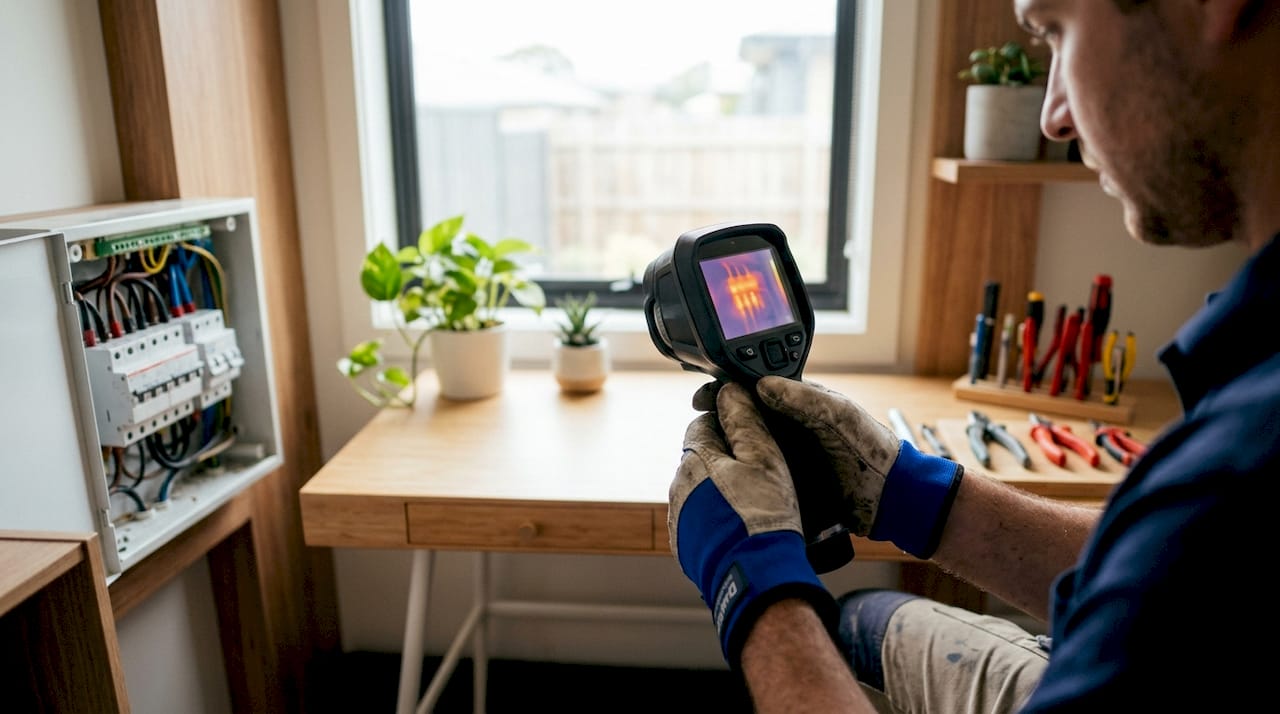
Inspectors use thermal imaging cameras to find hot spots inside switchboard panels. Loose connections cause hot spots that circuit breakers never detect, because the resistance is too low to trip the breaker but high enough to generate heat over time. RCD trip-time testing confirms that safety switches will actually operate within the required time frame under fault conditions. Insulation resistance testing checks whether wiring has deteriorated to the point where leakage current poses a shock or fire risk.
Pro Tip: Test your RCDs monthly by pressing the test button on each safety switch. This takes 10 seconds and confirms the device will trip in a real fault. It does not replace a professional inspection, but it catches a failed RCD before it matters.
2. How do electrical inspections support compliance and insurance requirements?
Victorian property owners operate under a clear legal framework. The Electricity Safety Act 1998 (Vic) and associated regulations set minimum standards for electrical installations. Compliance with Australian Standards AS/NZS 3000, known as the Wiring Rules, is mandatory for any new work and forms the benchmark against which existing installations are assessed.
Key compliance considerations include:
- Residential landlords in Victoria must maintain electrical safety for tenants, with obligations to address known faults promptly
- Commercial properties face Work Health and Safety (WHS) requirements that mandate documented inspection and testing records
- Rental properties undergoing significant renovation require electrical safety checks before re-occupation
- Businesses in high-risk industries face more frequent inspection obligations under sector-specific regulations
Insurance is where non-compliance becomes financially painful. Insurance companies may refuse claims if damage results from non-compliant electrical faults. A documented inspection report from a licensed electrician is the clearest evidence that you maintained your system to the required standard. Without it, an insurer can argue that a fire or equipment failure resulted from neglect.
Commercial inspections require formal documentation and scheduled maintenance records, which go well beyond what a standard residential check covers. Business owners should treat inspection reports as legal documents and store them securely.
3. What financial and operational advantages come from regular inspections?
Early fault detection is the single biggest financial argument for routine electrical safety checks. A loose connection found during an inspection costs a fraction of what it costs after it causes a switchboard fire or destroys connected equipment. The repair bill for fire damage, equipment replacement, and business interruption dwarfs the cost of an annual or biennial inspection.
Key financial and operational benefits include:
- Avoiding emergency call-out fees by catching faults before they become failures
- Extending the service life of appliances and equipment by reducing voltage fluctuations and wiring stress
- Identifying energy waste from outdated or inefficient fixtures and wiring configurations
- Reducing business downtime by scheduling inspections out of hours
Inspections detect energy loss and inefficiency, giving owners the information they need to upgrade specific circuits or fixtures and reduce utility bills. Identifying outdated components also contributes to lower environmental impact over time.
Inspection reports create a maintenance history that significantly reduces future diagnostic time. When a fault does occur, an electrician with your property's history can distinguish a sudden failure from long-term degradation in minutes rather than hours. That speed translates directly into lower labour costs.
Pro Tip: Keep a folder, physical or digital, with every inspection report, test certificate, and electrical work invoice for your property. This record is your first line of defence in an insurance dispute and your fastest path to an accurate diagnosis when something goes wrong.
4. How often should home and business owners in Victoria schedule electrical inspections?
Experts recommend home inspections every 3–5 years, with more frequent checks for older homes or properties with high electrical demand. That interval is a starting point, not a ceiling. Several factors push the recommended frequency higher.
- Homes built before 1990 carry a higher risk of degraded wiring insulation and outdated switchgear. Inspections every 2–3 years are appropriate.
- Properties with recent renovations or additions should be inspected after any significant electrical work to confirm the new installation meets AS/NZS 3000.
- Rental properties require landlords to address electrical faults promptly. A proactive inspection every 2 years reduces the risk of a tenant complaint triggering an emergency response.
- Commercial premises with high electrical loads, such as hospitality venues, medical facilities, or manufacturing sites, benefit from annual inspections and quarterly visual checks by a responsible person on site.
- Properties that have experienced storm damage, flooding, or a power surge need an inspection before normal use resumes, regardless of when the last check occurred.
Between professional inspections, testing GFCI and AFCI devices monthly improves safety and catches device failures early. In Victoria, the equivalent devices are RCDs and arc fault detection devices. Pressing the test button on each RCD monthly takes under a minute and confirms the device is functional.
5. What distinguishes professional electrical inspections from DIY checks?
A DIY check is a visual scan. A professional inspection is a systematic test of every circuit, protective device, and connection point using calibrated equipment. The difference matters because the most dangerous faults are invisible.
| Check type | What it covers | What it misses |
|---|---|---|
| DIY visual check | Visible damage, scorch marks, tripped breakers | Insulation breakdown, reversed polarity, hot spots, RCD failure |
| Professional inspection | Insulation resistance, continuity, RCD trip times, thermal imaging, load testing | Nothing within scope of AS/NZS 3000 testing |
Visual checks miss critical hazards like bootleg grounds and reversed polarity, which are common in older homes and properties with DIY wiring. These faults carry a real shock and fire risk but produce no visible sign until failure.
Professional inspectors use insulation resistance testers, multifunction testers, and thermal imaging cameras. Thermal scanning identifies hot spots in electrical panels that no circuit breaker will ever flag. Smart monitoring systems, now available as add-ons to modern switchboards, can track load patterns between inspections and alert owners to anomalies. A licensed electrician interprets those alerts in context. A homeowner without training cannot.
Homeowners often wait for failure signs before booking an inspection, overlooking invisible risks that were present long before any symptom appeared. Waiting for a symptom is the most expensive strategy available.
Key takeaways
Regular electrical inspections protect Victorian home and business owners from fire, shock, insurance voids, and costly emergency repairs by identifying hidden faults before they become critical failures.
| Point | Details |
|---|---|
| Safety is the primary benefit | Inspections catch hidden faults like hot spots and degraded wiring before they cause fires or shocks. |
| Compliance protects your insurance | Documented inspection records are your defence if an insurer disputes a claim after an electrical fault. |
| Early detection saves money | Fixing a loose connection during an inspection costs far less than repairing fire damage or replacing equipment. |
| Frequency depends on property type | Homes need checks every 3–5 years; older homes, rentals, and commercial premises need more frequent inspections. |
| Professional tests go beyond visual | Licensed electricians use thermal imaging, insulation resistance testing, and RCD trip-time testing to find invisible faults. |
Why I think most property owners underestimate electrical risk
After years of working across residential and commercial properties on the Mornington Peninsula, the pattern I see most often is this: owners invest heavily in visible maintenance and ignore what is behind the walls. A freshly painted house with a 40-year-old switchboard is not a safe house. It just looks like one.
The faults that concern me most are the slow ones. A loose connection in a switchboard does not trip a breaker. It generates heat, day after day, until the insulation around it chars and ignites. I have seen this in properties where the owners had no idea anything was wrong. The house looked fine. The lights worked. The power points worked. The switchboard was quietly building toward a fire.
The other thing I have noticed is that business owners often treat electrical inspections as a cost rather than a protection. The maths does not support that view. One unplanned shutdown from an electrical fault costs more in lost revenue and emergency repairs than several years of scheduled inspections. The businesses that run smoothly are the ones that treat maintenance as a fixed operating cost, not a discretionary one.
Routine inspections also give you something less tangible but genuinely valuable: confidence. Knowing your property has been checked by a licensed electrician, tested against AS/NZS 3000, and cleared of faults lets you sleep without wondering whether the wiring in your roof is doing something you cannot see.
— Mike
Electrical inspections on the Mornington Peninsula with Dualflowservices
Scheduling a professional electrical inspection is the most direct step you can take to protect your property, your family or staff, and your insurance cover.

Dualflowservices provides licensed electrical inspections for homes, businesses, rental properties, aged care facilities, and commercial premises across the Mornington Peninsula and greater Victoria. Every inspection follows Australian Standards AS/NZS 3000 and produces a documented report you can present to your insurer or use as a maintenance baseline. Dualflowservices also offers scheduled maintenance programmes so your property stays compliant between inspections. Book your electrical inspection in Victoria through the Dualflowservices website and get a clear picture of your property's electrical health.
FAQ
What are electrical inspections and what do they cover?
An electrical inspection is a formal assessment by a licensed electrician that tests wiring, switchboards, protective devices, and circuits against Australian Standards AS/NZS 3000. It covers insulation resistance, continuity, RCD trip times, and thermal scanning of switchboard components.
How often should electrical inspections be scheduled in Victoria?
Homes should be inspected every 3–5 years, with older homes and rental properties inspected every 2–3 years. Commercial premises with high electrical loads benefit from annual inspections.
Can electrical faults affect my home insurance claim?
Yes. Insurance companies may refuse claims if damage results from non-compliant electrical faults. A documented inspection report from a licensed electrician is the clearest evidence of maintained compliance.
What is the difference between a DIY check and a professional inspection?
A DIY check is a visual scan that misses hidden faults like reversed polarity, bootleg grounds, and insulation breakdown. A professional inspection uses calibrated test equipment and thermal imaging to identify faults that are invisible to the eye.
Do Victorian landlords have electrical inspection obligations?
Victorian landlords must maintain electrical safety for tenants and address known faults promptly. Proactive inspections every 2 years reduce the risk of emergency responses and demonstrate compliance with the Electricity Safety Act 1998 (Vic).