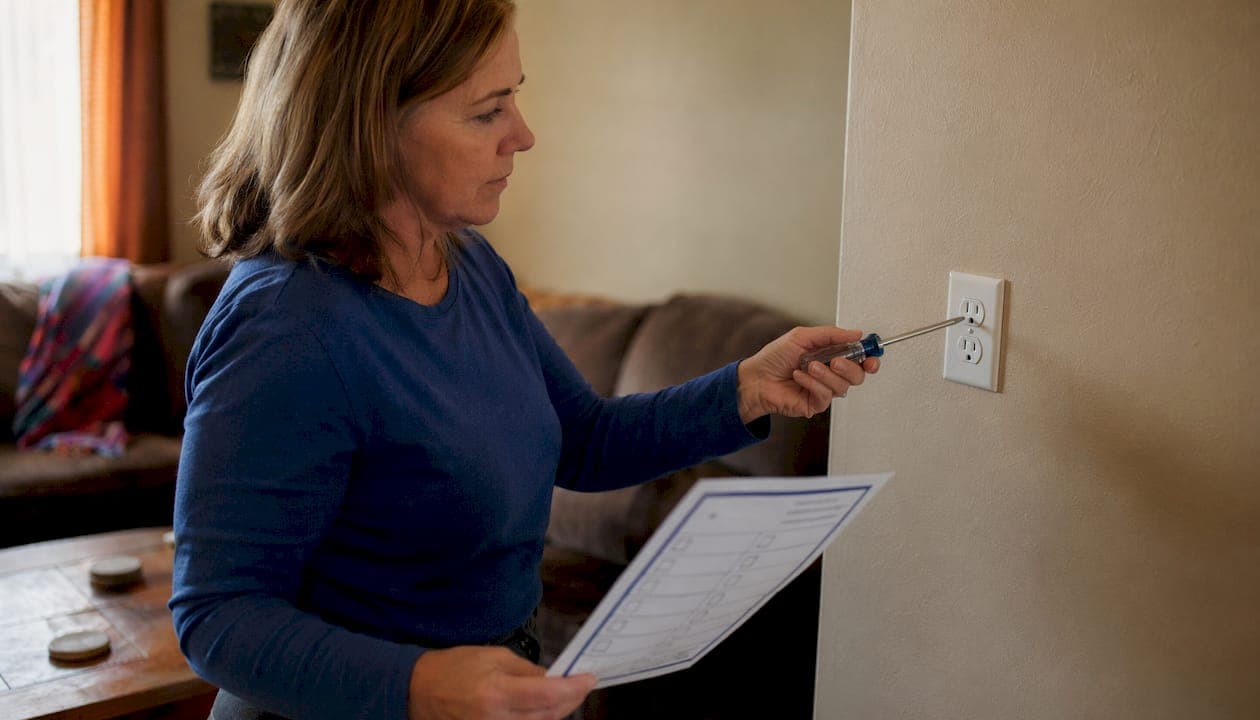
An electrical safety checklist for homeowners is a practical tool that identifies potential hazards before they cause fires or shocks. Most electrical problems start small. A warm outlet, a flickering light, or a tripped breaker are all early warnings that a structured checklist catches before they escalate. The National Fire Protection Association (NFPA) recommends professional inspections every 3–5 years, and Australian electrical standards align with this guidance. Used consistently, a home electrical safety checklist transforms vague concern into a clear, repeatable routine that keeps your household safe and your system compliant.
1. What should an electrical safety checklist for homeowners include?
A complete checklist for electrical safety covers outlets, switches, cords, the electrical panel, and safety devices. Each category has specific warning signs that any homeowner can spot without tools or trade knowledge. The goal is early detection, not DIY repair.
Outlets and switches
- Check for discolouration, scorch marks, or cracks on outlet covers and switch plates.
- Press plugs firmly into outlets. A loose fit signals worn contacts that need professional attention.
- Touch outlet covers briefly. Warmth is abnormal and requires immediate investigation.
- Listen for buzzing or crackling near any switch or outlet.
Extension cords and power strips
- Extension cords are designed for temporary use only. Permanent installation causes insulation breakdown and overheating.
- Never daisy-chain power strips. Plugging one strip into another overloads the circuit.
- Inspect cords for fraying, kinking, or exposed wires. Replace damaged cords immediately.
Electrical panel
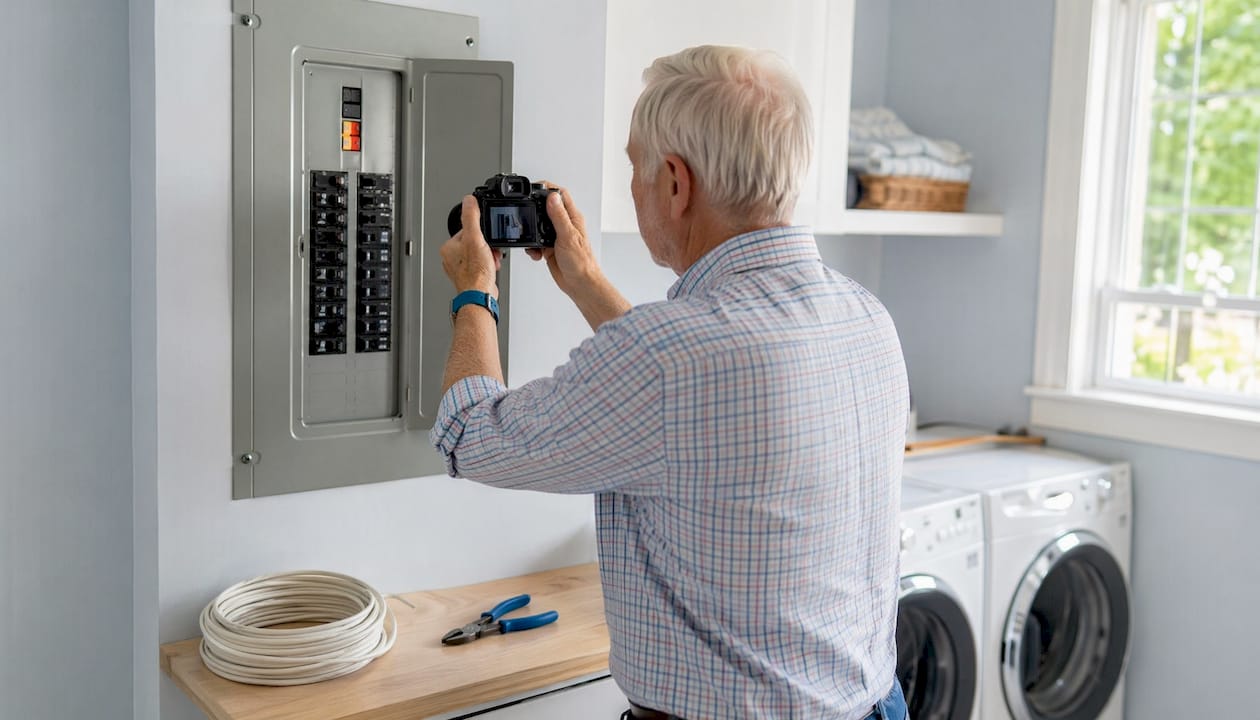
- Every breaker must be clearly labelled with the room or circuit it controls. Unlabelled breakers delay emergency shutoff and increase risk.
- Note any breakers that trip repeatedly under normal household loads.
- A burning smell near the panel is a critical warning sign requiring same-day professional attention.
GFCI outlets
- Ground Fault Circuit Interrupters (GFCIs) must be present in kitchens, bathrooms, laundries, and outdoor areas.
- Press the "Test" button monthly. The outlet should lose power. Press "Reset" to restore it.
- GFCIs can fail internally while still supplying power. Monthly testing is the only reliable way to confirm they work.
Signs of overload
- Flickering or dimming lights, especially when appliances start up, indicate a circuit under strain.
- Frequent breaker trips under normal use signal that the circuit is overloaded or faulty.
Pro Tip: Photograph your electrical panel after labelling every breaker. Store the image on your phone so you can identify circuits quickly during an emergency.
2. How often should homeowners perform electrical safety checks?
Frequency matters as much as thoroughness. A checklist you run once and forget provides far less protection than one built into a regular routine.
- Monthly. Test every GFCI outlet using the built-in test and reset buttons. This takes under five minutes and confirms that your most critical shock-prevention devices are working.
- Every 6–12 months. Conduct a full visual walkthrough of your home. Basic inspections every 6–12 months are the standard recommendation for residential properties. Check outlets, switches, cords, the panel, and all visible wiring.
- Every 3–5 years. Book a comprehensive inspection with a licensed electrician. The NFPA recommends professional inspections every 3–5 years for standard residential properties.
- Immediately, for homes 25 years or older. Older wiring systems were not designed for modern electrical loads. A professional inspection for homes aged 25 years or more should not wait for the standard cycle.
- After any renovation or major appliance installation. New circuits, rewiring, or high-draw appliances change the load on your system. A post-work inspection confirms everything is safe and compliant.
- When warning signs appear. Flickering lights, burning smells, or repeated breaker trips are not problems to monitor. They require a licensed electrician promptly.
Building these intervals into a calendar reminder removes the guesswork. A missed inspection is not a minor oversight. It is a gap in your home's protection.
3. Which safety devices are essential for modern home electrical safety?
Four safety technologies form the foundation of a well-protected residential electrical system. Each one addresses a different type of risk.
Ground Fault Circuit Interrupters (GFCIs)
GFCIs detect current imbalances as small as 1/2000 of an amp and cut power in as little as 1/40th of a second. That speed is fast enough to prevent electrocution in wet areas. Australian wiring rules require GFCIs in bathrooms, kitchens, laundries, and outdoor circuits. If your home lacks them in these locations, installation is not optional.
Arc-Fault Circuit Interrupters (AFCIs)
AFCIs detect dangerous electrical arcs inside walls, the kind caused by damaged or ageing wiring that a standard breaker cannot detect. AFCIs reduce fire risk by identifying these invisible faults before they ignite insulation or framing. Modern electrical codes require AFCI protection in living areas. Older homes often lack them entirely.
Tamper-Resistant Receptacles (TRRs)
TRRs have internal shutters that only open when equal pressure is applied to both slots simultaneously. This prevents children from inserting objects into a single slot. If your home has young children, TRRs in all accessible outlets are a straightforward safety upgrade.
Whole-home surge protectors
A whole-home surge protector installs at the main panel and shields every circuit from voltage spikes caused by lightning or grid fluctuations. Individual power-board surge protectors only protect the devices plugged into them. A panel-level device protects your entire home, including hardwired appliances.
Pro Tip: Ask your licensed electrician to confirm which safety devices are present and compliant during your next scheduled inspection. Many older homes in Victoria have GFCIs but lack AFCIs entirely.
4. What are the electrical hazards homeowners should never ignore?
Electrical hazards rarely start dramatically. Most begin as minor signs that are easy to dismiss. Dismissing them is the mistake that leads to fires and injuries.
- Warm or discoloured outlets and switches. Heat at an outlet means current is flowing where it should not. Discolouration indicates past arcing or overheating. Both require immediate professional assessment.
- Buzzing, crackling, or humming sounds. Electrical systems should be silent. Any audible noise from an outlet, switch, or panel signals a loose connection or arcing fault.
- Burning smells near electrical devices or the panel. A burning smell is a fire precursor. Do not wait to see if it goes away.
- Repeated breaker trips. A breaker that trips once under unusual load is doing its job. A breaker that trips regularly under normal use indicates an overloaded or faulty circuit.
- Frayed, cracked, or overheating cords. Damaged insulation exposes live conductors. An extension cord that feels warm during normal use is already failing.
- Missing or incorrect panel labels. In an emergency, an unlabelled panel slows your response. Accurate panel labelling is a critical safety step, not a cosmetic one.
"Warning signs often start small, like loose plugs, warm switches, or flickering lights. Ignored, these minor signs become serious hazards. The homeowner's role is to spot them early and call a licensed professional immediately."
None of these signs are safe to monitor over time. Each one warrants a call to a licensed electrician.
Key takeaways
A home electrical safety checklist works best when it combines monthly GFCI testing, biannual visual inspections, and a professional comprehensive check every 3–5 years.
| Point | Details |
|---|---|
| Test GFCIs monthly | Press the test button on every GFCI outlet monthly to confirm it cuts power correctly. |
| Inspect visually every 6–12 months | Check outlets, switches, cords, and the panel for warning signs twice a year. |
| Book a professional every 3–5 years | Licensed electricians identify faults that visual checks cannot detect. |
| Never ignore warning signs | Warm outlets, burning smells, and repeated breaker trips require same-day professional attention. |
| Extension cords are temporary | Permanent cord use causes insulation breakdown and overheating. Replace with fixed wiring. |
What I've learned from years of home electrical work
Homeowners consistently underestimate how much early detection matters. The most common pattern I see is a warning sign that was noticed months before a fault became serious. A warm outlet. A breaker that "sometimes" trips. A light that flickers "only occasionally." Each one was noticed, and each one was left for later.
A formal checklist changes that behaviour. It turns a vague sense that something might be wrong into a documented observation that demands a response. Consistency via a formal checklist transforms subjective instincts into objective assessments. That shift is the real value of the tool.
The other thing I want to be direct about: DIY electrical repairs are dangerous. DIY repairs by non-professionals cause a significant share of residential electrical fires. Your role as a homeowner is to observe, document, and report. The repair belongs to a licensed electrician every time. That boundary is not about capability. It is about safety and legal compliance under Australian electrical standards.
Build the habit. Run the checklist. Call a professional when you find something. That three-step routine is more effective than any single inspection.
— Mike
Professional electrical inspections from Dualflowservices
Dualflowservices provides licensed electrical inspections for homeowners across the Mornington Peninsula in Victoria. A professional inspection goes well beyond what a visual walkthrough can cover. It includes testing circuits, verifying safety device function, checking panel integrity, and confirming compliance with current Australian wiring standards.

Booking is straightforward. Dualflowservices handles scheduled maintenance, safety inspections, and urgent call-outs for homes of all ages. If your home is overdue for a professional check, or if you have spotted a warning sign that needs attention, the team at Dualflowservices is ready to help. A licensed inspection gives you a clear picture of your home's electrical health and the confidence that comes with it.
FAQ
How often should I test GFCI outlets?
Test every GFCI outlet monthly using the built-in test and reset buttons. GFCIs can fail internally while still supplying power, so monthly testing is the only reliable way to confirm they work.
What is the difference between a GFCI and an AFCI?
A GFCI protects against electrocution by detecting current leaking to ground, while an AFCI protects against fires by detecting dangerous electrical arcs within wiring. Both devices address different risks and many modern homes require both.
When should I call a licensed electrician instead of waiting?
Call a licensed electrician immediately if you notice warm outlets, burning smells, buzzing sounds, or repeated breaker trips. These are not problems to monitor. They are active warning signs requiring professional assessment.
How do I know if my home needs a professional electrical inspection?
The NFPA recommends a professional inspection every 3–5 years for standard homes, or immediately for homes aged 25 years or more. Any visible warning sign also triggers an immediate inspection regardless of when the last one occurred.
Are extension cords safe to use permanently?
Extension cords are designed for temporary use only. Permanent use causes insulation breakdown and overheating, both of which are leading causes of residential fires. Permanent wiring installed by a licensed electrician is the correct solution.