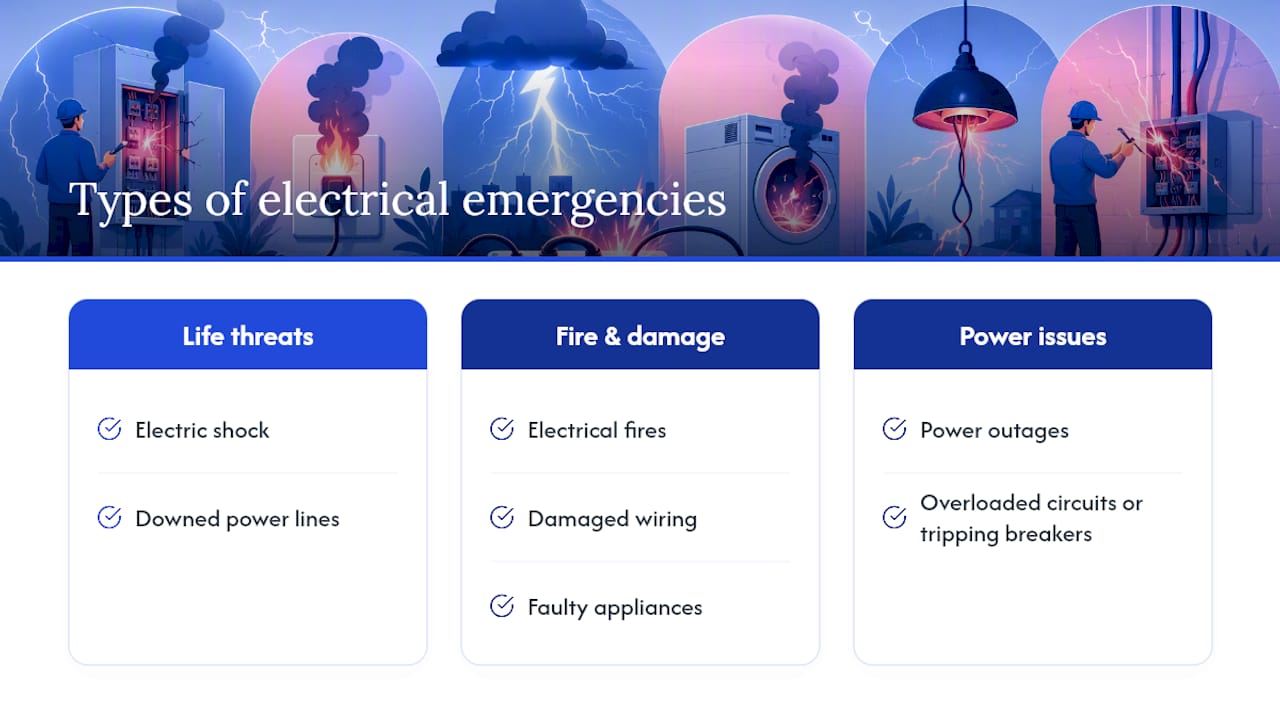
Nine incidents cover almost every electrical emergency you'll face: electric shock, downed power lines, electrical fires, blackouts, overloaded circuits, damaged wiring, faulty appliances, water-related electrical risk, and arcing or sparks. Each demands a different first move.
- Electric shock — don't touch the person; cut power at the source and call 000.
- Downed power lines — stay at least 9 metres back and phone emergency services.
- Electrical fire — only fight it with an electrical-rated extinguisher; otherwise evacuate and call 000.
- Power outage — keep fridge and freezer doors shut and switch off major appliances.
- Overloaded circuit or tripping breaker — stop using it and reset just once.
- Exposed or damaged wiring — isolate the circuit and keep everyone clear.
- Appliance fault — unplug only if it's safe to reach, otherwise kill the circuit.
- Water near electrics — never touch switches with wet hands; cut power at the board.
- Sparks or arcing — switch off and call an emergency electrician immediately.
Pro Tip: Save 000 and a licensed emergency electrician like Dualflowservices in your phone now, before you need them at 2am.
Key Takeaways
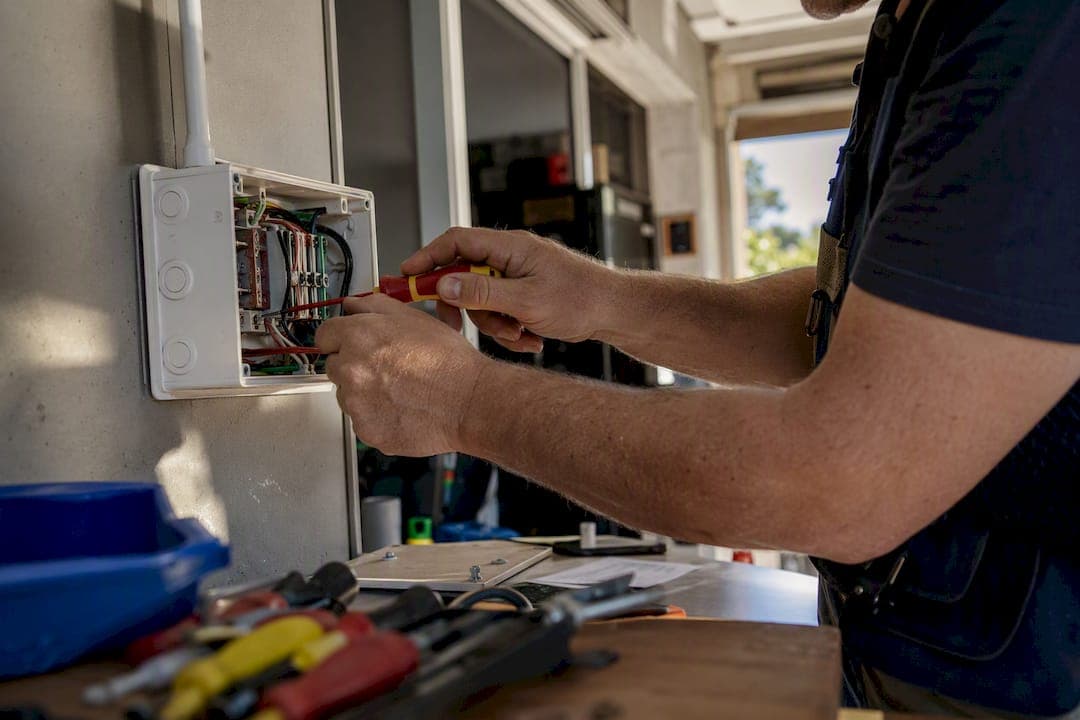
The type of electrical emergency you're facing determines your first move, and getting that first move wrong is what turns a fault into an injury or a fire.
| Point | Details |
|---|---|
| Nine core emergency types | Shock, downed lines, fire, outage, overloaded circuits, damaged wiring, appliance faults, water risk, and arcing each need a distinct first response. |
| Distance saves lives | Stay at least 9 metres from any downed power line and treat it as live regardless of appearance. |
| Food safety has a clock | An unopened fridge holds safe temperatures for about 4 hours, a full freezer for roughly 48 hours. |
| Repeated trips mean stop | A breaker that trips again immediately after reset signals a fault, not a nuisance to bypass. |
| Dualflowservices handles urgent calls | Emergency electrician response across the Mornington Peninsula, from phone triage through to safe works and repair. |
Table of Contents
- Electric shocks: what they look like and what to do first
- How far should you stay from a downed power line?
- What should you do during an electrical fire?
- How long is food safe during a power outage?
- Why does my breaker keep tripping?
- How do you spot dangerous wiring damage?
- What should you do about a sparking appliance?
- Should you call 000 or an emergency electrician?
- Simple ways to reduce your risk of an electrical emergency
- Quick checklist for an electrical problem right now
- What happens when you call Dualflowservices for an emergency
- A tradesperson's view on what actually causes these calls
- Need an emergency electrician now? Here's how to get one fast
- Frequently asked questions
- Sources
Electric shocks: what they look like and what to do first
Any shock, no matter how mild it feels, needs to be treated as dangerous. Don't grab the person if they're still touching the live source. You'll become the second casualty.
Follow this order:
- Check the scene. Look for water, metal, or anything conductive between you and them.
- If they're still in contact with the source, switch off power at the switchboard rather than pulling them away.
- Only separate them using a dry, non-conductive object (a wooden broom handle, for example) if you're confident it's safe.
- Call 000 immediately, even if they seem fine afterwards.
Electric shock can trigger heart rhythm problems that don't show up straight away, which is why medical review matters even for a "minor" jolt.
Pro Tip: Leave the faulty appliance or switch exactly as it was. An electrician needs to see it undisturbed to diagnose the fault properly.
How far should you stay from a downed power line?
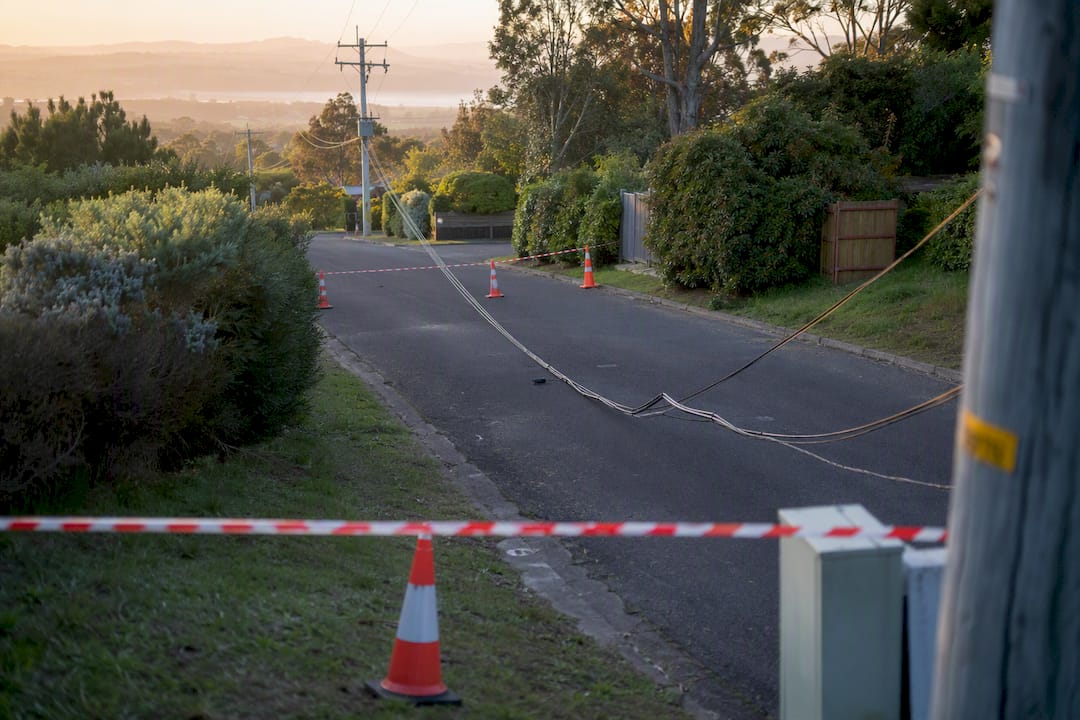
Treat every fallen line as live, even if it looks dead or the street lights are still on. Keep people and cars back, and call both emergency services and your electricity network provider straight away.
Stay at least 9 metres away, roughly the length of a small bus. Ground around a fallen line can carry "step potential", meaning voltage radiates outward through the earth, so walking toward it in small steps can still shock you well before you reach the wire itself.
- Never touch the line, a fence, or a car that's in contact with it.
- Don't drive through pooled water near a downed line.
- Warn neighbours and passersby, but don't approach to do it.
Electrical incidents remain a meaningful contributor to workplace and property injuries nationally, which is exactly why network operators treat every reported line as an emergency dispatch, not a routine job.
What should you do during an electrical fire?
If the fire is small, contained, and you have an extinguisher rated for electrical fires, use it. If there's any doubt, get everyone out and call 000 from outside.
- Do cut power at the switchboard first, but only if you can reach it safely.
- Don't ever throw water on an electrical fire. Water conducts electricity and can spread the flame or shock you.
- Don't go back inside until a fire crew or licensed electrician confirms it's safe.
Pro Tip: Daisy‑chained power boards are a common hidden cause. Plugging one board into another lets a circuit draw more current than the wiring is rated for, without the upstream safety switch tripping in time to prevent damage. Once the fire's out, get an emergency electrician to check the circuit before you use it again.
How long is food safe during a power outage?
Check whether it's just your property or the whole street. Switch off ovens, heaters, and anything with a motor so a surge doesn't damage them when power returns, and keep fridge and freezer doors shut.
The food-safety clock matters more than most people realise:
- An unopened fridge stays safe for several hours.
- A full freezer holds safe temperatures for about two days.
- Any perishable food sitting above 4°C for two hours or more should be thrown out.
Before the power comes back, unplug sensitive electronics. Restoring supply to a heavily loaded property can cause a damaging surge.
Why does my breaker keep tripping?
One trip after a storm or a new appliance is usually nothing. A breaker or safety switch that trips again immediately after reset is telling you something is actively wrong, and that's not a DIY fix.
- Unplug or switch off whatever you were using when it tripped.
- Reset the breaker once only.
- If it trips again straight away, leave it off and note which circuit it controls.
- Don't hold it in place or tape over a switch that keeps tripping.
Persistent trips point to a fault in the wiring or an appliance, not the switch itself. Bypassing a safety switch to "fix" the nuisance removes the exact protection that stops a fire or shock.
How do you spot dangerous wiring damage?
Frayed insulation, scorch marks, a burning smell, or a power point that's warm to touch are all signs of a live hazard, not a cosmetic issue. Isolate the circuit at the switchboard and keep people well clear.
- Look for discolouration around outlets or switches.
- Smell for burning plastic, particularly near the switchboard.
- Feel (carefully) for unusually warm wall plates.
- Switch off the affected circuit rather than the whole board if you can identify it.
Pro Tip: Wiring exposed after a storm, flood, or renovation needs same-day attention. Water and damaged insulation together are one of the fastest routes to a house fire.
What should you do about a sparking appliance?
Unplug it only if you can reach the plug without touching anything wet or damaged. If not, switch off the circuit at the board and step back.
- Isolate power at the safest point.
- Move people and pets away from the appliance.
- Never pour water on it or on any powered equipment.
- Call an electrician once it's safe.
Pro Tip: Photograph the appliance, note the make, model, and rough age. It speeds up both the warranty claim and the electrician's diagnosis.
Should you call 000 or an emergency electrician?
Call 000 the moment there's an active fire, someone's being shocked, or a downed line poses a direct threat to life. Call a licensed emergency electrician when the hazard is contained but still unsafe to leave, such as a burning smell from a wall, exposed live cabling, or breakers that won't stop tripping.
- Is anyone injured or in contact with electricity right now? Call 000.
- Is there visible fire or smoke? Call 000.
- Is the hazard contained but ongoing (smell, sparks, repeated trips, exposed wiring)? Call an emergency electrician.
Have ready: your address, what you're seeing or smelling, and whether anyone's hurt.
- Response teams like Dualflowservices triage by phone first, then attend to make the site safe.
Simple ways to reduce your risk of an electrical emergency
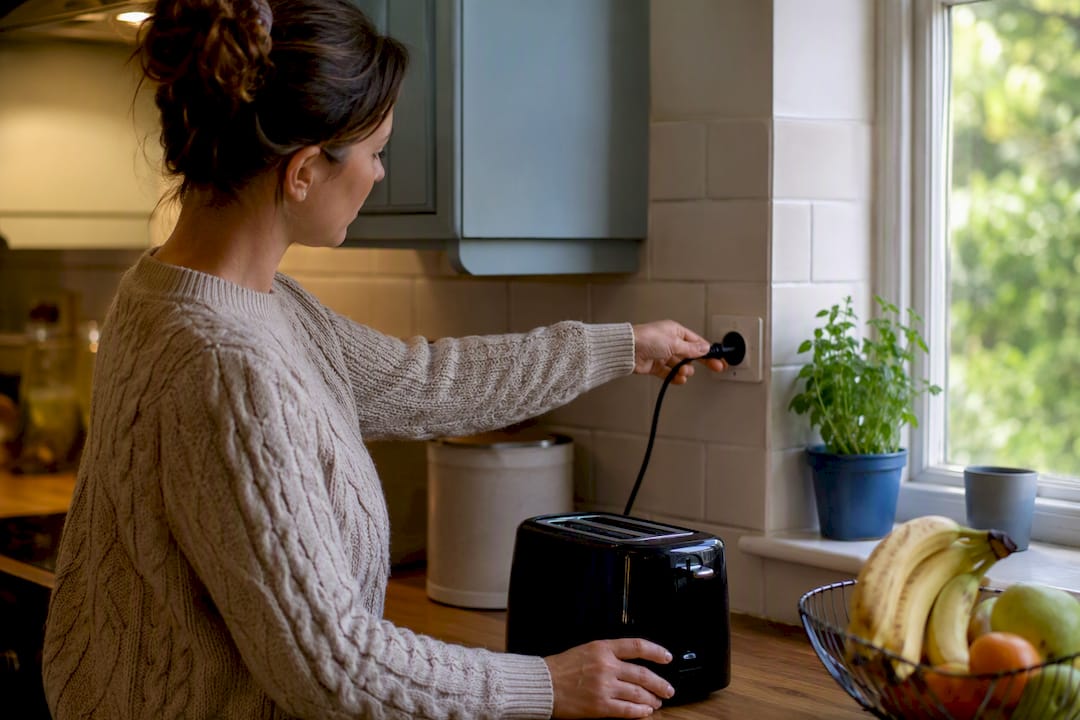
Most emergencies trace back to habits, not bad luck: overloaded boards, ignored warning signs, and skipped inspections. A few basic changes cut the odds significantly.
- Get a licensed inspection roughly every 1 to 2 years, more often for older properties.
- Never daisy-chain power boards. Plug one board straight into a wall socket, not another board.
- Keep cords and outlets away from water, especially in kitchens, bathrooms, and outdoor areas.
- Test your safety switches (RCDs) periodically, or have them checked as part of a scheduled inspection.
Pro Tip: Businesses running fridges, servers, or medical equipment should run those on dedicated circuits with surge protection. It isolates critical gear from faults elsewhere in the building.
Quick checklist for an electrical problem right now
- Isolate power at the switchboard if you can do it safely.
- Keep everyone clear of the area.
- Life at risk or fire visible? Call 000.
- Hazard contained but unsafe? Call an emergency electrician.
- Print this list and keep it near your switchboard, and snap a photo or note the time for insurance and trade records.
What happens when you call Dualflowservices for an emergency
Dualflowservices runs a defined emergency response: your call gets triaged over the phone, a tradesperson is dispatched, and on arrival they isolate the hazard before diagnosing the fault.
- Have your address, a description of the problem, and whether anyone's injured ready when you call.
- Expect a safety check first, then temporary safe works if a full repair needs parts or scheduling.
- Coverage spans homes, businesses, and sensitive sites like aged care and disability care homes across the Mornington Peninsula.
- Every callout includes documentation you can hand to your insurer if needed.
A tradesperson's view on what actually causes these calls
Most emergency callouts I see trace back to two habits: overloaded power boards stacked behind the TV, and a flickering light or warm switch that got ignored for months. The fix is almost always cheaper before it becomes urgent.
Pro Tip: If a switch feels warm or a light's been flickering for more than a week, that's not a "get to it eventually" job.
Need an emergency electrician now? Here's how to get one fast
If you're dealing with sparks, a dead circuit, or exposed wiring right now, Dualflowservices gets a licensed electrician to your door faster than the wait-and-hope approach of ringing around for quotes mid-crisis. One call, one dispatched tradesperson, no chasing three different businesses while a hazard sits live in your wall.

Have this ready when you call: your address, what you're seeing (smoke, sparks, smell, water), and whether anyone's injured. Dualflowservices covers homes, businesses, aged care, and retirement villages across the Mornington Peninsula, and the crew arrives with a safety-first process: isolate, assess, make safe, then repair. Book an emergency call-out now if something's live and unsafe in your property.
Frequently asked questions
What are the most common types of emergency electrical situations? The most common types are electric shock, downed power lines, electrical fires, power outages, overloaded circuits or tripping breakers, damaged wiring, and faulty appliances.
Is a flickering light an emergency? Occasional flickering during a storm usually isn't urgent, but persistent flickering paired with a burning smell or warm switch needs same-day attention from an electrician.
Should I unplug appliances during a blackout? Switch off major appliances and unplug sensitive electronics before power returns, since a surge on restoration can damage them.
How close is too close to a downed power line? Stay at least 9 metres away and assume every line is live, even if it looks dead or the surrounding power seems off.
When should I call an emergency electrician instead of 000? Call 000 for immediate threats to life or active fire. Call an emergency electrician for a contained but ongoing hazard, such as exposed wiring, persistent breaker trips, or a burning smell without visible flame.
Sources
- Better Health Victoria — electric shock
- Safe Work Australia — key work health and safety statistics
- Power and Water — safety around powerlines and restoration advice