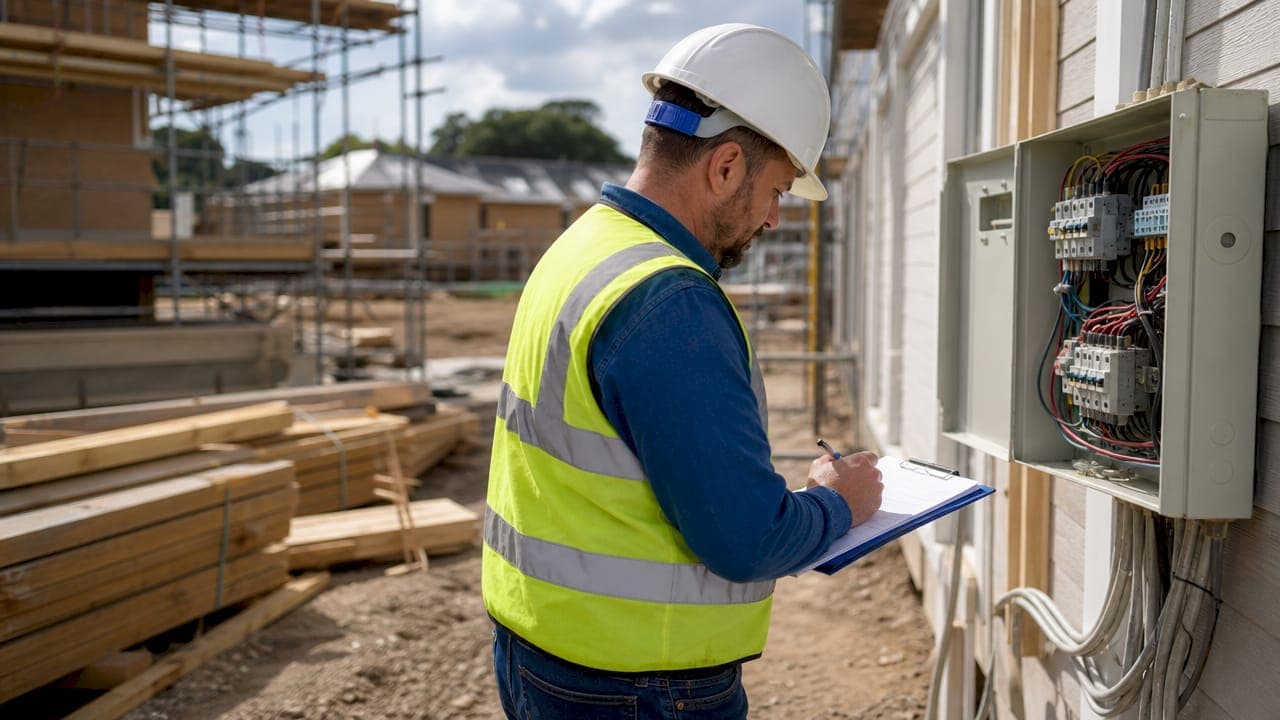
An electrical wiring inspection is the formal process of verifying that all electrical installations in a building meet safety standards and comply with applicable regulations before occupants use them. Known in the trade as an electrical compliance inspection, this process follows a two-phase structure: a rough-in inspection before walls are closed, and a final inspection after all fixtures and panels are installed and energised. For homeowners and business operators in Australia, understanding how electrical wiring inspection works is the difference between a smooth project sign-off and a costly remediation. Regulatory bodies including SafeWork Australia and state-based electrical safety authorities set the standards every licensed inspector applies on site.
How does the electrical inspection process work, step by step?
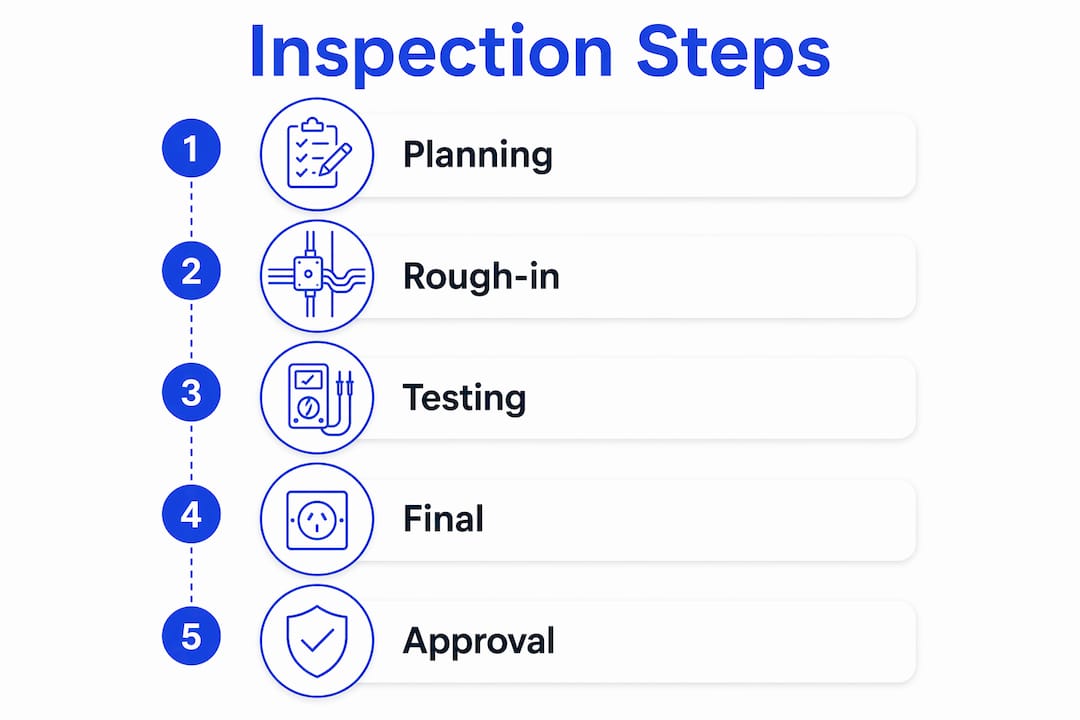
The electrical inspection process follows a clear sequence, and knowing each step helps you avoid delays and extra costs.
- Apply for a permit. Before any wiring begins, a licensed electrician pulls the required permit. The permit must be displayed on site throughout the project.
- Schedule the rough-in inspection. Once wiring is run but before walls are closed, you notify the inspector. Scheduling requires 24–48 hours notice in most jurisdictions. The rough-in phase typically takes 15–45 minutes for a standard residential property.
- Rough-in inspection occurs. The inspector checks open wiring, conduit runs, grounding, box fill, conductor sizing, and cable stapling. Nothing is concealed at this stage.
- Walls close after approval. Only after the inspector signs off can drywall or plaster go on. This is a hard rule with no exceptions.
- Complete the installation. Fixtures, switches, outlets, and the main panel are fully installed and the system is energised.
- Schedule the final inspection. The final phase takes 10–30 minutes for most residential jobs. Commercial properties take longer depending on complexity.
- Final inspection occurs. The inspector tests GFCI and AFCI devices, checks panel labelling, verifies working space clearance, and confirms all circuits operate correctly.
- Receive your certificate. A passing final inspection results in a certificate of compliance, which is required before a certificate of occupancy is issued.
Service inspections are a third type, required when upgrading a main panel or adding a new service connection. These are less common but follow the same permit and approval process.
Pro Tip: Book your rough-in inspection before the plasterer is scheduled. A one-day delay in approval can push your entire build timeline out by a week.
Why are electrical wiring inspections important?
Electrical inspections exist because faulty wiring is one of the leading causes of residential and commercial fires in Australia. An inspection catches problems before they become permanent and before people are at risk.
The safety case is straightforward. Inspectors verify correct grounding and bonding, GFCI and AFCI protection in required locations, proper wire gauge relative to breaker rating, and conduit fill limits. Each of these checks prevents a specific failure mode, from electrocution to arc faults that ignite insulation inside walls.
Compliance is equally critical for business operators. Business inspections require formal test records and maintenance logs to satisfy Work Health and Safety regulations and insurer requirements. Without this documentation, a business may face voided insurance cover after an electrical incident.
Common reasons inspections fail include:
- Missing GFCI protection in kitchens, bathrooms, and outdoor areas
- Overloaded panels with undersized breakers
- Wiring concealed before rough-in approval
- Permits not obtained or not displayed on site
- Inadequate working space clearance at the panel
Inspection failures are most often administrative, not technical. Missing a permit or skipping a GFCI outlet will fail an inspection just as surely as faulty wiring will.
The risks of skipping inspections go beyond a fine. Concealed non-compliant wiring can void your home insurance. For businesses, a WHS audit that uncovers undocumented electrical work can trigger mandatory shutdown orders.
Pro Tip: Check your insurance policy before any electrical renovation. Most policies require permitted and inspected work. An uninspected installation can void a claim entirely.
How to prepare for an electrical wiring inspection
Preparation is the single biggest factor in passing first time. A 10-minute self-inspection before the professional arrives can prevent the majority of failures.
Rough-in preparation checklist
- All wiring boxes are open and accessible, not covered or blocked
- Cables are stapled at correct intervals and within 300mm of each box
- Conductors are counted correctly for box fill compliance
- Grounding electrode conductors are correctly sized and connected
- Conduit fill does not exceed code limits
- Permit is displayed visibly on site
Final inspection preparation checklist
- All outlets, switches, and fixtures are fully installed
- Panel is labelled clearly with every circuit identified
- Working space in front of the panel is clear (at least 900mm in most Australian states)
- GFCI and AFCI devices are installed in all required locations
- Property address is clearly visible from the street
Clear address visibility matters more than most owners realise. An inspector who cannot locate the site may mark it as a missed appointment, and you may be charged a re-inspection fee.
Business operators face additional requirements. Inspections often need to be scheduled outside business hours to avoid disrupting operations. Have your maintenance logs, previous test records, and any relevant electrical plans ready before the inspector arrives.
| Preparation item | Rough-in | Final |
|---|---|---|
| Permit displayed on site | Required | Required |
| Wiring exposed and accessible | Required | Not applicable |
| Panel fully labelled | Not applicable | Required |
| GFCI/AFCI devices installed | Not applicable | Required |
| Working space clearance | Required | Required |
| Maintenance logs (business) | Recommended | Required |
Pro Tip: Walk through your site with a receptacle tester before the final inspection. These cost under $30 at any hardware store and will flag wiring polarity errors and missing earth connections before the inspector finds them.
What do inspectors actually check during each phase?
An inspector does not simply glance at the wiring and move on. Each phase involves a structured walkthrough with physical and operational tests.
Rough-in inspection
The inspector starts at the main electrical panel and works outward. At rough-in, the panel is partially installed, so the focus is on the wiring itself. The inspector checks conductor continuity, conduit fill percentages, grounding electrode sizing, and box fill calculations. Cable stapling intervals and support methods are physically verified. Any conductor that is undersized for its breaker rating is flagged immediately.
Final inspection
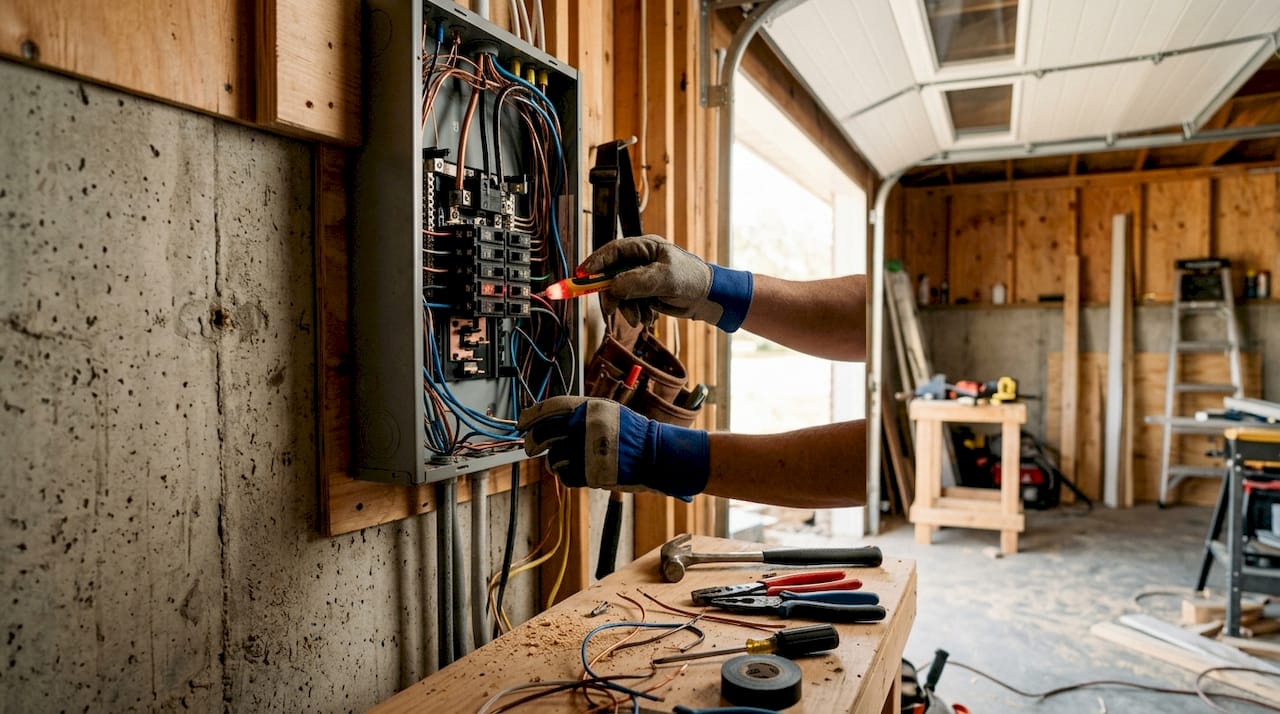
The final inspection shifts to operational verification. The inspector tests every GFCI outlet by pressing the test button and confirming the reset works correctly. AFCI breakers are tested at the panel. Panel labelling is verified against actual circuit function, not just what is written on the directory. Surge protection devices are checked where required. The inspector also confirms that working space clearance in front of the panel meets the minimum distance set by the relevant Australian standard.
How inspectors communicate results
Inspectors document findings on a written report. A pass means the work meets code and the next stage can proceed. A failure generates a correction notice listing each deficiency by code reference. You address each item and schedule a re-inspection. Failures at the final stage delay the certificate of compliance and, by extension, the certificate of occupancy.
| Inspection phase | Primary focus | Typical duration |
|---|---|---|
| Rough-in | Wiring, conduit, grounding, box fill | 15–45 minutes |
| Final | Operational testing, panel, GFCI/AFCI | 10–30 minutes |
| Service/upgrade | Panel capacity, metering, service entry | Varies by scope |
Key takeaways
A successful electrical wiring inspection requires preparation at both the rough-in and final phases, with correct permits, exposed wiring, clear panel labelling, and tested GFCI and AFCI devices.
| Point | Details |
|---|---|
| Two-phase structure | Rough-in checks open wiring before walls close; final checks installed, energised systems. |
| Permit is non-negotiable | No permit means no legal inspection and potential insurance voidance. |
| Most failures are administrative | Missing GFCI protection or permits cause more failures than faulty wiring. |
| Self-inspection saves money | A 10-minute walkthrough before the inspector arrives prevents the majority of re-inspections. |
| Business operators need more documentation | Formal test records and maintenance logs are required to satisfy WHS and insurer requirements. |
What I have learned after years of electrical inspections on the Mornington Peninsula
The most common mistake I see is owners treating the inspection as a formality rather than a checkpoint. They rush the rough-in, close the walls before approval, and then face the worst outcome in construction: destructive remediation. Pulling plaster off a freshly finished wall to expose non-compliant wiring costs far more than the original job.
The second pattern I see regularly is poor panel labelling. An inspector who cannot verify which breaker controls which circuit will fail the job on the spot. Clear, accurate labelling takes 20 minutes and saves hours of re-inspection time. It also makes every future maintenance call faster and cheaper.
For business operators, the scheduling piece is underestimated. Booking an inspection during trading hours creates operational disruption and often means the inspector cannot access all areas safely. Plan for an out-of-hours inspection from the start. Your WHS obligations and insurer both expect it.
The single best thing any homeowner or business operator can do is work with a licensed electrician who has done this process hundreds of times. They know what inspectors look for, they prepare the documentation correctly, and they do not close walls early. That experience is worth every dollar.
— Mike
Electrical inspections on the Mornington Peninsula: Dualflowservices can help
Dualflowservices provides licensed electrical inspection and compliance services across the Mornington Peninsula for homeowners, business operators, aged care facilities, and retirement villages.

Whether you need a rough-in inspection before walls close, a final sign-off on a new installation, or a full compliance review for a commercial property, the Dualflowservices team handles the process from permit to certificate. Every job is documented to meet Australian electrical safety standards and WHS requirements. For business operators, out-of-hours scheduling is available to keep your operations running without interruption. Contact Dualflowservices to book an inspection or get advice on your next electrical project.
FAQ
What are the two main phases of an electrical inspection?
The two phases are the rough-in inspection, which occurs before walls are closed, and the final inspection, which occurs after all fixtures and panels are installed and energised.
How long does an electrical wiring inspection take?
A rough-in inspection takes 15–45 minutes and a final inspection takes 10–30 minutes for a standard residential property. Commercial properties take longer depending on scope.
What causes most electrical inspections to fail?
Most failures are administrative, caused by missing GFCI protection, overloaded panels, or work done without a permit, rather than faulty wiring.
Can I close my walls before the rough-in inspection?
No. Closing walls before rough-in approval causes inspection failure and requires destructive remediation to expose the wiring again.
Do business operators need extra documentation for electrical inspections?
Yes. Businesses must provide formal test records and maintenance logs to satisfy WHS regulations and insurer requirements, and inspections are often scheduled outside normal operating hours.