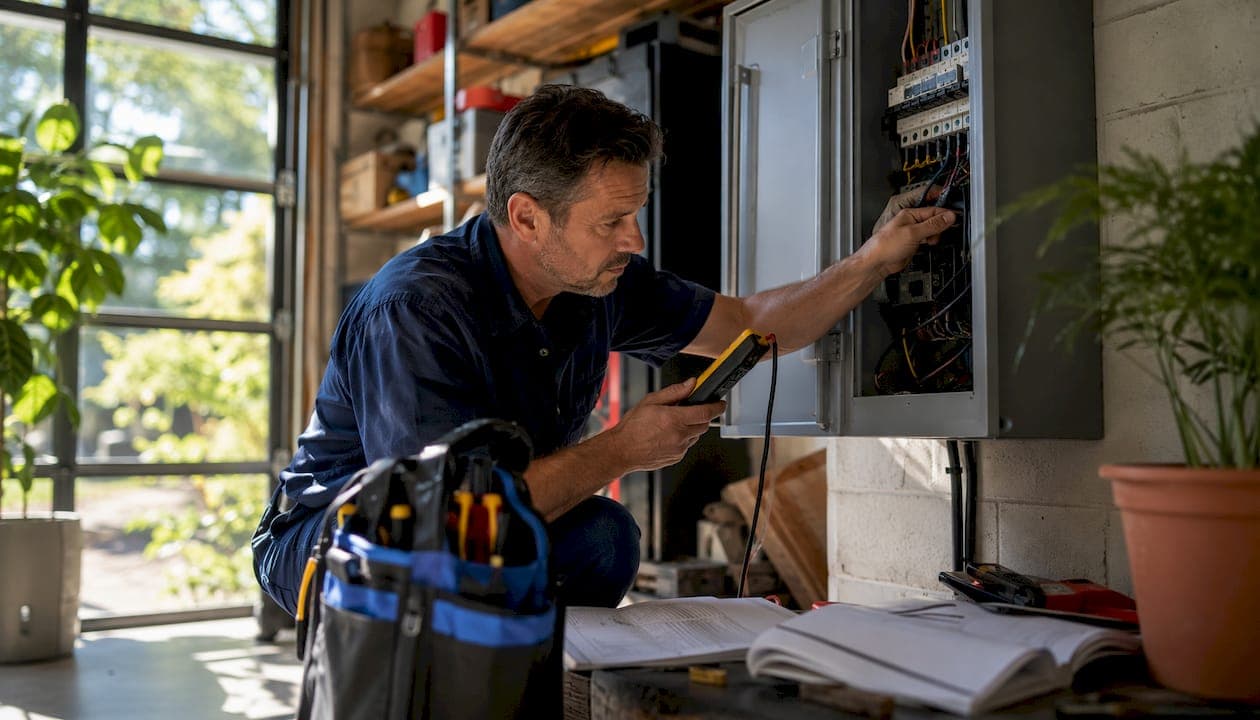
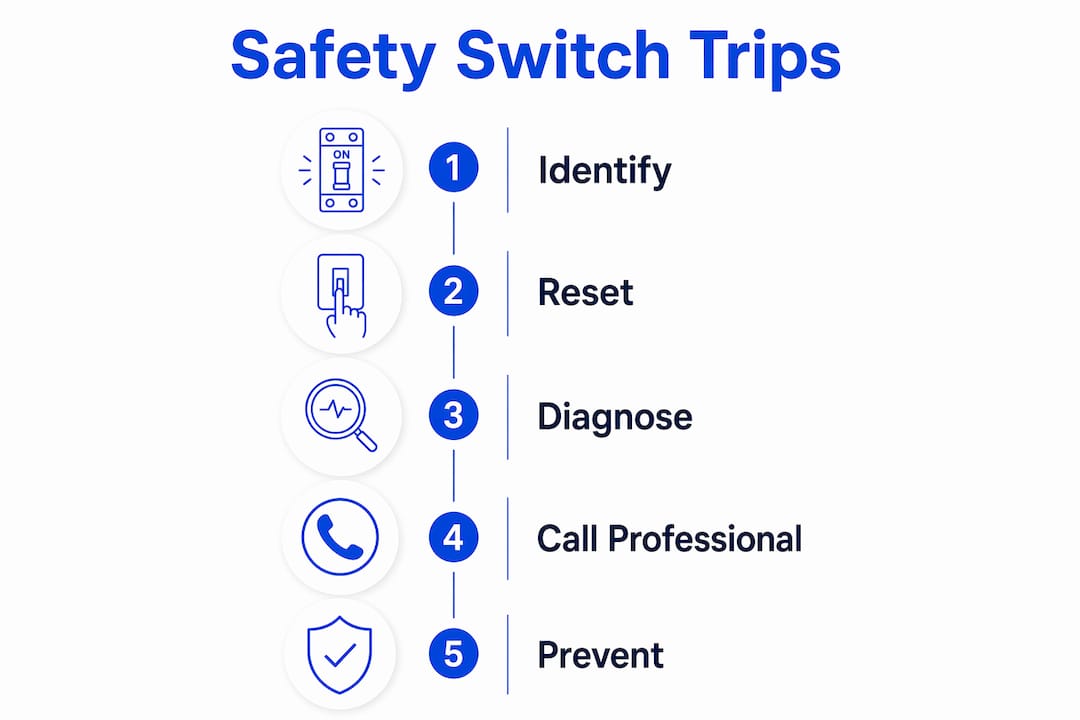
Your safety switch (RCD — Residual Current Device) trips because it has detected current leaking to earth, and it cuts power in milliseconds to protect you from electric shock. That trip is the device doing exactly what it was designed to do. Before you touch anything, here is what to do:
- Check for obvious hazards first. If you smell burning or see scorch marks near the switchboard or any outlet, do not reset. Call a licensed electrician immediately.
- Unplug all appliances on the affected circuit before attempting a reset.
- Try a controlled reset at the switchboard: push the RCD lever firmly back to the ON position.
- If it won't reset, or trips again immediately, stop. This is a job for a licensed electrician, not a second attempt.
Australian regulators including Energy Safe Victoria and the Electrical Safety Office are consistent on this: a safety switch that keeps tripping is telling you something is wrong. The RCD test button (labelled 'T' on the device) should be pressed every three months to confirm the switch is working. WorkSafe ACT confirms Australian RCDs are set to trip at a low-level current — typically designed to quickly disconnect and prevent serious harm.
Table of Contents
- How to recognise a tripped safety switch on your switchboard
- Common reasons your safety switch keeps tripping
- Step-by-step diagnosis you can safely do at home
- Nuisance tripping vs a serious fault: how to tell the difference
- When to call a licensed electrician: red flags and what to expect
- Practical ways to prevent safety switch trips
- What the evidence says about appliances, moisture, and ageing wiring
- Key takeaways
- A trades perspective on what Victorian homes actually need
- Dualflowservices can diagnose and fix your tripping safety switch
- Useful sources and further reading
How to recognise a tripped safety switch on your switchboard
A tripped RCD looks different from a tripped circuit breaker, and knowing the difference saves time. Here is what to look for:
- Switch position: A tripped RCD sits in the middle or 'OFF' position, not fully up or fully down. A circuit breaker that has tripped usually snaps to a midpoint too, but RCDs are typically wider and have a test button on the face.
- Partial power loss: You lose power to some rooms or circuits but not others. If the whole house is dark, check whether the main switch has tripped instead.
- Labelling: Australian switchboards label RCDs as 'Safety Switch', 'RCD', or sometimes 'RCCB'. Circuit breakers (MCBs) are labelled by circuit name — 'Lights', 'Power', 'Oven', and so on.
- Multiple RCDs: Newer switchboards often have two or more RCDs covering different circuit groups. One tripping while others stay on confirms the fault is on that specific group.
The key distinction: an RCD monitors leakage current to earth and protects people. A circuit breaker monitors current volume and protects wiring. As Energy Safe Victoria puts it, circuit breakers and fuses do not protect people directly — only safety switches save lives.
Urgent warning signs that need immediate action:
- Burning smell anywhere near the switchboard or power points
- Scorch marks or discolouration on outlets or the switchboard panel
- The RCD trips again within seconds of being reset
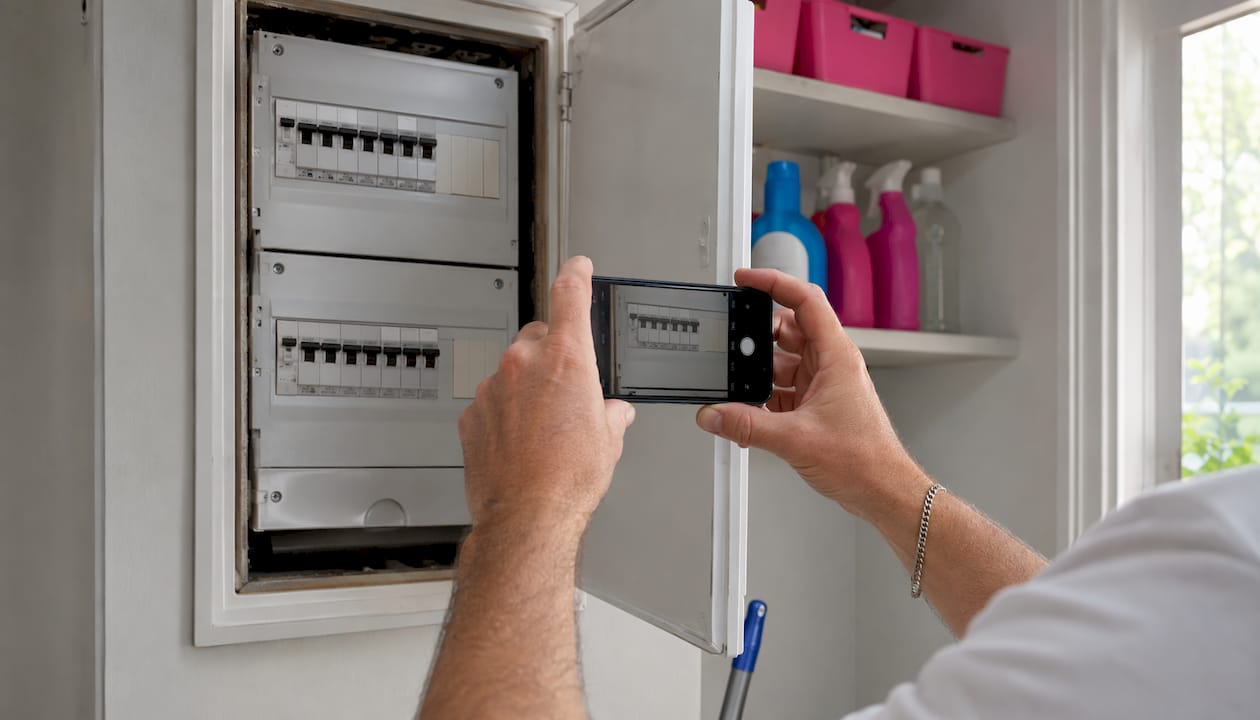
Pro Tip: Photograph your switchboard before any fault occurs. A clear, labelled photo on your phone means you can describe the layout accurately when you call an electrician, and it helps you spot which switch has moved.
Common reasons your safety switch keeps tripping
Understanding the likely cause helps you troubleshoot faster and explain the problem clearly to an electrician.
- Faulty appliances with degraded insulation. Heating elements in kettles, dishwashers, washing machines, and hot-water systems are among the most common culprits. As the element ages, its insulation breaks down and current leaks to the metal casing. Motors in fridges and washing machines fail similarly. The appliance may still appear to work normally right up until the RCD trips.
- Moisture and water ingress. Outdoor power points, garden lighting, bathroom exhaust fans, and ceiling cavities after rain all create leakage paths. A heavy storm followed by a tripping RCD the next morning is a strong indicator of moisture in an external circuit or ceiling space.
- Deteriorated wiring insulation. Older homes — particularly those built before the 1980s — often have wiring whose insulation has become brittle with age. Rodent damage and corroded connections accelerate this. The insulation does not need to be fully stripped to cause leakage; hairline cracks are enough.
- Cumulative leakage from multiple devices. Modern electronics — LED drivers, smart appliances, laptop power supplies — each leak a tiny amount of current. Individually, none would trip an RCD. Together on one circuit, their combined leakage can exceed the 30 mA threshold. This is a common cause of nuisance tripping in homes with many devices on a single RCD.
- A failing or overly sensitive RCD. The device itself can become faulty over time. An ageing RCD may trip at currents well below 30 mA, or it may trip randomly with no fault present. Electricians can test trip current and response time with calibrated equipment and replace the unit if it fails.
The 30 mA threshold is not arbitrary. At that current level, ventricular fibrillation becomes a real risk. The RCD's millisecond response time is what makes the difference between a shock and a fatality.
Step-by-step diagnosis you can safely do at home
This method works for most appliance-related faults. Stop at any point if the RCD trips immediately on reset, if you smell burning, or if you are unsure.
Safety first: Do not open the switchboard enclosure, do not touch wiring, and do not attempt to bypass or tape over a tripping switch. If the RCD covers hardwired appliances (oven, hot-water system, air conditioner), leave those circuits to a licensed electrician.
- Turn off all individual circuit breakers on the affected RCD group at the switchboard.
- Unplug every appliance from every power point on that circuit — including items you rarely unplug, like fridges and microwaves.
- Reset the RCD by pushing the lever firmly to ON. If it holds, the fault is in an appliance, not the wiring.
- Turn the circuit breakers back on one at a time, waiting a few seconds between each. If the RCD trips when you restore a specific breaker with nothing plugged in, the fault is in the wiring or a hardwired appliance on that circuit.
- Plug appliances back in one at a time, waiting a moment after each. The RCD tripping when you plug in a specific item identifies the faulty appliance. Remove it from service and have it tested or replaced.
- Press the RCD test button (marked 'T') to confirm the device is working. The switch should trip to OFF with a 'clunk'. If it does not, the RCD itself is faulty. The Electrical Safety Office recommends testing every three months — and waiting 2–3 minutes before restoring power to fridges and air conditioners after a test.
Pro Tip: Keep a notebook near the switchboard. Log the date, time, which RCD tripped, and what was running at the time. Three entries showing the same pattern — say, the RCD trips every time the dishwasher runs its heated-dry cycle — tells an electrician exactly where to look.
When you do call a professional, they will isolate hardwired appliances individually, apply insulation resistance testing (megger testing) to the wiring, and test the RCD's actual trip current with calibrated equipment. Knowing this in advance means you will not be surprised by the process.
If the RCD trips the moment you reset it, with nothing plugged in, stop resetting it. That pattern points to a wiring fault or a hardwired appliance — not something a homeowner should chase further.
Nuisance tripping vs a serious fault: how to tell the difference
Not every trip is a crisis, but none should be ignored. The distinction matters because the response is different.
Nuisance tripping happens when the RCD responds to real but harmless leakage — usually cumulative current from many devices, a transient voltage surge, or an RCD that has become overly sensitive with age. The RCD resets easily, holds, and the pattern is inconsistent.
A serious fault shows a pattern: the RCD trips repeatedly, trips immediately on reset, or trips with nothing plugged in. These are diagnostic signals, not bad luck.
- Trips with nothing plugged in point to a hardwired appliance (oven, hot-water system, air conditioner, pool pump), a wiring insulation failure, moisture in the circuit, or a faulty RCD. None of these are homeowner fixes.
- Half-trips or partial outages — where some lights or points go off but others stay on — usually mean you have multiple RCDs and only one has tripped. That is normal behaviour in a well-configured switchboard and narrows the fault to one circuit group.
- Trips that follow rain or humid weather almost always involve moisture ingress in outdoor circuits, garden lighting, or ceiling spaces.
Track the pattern before you call. Note whether trips happen at a specific time of day, after rain, when a particular appliance starts, or seemingly at random. That information cuts diagnostic time significantly.
A simple tracking checklist:
- Time and date of each trip
- Which RCD tripped (label it if it is not already)
- What was running or recently switched on
- Recent weather or any plumbing/building work nearby
- Whether the RCD reset easily or tripped again immediately
When to call a licensed electrician: red flags and what to expect
Some situations are not for homeowners to troubleshoot. Call a licensed electrician when:
- The RCD will not reset, or trips again within seconds
- You smell burning or see scorch marks anywhere near the switchboard or outlets
- The RCD trips with nothing plugged in and all breakers off
- Trips are affecting hardwired appliances (oven, hot-water system, air conditioner)
- The same RCD has tripped more than twice in a short period despite unplugging appliances
- Your home has older wiring and trips are becoming more frequent
What the electrician will do:
- Isolate each circuit at the switchboard and test individually
- Use a megger (insulation resistance tester) to measure wiring insulation quality — low readings confirm moisture, damage, or age-related breakdown
- Test the RCD's actual trip current and response time with calibrated equipment
- Inspect the switchboard for loose connections, corrosion, or undersized devices
- Check hardwired appliances individually for earth leakage
For a standard diagnostic visit on the Mornington Peninsula, expect the electrician to spend one to two hours on-site for a straightforward fault. More extensive testing — full insulation resistance testing across multiple circuits, or switchboard inspection — takes longer. Costs vary by complexity; ask for a quote before work begins.
Have this ready when you call:
- Notes on when trips occurred and what was running
- Which RCD tripped (and its label if visible)
- Any recent storms, plumbing work, or renovations
- The age of your home and whether the wiring has been updated
A licensed electrician is legally required for any work inside the switchboard or on fixed wiring in Australia. This is not a guideline — it is the law in every state and territory.
For a clear overview of what an electrical safety inspection covers, including the tests performed and what results mean, that resource explains the process well.
Practical ways to prevent safety switch trips
Prevention is mostly about maintenance and sensible habits.
- Test the RCD test button every three months. Press the 'T' button on each safety switch. It should trip to OFF immediately. If it does not, the device is faulty and needs replacing. The Electrical Safety Office recommends this schedule, and it takes under two minutes.
- Inspect outdoor circuits after storms. Check garden lighting, outdoor power points, and any external fixtures for water ingress. If an outdoor point looks damaged or corroded, do not use it until it has been inspected.
- Spread large appliances across circuits. Avoid running a washing machine, dishwasher, and electric hot-water system all on the same RCD. Where possible, plug high-draw or high-leakage appliances into circuits on separate RCDs.
- Schedule inspections for older homes. If your home was built before the 1990s and the wiring has not been updated, a periodic electrical inspection can identify insulation degradation before it causes a fault. State regulators recommend scheduled checks for older or high-risk properties.
- Consider a switchboard upgrade if a single RCD covers many circuits. In older homes, one RCD protecting every circuit in the house is common. Splitting circuits across multiple RCDs means a fault on one circuit does not cut power to the whole house, and it reduces nuisance tripping from cumulative leakage. This is also a good time to add RCD testing compliance to your maintenance schedule.
- Keep the switchboard area clear and dry. Vegetation, stored items, and moisture near the switchboard create risk. Check that the enclosure door closes properly and that no water can enter.
Pro Tip: If you are buying or renting an older home, ask whether the switchboard has been upgraded and whether RCDs cover all circuits — lighting, power points, oven, hot water, and air conditioning. Many older switchboards protect only the power-point circuits.
Property managers and landlords can also check electrical certification requirements for their obligations around RCD compliance and inspection records.
What the evidence says about appliances, moisture, and ageing wiring
The 30 mA trip threshold is set at that level because currents above roughly 10 mA can cause muscle paralysis, and currents above 30 mA carry a real risk of cardiac arrest. The RCD's millisecond response time is the critical factor — it disconnects before the current can cause lasting harm.
Heating elements create leakage because they operate at high temperatures that accelerate insulation breakdown. As the element ages, microscopic cracks form in the insulation and moisture from steam or condensation enters those cracks, creating a conductive path to earth. This is why a kettle or dishwasher that has worked fine for years can suddenly start tripping an RCD — the degradation is gradual until it crosses the threshold.
Intermittent faults are particularly difficult to diagnose because they appear only when conditions are right. Humidity, temperature, and an appliance warming up can all create a leakage path that disappears when the appliance cools or dries out. An electrician testing the same appliance in a cool, dry workshop may find nothing wrong. Testing under operating conditions, or using a megger on the wiring in situ, is the reliable approach.
Recurring trips are a diagnostic signal, not a nuisance. Every time an RCD trips, it has detected a real leakage event. Resetting without investigating does not fix the underlying fault — it just resets the protection until the next event.
An insulation resistance (megger) test applies a controlled voltage to the wiring and measures how well the insulation resists current flow. Low resistance readings point to moisture, physical damage, or age-related breakdown. For homes with wiring that has not been inspected in many years, this test often reveals problems that visual inspection alone would miss.
Key takeaways
A tripped safety switch is a successful safety action — the RCD detected leakage and protected you. The right response is to investigate, not to keep resetting.
| Point | Details |
|---|---|
| RCD trip threshold | Australian RCDs trip at 30 mA and disconnect in milliseconds to prevent electrocution. |
| First homeowner step | Unplug all appliances, then reset the RCD; reconnect items one at a time to find the fault. |
| Test button schedule | Press the 'T' button on each safety switch every three months to confirm it is working. |
| When to stop and call | If the RCD won't reset, trips immediately, or you smell burning, call a licensed electrician now. |
| Dualflowservices | Dualflowservices provides licensed electrical diagnostics, megger testing, and switchboard inspections across the Mornington Peninsula. |
A trades perspective on what Victorian homes actually need
The most common call Dualflowservices gets about tripping safety switches in Victorian homes comes down to three things: an ageing appliance with a failing heating element, moisture in an outdoor circuit after a wet week, or a switchboard that was installed before RCDs were required on lighting circuits. Those three causes account for the vast majority of trips.
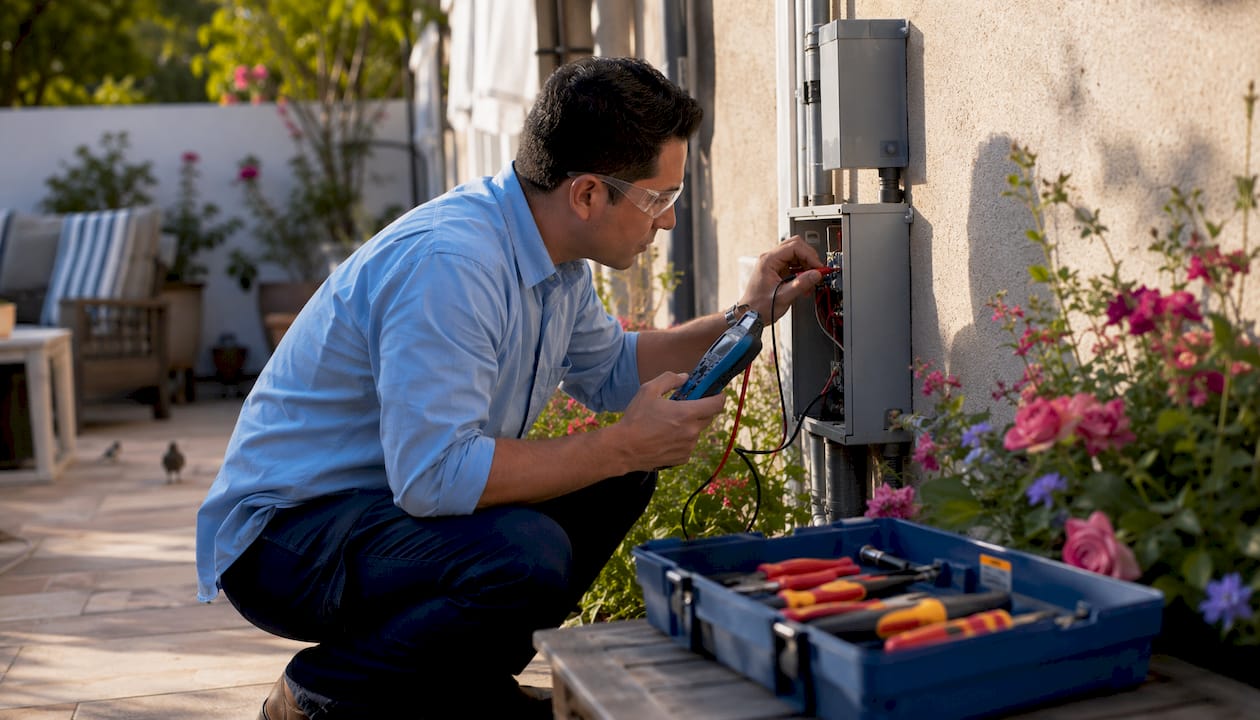
What homeowners consistently underestimate is how gradual the deterioration is. A hot-water system or dishwasher does not fail overnight. The insulation breaks down slowly, the leakage creeps up, and the RCD starts tripping occasionally before it starts tripping every time. By the time the homeowner calls, the fault has often been developing for months.
The other thing worth saying plainly: resetting a tripping RCD without investigating is not a neutral act. Every reset without a fix means the protection has been restored, but the fault is still there. If the leakage path involves wiring rather than an appliance, the risk does not go away between trips.
Victorian homes built in the 1960s through 1980s often have wiring that has never been tested. A megger test on those circuits sometimes reveals insulation resistance so low that the wiring needs replacing in sections. That is not a scare tactic — it is what the test shows. Getting that information early, before a fault becomes a fire, is exactly what scheduled inspections are for.
Dualflowservices can diagnose and fix your tripping safety switch
When the unplug-and-reset method does not resolve the problem, or when the RCD trips with nothing connected, you need a licensed electrician with the right equipment. Dualflowservices carries out full electrical diagnostics across the Mornington Peninsula: isolating circuits, testing hardwired appliances for earth leakage, running megger insulation tests on wiring, and inspecting switchboards for age-related faults or undersized protection.
For homes with older wiring, recurring trips, or moisture-prone outdoor circuits, a single diagnostic visit often identifies the exact fault and gives you a clear repair path. Switchboard upgrades, circuit splitting, and RCD replacement are all part of the service.
Book a licensed electrician with Dualflowservices for a same-day or scheduled inspection across the Mornington Peninsula.
Useful sources and further reading
| Resource | What it covers |
|---|---|
| Electrical Safety Office — Safety Switches | Official guidance on how safety switches work, testing procedure, and what to do when one trips |
| Energy Safe Victoria | Victorian electrical safety standards, RCD requirements, and the difference between safety switches and circuit breakers |
| WorkSafe ACT — Electrical Safety | Technical guidance on RCD trip thresholds and electrical safety obligations |
| Dualflowservices — Electrical inspections | What an electrical safety inspection covers in Victoria, including tests performed |
| Dualflowservices — RCD testing in Victoria | RCD testing obligations, recommended frequencies, and compliance requirements |
| Dualflowservices — Electrical safety checklist | Practical homeowner checklist for identifying when to call a professional |
| Dualflowservices — Wiring inspection guide | How wiring inspections and megger tests work, and what results indicate |
For routine RCD testing, document the date and result each time you press the test button. If the switch fails to trip, or trips but does not reset cleanly, contact a licensed electrician before using the protected circuits again. Keeping your switchboard clearly labelled and your test records up to date means any electrician who attends can work faster and more accurately.