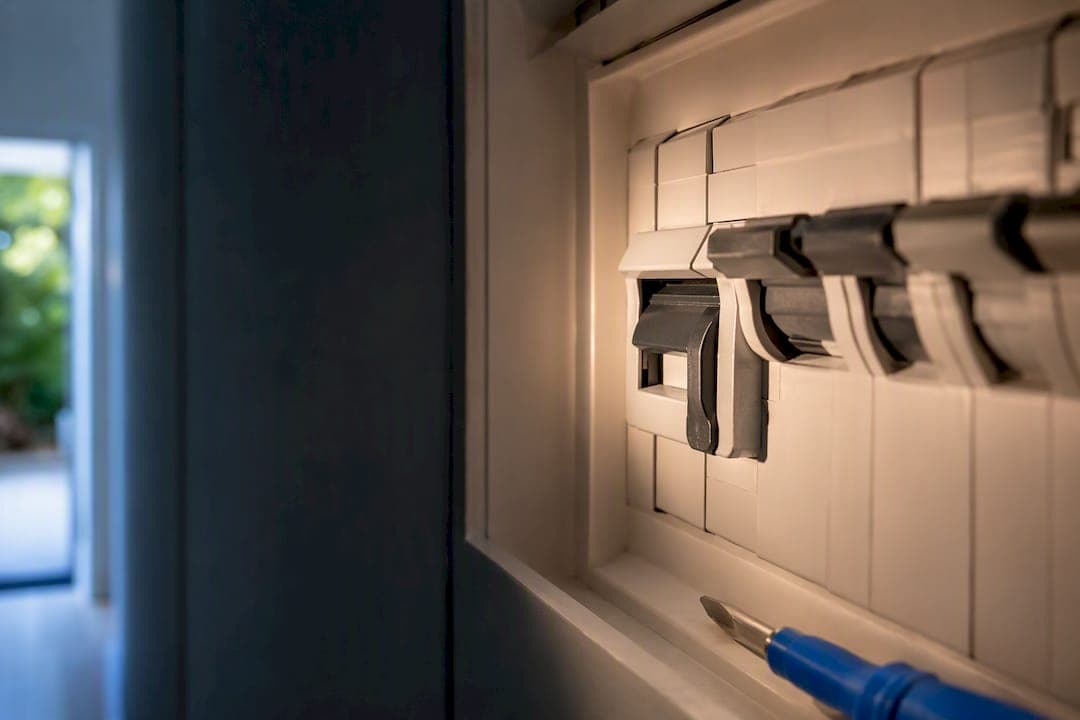
Most tripping comes down to four culprits: circuit overload, a short circuit, a ground fault picked up by the safety switch, or an ageing breaker that's simply worn out. If a breaker trips, unplug the load, switch it off, and reset it once. If it trips again straight away, or you notice burning smells or scorch marks, leave it off and call a licensed electrician rather than resetting it again.
TL;DR:
- Most circuit trips are caused by overloads, especially when high-power appliances are used simultaneously on older circuits not designed for such loads.
- Short circuits trip instantly due to wiring faults, requiring professional inspection to prevent fire hazards, and should never be reset without expert assessment.
- Safety switches detect small current leaks to earth and should be tested quarterly to ensure proper functioning, especially in outdoor or older appliance setups.
- Repeatedly resetting a breaker without identifying the root cause risks worsening the problem or causing an electrical fire, and professional diagnosis is essential.
- Signs like burning smells, scorch marks, or hot outlets demand immediate professional intervention instead of further resets.
Table of Contents
- Tripping circuit breaker causes: circuit overload explained
- Short circuits: why these trips demand an urgent call, not a reset
- Ground faults and safety switches: why RCDs trip differently
- Ageing panels, worn breakers and failing appliances
- Warning signs that mean stop resetting immediately
- Safe checks you can run before calling an electrician
- What a licensed electrician actually checks
- How Dual Flow Services approaches persistent tripping
- Why reset-and-forget habits cost homeowners more than they think
- Book an electrician who treats your switchboard like it matters
- Sources
- FAQ
Tripping circuit breaker causes: circuit overload explained
An overload happens when a circuit draws more current than the breaker's rated to handle, so the breaker does its job and cuts power before wires overheat. Older homes built decades ago often have circuits designed for far fewer appliances than the average household now runs, which is why a single power board loaded with heaters, hairdryers and a kettle can push a 10‑amp circuit past its limit within minutes.
Watch for these common high‑draw offenders on one circuit:
- Space heaters and electric heaters
- Hairdryers, straighteners and other heat‑based grooming tools
- Air conditioners, especially older split systems (a frequent culprit worth checking against a dedicated air‑con trip checklist)
- Microwaves and toasters running at the same time as other appliances
The timing clue matters here: an overload trip usually happens after several minutes of heavy use, not instantly.
Pro Tip: Spread high-draw appliances across different circuits or rooms before you assume the breaker itself is faulty. If the trips keep happening on the same circuit no matter what you unplug, that circuit probably needs a dedicated line or the panel needs an upgrade.
Short circuits: why these trips demand an urgent call, not a reset
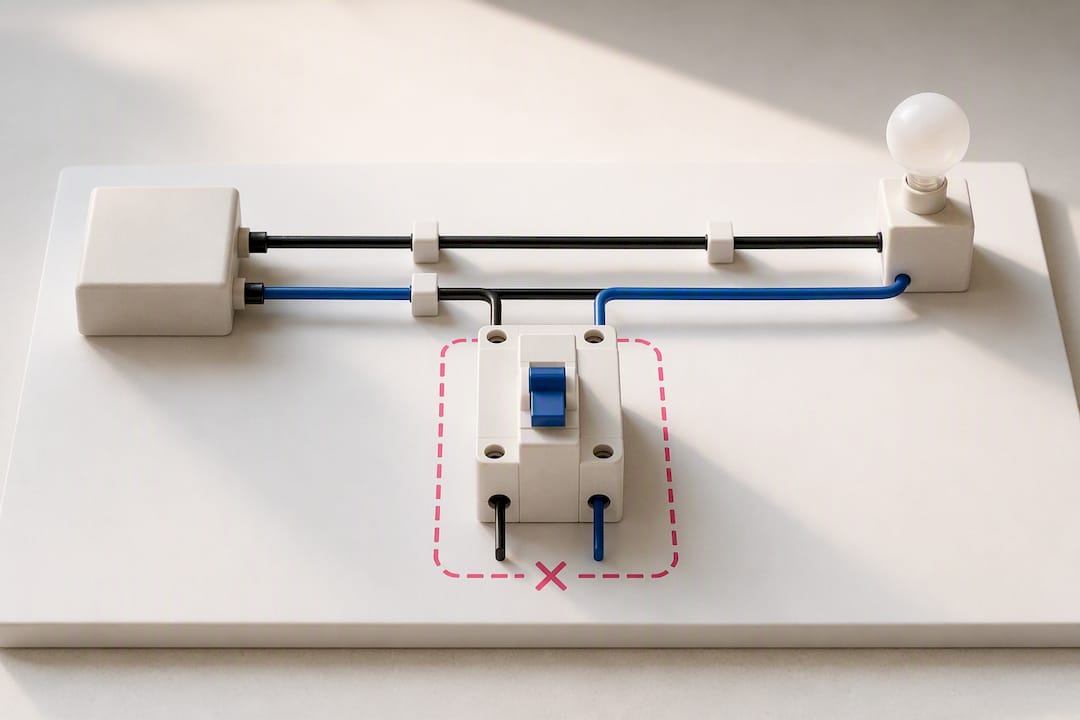
A short circuit occurs when a live wire touches a neutral or earth wire directly, sending a surge of current through a path with almost no resistance. The breaker senses this instantly and trips within a fraction of a second, which is the biggest diagnostic difference from an overload trip.
Common causes include:
- Damaged or cracked wire insulation, often from age or rodent damage
- Cables pinched behind furniture, in wall cavities, or under carpet
- A nail or screw driven through a wall accidentally piercing a cable
- A faulty switch or socket with internal wiring damage
If a breaker trips the instant you flick it on, with nothing else plugged in, that's a short circuit. Diagnostic timing is the clearest signal you have before calling anyone. Don't keep resetting it. Leave the circuit off and get a licensed electrician to trace the fault before it causes arcing or fire damage.
Ground faults and safety switches: why RCDs trip differently
Circuit breakers guard against overcurrent and short circuits, but they don't detect current leaking to earth. That's the job of a safety switch, known as an RCD, RCBO or GFCI depending on where you learnt your trade. Energy Safe Victoria explains that breakers and safety switches are complementary devices, not substitutes for each other, and a home can have both nuisance breaker trips and safety switch trips for entirely different reasons.
Common triggers for a ground fault trip include:
- Moisture inside an outdoor power point, appliance, or light fitting
- A damaged appliance cord leaking small amounts of current to earth
- Several older appliances each leaking a tiny amount, which adds up across the circuit
Statistic Callout: Safety switches are designed to trip at a leakage of roughly 4 to 6 milliamps, a level far below what a standard breaker would ever notice. Energy Safe Victoria recommends pressing the test button on every safety switch every three months to confirm it's still functioning.
Installers must also verify compliant RCBOs during installation, since these combined devices carry extra testing obligations beyond a standard breaker.
Ageing panels, worn breakers and failing appliances
Breakers wear out mechanically over time. Repeated heating and cooling cycles inside the switch mechanism can loosen the internal spring tension, making a breaker trip at lower loads than it used to, or fail to reset cleanly at all. A panel installed 20 or 30 years ago may simply be reaching the end of its working life.
Appliances can mimic a wiring fault too. Keep an eye on:
- A failing motor or capacitor in a fridge, air conditioner or pool pump drawing a sudden current spike on startup
- A heating element that's partially shorted, tripping the breaker only when it reaches a certain temperature
- A compressor that draws far more current than its rated load once its bearings wear
If the same breaker trips no matter what's plugged into that circuit, and swapping appliances makes no difference, the breaker itself, or the wiring behind it, is the more likely suspect.
Warning signs that mean stop resetting immediately
Some symptoms aren't a diagnostic puzzle, they're a direct warning. Treat any of these as an emergency, not a troubleshooting exercise:
- A burning smell near the switchboard, a power point or an appliance
- Scorch marks, discolouration or melted plastic around a socket or switch
- Buzzing, crackling or sizzling sounds from the wall or panel
- Outlets, switches or faceplates that feel hot to touch
- A breaker that won't stay reset, or trips with absolutely nothing plugged into that circuit
Statistic Callout: Electrical Safety First lists burning smells, arcing sounds and hot outlets among the clearest indicators of dangerous wiring faults that demand immediate professional attention, not another reset attempt.
Safe checks you can run before calling an electrician
A little observation goes a long way toward narrowing down the cause, provided you stay well clear of the panel's internals.
- Note exactly when the breaker trips: instantly on flipping the switch, or only after several minutes of use. This single detail is often the most useful clue an electrician gets over the phone.
- Unplug everything on the affected circuit, reset the breaker once, and watch what happens with nothing drawing power.
- If one appliance seems responsible, test it on a different circuit, but only if there's no burning smell, damage, or exposed wiring involved.
- Record any pattern with weather, recent renovations, or new appliances, since dampness and DIY work are common hidden triggers.
Pro Tip: Never reset a breaker more than once if it trips again immediately. Repeated resets on a genuine fault can push a small wiring problem into a fire risk.
Avoid opening the switchboard cover, touching any terminals, or poking around live circuits. That's exactly the line where homeowner troubleshooting should stop and professional diagnosis should start.
What a licensed electrician actually checks
A qualified electrician doesn't just swap the breaker and hope. Diagnostic work typically includes clamp-meter readings to measure actual load against the circuit's rating, insulation resistance testing to detect damaged cable, verification that RCDs and RCBOs trip within spec, and fault-loop impedance testing to confirm the earthing system is doing its job.
- Clamp-meter load checks across each circuit
- Insulation resistance testing on suspect cable runs
- RCD/RCBO trip verification against rated thresholds
- Fault-loop impedance testing on the earthing system
Before any consumer unit or switchboard replacement, a proper pre-work survey, often formalised as an Electrical Installation Condition Report, is recommended to avoid re-energising a fault into brand new equipment. Depending on what turns up, the fix might be as simple as replacing one breaker, or as involved as repairing damaged wiring or replacing the whole switchboard.
How Dual Flow Services approaches persistent tripping
When a call comes in about a breaker that keeps tripping, the first job is triage: is this a nuisance overload, or a hazard that needs the circuit isolated on arrival? Electricians check load distribution, inspect visible wiring and connections, and test the safety switch before touching anything else.
Common on-site fixes include redistributing overloaded circuits, replacing a breaker, or tightening loose terminal connections that have been generating heat unnoticed. Where the panel itself is ageing or shows signs of previous overheating, a scheduled inspection rather than a one-off patch is recommended, since recurring trips rarely fix themselves.
Why reset-and-forget habits cost homeowners more than they think
Most people treat a tripped breaker like a minor inconvenience, flick it back on and move on with the day. That habit ignores the fact that a breaker tripping is a protective device doing exactly what it's built to do. Testing your safety switch every quarter and booking a periodic inspection catches the small faults before they become expensive ones. Use the checklist above, and call a licensed electrician the moment a warning sign appears.
— Mike
Book an electrician who treats your switchboard like it matters
There are services that cover plumbing, electrical and heating trades across the Mornington Peninsula, with 24/7 emergency call-out so a genuine fault doesn't sit overnight.
Whether it's an emergency call-out for a breaker that won't hold, a scheduled maintenance visit, or a full switchboard inspection ahead of a renovation, the approach should be safety-first triage on arrival, an on-site diagnosis using proper testing equipment, and a written quote before any work starts. Facility managers running aged care, retirement villages or disability care homes require prompt and professional electrical service, since those sites can't afford a switchboard fault left unresolved. If your breaker keeps tripping and you're past the point of guessing, book a service through Dual Flow Services and get someone qualified looking at it properly.
Sources
For official testing routines and household wiring guidance, Energy Safe Victoria's testing page and its household wiring guide are the primary references. For symptom-based safety advice, Electrical Safety First covers warning signs in plain language.
- Household wiring | Energy Safe Victoria
- Why Breaker Trips Randomly and How to Fix It | CircuitFixer
- Household electrical safety advice | Electrical Safety First
- Compliant RCBOs guidance | Energy Safe Victoria
FAQ
What is the most common cause of a tripped breaker?
Circuit overload is the most common cause, happening when too many appliances draw current on one circuit at once. The breaker trips after a delay, usually several minutes into heavy use, which distinguishes it from the instant trip of a short circuit.
How do I find out what keeps tripping my circuit breaker?
Note the timing of the trip first: instant trips point to a short circuit, while delayed trips under load usually mean overload. Unplug everything on that circuit, reset the breaker once, and reintroduce appliances one at a time to see which one triggers it.
How do I fix a breaker that keeps tripping?
For a genuine overload, redistributing appliances across circuits or requesting a dedicated circuit often solves it. For anything else, including short circuits, ground faults, or a breaker that won't hold at all, the fix requires a licensed electrician with proper testing equipment rather than repeated DIY resets.
How many times can a breaker trip before it's bad?
A breaker that trips more than once from the same fault, or won't stay reset at all, should be treated as faulty and left off until inspected. Repeated tripping isn't a sign to keep resetting, it's a sign of a fire risk that needs an electrician's assessment.
Does Dual Flow Services offer emergency electrical call-outs?
Emergency electrical call-out services are provided across the Mornington Peninsula alongside scheduled maintenance and inspections by some providers. Current pricing for call-outs and inspections is available on the Dual Flow Services website.