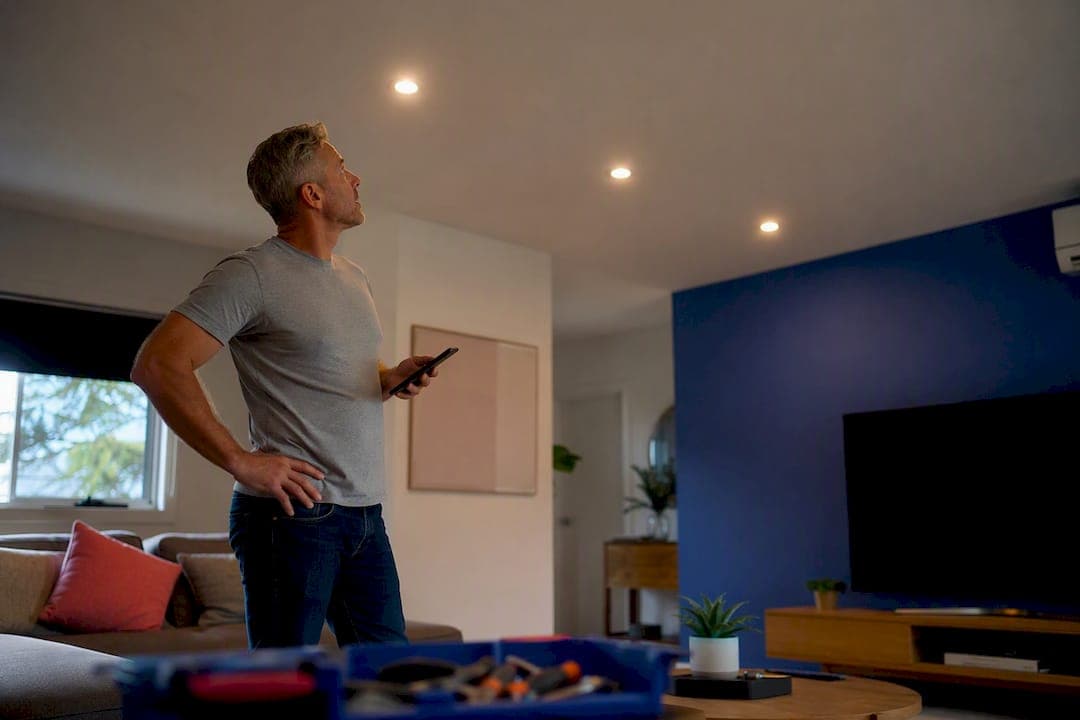
A brief dim for a few seconds when your air conditioner kicks in is usually normal, caused by the compressor's startup surge. But if lights brighten instead of dim, you hear buzzing or crackling, smell burning, or the flicker continues while the unit is already running, stop troubleshooting and call a licensed electrician. Watch it happen once more, note exactly what you see and hear, then work through the checks below before you pick up the phone.
TL;DR:
- Flicker caused by the compressor's startup surge is normal if it lasts only a few seconds and occurs consistently at startup without worsening.
- Shared circuits, failing start capacitors, and undersized switchboards frequently increase flickering beyond normal limits and require professional diagnosis.
- Brightening lights, buzzing sounds, burning smells, or flickering that continues while the AC runs indicate electrical faults needing immediate attention from an electrician.
- When flicker involves specific circuits or persists beyond startup, a licensed professional should inspect wiring, neutral connections, and capacity, not the homeowner.
- Typical repairs include dedicated circuits, capacitor replacement, switchboard upgrades, or fixing loose connections, with licensed certification and post-repair testing essential.
Table of Contents
- What causes lights to flicker when the air conditioner starts?
- What electrical faults cause abnormal aircon flicker?
- Safe checks you can do before calling a pro
- When should you call an electrician or HVAC technician?
- What fixes do professionals actually recommend?
- Dualflow Services' perspective: what we see in the field
- Why we won't tell you to fix wiring yourself
- How Dualflow Services can help with flickering lights and AC faults
- Sources
What causes lights to flicker when the air conditioner starts?
Every air conditioner compressor pulls a short, heavy jolt of electricity the instant it kicks on. That jolt is called inrush current, and it can run several times higher than the motor's normal running current for a fraction of a second while the compressor overcomes its own resistance to spinning up from a standstill. Your home's wiring briefly diverts extra current to feed that surge, and anything sharing the same circuit, particularly lighting, sees a momentary dip in voltage. That's the flicker.
Lights dim faster and more visibly than other appliances because they respond to voltage changes almost instantly. A fridge motor or a television power supply barely registers the same dip. This is also why the effect is more noticeable on older or heavily loaded circuits: less spare capacity means a bigger relative drop when the compressor demands its surge.
Split systems and ducted systems don't behave identically here. A single split system unit draws a comparatively modest surge, so flicker from one unit is often barely noticeable unless the circuit is already marginal. Ducted systems, especially larger three-phase or high-capacity units, pull a bigger jolt on startup, so a visible dim across a wider part of the house isn't unusual even on a well-wired switchboard.
A few points worth remembering about normal startup flicker:
- It typically lasts a short few seconds and then the lights return to full brightness, according to HouseWise.
- It happens only at the moment of startup, not while the compressor is running steadily.
- It tends to be consistent every time the unit cycles on, rather than getting worse.
- It's more obvious on lights that share a circuit or switchboard section with the aircon.
If your experience matches that pattern, you're most likely looking at ordinary voltage drop from inrush current, not a fault.
What electrical faults cause abnormal aircon flicker?
When flicker doesn't fit the normal pattern above, the cause is usually one of a handful of electrical issues rather than anything wrong with the compressor's basic design.
- No dedicated circuit. Air conditioners, particularly larger split system and ducted units, should generally run on their own dedicated circuit. When an AC shares a circuit with general lighting or power points, every startup surge competes with whatever else is drawing current on that line, and the flicker is far more pronounced. Byrd Electrical notes this shared-circuit setup is one of the most common causes of noticeable dimming, and fitting a dedicated circuit is the standard fix.
- A failing start capacitor. The capacitor gives the compressor motor its initial push. When it weakens, the compressor hard-starts, meaning it struggles for a second or two, or short-cycles repeatedly, and both problems increase inrush current and make flicker worse over time.
- Undersized switchboard or mains capacity. Older homes with smaller service capacity or an ageing switchboard have less headroom to absorb a startup surge, so even a well-functioning aircon produces a more noticeable dip.
- Loose or corroded connections. A loose neutral or corroded joint anywhere in the circuit path increases resistance, which shows up as flicker that's often localised to specific lights rather than the whole house, sometimes with a faint buzzing or warm smell at a switch or point.
- Shared neutral faults. Where multiple circuits share a neutral conductor, a fault on one can cause voltage swings on another, occasionally making lights brighten rather than dim, which is a distinct warning sign covered below.
Safe checks you can do before calling a pro
You don't need any electrical skills to gather useful information. In fact, the most valuable thing you can do is observe carefully and write it down, because a clear description saves your electrician or HVAC technician real diagnostic time.
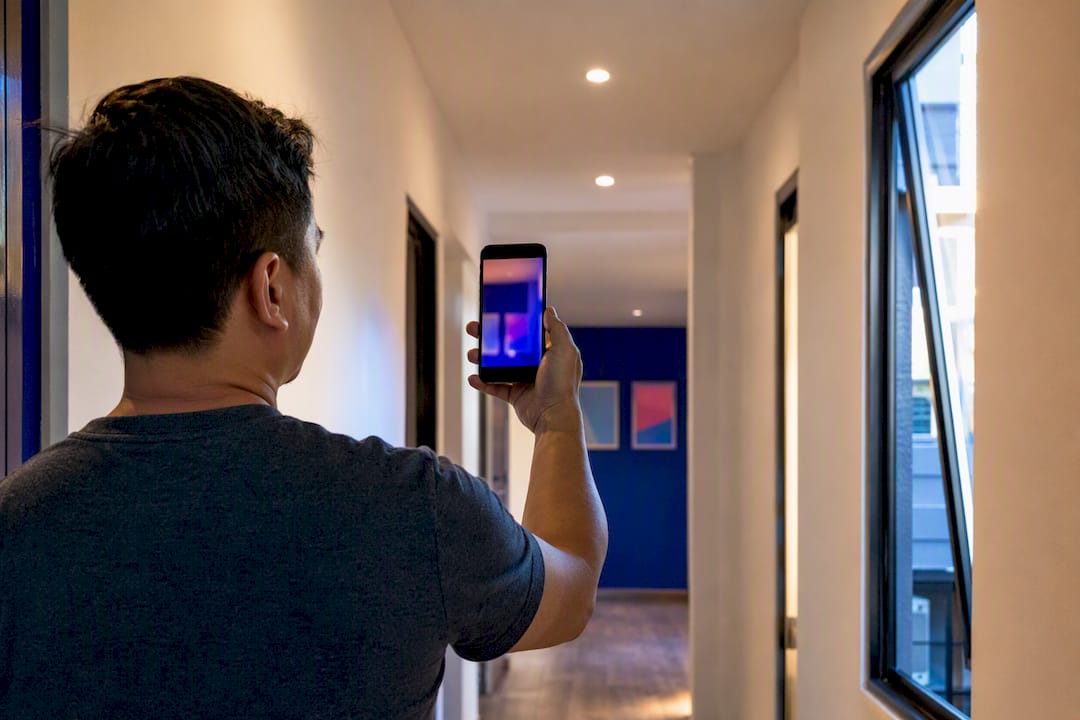
Start by timing the flicker. Does it happen only at the moment the compressor starts, and settle within a few seconds? Or does it continue, worsen, or happen at random while the unit is already running? That single distinction, startup-only versus operational, is the most important thing you can report.
Next, walk outside and listen to the condenser unit when it starts. A healthy compressor kicks in with a smooth hum. A struggling one might click, hesitate, hum without starting, or grind, all signs pointing toward a capacitor or compressor problem rather than a wiring issue.
Check which lights are affected. Is it every light in the house, or just those on one circuit or in one room? Does the flicker happen when other large appliances start too, like a washing machine or oven, or is it specific to the aircon? That pattern tells an electrician a lot before they even open the switchboard.
- Time and describe the flicker: startup-only, operational, or worsening
- Listen at the outdoor unit for hums, clicks, hesitation or grinding
- Note which lights and circuits are affected
- Check whether other large appliances cause the same dip
- Look (don't touch) for scorch marks, unusual smells, or heat near switches and the switchboard
Never open the switchboard, remove a cover, or attempt to tighten a connection yourself. That work carries real fire and electrocution risk and is strictly a licensed electrician's job, a point Energy Safe Victoria makes clear in its household wiring guidance.
Pro Tip: Film the flicker on your phone for a few cycles, including the sound from outside if you can capture it. A ten-second video often tells a technician more in five minutes than a verbal description manages in twenty.
When should you call an electrician or HVAC technician?
Some symptoms call for an electrician, some call for an HVAC technician, and a few need both trades working together.
Call an electrician immediately if:
- Lights brighten rather than dim when the aircon starts, a sign of a floating or lost neutral, according to Epic Electrical
- You hear buzzing or crackling from a switch, point, or the switchboard
- There's any burning smell
- Flicker spreads across multiple rooms or continues while the AC is running
- A breaker or safety switch trips repeatedly
Call an HVAC technician if the aircon itself is hard-starting, short-cycling repeatedly, or the outdoor unit makes grinding or straining noises without starting properly; for practical guidance on these issues, consult our homeowner's fix guide for AC not blowing cold air. Compressors often show these warning signs 30 to 90 days before they fail outright, so acting early can avoid a full breakdown.
When the cause isn't obvious, both trades may need to visit. The electrician checks supply voltage, panel condition, and wiring integrity using voltage-drop testing and switchboard inspection, while the HVAC technician tests the capacitor and measures the compressor's actual startup current. Between them, they isolate whether the fault sits in your house wiring or in the AC unit itself.
What fixes do professionals actually recommend?
Once a licensed electrician or HVAC technician has diagnosed the cause, the fix is usually one of a short list of proven solutions rather than anything exotic.
- Installing a dedicated circuit for the air conditioner isolates its startup surge from your lighting and general power circuits, which resolves the majority of shared-circuit flicker cases.
- Testing and replacing the start capacitor, sometimes paired with a hard-start kit that reduces the compressor's peak draw on startup, cutting the flicker at its source.
- Upgrading the switchboard or service capacity where the existing panel simply can't absorb the aircon's demand alongside the rest of the house, common in older properties on older wiring standards.
- Repairing loose or corroded connections, which removes the extra resistance causing localised flicker and eliminates a genuine fire risk in the process.
When you're approving this kind of work, ask three things: how long the job will take on site, the approximate cost band for parts and labour, and what compliance certificate or paperwork you'll receive once it's done. A reputable tradesperson should answer all three without hesitation.
Pro Tip: Ask whether the quote includes a post-repair voltage check under load, meaning the aircon running while lights are on. That's the only real way to confirm the fix has actually worked, rather than just assuming it has.
Dualflow Services' perspective: what we see in the field
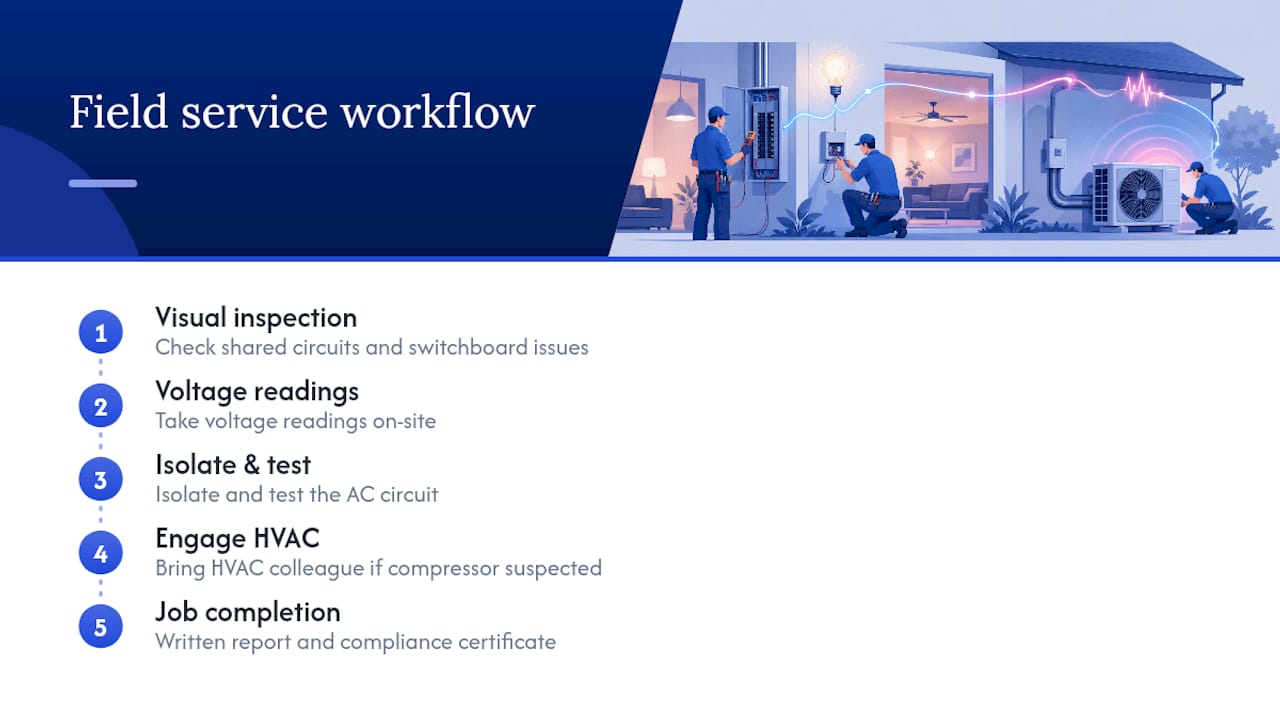
Across the homes and facilities we service, the majority of AC-related flicker calls trace back to shared circuits, ageing switchboards, or a capacitor that's been quietly failing for weeks. On a first visit, our technicians run a visual inspection, take voltage readings, isolate and test the AC circuit specifically, and bring in an HVAC colleague when the compressor itself is the likely culprit. Every job finishes with a written report and, where electrical work is carried out, a compliance certificate for your records, whether you're a homeowner, a facility manager, or running an aged care or retirement village site.
Why we won't tell you to fix wiring yourself
The biggest misconception we hear is that flicker is "probably nothing" because it's only the lights, not the aircon, acting up. Loose connections and failing neutrals don't announce themselves loudly until they do, and by then you're looking at a genuine fire risk rather than a minor annoyance. Licensed diagnostics catch that early. Write down what you saw, time it, and let a professional take it from there.
— Mike
How Dualflow Services can help with flickering lights and AC faults
If your lights are doing more than a brief startup dim, Dualflow Services is the practical next step, not a generic call centre, but licensed electricians and HVAC technicians who work on exactly this fault across homes, businesses, aged care, and retirement living sites on the Mornington Peninsula and surrounding Melbourne suburbs.

Book a visit and you'll get a technician who checks the switchboard, runs voltage-drop testing on the AC circuit, and tests the capacitor and compressor startup current on the spot, coordinating between electrical and HVAC where needed so you're not stuck between two tradespeople pointing at each other. Whether the fix ends up being a dedicated circuit, a capacitor swap, or a switchboard upgrade, you'll get a written diagnosis and the compliance paperwork to go with it. If your lights are brightening, buzzing, or flickering while the AC runs, don't wait for the next cycle. Book an emergency electrical or aircon assessment with Dualflow Services and get it checked properly.
Sources
- Energy Safe Victoria – home safety / electrical guidance
- HouseWise — why do my lights flicker when the AC turns on?