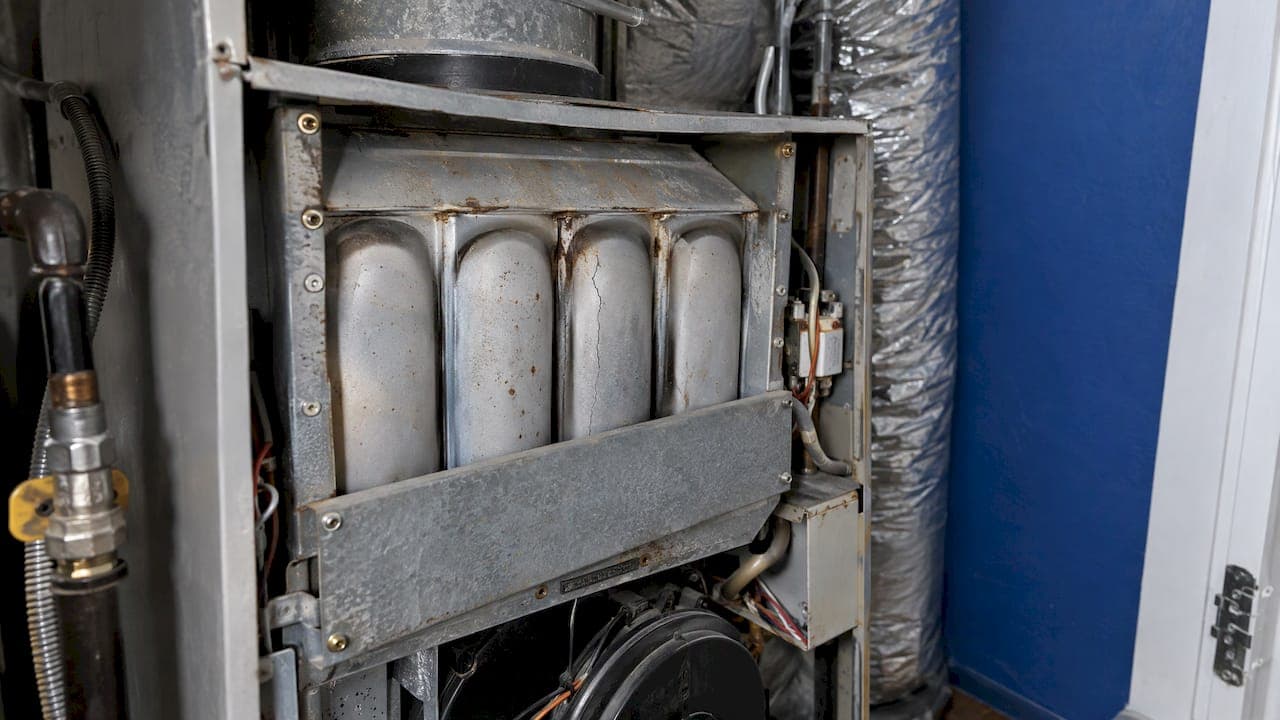
A cracked heat exchanger in a gas heater can let combustion gases, including carbon monoxide, escape into the air your household breathes. You often can't see, smell or hear it. If you suspect a crack, turn the heater off, ventilate the property and call a licensed gasfitter. If anyone feels unwell, get out and call 000. This guide explains the warning signs, why cracks form, how a gasfitter confirms one, and what Victorian homes, businesses and care facilities should do about it.
TL;DR
- A heat exchanger keeps the burning gas separate from the air that heats your rooms. A crack can break that barrier and let carbon monoxide into the living space.
- Carbon monoxide is colourless and odourless, so a sooty flame, soot marks, a pilot light that keeps blowing out or unexplained headaches are cues to act, not to wait.
- Energy Safe Victoria and the Building and Plumbing Commission recommend a gas heater service by a qualified gasfitter once every two years.
- A crack alone doesn't automatically mean the heater is unsafe in that moment. What counts is whether combustion products are found at the outlets, and a gasfitter has to measure that.
- If you suspect carbon monoxide exposure, leave the property, open windows and doors, turn off gas appliances and call 000 in an emergency.
Table of Contents
- What a heat exchanger does, and what a crack changes
- Signs of a cracked heat exchanger
- What to do if you suspect a crack
- How a gasfitter confirms a crack
- What happens if the test finds spillage
- What causes heat exchangers to crack
- How to reduce the chance of a crack
- Quick reference: what to do and who to call
- Aged care, retirement villages and disability homes
- Our perspective
- Book a heater check on the Mornington Peninsula
- FAQ
- Sources
What a heat exchanger does, and what a crack changes
In a gas ducted heater or a gas space heater, burning gas heats a metal chamber. Air from your home passes over the outside of that chamber, picks up the heat and is pushed back into your rooms. The chamber is the heat exchanger. Its job is to transfer heat while keeping toxic combustion separate from the heated air. The combustion gases are meant to leave through the flue, never mix with the air you breathe.
When the metal cracks, that separation can fail. A cracked heat exchanger can leak combustion gases, including carbon monoxide, into your home. In a ducted system the blower can then move those gases through the vents and into several rooms at once.
The term also covers other equipment. Hydronic boilers, commercial plant and hot water systems all use heat exchangers. This article focuses on gas heaters, because that is where a crack becomes a carbon monoxide safety issue for people in the building. If your facility runs a large hydronic system, our guide on how hydronic heating works in large facilities covers how those systems are put together.

Signs of a cracked heat exchanger
The honest answer is that a crack can be present with no obvious sign at all. Still, there are clues. AGL's gas heater servicing guide lists a yellow, red or sooty flame, soot around the heater, a pilot light that blows out often, discoloured walls or heater panels, an acrid smell or eye irritation as warning signs.
What you might notice around the heater
- Flame colour and shape. A healthy gas flame is mostly blue and steady. Yellow, orange or flickering flames, or a flame that seems to lean or dance when the fan starts, deserve attention.
- Soot. Black marks on or around the heater, or on the heater panels, suggest gas isn't burning cleanly. Soot inside the combustion chamber is another common finding at service time.
- A pilot light that keeps going out. Occasional drafts happen. Repeated outages are a pattern worth reporting.
- Staining or discolouration. Marks on walls or panels near the heater can point to products of combustion escaping where they shouldn't.
- Smell or irritated eyes. An acrid smell or stinging eyes when the heater runs is a reason to switch it off and ventilate. Carbon monoxide itself has no smell, so this is a sign of other combustion products, not a safe test for CO.
- Rust, corrosion or visible damage. If a gasfitter can see through the panels, they may spot a crack directly, though many are hidden.
What you might feel
Carbon monoxide exposure can cause tiredness, dizziness, headaches, weakness, nausea, shortness of breath or chest pain. Because these resemble the flu, people often blame winter bugs. A useful clue is timing: symptoms that appear when the heater is running and ease when you go outdoors, or that affect everyone in the household at once, or pets as well.
The key fact from Energy Safe Victoria is that carbon monoxide is colourless and odourless, and any gas heater can spill it, making people very sick or even killing them. The risk applies to heaters of any age, so a newer or well-kept unit still needs regular checks.
What to do if you suspect a crack
Treat it as a safety matter first and a repair job second. Energy Safe Victoria's advice for a suspected gas heater fault or carbon monoxide exposure is to evacuate the property, open windows and doors, turn off all gas appliances and seek medical advice immediately, or call 000 in an emergency.
In practice:
- If anyone feels unwell, get everyone outside into fresh air, including pets, and call 000.
- Open doors and windows on the way out if it is safe to do so.
- Turn the heater and other gas appliances off. Don't use the heater again until it has been checked.
- Call a licensed gasfitter and tell them what you saw, such as soot, flame changes or symptoms.
- Get medical advice if anyone had symptoms, even if they have passed.
If you can smell gas rather than just suspect combustion problems, that is a different emergency with its own steps. Our guide for homeowners on what to do in the first five minutes if you smell gas walks through it.
Is a crack always an emergency?
Not in every case, and that point matters for decisions about repair and replacement. Energy Safe Victoria's webinar FAQ states that a crack in a heat exchanger does not mean the appliance is immediately unsafe. The trigger to isolate the appliance is the presence of combustion products at the outlets, and replacing the heat exchanger or the heater is strongly recommended.
That is exactly why you shouldn't guess. A visual crack and a carbon monoxide reading tell the gasfitter different things, and only a proper test shows which situation you have.
How a gasfitter confirms a crack
There is no reliable do-it-yourself test. Qualified technicians use a mix of methods. According to an HVAC trade publication, they may visually locate a crack, use a combustion analyser to check readings when the blower comes on, or use a flame-distortion test. The same article notes that combustion-analyser testing under real operating conditions can reveal cracks that open only when the heat exchanger is hot, which is why a cold visual check alone can miss them.

In Victoria, the carbon monoxide test is part of a proper service. As part of a comprehensive service, a gasfitter must use a CO analyser to test for carbon monoxide spillage. The Victorian Building Authority adds that a comprehensive gas heater service must include testing for both carbon monoxide spillage and negative pressure environments.
Why negative pressure matters
Negative pressure is a separate cause of dangerous gases entering a room, and it can be confused with a cracked heat exchanger. Extraction fans such as rangehoods and bathroom exhausts can create negative pressure that adversely affects the safe operation of internal open-flue gas appliances, leading to CO spillage. The Victorian Building Authority also notes that this pressure can draw carbon monoxide and other gases from a heater's flue into the room. A good test looks at both the appliance and the house around it.
For a closer look at how the Victorian testing process runs, see our explainer on carbon monoxide heater testing and the four stage test. If you are choosing who to book, four checks to ask your Type A gasfitter before a CO test will help you know what a good visit includes.
What happens if the test finds spillage
When a gasfitter measures carbon monoxide spillage they can't fix on the spot, the appliance can't simply be left running. Under Energy Safe Victoria's guidance for gasfitters, the appliance must be isolated with the owner's consent, or Energy Safe Victoria must be notified if the owner refuses.
For you, that means a tag or disconnection, a clear explanation of what failed, and a choice between repair and replacement. A cracked heat exchanger on an older ducted unit often tips toward replacing the heater, since the exchanger is a core component. Your gasfitter can advise on what suits the particular unit. We don't publish prices for this work because it depends on the make, model, age and access, so ask for a written quote after the inspection.
What causes heat exchangers to crack
Most cracks aren't sudden. They build slowly from repeated heating and cooling, and from conditions that make the metal run hotter than it was designed to.
Heat cycles and metal fatigue
Every time the heater fires, the metal expands. Every time it shuts off, it contracts. Over thousands of cycles that movement can cause tiny cracks that grow. One US source describes metal fatigue from thermal stress as the primary cause of failure, with most units failing between 15 and 25 years. That figure comes from American furnaces, so treat it as a rough guide rather than a rule for Victorian heaters. AGL's servicing guide also says a crack is one of the most common causes of a natural gas heater leaking carbon monoxide, often from heat damage over time.
Overheating and restricted airflow
A heater that repeatedly overheats can develop a cracked exchanger, and restricted airflow can cause overheating. Common culprits in ducted systems include:
- dirty or clogged filters
- closed or blocked registers
- furniture or rugs over return-air grilles
- ducting that has been crushed, disconnected or poorly designed
Oversized units and short cycling
A heater that is too big for the space heats the house quickly, shuts off, then starts again. That rapid cycling puts more thermal stress on the metal. It is one reason a correct sizing calculation at installation matters. The same source lists oversizing, poor installation and age among the contributing factors.
Rust and corrosion
Moisture, combustion by-products and coastal air can corrode the metal over time. That is relevant on the Mornington Peninsula, where many properties sit close to salt air, though we'd never say corrosion alone causes a crack. It is one of the four main causes manufacturers list, alongside wear, overheating and oversizing.
How to reduce the chance of a crack
You can't stop metal ageing, but you can avoid the conditions that speed it up.
- Service on schedule. Energy Safe Victoria and the Building and Plumbing Commission recommend that all gas water heaters, space heaters and central heaters are serviced once every two years by a qualified gasfitter. For facilities with vulnerable residents, many managers choose a yearly check before winter.
- Keep air moving. Replace or clean filters as the manufacturer directs and keep registers and return-air vents unblocked.
- Get the sizing right when replacing a heater, rather than copying what was there before.
- Act on early symptoms. Soot, flame changes and a pilot that won't stay lit are cheaper to investigate early.
- Keep a record. For larger sites, a documented preventive maintenance process for HVAC assets makes sure each unit's inspections and follow-ups are scheduled and tracked.
Our article on why gas heater safety inspections matter for Victorians goes deeper on what a service should cover, and how gas appliance servicing works for homeowners shows what to expect on the day.
Quick reference: what to do and who to call
| Situation | What to do | Who to call |
|---|---|---|
| Anyone dizzy, nauseous, or has a headache that eases outdoors | Leave, ventilate, turn off gas appliances | 000 |
| Soot, yellow flame or pilot light blowing out, nobody unwell | Switch the heater off, ventilate, don't use it again until checked | Licensed gasfitter |
| Heater not serviced for more than two years | Book a service with CO and negative pressure testing | Licensed gasfitter |
| Gasfitter finds spillage they can't rectify | Agree to isolation of the appliance, then plan repair or replacement | Your gasfitter |
| Heater won't start but no other signs | Run basic checks first | See our heating not working checks |
Aged care, retirement villages and disability homes
For facility managers, a cracked heat exchanger is more than a repair. Residents may be less able to notice symptoms, to report them or to leave quickly, and heating often runs for long hours through winter. One shared plant room can serve many rooms. That raises the value of planned inspections, clear records and a fast response when something looks wrong. Our piece on why heating breakdowns put residents in care at risk covers the operational side. If you manage rental properties, the rules on certificates matter as well: see the five day lodgement rule for gas certificates in Victoria.
Our perspective
Most cracked heat exchanger calls we hear about start the same way: a heater that has been running quietly for years, no real service history, and a household that assumed no smell meant no problem. Carbon monoxide gives no smell, so the only dependable protection is a regular test by a licensed professional.
We built our business around not leaving that to chance. A heating fault rarely stays in one trade. A heater that trips a breaker is an electrical question. A condensate or water line problem is a plumbing one. When one team can look at all three, the facility manager makes one call and gets one clear answer, instead of juggling three contractors in the middle of winter.
For aged care, retirement villages and disability homes, we think of planned maintenance as part of duty of care. We offer emergency call-out around the clock, and we also offer scheduled maintenance so the call-out never has to happen. Book the service before the cold arrives, keep the records, and act on the first sign. That is simpler and safer than waiting for the first cold snap to find the problem.
Mike
Book a heater check on the Mornington Peninsula
If your gas heater is due for a service, or you've noticed soot, flame changes or a pilot light that won't stay lit, we can help. DualFlow Services provides plumbing, electrical, and heating and cooling services, scheduled maintenance, compliance work and 24/7 emergency call-out for homes, businesses, aged care facilities, retirement villages and disability care homes across the Mornington Peninsula and surrounding Melbourne suburbs. See our heating and cooling services or get in touch through our home page.

For sites with several buildings, ask about a scheduled maintenance plan so each heater is checked before winter rather than after a fault.
FAQ
What happens if a heat exchanger cracks?
The barrier between the combustion gases and your household air can fail, so gases including carbon monoxide may mix with the air the heater circulates. Whether that actually happens depends on the crack and how the appliance is operating. A gasfitter's carbon monoxide test shows whether combustion products are escaping.
What is the best way to tell if my heat exchanger is cracked?
You can't reliably tell by looking or smelling. Warning signs include a sooty or yellow flame, soot around the heater and a pilot light that keeps going out. The reliable method is a service by a licensed gasfitter who uses a CO analyser and may also inspect the exchanger directly.
Can I keep using the heater with a cracked heat exchanger?
Don't use it until a gasfitter has assessed it. Energy Safe Victoria says a crack doesn't automatically make the appliance immediately unsafe, but combustion products at the outlets mean it must be isolated, and replacing the exchanger or heater is strongly recommended. Only a test can tell you which applies.
How often should a gas heater be serviced in Victoria?
Energy Safe Victoria and the Building and Plumbing Commission recommend a service by a qualified gasfitter once every two years for gas water heaters, space heaters and central heaters. A care facility or a heater showing warning signs should be checked sooner.
How long does a heat exchanger last?
It varies with the model, usage, airflow and maintenance. One US source reports most failures happen between 15 and 25 years, but that is an overseas figure for furnaces. A regular service is a better guide for your own heater than age alone.
Sources
- What Is a Heat Exchanger in HVAC? (Trane)
- Cracked Heat Exchanger: What It Means (Trane)
- Your go-to guide for gas heater servicing (AGL)
- Heating your home with gas (Energy Safe Victoria)
- Is your gas heater safe? Be Sure (Energy Safe Victoria)
- Frequently Asked Questions (Energy Safe Victoria)
- Checking for Cracked Heat Exchangers (ACHR News)
- Using gas safely (Energy Safe Victoria)
- Carbon monoxide (Victorian Building Authority)
- GIS 38: Testing for negative pressure and carbon monoxide (Energy Safe Victoria)
- GIS 59: Type A appliance service (Energy Safe Victoria)
- Cracked Heat Exchanger: Signs, Dangers, and What to Do (Furnace Direct)
- Mastering the Preventive Maintenance Process for HVAC Assets