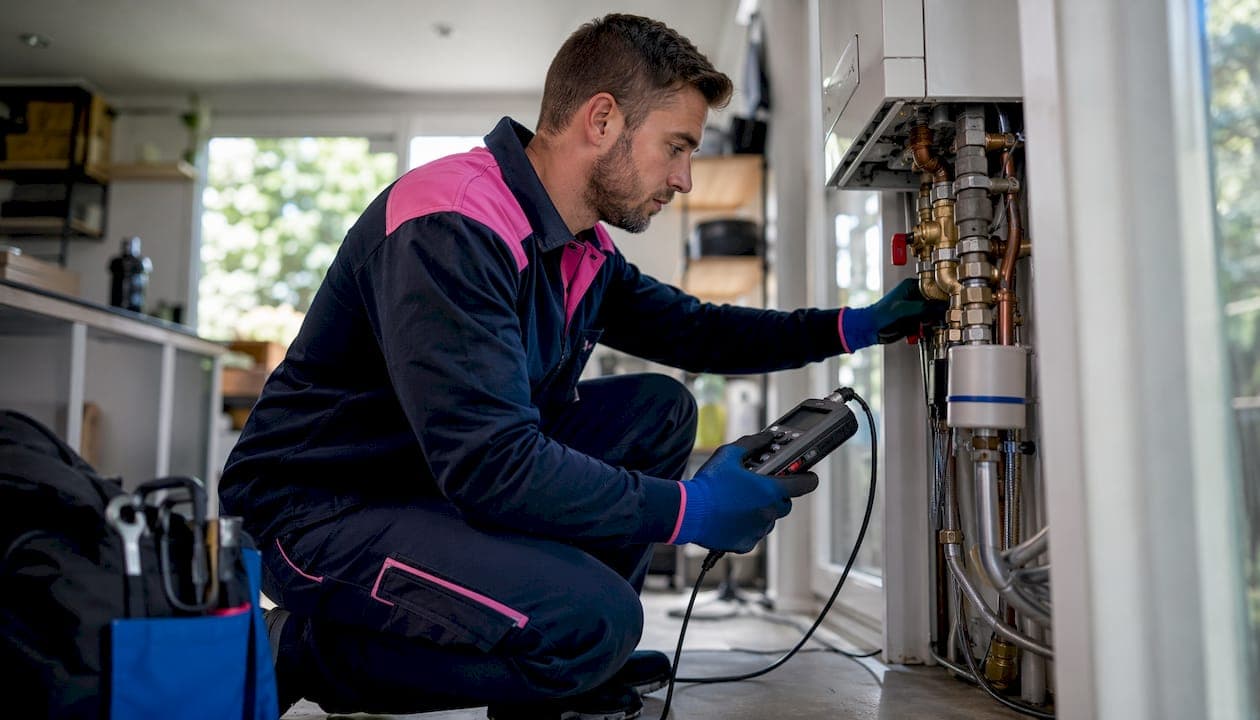
A professional Type A gas appliance service is a scheduled safety and performance inspection carried out by a licensed Type A gasfitter under AS 4575, Australia's minimum standard for servicing domestic gas appliances. It is not a quick visual check. The technician runs mandatory carbon monoxide spillage tests and negative-pressure tests, completes a formal Appendix E checklist, and issues a signed service record. For homeowners and property managers, that distinction matters because a gas appliance can appear to work perfectly while quietly producing dangerous levels of CO.
Three reasons this process is non-negotiable:
- Safety: CO is colourless and odourless. Only calibrated testing equipment and a structured test sequence can confirm an appliance is not spilling combustion gases into your living space.
- Compliance: Energy Safe Victoria and the Victorian Building Authority (VBA) set the regulatory framework. Rental properties have specific obligations, and a service record is the evidence that satisfies them.
- Insurance and warranty protection: Unserviced appliances or DIY repairs can void manufacturer warranties and create liability gaps in home and landlord insurance policies.
Table of Contents
- What does 'Type A appliance servicing' actually mean?
- Who may legally carry out a Type A gas appliance service?
- What happens during a Type A gas appliance service?
- How often should gas appliances be serviced?
- Warning signs that mean you should call a gasfitter now
- How to prepare for a service visit and what to expect
- Key takeaways
- Why preventive servicing is worth more than people think
- Dualflowservices: licensed Type A servicing on the Mornington Peninsula
- Useful sources and where to check technician licences
What does 'Type A appliance servicing' actually mean?
Under Australian gas regulations, Type A appliances are the gas-burning devices found in most homes: open-flued space heaters, wall furnaces, gas log fires, ducted gas heaters, gas cooktops and ovens, and most domestic hot water systems. The term "Type A" distinguishes them from industrial or commercial gas equipment (Type B), which sits under a separate regulatory regime.
The Victorian Building Authority prescribes AS 4575 as the minimum standard for servicing these appliances. The standard defines what the service must cover: internal inspection, cleaning, performance testing, adjustment of burners and controls, and the completion of a formal Appendix E checklist. That checklist covers flue condition, ventilation adequacy, appliance condition, negative-pressure test results, and CO spillage readings. Every field must be completed, not just the ones where a fault was found.
Energy Safe Victoria and the VBA share oversight of this framework. Energy Safe publishes Gas Information Sheets (GIS) that translate the standard into practical guidance for gasfitters. GIS 57 covers a gasfitter's obligations under the Gas Safety Act, and GIS 59 is the primary technical reference for the inspection and servicing sequence itself. If you are outside Victoria, your state's equivalent gas safety regulator publishes comparable guidance, but the AS 4575 standard applies nationally.
Who may legally carry out a Type A gas appliance service?
Type A appliance servicing is a licensed class of plumbing work. Not every plumber or gasfitter holds this registration, and the distinction is worth understanding before you book anyone.
- Confirm the licence class. Ask the technician for their Type A appliance servicing registration. In Victoria, this is a specific category under the VBA's plumber registration scheme. A general gasfitter licence does not automatically cover Type A servicing work.
- Verify the registration number. You can check a plumber's registration on the VBA's online portal before the visit. For other states, use the equivalent state regulator's licence search tool.
- Ask for photo ID and company details on arrival. The technician should be able to show a registration card with their name, registration number, and the categories of work they are authorised to perform.
- Confirm current insurance. A licensed gasfitter carrying out servicing work should hold current public liability insurance. Ask for evidence if you are a property manager with compliance obligations.
- Expect a service record. A properly licensed technician will issue a completed gas servicing record, including the Appendix E checklist, within five days of the visit. If someone offers a service without paperwork, that is a red flag.
Attempting gas appliance repairs yourself is not just inadvisable. In most Australian states, internal gas appliance repairs must be carried out by a licensed gasfitter, and DIY work can void warranties and expose you to significant insurance liability. The licensing requirement exists because the risks are not visible to an untrained eye.
What happens during a Type A gas appliance service?
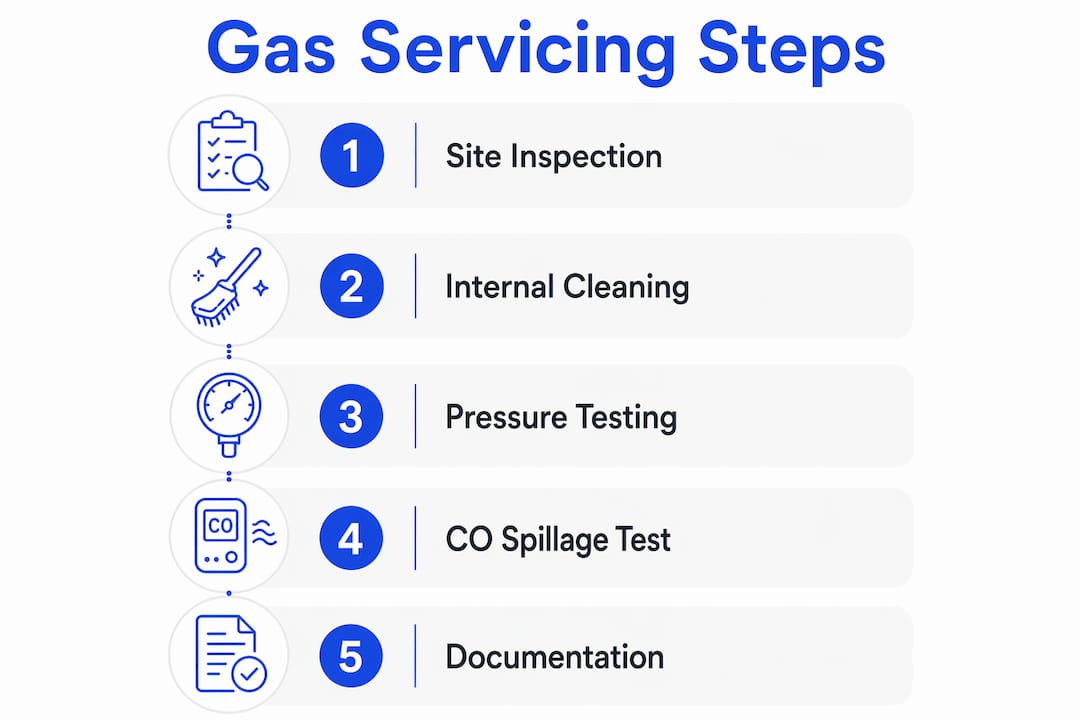
The service follows a structured sequence defined by GIS 59 and the AS 4575 Appendix E checklist. Here is what a technician works through on the day.
Site inspection and visual checks
The technician starts with the installation as a whole: gas supply pipework, the appliance casing, flue connections, and the surrounding ventilation. Scorch marks, corrosion, blocked vents, and damaged flue cowls are all noted before the appliance is even switched on. Flue and ventilation condition is a mandatory checklist item because a blocked or deteriorated flue is one of the most common causes of CO spillage.
Internal cleaning and adjustment
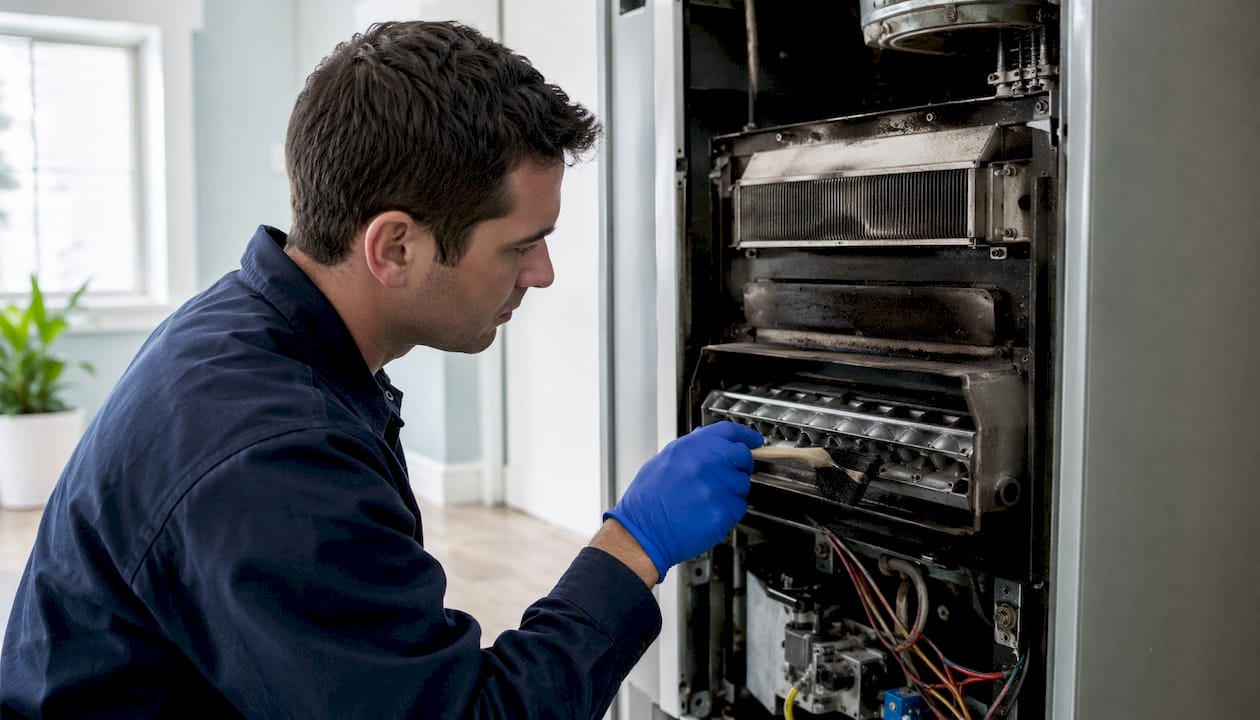
Burners, heat exchangers, and pilot assemblies are cleaned and inspected for wear. The technician checks ignition, flame pattern, and gas pressure, adjusting burner settings where required. On ducted heaters, the heat exchanger is inspected for cracks, which can allow combustion gases to enter the duct system and circulate through the house.
Negative-pressure testing
This test checks whether the building's ventilation conditions could cause combustion gases to be drawn back into the living space rather than expelled through the flue. It is done by closing internal doors and windows to simulate realistic operating conditions. If a negative-pressure condition is identified, the technician may clear blocked vents, recommend additional ventilation, or, where the problem cannot be resolved and the client declines rectification, isolate the appliance and notify the BPC or Energy Safe Victoria.
Carbon monoxide spillage testing
CO spillage testing is done with calibrated measurement equipment, not a domestic CO alarm. The test is performed with a cold flue, because a cold flue is the worst-case condition for spillage: it has not yet established a draught, so any combustion gases produced in the first minutes of operation are most likely to spill. If CO spillage is detected above background levels, the technician must find and eliminate the cause. If that is not possible, the appliance must be isolated. If the client refuses rectification, the gasfitter is required to contact Energy Safe Victoria and supply the spillage readings and contact details.
Completion and documentation
Once all checks and tests are done, the technician completes the Appendix E checklist and prepares the gas servicing record. Any faults found, actions taken, and parts replaced are documented. The completed record must be provided to the customer within five days and retained by the gasfitter for 10 years.
Pro Tip: On older open-flued heaters, ask the technician to check the draught diverter for signs of soot or discolouration on the inside face. This area is rarely visible to homeowners but is one of the first places to show evidence of chronic low-level spillage that a single CO test might not catch on a good day.
How often should gas appliances be serviced?
General professional guidance recommends most gas appliances be serviced every one to two years. Gas heaters, particularly open-flued models, should be serviced regularly, with intervals generally recommended to be no longer than two years, and more frequently if the appliance is old, heavily used, or showing any warning signs. Hot water systems typically need a major service every five to six years, though homeowners should carry out basic visual checks every six months.
For rental properties, the obligations are more specific. In Victoria, landlords are required to have gas appliances serviced and to maintain records demonstrating compliance. The HVAC maintenance schedule you set for a rental property should treat two years as the maximum interval for gas heaters, not the default.
| Appliance type | Recommended service interval | Notes |
|---|---|---|
| Open-flued space heaters / wall furnaces | Every 1–2 years | Higher risk of CO spillage; prioritise |
| Ducted gas heaters | Every 1–2 years | Heat exchanger cracks are a key risk |
| Gas log fires | Every 1–2 years | Flue and burner condition critical |
| Gas cooktops and ovens | Every 2 years | Less spillage risk but burner wear matters |
| Gas hot water systems | Major service every 5–6 years | Visual homeowner checks regularly |
Factors that shorten any interval: appliance age over 10 years, heavy daily use, any of the warning signs listed below, or a property with vulnerable occupants such as elderly residents or young children. For aged care and disability care settings, compliance obligations are more stringent and records are subject to audit.
Warning signs that mean you should call a gasfitter now
Some symptoms are not a reason to schedule a service. They are a reason to stop using the appliance and call a licensed gasfitter today.
- Yellow or orange flames on a gas burner that should burn blue. This indicates incomplete combustion, which produces CO. Gas log fires are an exception, as some are designed to display a yellow flame, but any change from the appliance's normal appearance warrants a check.
- Soot or black marks around the appliance, on the wall behind it, or near the flue outlet. Soot is a physical sign that combustion gases are not being fully expelled.
- Pilot light that keeps going out. Repeated pilot outages suggest a faulty thermocouple, a draught problem, or a gas supply issue, none of which resolve themselves.
- Unexplained increase in your gas bill. An appliance running inefficiently burns more gas to produce the same heat output.
- Headaches, nausea, or dizziness that improve when you leave the house. These are classic early symptoms of CO exposure. If multiple occupants are affected, evacuate immediately, leave doors open, and call 000.
- Gas smell. Do not attempt to find the source yourself. Leave the building, do not operate any switches or flames, and call your gas distributor's emergency line.
For any of these situations, the emergency steps for Victorian homeowners are: ventilate, isolate the gas supply at the meter if you know how, evacuate if the smell is strong, and call for help before re-entering.
How to prepare for a service visit and what to expect
A little preparation makes the technician's job faster and reduces the chance of a return visit.
- Clear access to the appliance and flue. Move furniture, stored items, or anything blocking the front, sides, and top of the appliance. For ducted heaters, make sure the roof or subfloor access point is clear.
- Locate previous service records. If you have them, hand them to the technician at the start. They show what was found last time and whether any recurring faults need attention.
- Note any symptoms. Write down anything unusual you have noticed: flame colour changes, smells, noises, or physical symptoms in occupants. The more specific you are, the faster the technician can focus their checks.
- Have the appliance manual available if you still have it. It helps the technician confirm the correct gas pressure settings and any manufacturer-specific service requirements.
- Secure pets and clear the area for the duration of the visit. Testing involves opening windows and doors in a specific sequence, and an unsecured pet can disrupt the negative-pressure test conditions.
Time and cost: A standard service on a single appliance typically takes 45–90 minutes. Add time for older appliances, difficult flue access (roof-mounted cowls, subfloor ducts), or any repairs required on the day. Cost varies by region, appliance complexity, and whether parts are needed. Get a written quote before the visit if you are managing multiple appliances or a rental property.
Documentation you must receive: After the service, the gasfitter must provide a completed gas servicing record that includes the Appendix E checklist, test results, any faults found, actions taken, and a signed declaration. This must be in your hands within five days of the visit. Keep it with your property records. For landlords, this document is your evidence of compliance.
Key takeaways
A licensed Type A gasfitter must carry out every gas appliance service under AS 4575, completing mandatory CO and negative-pressure tests and issuing a signed service record within five days.
| Point | Details |
|---|---|
| Use a licensed Type A gasfitter | Only a registered Type A gasfitter may legally carry out this work; verify their registration before the visit. |
| Service intervals by appliance | Gas heaters generally every one to two years; hot water systems require major service every five to six years; shorten intervals for older or heavily used appliances. |
| Mandatory documentation | You must receive the completed Appendix E checklist and service record within 5 days; the gasfitter retains their copy for 10 years. |
| Act on warning signs immediately | Yellow flames, soot, CO symptoms, or a gas smell mean stop using the appliance and call a licensed gasfitter now, not at the next scheduled service. |
| Dualflowservices for local servicing | Dualflowservices provides licensed Type A appliance servicing on the Mornington Peninsula, with compliance documentation issued after every visit. |
Why preventive servicing is worth more than people think
The conventional view is that gas appliance servicing is a box-ticking exercise, something you do because a landlord checklist or a renewal notice says you have to. That framing misses the point almost entirely.
The real value of a properly conducted Type A service is that it catches the faults an appliance can develop while still appearing to work. A cracked heat exchanger in a ducted heater, a partially blocked flue cowl, a draught diverter showing early signs of spillage: none of these announce themselves with an obvious symptom until the problem is well advanced. By the time a yellow flame or a CO alarm triggers, the appliance has often been operating unsafely for weeks or months.
Scheduled servicing also changes the economics of appliance ownership. An appliance that is cleaned, adjusted, and tested regularly runs more efficiently, lasts longer, and is far less likely to fail on the coldest night of the year when a replacement part takes a week to arrive. The cost of a service is almost always less than the cost of an emergency call-out, and it is a fraction of the cost of a replacement unit.
The one situation where servicing is not the right answer is when an appliance has had repeated spillage faults across multiple service cycles, is more than 15–20 years old, or has a heat exchanger that cannot be made safe. At that point, replacement is the responsible choice, and a good technician will tell you so plainly rather than keep collecting service fees on an appliance that should be retired.
Dualflowservices: licensed Type A servicing on the Mornington Peninsula
When a gas appliance service is done properly, you leave the visit with a signed Appendix E checklist, confirmed CO and negative-pressure test results, and the confidence that your appliance is safe to run through winter. That is exactly what Dualflowservices delivers for homeowners, property managers, aged care facilities, and retirement villages across the Mornington Peninsula.
Every Dualflowservices gas appliance service is carried out by a licensed Type A gasfitter, follows the AS 4575 checklist, and includes a completed service record issued within five days. If a fault is found, you get a straight answer about whether it can be repaired on the day or whether the appliance needs to be isolated. No guesswork, no deferred paperwork.
To book a service or get a quote for your property, visit the Dualflowservices gas servicing page or call the team directly. If you manage multiple appliances across a rental portfolio or care facility, ask about scheduled maintenance programmes that keep your compliance records current year-round.
Useful sources and where to check technician licences
The following official sources are the authoritative references for gas appliance servicing requirements in Victoria and nationally. For state-specific rules outside Victoria, use your state's equivalent gas safety regulator.
- Energy Safe Victoria: The primary gas safety regulator in Victoria. Publishes all Gas Information Sheets including GIS 57 (gasfitter obligations) and GIS 59 (Type A servicing inspection sequence). Use this site to understand what a compliant service must include and to report safety concerns.
- Victorian Building Authority (VBA): Administers plumber and gasfitter registration in Victoria and provides the AS 4575 guidance page. Use the VBA's online portal to verify a technician's registration number and licence class before booking.
- AS 4575 (Standards Australia): The national standard for servicing Type A gas appliances. Available through Standards Australia or your state library. This is the document that defines the Appendix E checklist and record-keeping obligations.
- Building Practitioners' Committee (BPC): Oversees the Type A appliance servicing work category in Victoria and receives lodgement of certain parts of the gas servicing record.
| Source | What it covers | When to use it |
|---|---|---|
| Energy Safe Victoria (GIS 59) | Full inspection and servicing sequence | Understanding what a compliant service includes |
| VBA registration portal | Licence verification for Victorian gasfitters | Checking a technician's registration before booking |
| BPC (Type A servicing page) | Registration category and lodgement obligations | Confirming what records must be lodged and by whom |
| AS 4575 (Standards Australia) | Full technical standard and Appendix E checklist | Reviewing what your service record must contain |
| Dualflowservices | Licensed local servicing, Mornington Peninsula | Booking a Type A service or compliance programme |
This article provides general information about gas appliance servicing requirements in Australia. For advice specific to your property, appliance, or jurisdiction, consult Energy Safe Victoria, your state gas safety regulator, or a licensed Type A gasfitter.