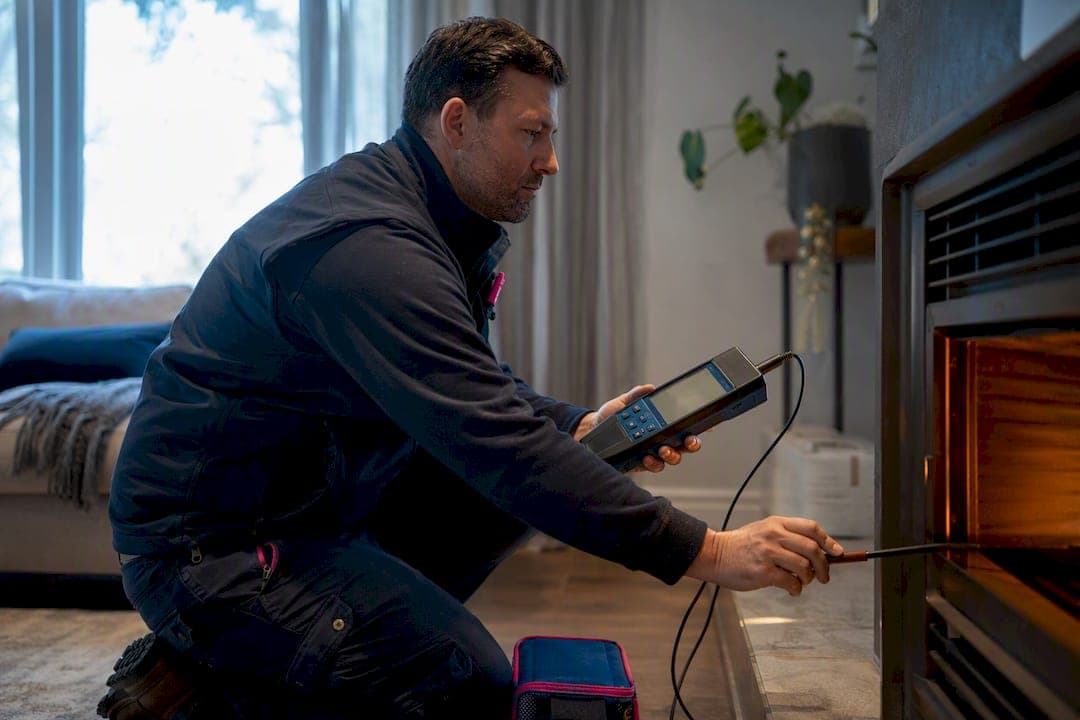
A flued gas heater needs a professional carbon monoxide spillage test at least every two years, and every year once it's past 15 years old, carried out by a licensed gasfitter using calibrated equipment. Energy Safe Victoria and the Department of Health Victoria back this interval; Dual Flow Services runs this exact test across the Mornington Peninsula. If you suspect exposure right now, get everyone outside, call 000, and don't go back in.
TL;DR:
- Regular testing is required every two years for rental properties, with annual checks recommended for heaters over 15 years old due to increased wear and degradation.
- Open-flued heaters always need spillage testing because they depend on natural draught, which makes them more vulnerable to negative-pressure issues.
- Proper CO testing follows a specific four-stage protocol, including establishing a background level, negative-pressure smoke testing, running the heater under load with extraction fans on, and careful result assessment.
- CO alarms only detect existing gas in the room and do not identify developing flue or heat exchanger faults, making professional tests essential for preventative safety.
- Documentation from licensed technicians must include ppm readings, calibration certificates, and repair details to verify compliance and safety.
Table of Contents
- Why carbon monoxide heater testing actually matters
- How often you legally need to test your heater
- Which heaters actually need a spillage test
- Inside a proper CO spillage test: the four-stage protocol
- What you can check yourself, and where CO alarms fall short
- What a licensed gasfitter's report should actually include
- How Dual Flow Services runs a CO test on the Mornington Peninsula
- Where the industry gets carbon monoxide testing wrong
- Book a carbon monoxide test with a licensed service provider
- Sources
- FAQ
Why carbon monoxide heater testing actually matters
Carbon monoxide has no smell, no colour, and no warning taste. That's the trap: early poisoning looks like a headache, nausea, or fatigue, and plenty of people write it off as flu until someone in the house collapses. The Department of Health Victoria treats this misdiagnosis risk as one of the main reasons gas heater servicing can't be optional.
Here's the part most homeowners miss: newer, tightly sealed houses are actually riskier, not safer. Draught-proofing and rangehood extraction fans can pull air out of a room faster than it comes in, creating negative pressure that drags flue gases back down the chimney instead of letting them escape. Energy Safe Victoria's GIS 38 treats this negative-pressure fault as an increasingly common cause of spillage, separate from any fault in the heater itself.
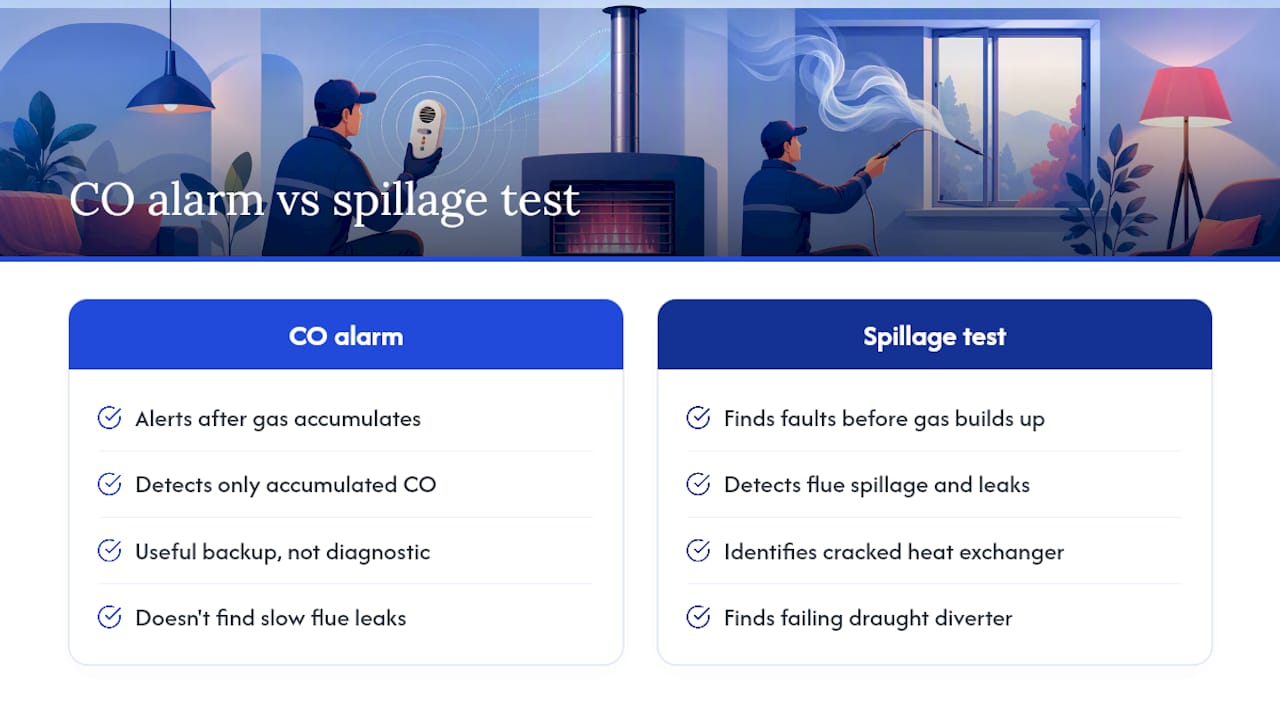
A CO alarm doesn't test your heater. It only tells you gas has already accumulated in the room. That's a genuinely useful backup, but it can't detect a slow flue leak, a cracked heat exchanger, or a draught diverter that's about to fail. Only a proper spillage test does that.
How often you legally need to test your heater
Victorian rental law requires a licensed gasfitter to carry out a gas safety check, including carbon monoxide testing, at least every two years for every rental property with gas appliances. This isn't a landlord courtesy, it's a compliance obligation tied to your rental certificate.
For owner-occupiers, Energy Safe Victoria recommends the same two-year baseline, tightening to annual testing once a heater passes 15 years old. Older units have worn seals, ageing heat exchangers, and flue components that degrade in ways you can't see from the outside.
Aged-care operators and retirement villages generally need to go further again, given the higher vulnerability of residents and the number of appliances typically running at once:
- Rental properties: gas safety check including CO testing periodically as required by Victorian tenancy law.
- Owner-occupied homes: regular testing recommended.
- Heaters over 15 years old: more frequent testing may be advisable.
- Aged-care and disability care facilities: testing frequency depends on the facility's risk assessment.
Whichever category you fall into, always ask for the written compliance report at the end of the visit, not just a verbal "all good." A checklist of what to ask your gasfitter before the test starts is worth reviewing if this is your first time booking one.
Which heaters actually need a spillage test
Not every heater carries the same risk, and the test itself changes depending on the appliance type.
- Open-flued heaters (the old wall furnaces and freestanding units that vent through a flue into the roof space) carry the highest risk and always require spillage testing. These rely entirely on natural draught to clear combustion gases, which makes them the most sensitive to negative pressure.
- Room-sealed appliances draw combustion air from outside and vent directly outside too, so they're inherently safer, but they still need periodic testing because seals and joints degrade.
- Ducted central heating systems get tested at the duct outlet over a longer sampling window, because a cracked heat exchanger in a ducted unit can leak combustion gas straight into the airstream circulating through the house.
- Decorative-effect and open-fronted gas heaters have their own testing timings and sampling points, and manufacturer guidance sometimes lists specific model exceptions.
Rinnai Australia advises that any gas heater with a flue system should be serviced and spillage tested at least every two years, and flags that the prescribed methods sit in Australian Standards and Energy Safe Victoria guidance rather than being left to individual technician judgement. If you're unsure what category your heater falls into, the model plate and manufacturer manual usually spell it out.
Inside a proper CO spillage test: the four-stage protocol
A rushed five-minute check with a sniffer isn't a valid CO test. Energy Safe Victoria's GIS 38 sets out a specific order, and skipping a stage or doing them out of sequence can misattribute a ventilation fault to the appliance, or the other way around.
- Establish a baseline. The gasfitter starts with the heater cold, doors and windows closed, and records the background CO level in the room before anything runs.
- Test for negative pressure using smoke. With extraction fans (rangehood, bathroom exhaust) switched on, the technician releases smoke near the draught diverter. If the smoke gets pulled away rather than rising naturally, the room has a negative-pressure problem independent of the heater.
- Run the appliance under full load with extraction fans still on, sampling CO at the draught diverter, heat-exchanger joints, flue connections, and warm-air outlet. WA Government guidance specifies 5 or 10 minutes of sampling depending on appliance type, and the reading at each point must not exceed the room's background level from stage one.
- Assess and act on the result. If spillage shows up, the fitter works out whether it's a ventilation issue (fix the negative pressure, retest) or an appliance fault (isolate the heater, repair, retest before it's used again).
Pro Tip: Ask whether the negative-pressure smoke test happened before the CO reading was taken. If a technician skips straight to running the heater, the result can't reliably tell you whether a fault sits with the appliance or the room's ventilation.
Every meter used should carry a current calibration certificate. Using a meter without recent calibration risks inaccurate readings, which can miss actual leaks.
What you can check yourself, and where CO alarms fall short
A few things are worth glancing at before you ever call a technician. None of these replace professional testing, but they can tell you whether to bring the call forward.
- Soot marks around the heater casing or draught diverter.
- A yellow, flickering flame instead of a steady blue one.
- A musty smell or visible condensation building up near the flue.
- A door or window that visibly sucks air when you switch on the rangehood while the heater is running.
CO alarms genuinely help, but their job is narrow: they detect gas that's already in the room, they don't detect a developing flue fault. Energy Safe Victoria treats an alarm as a secondary safety layer, never a substitute for the appliance and flue testing above. Placement matters too, ideally in hallways between sleeping areas and the heater, and compliant units in Australia carry AS 5443 certification. If an alarm ever sounds, or you notice two or more people in the house with sudden headaches, dizziness, or nausea that clears once they're outside, evacuate immediately and treat it as an emergency, not a maintenance item.
What a licensed gasfitter's report should actually include
A technician packing up after five minutes with no paperwork hasn't given you proof of anything. A proper visit ends with documentation you can hand to a landlord, a body corporate, or an aged-care compliance auditor without question.
- Per-appliance readings in actual ppm, not just a pass or fail tick.
- Evidence the CO meter's calibration certificate is current, ideally NATA-traceable and issued within the last 12 months.
- The gasfitter's licence and Type A appliance endorsement details.
- If a fault turns up: what was isolated, repair options, and confirmation a retest is scheduled once it's fixed.
- For rental properties, the certificate lodged as part of the five-day compliance process landlords need to follow.
How Dual Flow Services runs a CO test on the Mornington Peninsula
Local companies cover emergency call-outs, scheduled maintenance, and compliance checks for gas heaters across homes, rental properties, and aged-care facilities on the Mornington Peninsula. Every visit follows the negative-pressure test before any appliance is run under load, in line with the sequence GIS 38 sets out, not a shortcut version of it.
Technicians generally carry calibrated meters with current certificates, and jobs should end with a written, per-appliance report showing actual ppm readings, not just a verbal thumbs-up. That documentation is what a body corporate or aged-care compliance officer actually needs to file. and sit behind that process.
Where the industry gets carbon monoxide testing wrong
Most advice on this topic treats the CO alarm as the safety measure and the professional test as an optional extra. That's backwards. An alarm tells you gas is already in the room; a proper spillage test catches the fault before that ever happens. If I had to rank priorities for a homeowner with one afternoon and one phone call to make, book the test first and buy the alarm second.
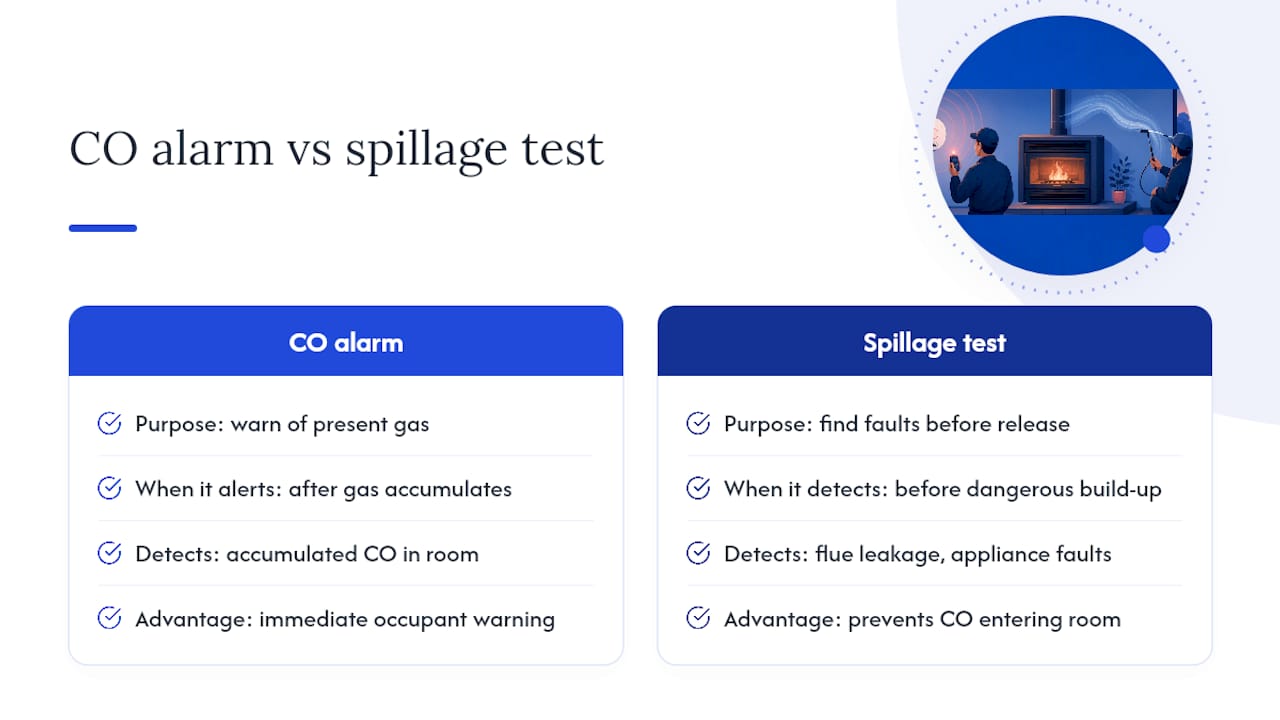
The other gap is sequencing. Plenty of quick "CO checks" advertised cheaply skip the negative-pressure smoke test and go straight to running the heater with a sniffer. That's not a technicality, it changes what the result actually means. A reading taken without first checking for negative pressure can blame a heater that's working fine for a ventilation problem caused by a rangehood fan, or miss a genuine appliance fault entirely.
If there's one thing worth pushing back on, it's the idea that a two-year interval is a maximum rather than a floor. Older appliances, extraction-heavy kitchens, and any home where someone has felt unexplained headaches near the heater all justify testing sooner. The interval is a legal minimum, not a guarantee of safety in between.
— Mike
Book a carbon monoxide test with a licensed service provider
Licensed service providers run the full negative-pressure and CO spillage protocol on gas heaters across the Mornington Peninsula, whether you need a one-off compliance check, an emergency call-out because something smells off, or scheduled testing tied to your rental or aged-care obligations.
When you book, it speeds things up if you can tell us the heater type (open-flued, room-sealed, ducted, or decorative), how many appliances are on the property, and whether you need the report for a rental compliance certificate or an aged-care audit. If you're not sure which category your heater falls into, just describe it, our technicians sort that out on site. You can get a quote or lock in a time through the Dual Flow Services booking page, and if it's urgent, our emergency call-out line runs the same tested protocol, not a rushed version of it.
Sources
For the primary rules and technical detail behind everything above, go straight to the regulator and manufacturer guidance: Energy Safe Victoria's GIS 38 for the testing protocol, the Department of Health Victoria for health risk guidance, Rinnai Australia for model-specific applicability, and WA Government guidance for procedural sampling detail.
This article is general information, not a substitute for advice from a qualified doctor. Consult a qualified healthcare professional about your own circumstances before acting on anything here.
- Carbon monoxide poisoning in the home | Department of Health Victoria
- Gas Heating - Carbon Monoxide (CO) Testing | Rinnai Australia
- Conducting carbon monoxide (CO) testing | WA Government
FAQ
What are safe CO levels for a gas heater test in Australia?
The CO reading at any test point must not exceed the room's background reading taken before the heater started, rather than a single fixed ppm figure across all appliances.
Is there an easy way to test for carbon monoxide at home?
A CO alarm can flag gas already in the room, but it can't detect a developing flue or heat-exchanger fault, so a calibrated professional spillage test from a licensed gasfitter is the only reliable way to check the heater itself.
Where can I get a carbon monoxide alarm in Australia?
Compliant CO alarms are available through hardware retailers and licensed gasfitters, and should carry Australian Standard AS 5443 certification and be placed between the heater and sleeping areas.
How do I know if my gas heater is leaking carbon monoxide?
Watch for soot around the casing, a yellow rather than blue flame, condensation near the flue, or headaches and nausea that ease once you leave the house, and book a professional spillage test if any of these show up.
How often does a rental property need CO testing in Victoria?
Victorian tenancy law requires a licensed gasfitter to carry out a gas safety check, including CO testing, at least every two years for any rental property with gas appliances.