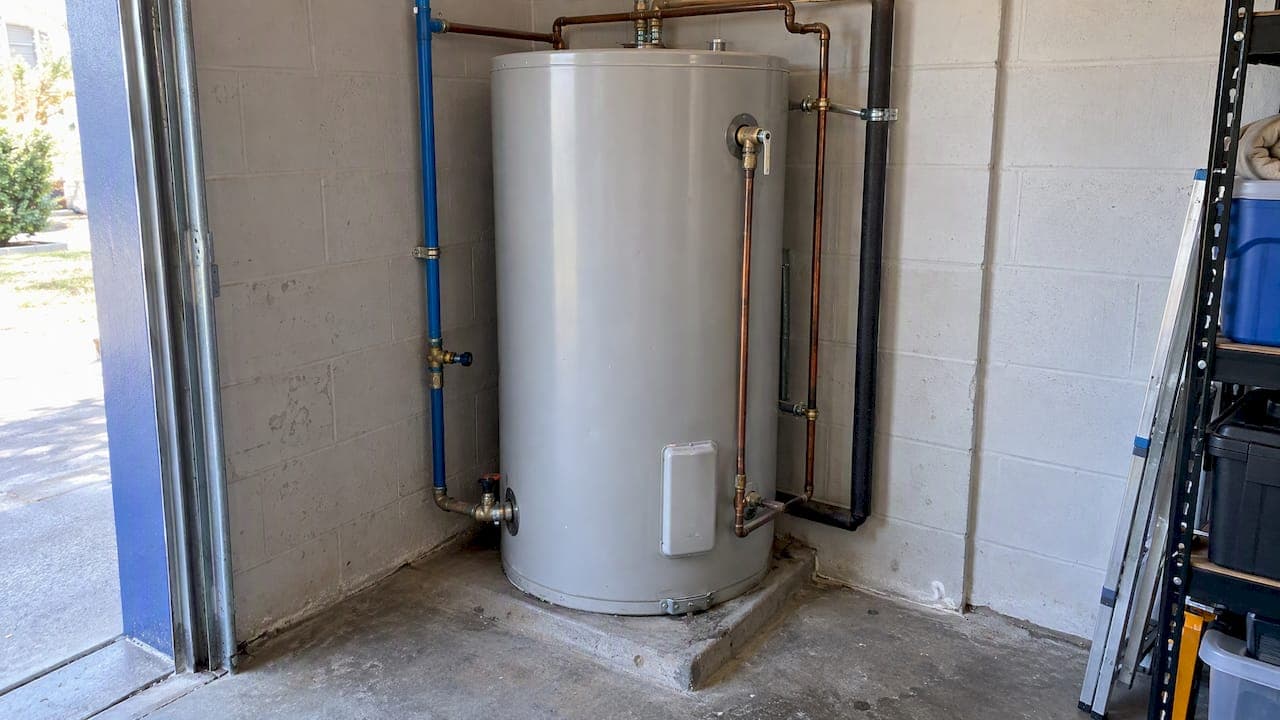
A noisy hot water system is usually telling you something specific. Rumbling and popping most often point to sediment in the tank. Banging when a tap shuts is usually water hammer in the pipes, not the heater. Whistling or screeching is a warning to shut the system down and call a licensed tradesperson. Quiet ticking or a soft hum is normal.
This guide walks through each sound, what is likely behind it, what you can safely check yourself and when the job belongs to a licensed plumber, gasfitter or electrician in Victoria. It is written for homeowners, business owners and the facility managers who look after aged care, retirement villages and disability care homes on the Mornington Peninsula and across Melbourne.
TL;DR
- Ticking, clicking and a gentle hum are normal. Persistent rumbling, popping or banging is not, and sediment is the most common cause.
- Banging that happens when a tap is turned off is typically water hammer in the pipework, and the fix is usually pressure control or an arrestor, not a new heater.
- A kettle-like whistle or screech means dangerous pressure may be building. Turn off the energy source and the water inlet, then call a professional.
- Gas work and hot water replacements must be done by licensed trades, and electrical work needs a Certificate of Electrical Safety.
- In aged care and disability homes, a hot water failure is an urgent repair, so a noise is a prompt to service the system before it fails.
Table of Contents
- Which noises are normal and which are not
- A quick guide to common sounds
- Rumbling and popping: the sediment problem
- Banging: usually the pipes, not the heater
- Whistling, screeching or a kettle-like sound: act straight away
- Humming and buzzing
- Hissing, sizzling and dripping sounds
- What you can safely do yourself
- Why licensing and certificates matter
- Perspective: what we see on the tools
- Aged care, retirement villages and disability homes
- Get the noise checked by one team
- FAQ
- Sources
Which noises are normal and which are not
Every storage hot water system makes some noise. Metal expands as it heats and contracts as it cools, so you will hear the occasional tick or tap, particularly after a big draw of hot water. Rheem's guide to water heater noises makes the same point: many sounds are part of normal operation.
The pattern matters more than the sound itself. Ask yourself:
- Is it new? A system that has been quiet for years and suddenly starts rumbling is changing.
- Is it persistent? A tick once a day is expansion. A rumble every heating cycle is not.
- Is it getting louder? Noise that grows over weeks usually means a build-up that is getting worse.
- Does it come with other signs? Rusty or discoloured hot water, a wet patch near the unit, a hotter or cooler supply than usual, or a smell of gas all change the urgency.
According to the ENERGY STAR guidance on replacing a water heater, quiet clicking from thermal expansion or humming from electric elements are normal, while persistent banging, rumbling or loud popping often points to sediment on the element or burner base. It also notes that older units, around 8 to 12 years and beyond, are particularly prone to sediment-related failure.
A quick guide to common sounds
| Sound | Most likely cause | Urgency | Who should handle it |
|---|---|---|---|
| Soft ticking or clicking | Metal expanding and contracting | Normal | Nobody, just monitor |
| Low hum from an electric unit | Normal element operation, or a loose component vibrating | Low | Electrician if it is loud or changing |
| Rumbling or popping | Sediment, with steam bubbles forming under the deposit | Medium | Licensed plumber (electric) or Type A gasfitter (gas) |
| Banging when a tap closes | Water hammer from high pressure or waterlogged air chambers | Medium | Licensed plumber |
| Whistling, screeching or kettle-like sound | Pressure building or a failing relief valve | High | Shut down, then call a licensed professional |
| Hissing or sizzling | Water on a hot element or burner, often from a leak | High | Licensed plumber, and a gasfitter if it is gas |
The causes in the table come from the manufacturer and technical guidance linked through this article. Your own unit may differ, which is why a persistent noise deserves a proper inspection.
Rumbling and popping: the sediment problem
If your system rumbles, crackles or pops while it heats, sediment is the first suspect. Minerals in the water settle at the bottom of the tank over time and harden. Heat then has to pass through that layer, and water trapped beneath it flashes into steam bubbles that burst through the deposit. That is the popping you hear. The Spruce explains that flushing and draining the tank to remove built-up sediment is the usual first remedy.
The sound is not only annoying. A layer of sediment makes the system work harder, which wastes energy and can shorten the tank's life. Rheem's technical guidance also warns that ignoring early popping can turn a low-cost maintenance flush into an expensive replacement, because sediment hardens into scale that is difficult to remove.
What a service involves
For a storage system, a tradesperson will typically isolate the power or gas and the cold inlet, drain the tank to clear loose sediment, inspect the anode, valves and fittings, and check the system is operating correctly when it is brought back up. On gas units, the burner, flue and ventilation are checked too. If the noise continues after a flush, the deposit may have hardened beyond removal, and ENERGY STAR notes that persistent noise after flushing suggests the unit may be near the end of its life.

If you are weighing repair against replacement, think about three things: the age of the tank, whether there are signs of leaking or rust, and how often it has needed attention lately. A tank ten years old that still rumbles after a flush is rarely worth a string of repairs.
Banging: usually the pipes, not the heater
A loud bang or rapid knocking as you shut off a tap, or when a dishwasher or washing machine valve closes, is typically water hammer. A moving column of water stops suddenly and the shock travels through the pipework. According to Scottish Water's guidance on noise in pipes, the usual causes are high water pressure or waterlogged air chambers, and the fixes include a water hammer arrestor or adjusting the pressure reducing valve. The same document notes that severe water hammer can cause leaks at joints and fittings over time.
Two quick clues that it is water hammer rather than a heater fault:
- The bang happens at the moment a tap or appliance valve closes, not while the heater is firing.
- It happens on cold taps as well as hot.
What you can do: note which taps trigger it and when. That information saves time on the visit. Do not keep ignoring it. Repeated shock loads on joints are exactly how a small noise turns into a concealed leak behind a wall. If you want broader habits for keeping water where it belongs, there is useful material on preventing water damage in the home.
Persistent water hammer needs a licensed plumber. Arrestors, pressure reducing valves and any change to the pipework are plumbing work, and a plumber can measure the static pressure rather than guess.
Whistling, screeching or a kettle-like sound: act straight away
This is the noise not to wait on. A high-pitched whistle or screech can mean dangerous pressure is building, or that the temperature and pressure relief valve is failing. Rheem's guidance says to turn off the energy or gas source and the water inlet immediately, and to have a professional deal with it. Never cap or block a noisy relief valve yourself. The valve is there to release pressure safely, and blocking it removes the safety margin.
A few practical points:
- Turn off the electricity at the switchboard or isolator, or the gas at the unit's control, if you can do so safely.
- Close the cold water inlet to the heater.
- Keep people away from the unit and any pipe discharging hot water.
- Call a licensed professional. If it is after hours, a 24/7 emergency call-out is exactly the situation it exists for.
Humming and buzzing
Electric systems hum a little as elements work. A louder buzz, rattle or vibration is often a loose component, such as a mounting bracket, a loose panel or a fitting vibrating against the tank. A.O. Smith and others make this point in their troubleshooting content, and it is usually a simple fix.
But do not tighten things around live electrical parts yourself. If the sound seems to come from wiring, an element terminal or the isolator, turn the power off and call an electrician. A buzzing sound near electrical connections can mean a loose or overheating connection, which is a fire risk rather than just a nuisance.
Hissing, sizzling and dripping sounds
Hissing or sizzling means water is meeting something very hot. In an electric tank this can be a leaking element seal. In a gas unit it can be water dripping onto the burner or a leak at a fitting. Either way, look for moisture around the base and fittings, and for rust stains. A leaking tank cannot be repaired and needs replacing, but a leaking valve or fitting often can be fixed by a plumber.
What you can safely do yourself
As a general rule, observe and document, and leave anything involving gas, electricity or pressure to the licensed trades. Safe steps include:
- Listening and noting when it happens: during heating, after a shower, when a tap closes.
- Checking that the area around the unit is clear and ventilated, and that nothing is stored against it.
- Looking for visible water, rust or scorch marks without touching the unit.
- Noting the make, model and age from the compliance plate so the tradesperson arrives prepared.
A hot water system is not a good DIY project, and for a good reason. In Victoria, Energy Safe Victoria says to always use a licensed gasfitter for installation, repairs or renovations involving gas work, which includes hot water systems and gas heaters.
Why licensing and certificates matter
Gas systems
Gas hot water noises can overlap with ventilation or flue problems. The research behind this article notes that Energy Safe Victoria expects gas hot water services to have a safety check by a licensed gasfitter endorsed for Type A appliance servicing, and that ignoring noises that may signal failing valves or venting problems raises the risk of carbon monoxide exposure. Carbon monoxide is colourless and odourless, and its symptoms include headaches, dizziness, nausea and shortness of breath. If you or anyone in the building has those symptoms near a gas appliance, get into fresh air and call emergency services.
Our own articles go deeper on how gas appliance servicing works and what to ask a Type A gasfitter before a carbon monoxide test.
Electric systems and replacements
If the noise turns out to be a failing tank and you replace it, the work has rules. Energy Safe Victoria says electrical installation work, including hot water services, must come with a Certificate of Electrical Safety, and connection of the isolator and overcurrent protection is for an A-class electrician. Without the certificate, the work may not be compliant or insured. Ask for it and keep it.
Perspective: what we see on the tools
We are plumbers, electricians and heating and cooling technicians, so a noisy hot water system rarely lands in just one trade. A rumble might be sediment, which is plumbing. The same system might need a new isolator, which is electrical. If it is a gas unit, the flue and ventilation are a gasfitting matter. Having all three trades under one roof means we do not send you in circles.

Our view is simple: a noise is cheap information. A flush and inspection while the system is merely complaining costs far less than an emergency replacement at 9 pm on a Sunday, and it gives you a chance to plan. Our scheduled maintenance work for care facilities is built on this idea. Where a hot water failure is not an inconvenience but a risk to residents, you want the sound caught early.
We also see the effect of poor installs. Noise complaints are often made worse by installations that were never done properly, such as poor venting or a bypassed safety device. Choose licensed trades, ask for the paperwork and do not accept a cheap fix that quietens the sound by removing a safety feature.
— Mike
Aged care, retirement villages and disability homes
For a facility manager, the stakes are different. Under the Residential Tenancies Act 1997, Consumer Affairs Victoria lists the failure or breakdown of a supplied hot water appliance among urgent repairs, which call for an immediate response. Whether your particular setting is covered by that Act depends on its arrangements, so confirm your obligations, but the operational point holds everywhere: residents depend on reliable hot water, and a noisy system that is allowed to fail becomes an emergency.
What works in practice:
- Log noises like faults. Record the date, the unit and the sound. A rumble that appears across the same bank of heaters points to water quality or a maintenance gap.
- Service on a schedule. Flushes, valve checks and gas safety checks are far easier to arrange when planned.
- Keep paperwork in one place. Certificates, service records and test results should be ready for audits.
- Plan for scale. If you run many units, ask whether a centralised system suits the site. See our notes on the benefits of centralised hot water systems.
Further reading from our team: plumbing compliance in aged care facilities, what makes a hot water system disability-compliant and Legionella prevention systems for aged care.
Get the noise checked by one team
If your hot water system is rumbling, popping, banging or whistling on the Mornington Peninsula or in the surrounding Melbourne suburbs, we can diagnose it and sort out the plumbing, gas or electrical side in one visit where possible. We offer plumbing, electrical and heating and cooling work, scheduled maintenance, compliance checks and 24/7 emergency call-outs for homes, businesses, aged care, retirement villages and disability care homes. Contact DualFlow Services to book a visit or request an emergency call-out.
FAQ
Should I be worried if my hot water system is making noise?
Not always. Light ticking and a gentle hum are normal. Be concerned about persistent rumbling, popping or banging, and treat a whistle or screech as urgent. If you smell gas or anyone feels dizzy or nauseous near a gas appliance, leave the area and call for help.
Why is my water heater rumbling?
The most common reason is sediment at the bottom of the tank. Water trapped under the deposit turns to steam and bursts through, which creates rumbling or popping. A flush by a licensed tradesperson often helps, though an older unit may have scale that cannot be removed.
How do I fix a noisy hot water tank?
It depends on the sound. Sediment calls for a flush and inspection, water hammer calls for pressure control or an arrestor, and a loose component can be secured by the right trade. Because gas, electricity and pressure are involved, the fix should be done by a licensed plumber, gasfitter or electrician.
What are the first signs of a hot water system failing?
New or growing noise, rusty or discoloured hot water, water around the base, inconsistent temperature and rising energy use are the typical early signs. Age matters too, and ENERGY STAR flags units from about 8 to 12 years as more prone to sediment-related failure.
Can a noisy hot water system be dangerous?
Yes, in some cases. A screeching or whistling system may have a pressure problem or a failing relief valve, and noises on a gas unit can sit alongside ventilation faults that raise carbon monoxide risk. Turn off the energy source and water inlet and call a licensed professional.
Sources
- Rheem: The Ultimate Guide to Water Heater Noises
- ENERGY STAR: When Should You Replace Your Water Heater?
- The Spruce: What to Do When Your Water Heater Is Making Noises
- Scottish Water: Noise in pipes
- Energy Safe Victoria: Gasfitters
- Energy Safe Victoria: Certificates of Electrical Safety
- Consumer Affairs Victoria: Rental providers, gas and electrical safety