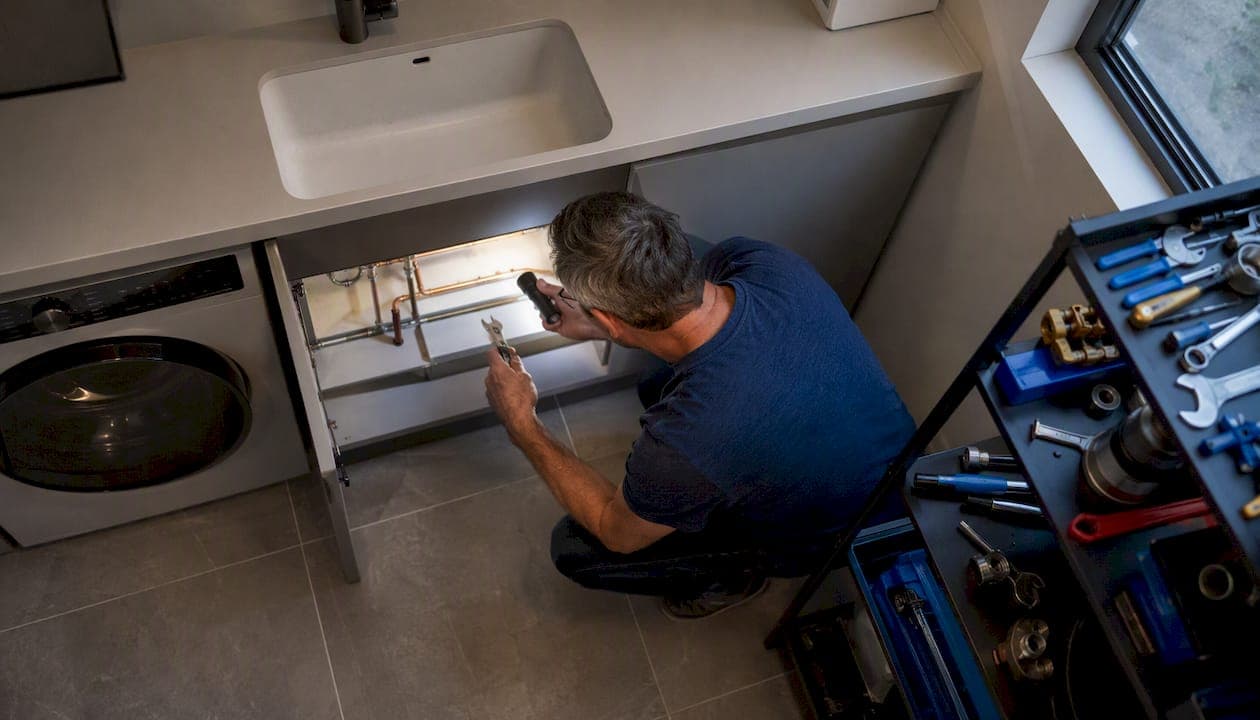
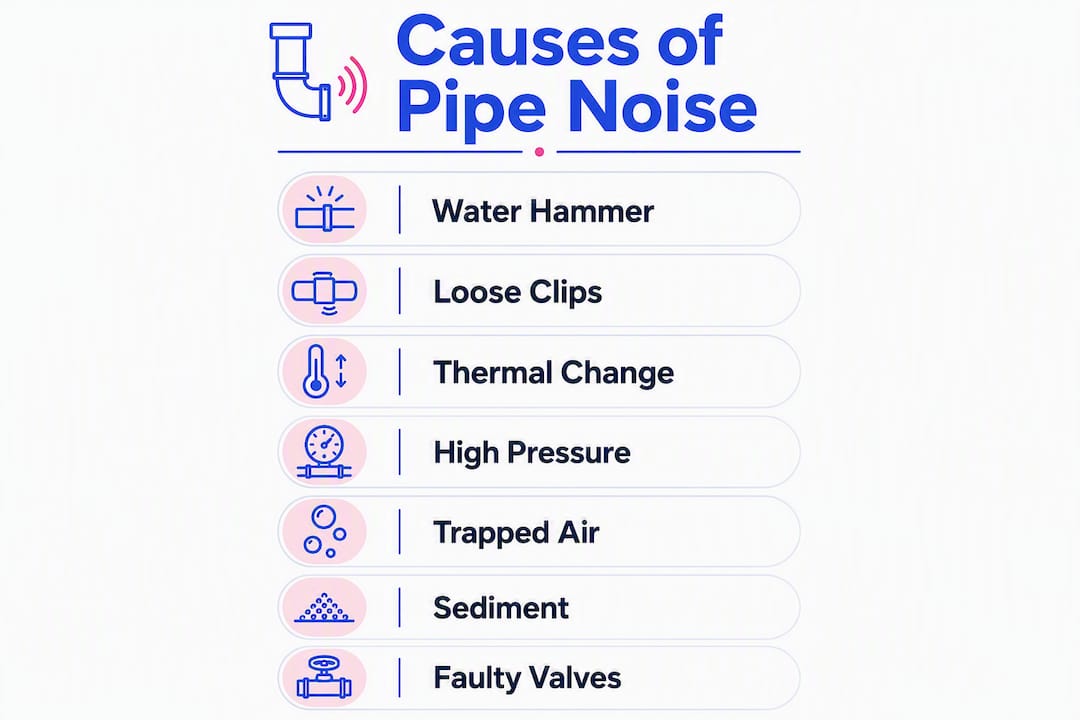
Pipes bang because of sudden pressure changes, loose supports, or thermal movement sending shockwaves or vibration through your plumbing. The most common culprits are water hammer (a pressure surge when a valve snaps shut), unsecured pipe runs rattling against framing, thermal expansion in hot-water pipes, high incoming mains pressure, trapped air, sediment in your hot-water system, or a worn solenoid or check valve.
Three safe things to do right now:
- Open any isolation valves (under sinks, behind toilets, at the washing machine) fully. A partially closed valve creates turbulence and noise every time water passes through it.
- Walk the visible pipe runs in your roof space, under the house, or in the laundry and check whether any clips or straps have come loose. A pipe that can move will bang.
- Reduce simultaneous appliance use temporarily. Running the dishwasher and washing machine at the same time amplifies pressure swings.
Pro Tip: To confirm water hammer, listen carefully the next time the washing machine or dishwasher finishes a cycle. If the bang lands exactly when the appliance valve closes; that is your diagnosis. Stop all DIY immediately if you notice leaks, visible pipe movement, or the banging is getting louder over time.
Table of Contents
- Why do pipes make banging noises? The main causes explained
- Step-by-step DIY checks you can safely do at home
- What parts and tools fix noisy pipes, and where to get them in Australia
- When should you call a licensed plumber?
- What a plumber will do, and what it typically costs in Australia
- How Dualflowservices diagnoses banging pipes on the Mornington Peninsula
- Key takeaways
- The noise your pipes make is worth taking seriously
- Dualflowservices can diagnose and fix your noisy pipes
- Useful sources and further reading
Why do pipes make banging noises? The main causes explained
Understanding which cause matches your sound is the fastest route to the right fix. Each one has a distinct signature.
1. Water hammer (pressure surge)
Water hammer is the sharp, single bang you hear when a fast-closing valve shuts off. Water moving through a pipe carries momentum. When a valve snaps shut instantly, that momentum has nowhere to go and creates a pressure shockwave that travels back through the system. Modern washing machines, dishwashers, and solenoid-controlled valves are the most frequent triggers because they close in milliseconds rather than the gradual turn of a manual tap. The bang typically lands right as the appliance cycle ends or the moment you turn off a tap quickly.
2. Loose or missing pipe clips and straps
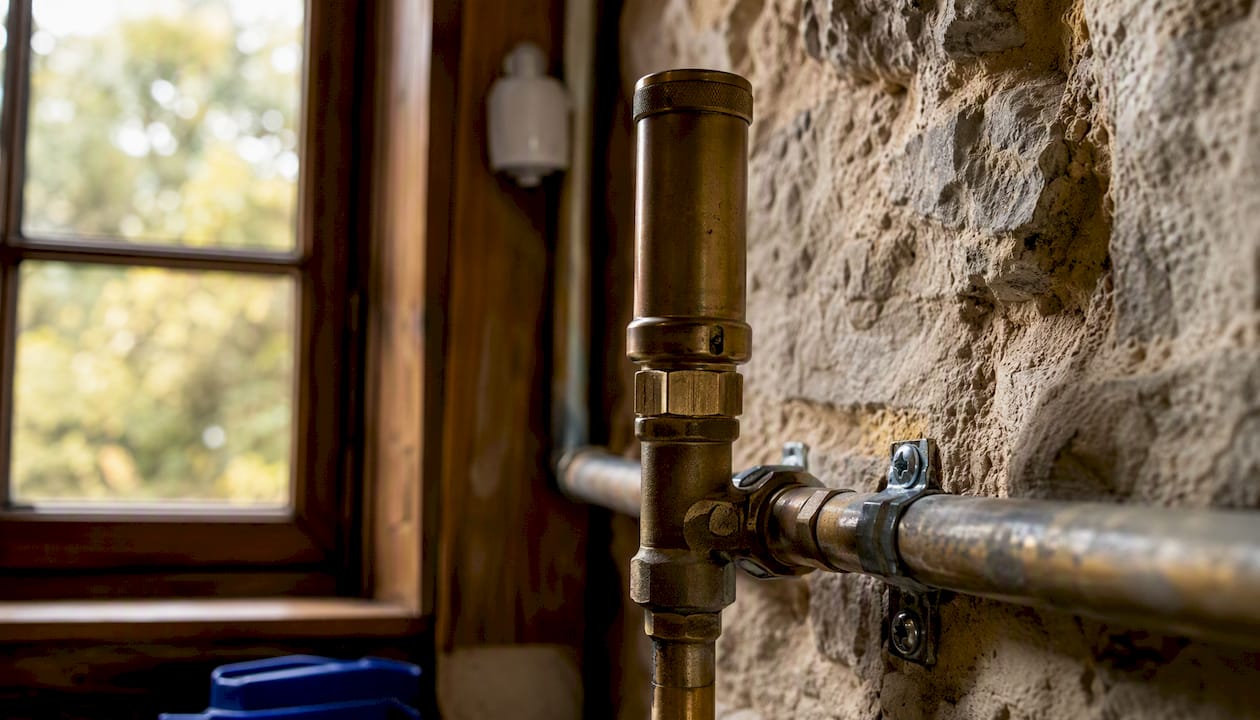
Pipes held loosely against framing will knock every time water flows or pressure changes. The sound is often a rhythmic rattle or thump localised to one area, such as under the bathroom or near the laundry. Adding pipe clips or cushioning straps often resolves this without touching the water supply at all.
3. Thermal expansion and contraction
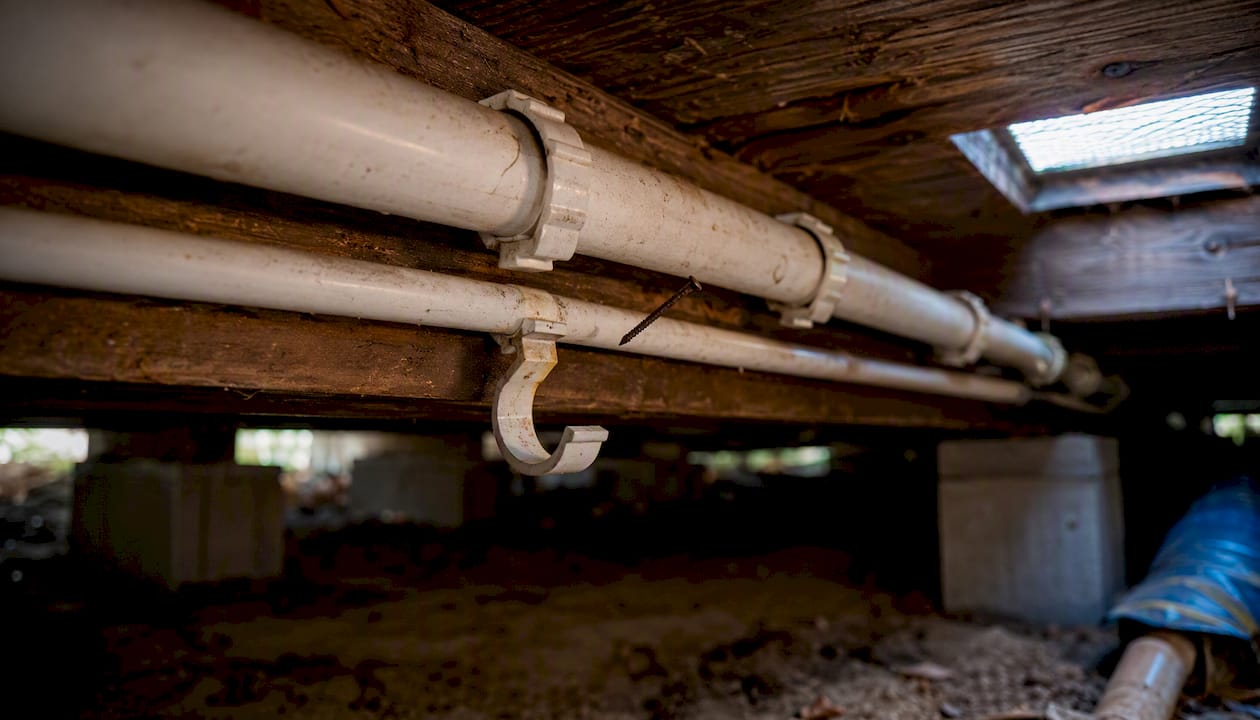
Hot-water pipes expand as they heat up and contract as they cool. When a pipe runs through a tight cavity in a wall, floor, or joist without room to move freely, it rubs against the surrounding timber or brackets. The result is a rhythmic ticking, creaking, or popping sound, not a sharp bang. It is most noticeable when hot water first runs, or in the minutes after use stops and the pipes cool back down. Cushioning the support points is the correct fix here, not a water hammer arrestor.
4. High incoming water pressure
High household pressure causes pipes to vibrate, rattle, or hum under stress. It also amplifies every other noise source in the system. Sustained high pressure accelerates wear on washers, valves, and appliance fittings across the whole house, not just the pipes themselves.
5. Trapped air
Air pockets in the system produce a shuddering or vibrating sound rather than a clean bang. If you hear sputtering at the tap alongside the noise, trapped air is a likely contributor. Bleeding the affected lines or running taps to purge air usually clears it.
6. Sediment in the hot-water system
Sediment build-up in a storage hot-water tank forces water bubbles to burst through the sediment layer, producing a knocking or rumbling sound that travels through connected pipework. If the noise seems to originate near the hot-water unit and happens when you draw hot water, sediment is a strong candidate.
7. Faulty or worn solenoid and check valves
Partially closed shutoff valves restrict flow and create turbulence. A worn appliance fill valve can produce short, sudden bangs that mimic water hammer but are actually the valve chattering as it struggles to seat properly.
Quick sound guide:
- Sharp single bang at valve close: water hammer
- Rhythmic ticking or creaking during or after hot-water use: thermal expansion
- Rattle or knock localised to one area while water runs: loose pipe support
- Humming or vibrating throughout the house: high mains pressure
- Sputtering with noise: trapped air
Step-by-step DIY checks you can safely do at home
Work through these in order. Most banging sounds in plumbing resolve at step three or four.
- Time the noise. Note exactly when it occurs: at valve close, while water is running, only with hot water, or at night when nothing is on. This single observation narrows the cause significantly.
- Isolate the trigger. Does it happen from one fixture only, or throughout the house? One fixture points to a localised loose support or faulty valve. Whole-house noise points to mains pressure or a system-wide issue.
- Inspect visible pipe runs. Check under the house, in the roof space, and in the laundry for loose or missing clips. A pipe that rocks when you push it gently needs a new strap.
- Open isolation valves fully. Check under sinks, behind the toilet cistern, and at the washing machine. A valve that is only three-quarters open creates turbulence and noise.
- Check appliance fill valves. If the bang is tied to the washing machine or dishwasher, the appliance's internal solenoid valve may be the source. A plumber or appliance technician can replace it.
- Listen near the hot-water system. Knocking or rumbling from the tank itself, especially when drawing hot water, suggests sediment. Flushing the tank annually reduces build-up. For guidance on water heater knocking, the same sediment-flush principle applies across storage systems.
Tools and materials for these checks:
- Adjustable spanner (for checking valve positions)
- Flat-head and Phillips screwdrivers
- Pipe clips or cushioning straps (available at Bunnings, Reece, or Tradelink)
- Foam pipe insulation strips (for thermal expansion points)
- Hose clamps (for securing flexible connections)
- Torch and phone camera (for recording the noise and location)
Pro Tip: Before a plumber visits, record a short video on your phone showing where the noise comes from and what you were doing when it started. A 30-second clip saves significant diagnostic time on site.
Safety boundary: Shut off the mains water supply at the meter if you suspect a leak. Do not cut into live pipework or attempt to replace valves unless you are confident and competent. Plumbing work that alters mains pressure in Australia must be carried out by a licensed plumber under the Plumbing Code of Australia.
What parts and tools fix noisy pipes, and where to get them in Australia
| Part | What it does | Best for | Approximate cost (AUD) |
|---|---|---|---|
| Water hammer arrestor | Absorbs pressure shockwave via piston or air chamber | Fast-closing valves, appliances | $30 per unit |
| Pressure-reducing valve (PRV) | Reduces incoming mains pressure to a safe level | Whole-house high-pressure issues | — |
| Expansion tank | Provides space for thermal expansion in closed hot-water systems | Storage hot-water systems | — |
| Pipe clips and straps | Secure pipe runs to framing | Loose or rattling pipes | $2 per clip |
| Foam pipe insulation | Cushions pipes at tight support points | Thermal expansion/contraction | $5 per metre |
| Replacement angle stops/washers | Restore valve seating and stop chatter | Worn or faulty isolation valves | — |
A few sourcing notes worth knowing. Pipe clips, foam insulation, and hose clamps are stocked at Bunnings Warehouse nationally. Water hammer arrestors and PRVs are available through trade plumbing suppliers like Reece and Tradelink, as well as online retailers. Expansion tanks are typically a trade-supply item and require a licensed plumber to install correctly, since they connect to the mains system.
On arrestor type: piston-type arrestors with a sealed chamber tend to hold their effectiveness longer than simple captive-air models, which gradually lose their air cushion as the air dissolves into the water over time.
When should you call a licensed plumber?
Some problems are safe to investigate yourself. Others need a licensed tradesperson, and knowing the difference matters.
Call a plumber when:
- The banging is loud, sharp, or has worsened over time
- Pipes are visibly moving or vibrating at fittings
- You notice water staining on walls, ceilings, or floors
- Water pressure has dropped noticeably alongside the noise
- The noise started after a recent repair or appliance installation
- Banging occurs even when no water is running inside the house
- The sound comes from near the hot-water system or boiler
- Multiple fixtures trigger noise throughout the whole house
Repeated pressure waves stress pipe joints, fittings, and appliance valves over time. What starts as an annoying sound can eventually produce a leak at a joint or fitting. Addressing it early is cheaper than repairing the damage later.
Before the plumber arrives, prepare:
- Note the exact timing and trigger (which fixture, which appliance, time of day)
- Record a short video showing where the sound comes from
- List which DIY steps you already tried
- Note the age of your hot-water system and any recent plumbing work
- Know the location of your mains shutoff valve
For urgent situations, the emergency plumbing checklist for Victorian homeowners covers what to do while you wait for a tradesperson.
What a plumber will do, and what it typically costs in Australia
Typical job scope and timeframes:
- Small jobs (securing loose clips, adding cushioning straps, opening valves): 30–60 minutes on site. These are often resolved during a standard service call.
- Medium jobs (installing a water hammer arrestor, replacing a faulty valve or fill valve): 1–2 hours. Parts are usually carried on the van or sourced same day.
- Larger jobs (fitting a PRV, installing an expansion tank, repairing corroded pipe runs): half a day or more, depending on access and system complexity.
Cost factors in the Melbourne and Mornington Peninsula region:
| Job type | Estimated cost range (AUD, labour and parts) | Notes |
|---|---|---|
| Service call and diagnosis | — | Varies by provider and time of day |
| Securing loose pipes / adding clips | — | Depends on access and number of runs |
| Water hammer arrestor installation | — | Per unit, including labour |
| PRV replacement or installation | — | Supply, install, and pressure test |
| Expansion tank installation | — | Hot-water system type affects price |
| Hot-water tank flush | — | Recommended annually for storage systems |
These are estimates for the Melbourne and Mornington Peninsula region and will vary with access difficulty, materials, and call-out timing. Emergency call-outs outside business hours carry a higher rate. Get at least one written quote before proceeding on larger jobs.
To get a sharper quote, have ready:
- Photos or video of the noisy pipe run
- Age and brand of your hot-water system
- Location of the noise within the house
- Any evidence of leaks, staining, or pressure changes
- Whether the noise is new or has been present for some time
How Dualflowservices diagnoses banging pipes on the Mornington Peninsula
When a Dualflowservices plumber arrives for a noisy-pipe job, the diagnostic sequence is consistent regardless of the house age or system type.
On-site diagnostic checklist:
- Confirm the timing and trigger with the homeowner (which fixture, which appliance, time of day)
- Locate the nearest mains shutoff and all relevant isolation valves
- Inspect visible pipe runs for loose straps, missing clips, or pipes rubbing against framing
- Check all isolation valves are fully open
- Test static and running pressure where authorised, to determine whether a PRV is warranted
- Inspect the hot-water tank for sediment signs (age, sounds, water colour)
- Check appliance fill valves and solenoid valves for wear or chatter
Understanding how plumbing venting systems affect pressure behaviour helps explain why some noises only appear at certain times of day or with specific fixtures.
Photo and video briefing tips:
- Film the pipe run closest to the noise source, showing how it is (or is not) clipped to the wall or joist
- Capture the noise itself if possible, even a short clip on a phone is useful
- Show the hot-water unit, including the brand label and any visible corrosion or staining
- Include the area around the mains meter if you have noticed pressure changes
To book a visit or discuss an emergency call-out, Dualflowservices needs your address, a description of the noise and when it occurs, and your preferred contact window. The team covers the Mornington Peninsula and surrounding Melbourne suburbs, including emergency call-outs. Preventative plumbing maintenance visits can also catch loose clips and pressure issues before they escalate into a noisy problem.
Key takeaways
Banging pipes almost always trace back to water hammer, loose supports, or high mains pressure, and most cases have a straightforward fix once the cause is confirmed.
| Point | Details |
|---|---|
| Water hammer is the top cause | A pressure shockwave from a fast-closing valve produces a sharp bang at the moment the valve shuts. |
| Start with the simplest checks | Open isolation valves fully, inspect visible clips, and time the noise before buying any parts. |
| Match the fix to the cause | Use a water hammer arrestor for pressure surges, cushioning clips for thermal expansion, and a PRV for whole-house high pressure. |
| Stop DIY at clear warning signs | Visible pipe movement, leaks, water staining, or worsening noise all require a licensed plumber. |
| Dualflowservices covers the Mornington Peninsula | Emergency call-outs, arrestor and PRV installations, and scheduled maintenance are available across the region. |
The noise your pipes make is worth taking seriously
Most homeowners hear a bang in the wall and assume it is just "old house sounds." That instinct to ignore it is understandable, but it is worth pushing back on. Water hammer, in particular, is not a passive annoyance. Every shockwave stresses the joints, elbows, and fittings in your system. A fitting that holds for years under normal pressure can fail much sooner under repeated hydraulic shock.
What I find most telling on site is how often the fix is genuinely simple. A loose clip. A valve that is sitting at three-quarters open. A pipe rubbing against a joist that just needs a foam sleeve. These are fifteen-minute jobs when caught early. The same pipe, left to bang for two more years, can work a joint loose and turn into a leak inside a wall cavity.
The diagnostic step most homeowners skip is timing. If you can tell a plumber exactly when the noise happens and what triggers it, the job is half done before anyone touches a spanner. That specificity is what separates a quick fix from a half-day investigation.
Dualflowservices can diagnose and fix your noisy pipes
Banging pipes that go beyond a loose clip or a partially open valve need a licensed tradesperson with the right tools and parts on hand. Dualflowservices provides same-day emergency call-outs and scheduled plumbing visits across the Mornington Peninsula and surrounding Melbourne suburbs, covering everything from water hammer arrestor installation and PRV replacement to expansion tank fitting and hot-water system servicing.

The team carries common parts including arrestors, PRVs, and pipe clips, so most standard fixes are completed in a single visit. To get the most from your booking, have a short video of the noise, the location of the affected pipe run, and your hot-water system details ready when you call.
Book a plumbing visit or request an emergency call-out through the Dualflowservices website. The team is available for urgent jobs across the Peninsula and can advise on the right fix before any work begins.
This article is general information only and does not constitute licensed plumbing advice. Confirm current requirements with a licensed plumber or the relevant authority for your specific situation.
Useful sources and further reading
- What Causes Banging Pipes and How to Stop It — Oatey: Clear explanation of water hammer and sediment noise, with guidance on arrestors.
- Why Are My Pipes Making a Knocking or Banging Noise? — Dalmatian Plumbing: Practical cause-and-timing breakdown for homeowners diagnosing the source.
- Understanding Water Hammer — Harris County MUD No. 71: Municipal utility explainer on pressure waves and when to act.
- How to Fix a Noisy Pipe — FixUpFirst: Covers PRVs, arrestors, and piston-type versus captive-air arrestor longevity.
- Fixing Water Hammer — Plumbing Advice: Step-by-step guide to securing loose pipes and checking valves.
- Water Hammer Causes and Solutions — Measure Monitor Control: Technical overview of long-term damage risks from repeated pressure waves.
- Preventative Plumbing Maintenance — Dualflowservices Blog: Practical guidance on keeping pipes, clips, and hot-water systems in good condition.
- How Plumbing Venting Systems Work — Dualflowservices Blog: Explains how venting and pressure interact in domestic systems.
Parts availability in Australia: Pipe clips, foam insulation, and hose clamps are available at Bunnings Warehouse nationally. Water hammer arrestors, PRVs, and expansion tanks are stocked at Reece and Tradelink trade counters. Any work that alters mains pressure, including PRV replacement and expansion tank installation, must be carried out by a licensed plumber under the Plumbing Code of Australia.