
Plumbing compliance in an aged care facility is defined as the ongoing process of meeting Victorian legislative requirements, Australian Standards, and National Construction Code (NCC) mandates to protect residents from waterborne hazards and ensure safe water delivery. Aged care residents are among the most vulnerable people in any building. Immunocompromised health, limited mobility, and constant exposure to water systems make plumbing failures genuinely life-threatening. The Victorian Building Authority (VBA) enforces these obligations, and the NCC 2025 sets the technical baseline. This guide explains exactly what compliance requires, how to audit your facility, and who must carry out the work.
What are the essential plumbing compliance requirements for aged care?
Aged care plumbing compliance in Victoria is governed by a layered framework of legislation, Australian Standards, and the NCC. Each layer carries specific obligations that facility managers must meet and document.
Temperature control and thermostatic mixing valves
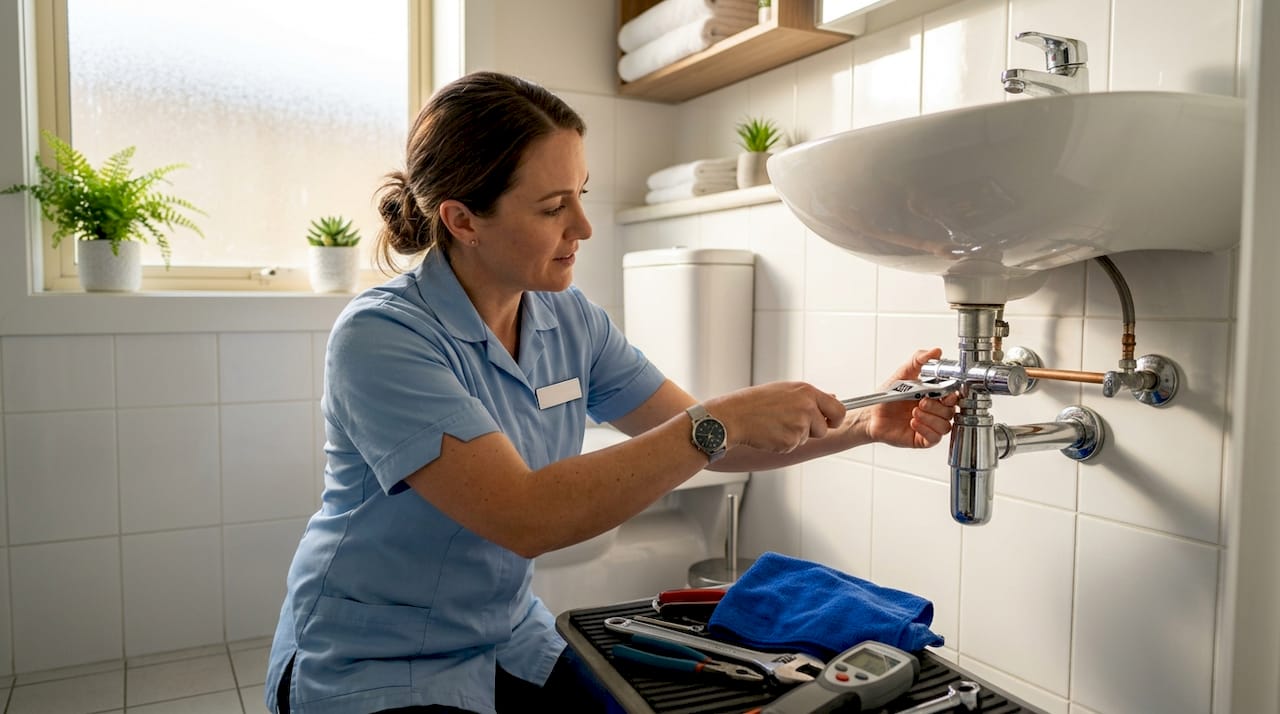
Hot water at personal hygiene outlets must not exceed 45°C in aged care facilities under NCC 2025. That limit exists because residents with reduced sensation or slower reaction times face serious scalding risk at higher temperatures. Hot water storage systems must maintain a minimum of 60°C to suppress Legionella bacteria, as required by AS/NZS 3500.4, Clause 1.9. The gap between storage temperature and delivery temperature is bridged by thermostatic mixing valves (TMVs) complying with AS 4032.1. TMVs must be tested and maintained annually under AS 4032.3.
Certificates of Compliance and lodgement timelines
Licensed plumbers must lodge Certificates of Compliance within 5 days of completing work valued at $750 or more in Victoria. These certificates are legal evidence that the work meets safety and regulatory standards. Records must be retained for at least six years. Facility managers should maintain a register of all certificates, including the date of issue, the scope of work, and the plumber's licence number.
Capital Maintenance Plan obligations from 2026
Victorian legislation effective may 2026 requires aged care operators to maintain a 10-year Capital Maintenance Plan covering all plumbing assets. That plan must include condition assessments, estimated remaining asset life, and photographic evidence of each asset's current state. This is a legal compliance obligation, not a best-practice recommendation. Facilities without a current plan face regulatory exposure from the moment the legislation takes effect.
Key compliance obligations at a glance:
- Hot water delivery at personal hygiene outlets must not exceed 45°C (NCC 2025)
- Hot water storage must be maintained at a minimum of 60°C (AS/NZS 3500.4)
- TMVs must comply with AS 4032.1 and be serviced annually under AS 4032.3
- Certificates of Compliance must be lodged within 5 days of qualifying work
- Records must be retained for a minimum of six years
- A 10-year Capital Maintenance Plan for plumbing assets is required from may 2026
How do you conduct a plumbing compliance audit?
A plumbing compliance audit is a structured review of your facility's plumbing infrastructure against AS/NZS 3500, NCC requirements, and your existing compliance records. Facilities that audit proactively avoid the costly scramble that follows a regulatory inspection or an incident.
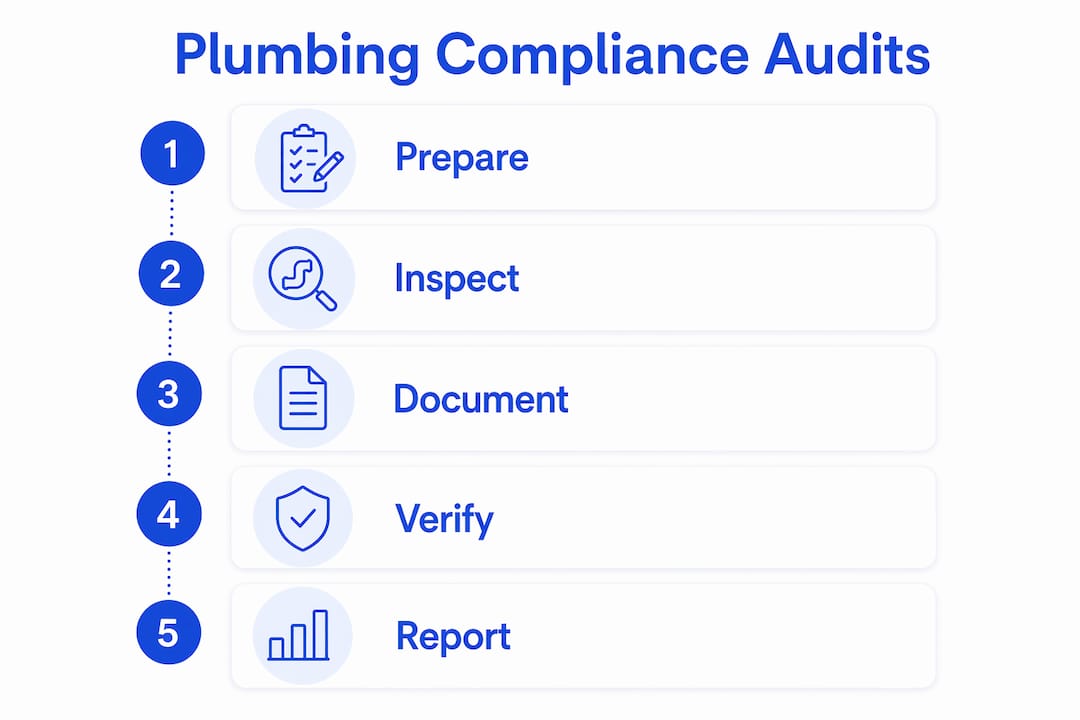
Step-by-step audit process
-
Compile your compliance document register. Gather all existing Certificates of Compliance, TMV service reports, backflow prevention certificates, and maintenance logs. Identify any gaps in the record trail.
-
Build your audit checklist. Base it on AS/NZS 3500 and NCC 2025 requirements. Include every hot water outlet, TMV location, backflow prevention device, and drainage point in the facility.
-
Conduct the physical inspection. Walk every area of the facility with the checklist. Check TMV accessibility, confirm temperature readings at outlets, inspect pipe condition, and photograph every asset. Photographic evidence and audit trails are a core requirement of the Capital Maintenance Plan and support any future regulatory review.
-
Identify compliance gaps. Compare physical findings against your document register and the applicable standards. Note any TMVs that are overdue for servicing, any certificates that have lapsed, and any assets approaching end of life.
-
Prioritise and schedule remediation. Rank gaps by risk level. Safety-critical items such as failed TMVs or missing backflow certificates require immediate action. Asset condition issues feed into your Capital Maintenance Plan for scheduling and budgeting.
The table below shows the core audit categories and what each one involves.
| Audit category | What to check | Key standard |
|---|---|---|
| Hot water temperature | Outlet delivery temperature at all personal hygiene points | NCC 2025, AS/NZS 3500.4 |
| TMV condition and access | Physical condition, accessibility, last service date | AS 4032.1, AS 4032.3 |
| Backflow prevention | Device type, test date, certificate currency | AS/NZS 3500.1 |
| Certificates of Compliance | Currency, scope, plumber licence details | VBA requirements |
| Asset condition | Pipe condition, remaining life estimate, photographic record | Capital Maintenance Plan |
Pro Tip: Schedule your annual TMV servicing at the same time as your broader plumbing audit. Combining both tasks reduces disruption to residents and gives you a single, consolidated compliance record for the year.
Who should perform compliance work in aged care facilities?
Only licensed plumbers can legally perform critical safety plumbing tasks in Victoria, including TMV recalibration, backflow prevention testing, and gas certification. This is not a grey area. In-house maintenance staff cannot carry out these tasks without the appropriate licence, and attempting to do so creates significant compliance vulnerabilities.
Risks of unlicensed plumbing work
Non-compliance can void your facility's insurance and trigger infringement notices from the VBA. The risk is compounded in aged care because residents are immunocompromised and waterborne pathogens such as Legionella pose a direct health threat. A single unlicensed repair that leads to a Legionella outbreak carries consequences far beyond a regulatory fine.
Managing your maintenance contracts
A maintenance agreement with a licensed plumbing contractor is the most reliable way to keep compliance on track. A well-structured agreement should cover:
- Annual TMV servicing and recalibration under AS 4032.3
- Backflow prevention device testing and certification
- Hot water system temperature checks and Legionella risk management
- Certificate of Compliance lodgement for all qualifying work
- Maintenance records provided in a format that supports your Capital Maintenance Plan
Dualflowservices provides scheduled maintenance agreements tailored to aged care and retirement village compliance requirements across the Mornington Peninsula and surrounding areas of Victoria.
What are the most common compliance mistakes in aged care facilities?
The most common compliance failures in aged care plumbing are predictable and preventable. Understanding them is the first step to avoiding them.
Failing to lodge Certificates of Compliance on time, skipping TMV servicing, and poor documentation are the three most frequent pitfalls. Each one creates a different category of risk.
-
Late or missing Certificates of Compliance. Work valued at $750 or more requires a certificate lodged within 5 days. Facilities that rely on verbal confirmation from a tradesperson have no legal evidence of compliance.
-
Skipping annual TMV servicing. TMVs that are not serviced annually under AS 4032.3 can fail to maintain safe delivery temperatures. A failed TMV is both a safety hazard and a compliance breach.
-
Using tempering valves instead of TMVs. Tempering valves are not suitable for vulnerable-person areas. NCC 2025 requires TMVs complying with AS 4032.1 at personal hygiene outlets in aged care. Substituting a tempering valve is a direct breach.
-
Poor documentation culture. Maintenance records that exist only in a tradesperson's head or on a handwritten note do not satisfy audit requirements. Documented inspections and compliance certificates form the backbone of effective plumbing asset management.
-
Inaccessible TMV installations. TMVs must be accessible for annual servicing. Valves installed in sealed wall cavities without access panels are non-compliant regardless of their initial installation quality.
Compliance is not a one-time event. It is a continuous obligation that requires scheduled servicing, timely certification, and a documented record trail that can withstand regulatory scrutiny at any point.
Key takeaways
Plumbing compliance in an aged care facility requires licensed professionals, documented maintenance records, and adherence to NCC 2025 and AS/NZS standards to protect residents and meet Victorian legal obligations.
| Point | Details |
|---|---|
| Temperature control is mandatory | Hot water delivery must not exceed 45°C at personal hygiene outlets; storage must stay above 60°C. |
| TMVs require annual servicing | AS 4032.3 mandates annual TMV testing and recalibration by a licensed plumber. |
| Certificates must be lodged promptly | Certificates of Compliance for work over $750 must be lodged within 5 days in Victoria. |
| Capital Maintenance Plan is now law | Victorian legislation from may 2026 requires a 10-year plumbing asset plan with photographic evidence. |
| Unlicensed work voids insurance | Only licensed plumbers can legally perform compliance tasks; unlicensed work risks fines and insurance voidance. |
What I've learned from years of aged care plumbing work
Aged care compliance gets treated as a paperwork problem far too often. Facility managers focus on getting the certificate filed and move on. The physical condition of the plumbing system gets less attention than the document trail.
That is the wrong way around. I have walked through facilities where every certificate was current but the TMVs were installed in ceiling voids with no access panels. Technically documented, practically inaccessible, and genuinely dangerous. The paperwork said compliant. The building said otherwise.
The 2026 Capital Maintenance Plan requirement is the most significant change I have seen in Victorian aged care plumbing regulation in years. It forces a shift from reactive maintenance to genuine asset management. Facilities that already have a structured maintenance agreement and a documented inspection history will find the transition straightforward. Those that have been coasting on annual certificates without a broader asset picture will face a significant catch-up effort.
My advice is to treat the audit as the starting point, not the finish line. Use it to build a real picture of your plumbing infrastructure. Know which assets are approaching end of life. Know which TMVs are due for replacement, not just recalibration. That knowledge is what protects your residents and keeps your facility on the right side of the VBA.
— Mike
Aged care plumbing compliance support from Dualflowservices
Aged care facility managers across the Mornington Peninsula trust Dualflowservices for plumbing compliance work that meets Victorian legislative requirements and protects residents.
Dualflowservices carries out compliance audits, annual TMV servicing under AS 4032.3, backflow prevention testing, and Certificate of Compliance lodgement for all qualifying work. Maintenance agreements are structured to align with your Capital Maintenance Plan obligations under the 2026 Victorian legislation. Every job is completed by licensed plumbers with direct experience in aged care and retirement village environments. Contact Dualflowservices to arrange a compliance audit or maintenance agreement for your facility.
FAQ
What temperature must hot water be in an aged care facility?
Hot water at personal hygiene outlets in aged care facilities must not exceed 45°C under NCC 2025. Storage systems must maintain a minimum of 60°C to prevent Legionella growth, as required by AS/NZS 3500.4.
Why are plumbing compliance audits required in aged care?
Plumbing compliance audits are required because aged care residents are immunocompromised and face serious risk from waterborne pathogens such as Legionella. Audits also satisfy Victorian legislative obligations and support the Capital Maintenance Plan requirements effective from may 2026.
How often do TMVs need to be serviced in aged care facilities?
TMVs must be serviced and tested annually under AS 4032.3. Annual servicing by a licensed plumber confirms the valve maintains safe delivery temperatures and meets AS 4032.1 compliance requirements.
Can in-house maintenance staff perform plumbing compliance work?
No. Critical compliance tasks including TMV recalibration, backflow testing, and gas certification must be performed by a licensed plumber in Victoria. Unlicensed work can void insurance and trigger regulatory fines.
What is a Certificate of Compliance in Victorian plumbing?
A Certificate of Compliance is a legal document confirming that plumbing work meets Victorian safety and regulatory standards. Licensed plumbers must lodge the certificate with the VBA within 5 days of completing work valued at $750 or more, and records must be kept for at least six years.