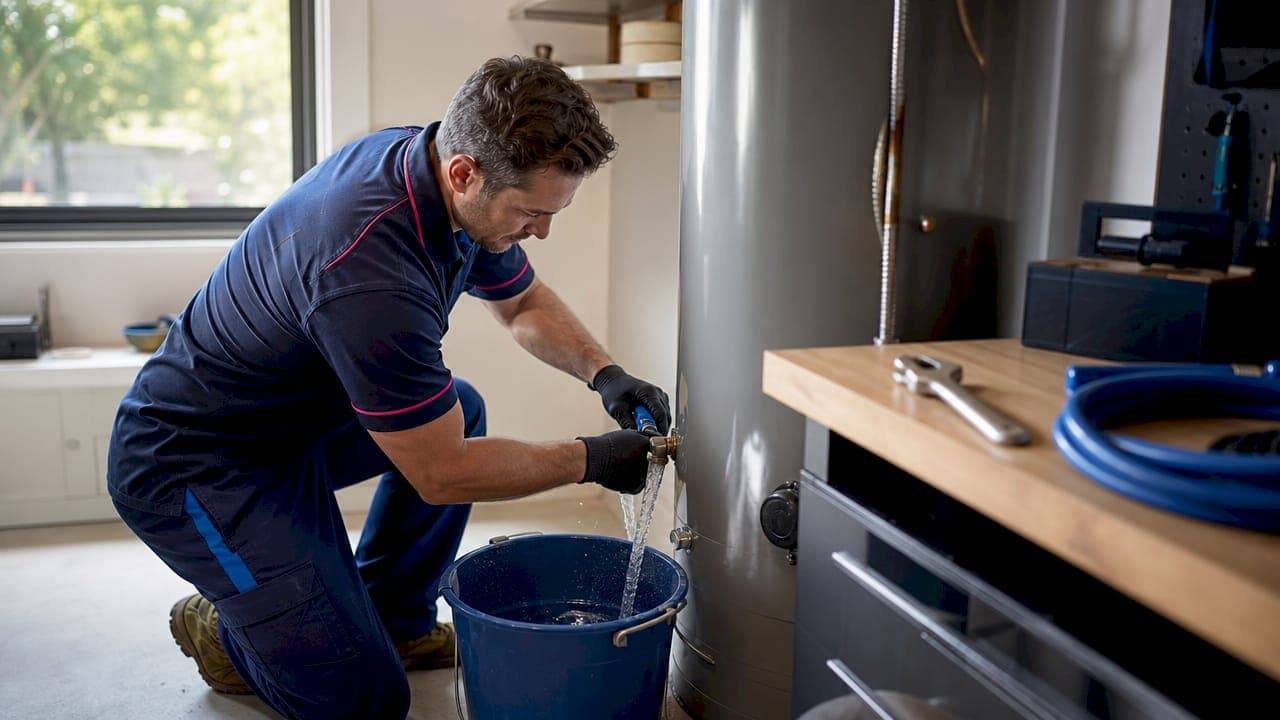
Regular hot water system flushing is the process of draining sediment and mineral deposits from your storage tank to keep the system running at full efficiency. In the plumbing trade, this is called a tank flush or sediment flush, and it is one of the most neglected maintenance tasks in Victorian homes and facilities. Skip it long enough and you pay for it twice: once in higher energy bills, and again in a premature system replacement. Annual flushing is the standard recommendation for most households, with six-monthly intervals for hard water areas or heavy-use facilities.
Why regular hot water system flushing is critical for efficiency
Sediment buildup is the primary reason hot water systems fail before their time. Victoria's mains water carries dissolved minerals, mainly calcium and magnesium carbonate. When water heats up inside a storage tank, those minerals precipitate out and settle on the tank floor and heating element. Over time, that layer thickens into a dense, chalky crust.
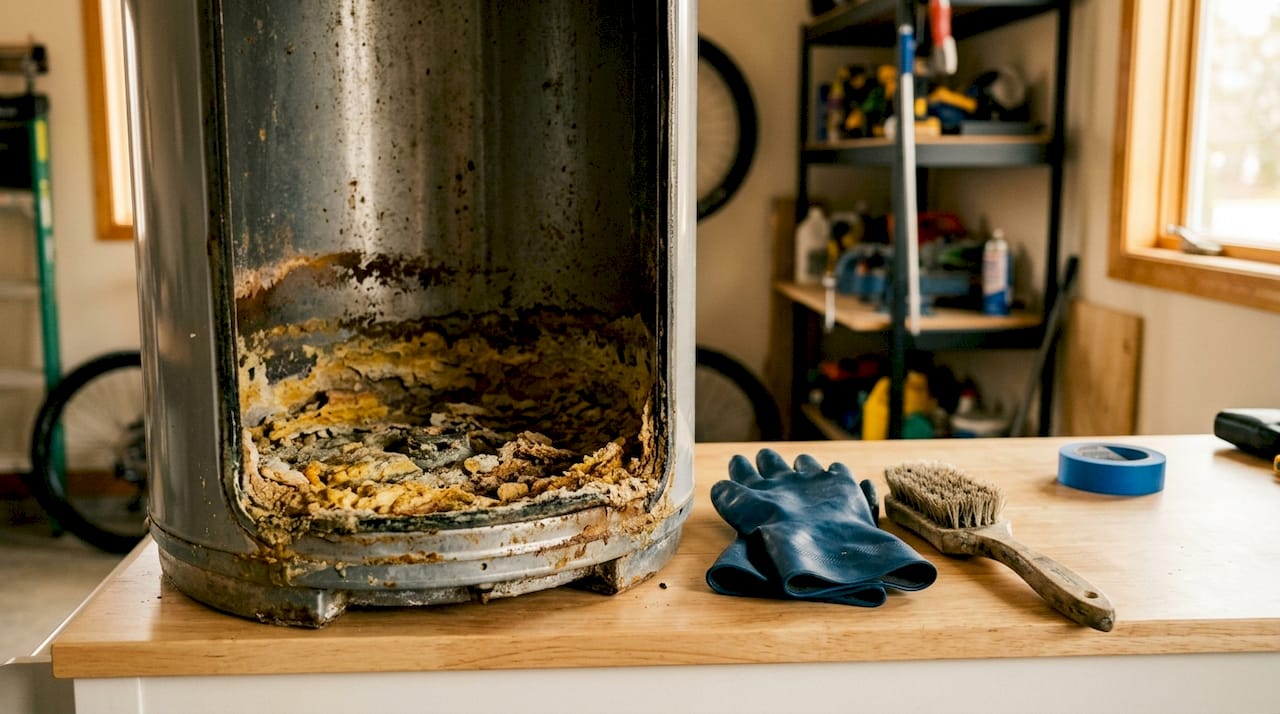
That crust acts as an insulating barrier. The heating element must work harder and run longer to push heat through the sediment and into the water above it. Mineral sediment deposits force the unit to consume more energy and shorten its lifespan. Higher energy consumption means higher bills every single quarter.
The wear on the heating element accelerates too. A tank-style system is designed to last 10–15 years. Neglecting sediment removal causes increased utility costs and damage to heating elements well before that window closes. For aged care facilities and retirement villages on the Mornington Peninsula, where hot water demand runs around the clock, that shortened lifespan translates directly into unplanned capital expenditure.
- Insulation effect: Sediment on the tank floor prevents efficient heat transfer, forcing longer heating cycles.
- Element damage: Constant overheating of the element through sediment contact causes premature burnout.
- Tank corrosion: Sediment traps moisture against the tank wall, accelerating rust and the risk of leaks.
- Energy waste: A system working harder than it should adds measurable cost to every energy bill.
Pro Tip: If your energy bills have crept up without an obvious cause, sediment buildup in the hot water system is one of the first things to check. A Dualflowservices technician can assess the tank condition during a scheduled flush.
What are the signs your hot water system needs flushing?
Your system will tell you when it needs attention. The signs are easy to spot once you know what to listen and look for.
Common indicators of sediment buildup include rumbling or popping noises, inconsistent water temperature, rust-coloured water, and reduced pressure at the tap. Each of these has a direct cause rooted in sediment accumulation.
- Rumbling or popping noises: Water trapped beneath the sediment layer heats and expands, creating noise. This is the most reliable early warning sign.
- Inconsistent temperature: Sediment disrupts even heat distribution, so the water temperature fluctuates during a shower or at the tap.
- Discoloured water: Rust-coloured or murky water signals that sediment or corrosion particles are entering the supply line.
- Reduced water pressure: Heavy sediment can partially block the outlet pipe, cutting flow rate to fixtures.
These symptoms do not always mean the system is beyond saving. Caught early, a thorough flush restores normal performance. Left too long, the damage to the element or tank lining may require a full replacement. If you notice discoloured water alongside rumbling noises, book a professional inspection rather than attempting a DIY flush. That combination can indicate corrosion inside the tank, which a flush alone will not fix.
Pro Tip: Run the hot tap into a white bucket once every few months. Clear water is a good sign. Cloudy or rust-tinted water means sediment is already entering your supply and flushing should not wait.
How often should you flush your hot water heater?
Flushing frequency depends on three factors: your local water hardness, how much hot water your household or facility uses, and the type of system you have.
Most households should flush once per year, with six-monthly flushing recommended for hard water areas or high-demand settings. That guidance applies directly to Victorian properties, where water hardness varies across the peninsula.
| Circumstance | Recommended flush frequency |
|---|---|
| Average household, standard water hardness | Once per year |
| Hard water area or high mineral content | Every 6 months |
| Aged care, retirement village, or high-demand facility | Every 6 months |
| Tankless (continuous flow) system | Annual descaling, not flushing |
| System older than 8 years | Annual flush plus annual inspection |
Tankless or continuous flow systems do not accumulate sediment in the same way as storage tanks. Tankless systems require periodic descaling rather than a standard flush, but the goal is identical: remove mineral deposits before they affect performance and reliability.
Timing matters too. Spring or autumn are the best seasons to schedule a flush, avoiding the peak demand of summer and winter. For facility managers, scheduling in autumn means the system is in top condition before the cold months drive up hot water demand.
Pro Tip: Set a calendar reminder on the same date each year. Pairing the flush with another annual service, like a smoke alarm check or air conditioning service, makes it easier to keep the habit.
How do you flush a hot water system safely?
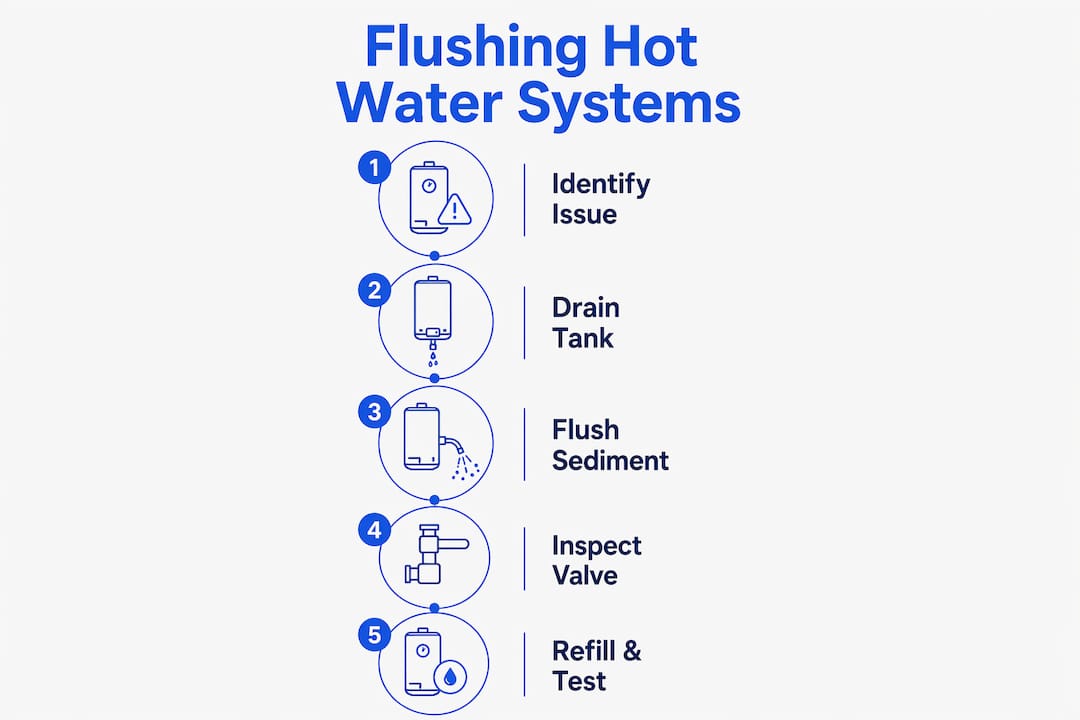
A professional flush takes around 60 minutes for a trained technician. A DIY attempt can take several hours, particularly if you are unfamiliar with gas or electric shutoff procedures. The steps below apply to a standard storage tank system.
- Turn off the power or gas supply. For electric systems, switch off the circuit breaker. For gas systems, turn the thermostat to the pilot setting. Never drain a tank with the heating element still active.
- Turn off the cold water inlet valve. This is the valve on the pipe feeding cold water into the top of the tank. Closing it stops new water entering during the drain.
- Connect a garden hose to the drain valve. The drain valve sits near the base of the tank. Run the hose to a drain, garden bed, or outside area. Sediment-laden water will stain concrete, so choose the outlet point carefully.
- Open a hot tap inside the house. Opening a tap prevents a vacuum forming in the tank, which would slow or stop drainage.
- Open the drain valve and let the tank empty. The water will be hot. Keep children and pets away from the drain area. Allow the tank to drain fully before moving to the next step.
- Flush with fresh water. Briefly open the cold water inlet to push remaining sediment out through the drain hose. Repeat until the water runs clear.
- Close the drain valve, remove the hose, and refill the tank. Close the drain valve firmly. Open the cold water inlet fully. Allow the tank to fill completely before restoring power or gas.
- Check for leaks. Inspect the drain valve and all connections once the tank is full and under pressure. A slow drip from the drain valve is common in older systems and may require a valve replacement.
The most common pitfall is restoring power before the tank is fully refilled. Running a heating element dry burns it out immediately. Wait until water flows steadily from the open hot tap inside the house before switching the power back on.
If the drain valve is seized or the water does not run clear after several flushes, call a licensed plumber. Forcing a stuck valve can crack it, causing a leak that requires an emergency repair.
Key takeaways
Regular hot water system flushing removes sediment that would otherwise raise energy costs, damage heating elements, and cut years off a system designed to last a decade or more.
| Point | Details |
|---|---|
| Flush annually as a minimum | Most Victorian households need a flush once per year; hard water areas need every 6 months. |
| Sediment raises energy costs | Mineral deposits insulate the heating element, forcing longer cycles and higher bills. |
| Know the warning signs | Rumbling noises, discoloured water, and inconsistent temperature all signal sediment buildup. |
| Tankless systems need descaling | Continuous flow systems require descaling rather than flushing, but the maintenance goal is the same. |
| Time it for spring or autumn | Scheduling outside peak seasons reduces disruption and prepares the system for high-demand months. |
What I've learned from years of hot water system callouts
The most common thing I hear from homeowners is that they were afraid flushing would cause a leak. That fear stops a lot of people from doing maintenance that would have saved them thousands. The truth is that flushing uncovers existing leaks hidden by sediment. The sediment was masking the problem, not preventing it.
I have attended plenty of emergency callouts where a system failed completely because nobody had touched it in eight or ten years. In almost every case, a simple annual flush would have extended the life of that unit by several years. The repair or replacement cost is always far higher than the cost of scheduled maintenance.
For facility managers at aged care homes and retirement villages, the stakes are even higher. Hot water is not a convenience in those settings. It is a compliance requirement. A system failure means cold showers for vulnerable residents and a potential breach of care standards. Keeping a maintenance log with flush dates, technician notes, and any observed changes in water quality is the single most useful habit a facility manager can build.
My advice to anyone who has not flushed their system in over a year: do not wait for a symptom. Book it now, treat it as routine, and your system will reward you with years of reliable, efficient service.
— Mike
Hot water system maintenance with Dualflowservices
Dualflowservices provides scheduled hot water system maintenance across the Mornington Peninsula, covering residential homes, aged care facilities, retirement villages, and commercial properties.
A professional flush from Dualflowservices takes around 60 minutes and includes a full inspection of the drain valve, anode rod condition, and pressure relief valve. That inspection catches problems before they become emergencies. For facility managers with compliance obligations, Dualflowservices provides written service records after every visit. Book a hot water system service through the Dualflowservices website and get your system ready for the months ahead.
FAQ
How often should I flush my hot water system?
Most households need a flush once per year. Properties with hard water or high hot water demand should flush every six months.
What happens if I never flush my hot water system?
Sediment accumulates and acts as an insulating layer, raising energy costs and causing premature wear on the heating element and tank. Systems that are never flushed typically fail well before their expected 10–15 year lifespan.
Can flushing cause my hot water system to leak?
Flushing does not cause leaks. Flushing reveals leaks that were already present but hidden by sediment buildup. If a leak appears during a flush, the underlying damage was there before the maintenance began.
Do tankless hot water systems need flushing?
Tankless systems do not accumulate sediment in a storage tank, so they do not need a standard flush. They do require periodic descaling to remove mineral deposits from the heat exchanger.
When is the best time of year to flush a hot water system?
Spring or autumn are the best times to schedule a flush. Flushing outside the peak summer and winter periods minimises disruption and ensures the system is in good condition before demand increases.