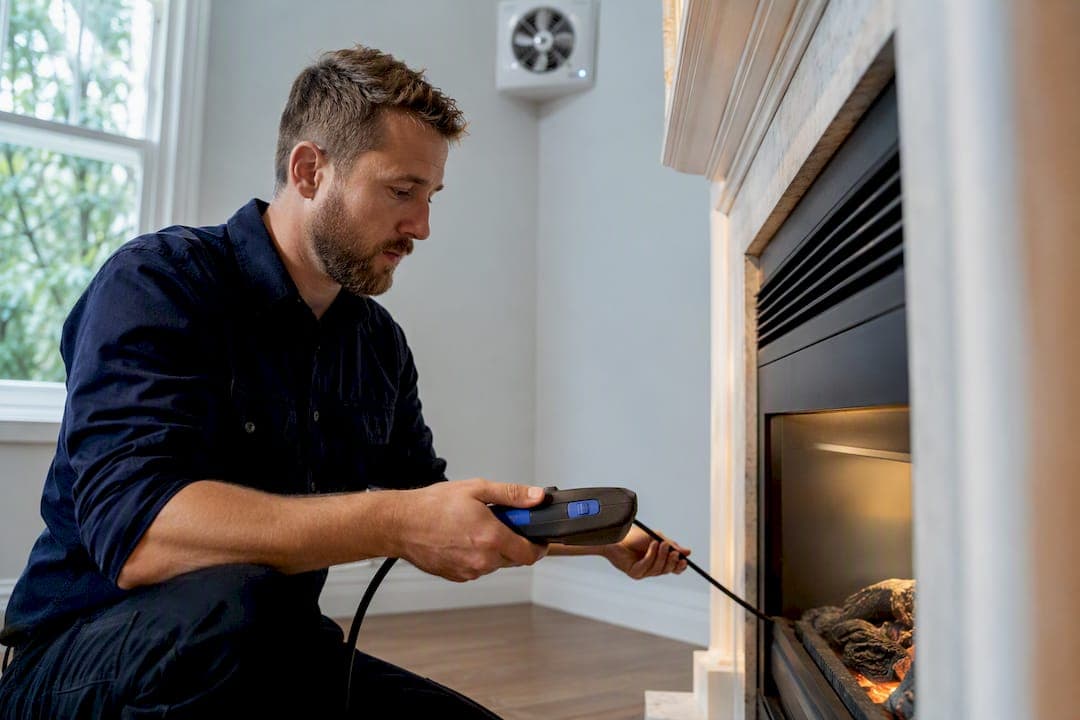
Gas safety checks, including carbon monoxide testing, are mandatory periodically every couple of years for rental properties under agreements signed after 29 March 2021 in Victoria, and strongly recommended for owner-occupied homes. A valid test can only be carried out by a licensed gasfitter holding the Type A appliance servicing class, and it must be done as part of a full service, not as a stand-alone check. CO alarms help as a back-up, but they never replace that servicing.
TL;DR:
- Gas safety checks for rental properties in Victoria must be performed by a licensed Type A appliance servicing gasfitter every two years, including carbon monoxide spillage testing.
- Proper testing requires a four-stage process: baseline ambient measurement, negative pressure test, CO spillage test during normal appliance operation, and outcome assessment, with negative pressure testing being crucial.
- Records of gas safety checks must be kept for at least four years, including the technician’s license details, test readings, and any repairs or recommendations.
- Owners and tenants cannot refuse a mandatory gas safety check, but tenants must be given proper notice and can request verification of the technician’s identity and license class.
- Omitting the negative pressure test in CO checks significantly increases the risk of undetected gas spillage, especially in tightly sealed or renovated homes.
Table of Contents
- Carbon monoxide test requirements Victoria landlords and homeowners face
- Who can legally test for carbon monoxide in Victoria
- What actually happens during a carbon monoxide test
- Landlord obligations: records, disclosure, and repairs
- What to do when a test finds unsafe carbon monoxide levels
- Where carbon monoxide alarms fit and where they fall short
- Dualflow Services' practical guidance from on-site work in Victoria
- Does owner-occupied housing need carbon monoxide testing too?
- What CO reading actually counts as unsafe under Victorian guidance
- How often should you test beyond the two-year minimum?
- How long do you need to keep CO test records?
- Can tenants ask questions or refuse access for a CO test?
- What happens if you skip carbon monoxide testing in Victoria?
- What matters most in Victoria's carbon monoxide rules
- Book a Type A gas service and carbon monoxide test with Dualflow Services
- Where to check the official rules yourself
- Sources
Carbon monoxide test requirements Victoria landlords and homeowners face
The rule that matters most sits in the Residential Tenancies Regulations 2021: rental providers who signed a new tenancy agreement after 29 March 2021 must arrange a gas safety check periodically every couple of years, covering heaters, stoves, and gas hot water systems. That check has to be performed by a licensed or registered gasfitter, and carbon monoxide testing is part of it, not an optional extra.
A compliant gas safety check under the regulations typically covers:
- A visual inspection of each gas appliance and its flue or exhaust system
- Negative pressure testing to check whether extraction fans or sealed rooms are pulling combustion gases back inside
- A CO spillage test while the appliance runs at normal operating pressure
- Confirmation the appliance is serviced in line with AS 4575 servicing standards where applicable
If your tenancy agreement predates 29 March 2021, the biennial check isn't strictly enforced under that regulation, though Energy Safe Victoria and the VBA both recommend it as standard practice regardless of when the lease started. Rental providers also need to disclose the date of the last gas safety check to new tenants before they move in, which means the paperwork trail matters just as much as the test itself.
Who can legally test for carbon monoxide in Victoria
Not every tradesperson with a gasfitting licence can test for CO spillage. The licence or registration needs to carry the Type A appliance servicing class specifically, which is the qualification tied to servicing domestic gas appliances like heaters, cooktops, and hot water units.
- Check the licence class, not just the licence. Ask to see the card or certificate and confirm it lists Type A appliance servicing, not just gasfitting generally.
- Verify against the VBA public register. The Victorian Building Authority maintains a searchable licensee database, so you can confirm the name and licence number match before booking.
- Ask for a written service report. A legitimate test always ends with documented readings, not a verbal "it's fine."
- Confirm the equipment is calibrated. A CO analyser that hasn't been calibrated recently can return readings that look safe when they aren't.
Apprentices can work under supervision, but the person signing off on the test and the report needs the appropriate class on their own licence.
What actually happens during a carbon monoxide test
A proper CO test follows a set sequence, and skipping steps is exactly how unsafe appliances get missed. Energy Safe Victoria's guidance sheet on this procedure, known as GIS 38, sets out four distinct stages.
- Baseline ambient reading: the gasfitter measures background CO in the room before the appliance is switched on, so any later reading has a genuine comparison point.
- Negative pressure (smoke) test: with exhaust fans, range hoods, or other extraction running, a smoke test checks whether the room is pulling air (and combustion gases) back down a flue that should be venting outward.
- CO spillage test: the appliance runs at its normal operating pressure while the technician samples air at known spillage points, commonly for 5 minutes on space heaters and up to 10 minutes on some decorative heaters.
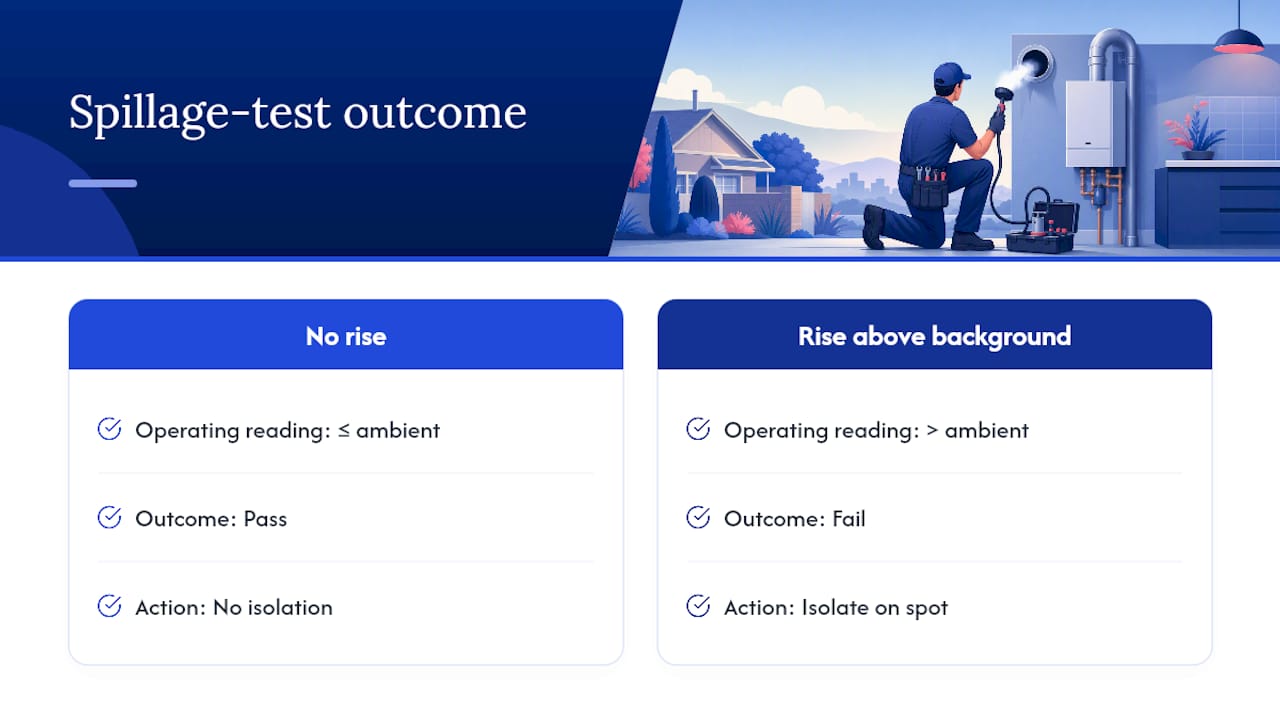
- Outcome assessment: CO levels shouldn't exceed the background reading taken in stage one; if they do, the appliance fails and needs isolation.
Environmental conditions can throw the results off. Strong wind gusting across a flue outlet, a nearby exhaust fan cycling on and off, or even a door left open partway through can produce a false reading. That's part of why the sequence matters, and why a rushed five-minute "test" that skips the negative pressure stage isn't worth the paper it's written on.
Pro Tip: Ask your gasfitter whether they tested under negative pressure with your extraction fans running. Homes sealed up tight for energy efficiency are far more likely to pull combustion gases back inside than older, draughtier houses, and that single question tells you whether the test was done properly.
Landlord obligations: records, disclosure, and repairs
Rental providers carry two separate obligations here: get the check done, and prove you got it done. Consumer Affairs Victoria requires records of every gas safety check to be kept and the date of the last check disclosed to incoming tenants.
- Keep a copy of every service report, including the technician's licence number and class.
- Disclose the date of the most recent gas safety check to new tenants before or at the start of the tenancy.
- Note any outstanding recommendations from the report and act on them promptly.
- Respond quickly to tenant reports of gas smells, pilot light issues, or suspected CO symptoms.
If a rental provider doesn't act on an urgent repair request, tenants can arrange the repair themselves up to a capped reimbursement and recover the cost. A simple workflow avoids most disputes: book the Type A service, receive the written report, file it somewhere retrievable, and hand a copy (or the relevant details) to every new tenant at lease signing.
What to do when a test finds unsafe carbon monoxide levels
- Stop using the appliance immediately. Don't wait until the gasfitter finishes the paperwork.
- Ventilate the space if it's safe to do so. Open windows and doors to clear residual gas.
- Evacuate and call 000 if anyone shows symptoms such as headache, dizziness, nausea, or confusion, since carbon monoxide poisoning can escalate quickly.
- Expect the gasfitter to isolate the appliance. A licensed technician who finds unsafe spillage must disconnect or tag the unit until it's repaired.
- Get written findings, not a verbal summary. The report should specify what failed and what fixing it requires.
- Don't recommission the appliance until it passes a follow-up test. Repairs, replacement, or added ventilation might all be valid fixes depending on the cause.
Where carbon monoxide alarms fit and where they fall short
Alarms are worth having, but they're a last line of defence, not a first one. Energy Safe Victoria and the VBA both frame alarms as a useful back-up rather than a substitute for servicing.
- Look for alarms certified to recognised standards such as UL 2034 or EN 50291.
- Choose models with sensor and battery expiry alerts, since CO sensors degrade over a few years and stop reading accurately.
- Place alarms near sleeping areas, not directly beside gas appliances, since proximity can trigger nuisance alarms or miss slow leaks elsewhere.
- Test batteries monthly and have any hard-wired alarm installed or serviced by a licensed electrician.
An alarm tells you when things have already gone wrong. A proper Type A service is designed to catch the fault before that happens.
Dualflow Services' practical guidance from on-site work in Victoria
A stand-alone CO check without a full appliance service is close to meaningless. You need the appliance running at its correct test-point pressure, commissioned properly, and checked for negative pressure at the same visit, otherwise the reading tells you very little. Dualflow Services builds CO testing into every Type A appliance service, not as an add-on.
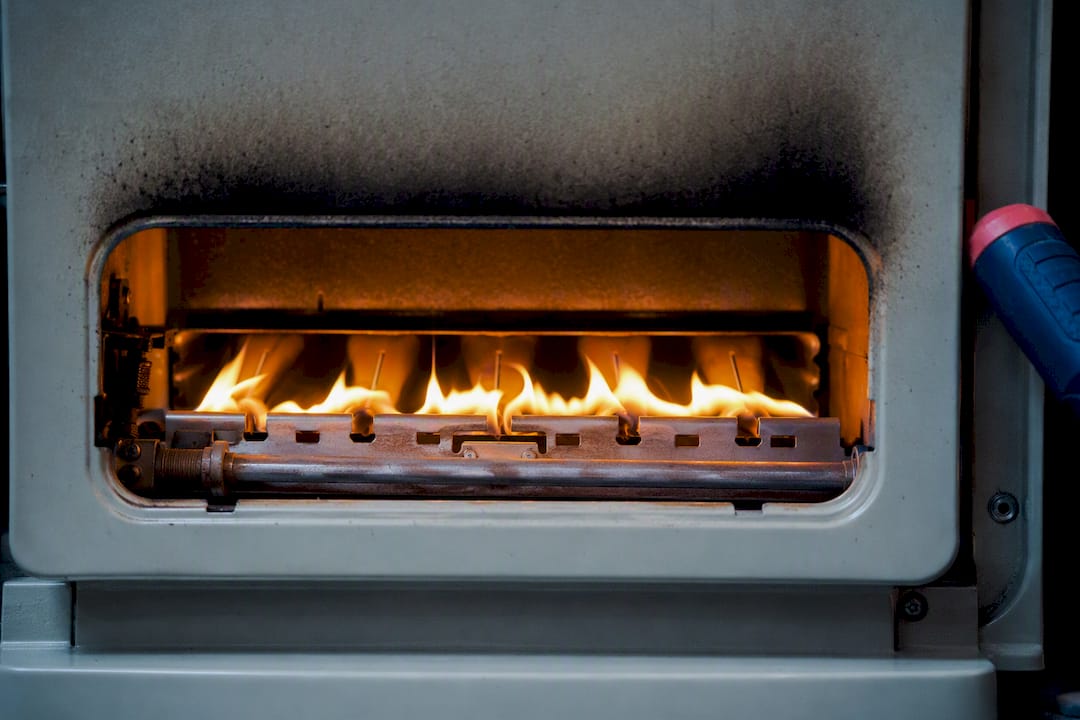
On-site, the common red flags are a yellow or lazy flame instead of blue, soot build-up around the appliance casing, an inconsistent pilot light, or signs a room is under negative pressure. Any of these trigger immediate isolation and a written report covering appliance condition, test readings, and recommended fixes.
Does owner-occupied housing need carbon monoxide testing too?
The legal obligation under the Residential Tenancies Regulations 2021 applies specifically to rental properties, so if you own and live in your home, there's no equivalent statutory requirement forcing you to book a biennial gas safety check. That surprises a lot of homeowners, who assume the rule covers every household with a gas heater.
That doesn't mean the risk disappears once you're not renting. Carbon monoxide poisoning doesn't care whether the person breathing it owns the title or pays rent, and Health.vic's guidance on symptoms and risk applies equally to owner-occupiers. Gas heaters, cooktops, and hot water systems in owner-occupied homes age the same way they do in rentals, flues corrode the same way, and negative pressure from a sealed-up renovation causes the same spillage risk regardless of who holds the title.
Energy Safe Victoria and the VBA both recommend the same two-year servicing interval for owner-occupiers as the legal minimum set for rentals, even though it isn't compulsory. Think of the regulation as a floor for landlords, not a ceiling for anyone else. If you own an older gas heater, particularly a wall furnace or a flued space heater installed more than a decade ago, treating the biennial check as optional is a gamble most safety guidance advises against. The appliance doesn't know whether it's in a rental or not.
What CO reading actually counts as unsafe under Victorian guidance
Victorian gas safety guidance doesn't hand consumers a single number to memorise the way a speed limit sign does, and that trips people up. Instead, the test result that matters is comparative: CO detected during the spillage test must not exceed the background (ambient) reading taken before the appliance was switched on. If the appliance pushes CO above that baseline while operating, it fails and needs isolation, regardless of the absolute parts-per-million figure.
For context on exposure, Safe Work Australia sets an eight-hour time-weighted average workplace exposure standard of a workplace exposure standard for carbon monoxide considered safe over an eight-hour period, with short-term excursion limits allowing higher readings for brief periods, allowing higher short-term exposure levels for brief periods. Gasfitters use these figures as a working reference for occupational exposure during testing, not as a green light for a heater to run at that level in someone's living room.
The practical takeaway for homeowners: don't ask your gasfitter "was it under X ppm?" Ask instead "did the CO reading rise above background during the test, and if so, by how much?" That's the question Victorian testing protocol is actually built to answer, and it's the one that determines whether an appliance gets isolated on the spot.
How often should you test beyond the two-year minimum?
Two years is the legal floor for rental properties, not a universal safe interval for every appliance in every home. Several situations warrant testing sooner, and waiting for the scheduled check in these cases is a genuine risk.
Any appliance older than 10 to 15 years should be assessed more frequently, since flue corrosion and heat exchanger cracking both increase with age. A renovation that sealed up the house more tightly, added an exhaust fan, or changed room layout near a gas appliance is another trigger, because it can introduce negative pressure that didn't exist when the appliance was last tested. If you notice a yellow flame instead of blue, soot marks, or condensation pooling near a heater, that's not a "wait for the next service" situation. It's an immediate one.
Properties with vulnerable occupants, aged care facilities, retirement villages, or disability care homes in particular, generally warrant more conservative intervals than the residential minimum, given the reduced ability of some occupants to notice or respond to early symptoms. A change of tenant is also a sensible trigger point even mid-cycle, since it gives the incoming resident a fresh baseline and confirms the disclosed check date is accurate.
How long do you need to keep CO test records?
Consumer Affairs Victoria's guidance on rental provider obligations requires rental providers to keep records of gas safety checks, though it doesn't set a single fixed retention period the way, say, tax record rules do. In practice, the sensible standard is to keep every report until at least two service cycles have passed, which covers roughly four years of history and gives you a defensible paper trail if a dispute or VCAT matter arises.
A complete record should include the date of the check, the technician's name and licence number with the Type A class specified, the readings taken at each test stage, and any recommendations made. If an appliance failed and was repaired, keep the follow-up passing report alongside the original failure notice, not as a replacement for it. Property managers overseeing multiple properties benefit from a simple spreadsheet or compliance folder per address rather than relying on memory or a tradesperson's own filing system.
For owner-occupiers, there's no regulatory retention requirement, but keeping the same records matters for resale disclosure and insurance purposes. A buyer's building inspector asking about gas appliance history will appreciate a folder with two or three service reports rather than a shrug.
Can tenants ask questions or refuse access for a CO test?
Tenants don't get to refuse a scheduled gas safety check outright, since it's a legally required safety inspection, but they do have rights around how and when it happens. Under general entry rules for rental properties, rental providers or their contractors need to give proper notice before entering to carry out inspections or repairs, and a gasfitter turning up unannounced isn't compliant practice even if the check itself is mandatory.
Reasonable notice typically means at least a few days' written notice specifying the date and approximate time window, delivered in a way the tenant can act on, not a same-day phone call. Tenants can request a specific time within a reasonable range if the standard slot doesn't work, and most gasfitters and property managers accommodate that without friction.
Tenants also have the right to ask the attending technician for identification and licence details before letting them in, and it's entirely reasonable to ask which licence class they hold. If a rental provider or agent can't confirm who's attending or when, that's worth pushing back on before the visit rather than after. Once the check is done, tenants are entitled to know the outcome, particularly if any appliance was isolated as unsafe, since that directly affects their ability to use heating or hot water in the meantime.
What happens if you skip carbon monoxide testing in Victoria?
Non-compliance with the biennial gas safety check requirement exposes rental providers to real consequences beyond just an awkward conversation with a tenant. A tenant can apply to VCAT for an order compelling the rental provider to carry out the check, and repeated or wilful non-compliance can lead to financial penalties under the Residential Tenancies Act framework.
Beyond the regulatory exposure, there's a much harder consequence to reverse: liability if someone is harmed. If a tenant or their family member suffers carbon monoxide poisoning in a property where the required biennial check was never done, that gap in compliance becomes central to any subsequent claim or investigation. Insurance can also become a live issue, since insurers reviewing a claim involving a gas incident will ask for service records, and a rental provider who can't produce them faces a much harder path to a payout.
For owner-occupiers, there's no regulatory penalty for skipping a voluntary check, but the safety consequence is identical to a rental scenario. The law doesn't distinguish between a landlord's negligence and a homeowner's oversight when someone ends up in an emergency department with elevated carboxyhaemoglobin levels. The practical cost of non-compliance, in every case, is measured in risk to people, not just in fines.
What matters most in Victoria's carbon monoxide rules
The regulation gets most of the attention, but the biennial check itself isn't really the hard part. Booking a Type A gasfitter periodically every couple of years is straightforward paperwork. What conventional advice consistently underweights is the negative pressure test, the step that catches problems caused by home sealing, renovations, and exhaust fans rather than by the appliance itself failing.
Most CO incidents I'd expect from the pattern in Energy Safe Victoria's own guidance aren't about an ancient, obviously dying heater. They're about a perfectly serviceable appliance in a house that's been sealed tighter than it was designed for, pulling flue gases back inside because nobody checked airflow at the same time they checked the burner. That's the gap between what a rushed inspection covers and what GIS 38's four stages actually demand.
If you take one thing from this guide, make it this: don't just ask whether the gasfitter tested for CO. Ask whether they ran the negative pressure test with your extraction fans on. That single question separates a genuine safety check from a box-ticking exercise, and it costs you nothing to ask it before the technician even walks in the door.
— Mike
Book a Type A gas service and carbon monoxide test with Dualflow Services
Most Victorian homeowners only think about CO testing once a lease is up for renewal or a heater starts smelling odd, which is exactly the wrong time to be searching for an available licensed gasfitter. Dualflow Services builds carbon monoxide and negative pressure testing into every Type A appliance service across the Mornington Peninsula and surrounding Melbourne suburbs, so you get the compliance paperwork and the safety check in a single booking rather than chasing two separate trades.
Every visit ends with a written report listing the technician's licence details, the readings taken at each test stage, and any recommended repairs, the exact documentation Consumer Affairs Victoria expects rental providers to keep on file. For property managers juggling multiple addresses across aged care, retirement living, or disability care settings, that paper trail is what protects you if a compliance question ever comes up. If an appliance fails, Dualflow Services can isolate it on the spot and organise the repair without a second call-out fee stacking on top. Book a service through the Dualflow Services landing page and get your next gas safety check, and your CO test, sorted in one visit.
Where to check the official rules yourself
- Energy Safe Victoria for testing methodology
- Victorian Building Authority for licensing guidance
- Consumer Affairs Victoria for rental obligations
- Health.vic for health and exposure risks
This article is general information, not a substitute for advice from a qualified doctor. Consult a qualified healthcare professional about your own circumstances before acting on anything here.
Sources
- GIS 38: Testing for negative pressure and carbon monoxide spillage (Energy Safe Victoria)
- Carbon monoxide (Victorian Building Authority)
- Rental providers: gas and electrical safety (Consumer Affairs Victoria)
- Carbon monoxide poisoning in the home (Health.vic)