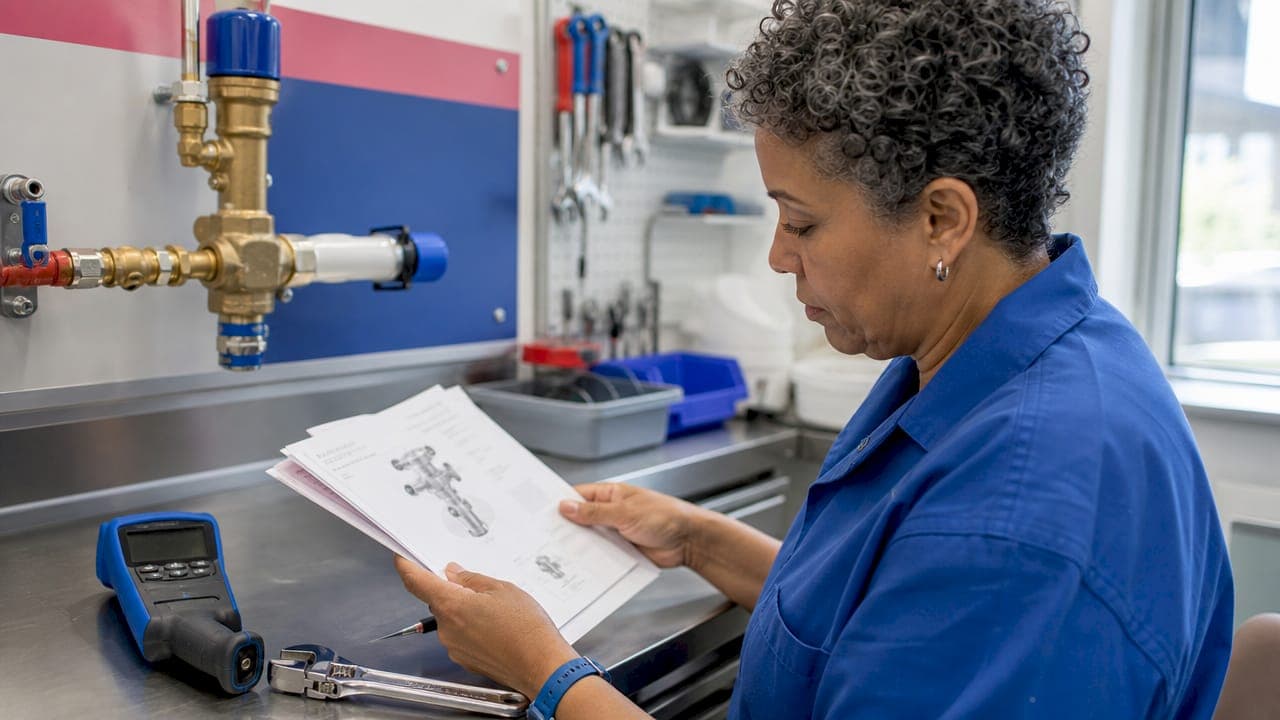
A disability-compliant hot water system is one that limits outlet water temperature to ≤45°C to prevent scalding for vulnerable users, while storing water at ≥60°C to control Legionella bacteria. The industry term for this type of setup is a "thermostatic mixing valve system" or TMV system, governed in Australia by AS 4032.1 and the National Construction Code (NCC). These systems are mandatory in disability care homes, aged care facilities, and NDIS Specialist Disability Accommodation (SDA). For homeowners and property managers on the Mornington Peninsula and across Victoria, understanding what separates a compliant system from a standard one is the difference between safety and serious liability.
What technical standards define a disability-compliant hot water system?
Australian law sets clear temperature rules for accessible hot water systems. The NCC and AS/NZS 3500.4 require that hot water outlets in accessible sanitary facilities deliver water at no more than 45°C. This cap protects residents who may have reduced sensation, limited mobility, or cognitive impairments that prevent them from reacting quickly to scalding water.
The key distinction in the standards is between thermostatic mixing valves (TMVs) and tempering valves. TMVs must comply with AS 4032.1. Tempering valves do not meet the fail-safe requirements for disability settings. The NCC and AS/NZS 3500.4 are explicit: accessible facilities require TMVs, not tempering valves.
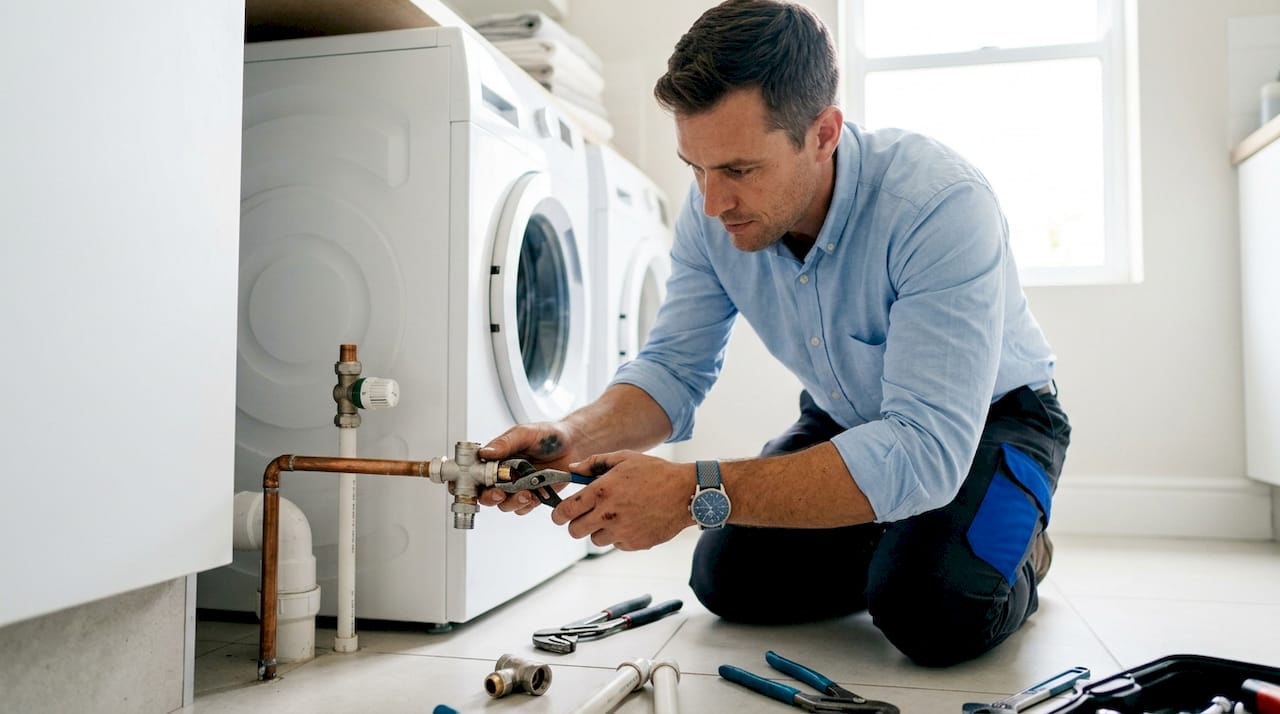
For NDIS SDA Class 3 dwellings, the requirements go further. Every personal hygiene outlet must have a TMV delivering water at ≤45°C, with storage maintained at ≥60°C. Compliance is verified by testing the farthest outlet from the hot water source, not the nearest. Commissioning records are mandatory and form part of certifier requirements.
Key regulatory requirements for disability-compliant systems include:
- Outlet temperature cap: ≤45°C at every personal hygiene outlet in accessible areas
- Storage temperature: ≥60°C to prevent Legionella growth in the tank
- Valve type: TMVs certified to AS 4032.1, not tempering valves
- Coverage: Every bathroom in a disability or aged care setting, not only designated accessible bathrooms
- Documentation: Commissioning records and ongoing temperature verification logs
- Maintenance: Annual TMV testing and servicing by a licensed plumber
Pro Tip: When reviewing plans for an SDA or aged care property, check that TMVs are specified at every bathroom outlet, not just the main accessible bathroom. Inspectors check all of them.
How do thermostatic mixing valves work and why are they essential?
A TMV blends hot water from the storage system with cold water to deliver a consistent, safe temperature at the tap. The valve contains a thermostatic element that expands or contracts with temperature changes, automatically adjusting the mix to hold the outlet temperature within ±2°C of the set point. That level of accuracy is not possible with a standard tempering valve.
The critical difference is the fail-safe function. If the cold water supply drops or fails entirely, a TMV shuts off the hot water flow automatically. A tempering valve does not do this. It continues to deliver hot water at storage temperature, which can reach 70°C or higher. For a resident with limited sensation or mobility, that is a serious scald risk.
Here is how a compliant TMV installation works in practice:
- Hot water storage is maintained at ≥60°C in the tank or cylinder to kill Legionella bacteria.
- The TMV receives both the hot supply and a cold water feed at the valve body.
- The thermostatic element blends the two flows to reach the set delivery temperature, typically 45°C.
- The fail-safe mechanism monitors cold water pressure. If cold flow drops, the valve closes the hot port to prevent scalding.
- The outlet delivers water within ±2°C of the set temperature, regardless of fluctuations in supply pressure or temperature.
- Annual testing confirms the valve still holds temperature accuracy and the fail-safe activates correctly.
TMVs must be installed in an accessible location so a licensed plumber can service and test them without major disruption. Burying a TMV inside a wall cavity with no access panel is a compliance failure waiting to happen.
Pro Tip: Specify the TMV installation location on your plans before construction begins. Retrofitting access panels after tiling is expensive and disruptive.
What steps do property managers take to maintain ongoing compliance?
Commissioning a disability-compliant hot water system is not a one-time event. Ongoing temperature verification is a mandatory part of managing these systems safely. Property managers who treat installation as the finish line create real risk for residents and real liability for themselves.
The commissioning process starts at the farthest outlet from the hot water source. Water loses heat as it travels through pipework. Testing at the farthest outlet confirms that every resident receives water at ≤45°C, not just those closest to the heater. This is a requirement under NDIS SDA guidelines and a sound practice for any accessible property.
Legionella management is the other side of the compliance equation. Dead legs and low-use outlets in hot water plumbing create warm, stagnant water where Legionella thrives. Property managers must design out dead legs where possible and flush low-use outlets regularly. Storage temperature must stay at ≥60°C at all times. Dropping the storage temperature to save energy defeats the entire safety design.
Common compliance pitfalls to avoid:
- Assuming one TMV covers the whole property. Every bathroom outlet needs its own TMV.
- Confusing tempering valves with TMVs. They look similar but only TMVs meet AS 4032.1 for disability settings.
- Skipping annual TMV testing. Valves drift over time. An untested TMV may no longer hold 45°C accurately.
- Ignoring documentation. Commissioning records and service logs are required for certification and insurance purposes.
- Reducing storage temperature. Storing water below 60°C to cut energy costs creates Legionella risk.
Pro Tip: Keep a maintenance log for every TMV on the property, including the date of testing, the measured outlet temperature, and the name of the licensed plumber who performed the test. This log is your evidence of compliance.
How does a disability-compliant system compare to a standard hot water system?
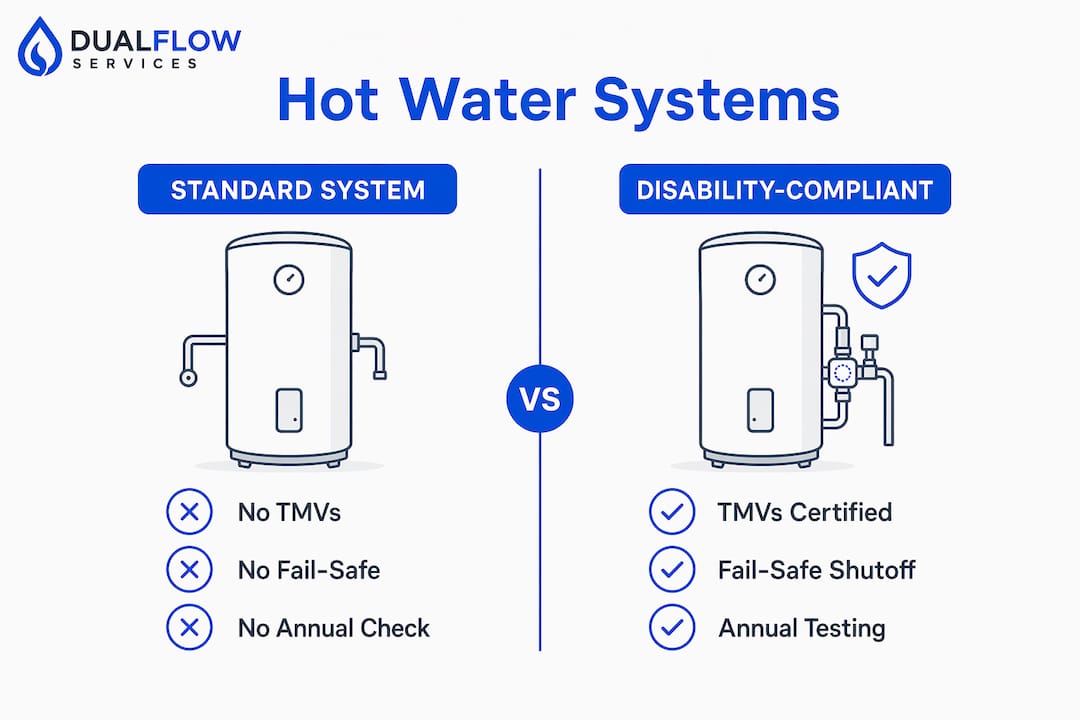
A standard residential hot water system delivers water at whatever temperature the storage unit produces, typically tempered down to around 50°C by a single tempering valve at the meter or heater. That is adequate for a healthy adult but not for someone with reduced sensation, limited mobility, or cognitive impairment. The dual temperature requirement of storing at ≥60°C and delivering at ≤45°C is the defining feature of a disability-compliant system.
The table below shows the key differences between a standard system and a disability-compliant accessible hot water system.
| Feature | Standard hot water system | Disability-compliant system |
|---|---|---|
| Outlet temperature | Typically 50°C or higher | ≤45°C at every personal hygiene outlet |
| Storage temperature | 60°C recommended | ≥60°C mandatory |
| Valve type | Tempering valve | TMV certified to AS 4032.1 |
| Fail-safe shutoff | Not required | Mandatory on cold supply failure |
| Coverage | Single valve at heater | TMV at every bathroom outlet |
| Commissioning records | Not mandatory | Mandatory for certification |
| Annual testing | Not required | Required for ongoing compliance |
| Applicable settings | Standard residential | Disability care, aged care, NDIS SDA |
The regulatory gap is significant. A standard system has no requirement for fail-safe shutoff, no mandatory annual testing, and no documentation obligations. A disability-compliant system carries all three. Property managers who upgrade a standard property to disability accommodation must retrofit TMVs at every outlet, not just add a single valve at the hot water unit.
Key takeaways
A disability-compliant hot water system requires TMVs certified to AS 4032.1 at every personal hygiene outlet, delivering water at ≤45°C while storing at ≥60°C, with mandatory commissioning records and annual testing.
| Point | Details |
|---|---|
| Core temperature rule | Outlets must deliver ≤45°C; storage must stay at ≥60°C to control Legionella. |
| TMVs are mandatory | Only AS 4032.1-certified TMVs meet the fail-safe standard for disability settings. |
| Full property coverage | Every bathroom outlet needs a TMV, not just designated accessible bathrooms. |
| Commissioning at the farthest outlet | Test the outlet furthest from the heater to confirm safe temperatures throughout. |
| Documentation is required | Commissioning records and annual service logs are mandatory for compliance and certification. |
What I've learned installing these systems across aged care and disability properties
The most common mistake I see is property managers assuming one TMV at the hot water unit covers the whole building. It does not. Every bathroom in a disability or aged care setting needs its own TMV. I have walked through properties where only the main accessible bathroom had a compliant valve, and every other bathroom was running water at 60°C straight from the tank. That is a serious risk to residents and a compliance failure that will show up in any audit.
The second thing I see regularly is confusion between tempering valves and TMVs. They sit in the same part of the pipework and look similar. But a tempering valve will keep pushing hot water if the cold supply drops. A TMV certified to AS 4032.1 shuts the hot flow off. For a resident who cannot feel scalding water or cannot move away from it quickly, that difference is the difference between a safe shower and a serious injury.
Annual testing is not optional. TMVs drift. A valve that was set correctly at commissioning may be delivering 48°C or 50°C two years later without anyone noticing. The only way to know is to test it. If you manage a disability property and you cannot produce a service log showing annual TMV testing, you are exposed.
My advice is straightforward. Engage a licensed plumber who knows AS/NZS 3500.4 and AS 4032.1 specifically. Ask them to show you where every TMV is installed, confirm each one has an accessible service point, and give you a commissioning report that tests the farthest outlet. That report is your protection.
— Mike
Hot water compliance services from Dualflowservices
Getting a disability-compliant hot water system right from the start saves significant cost and risk down the track. Dualflowservices provides compliant hot water installation and ongoing maintenance across the Mornington Peninsula, including TMV supply and installation, commissioning to AS 4032.1, farthest-outlet temperature testing, and annual service documentation.
Dualflowservices works with homeowners, property managers, aged care facilities, retirement villages, and disability care homes. Every job includes commissioning records and a service log you can present to certifiers and insurers. Whether you are building a new SDA property or retrofitting an existing one, the team at Dualflowservices delivers work that meets the NCC and AS/NZS standards your residents depend on.
FAQ
What temperature must a disability-compliant hot water system deliver?
A disability-compliant system must deliver water at ≤45°C at every personal hygiene outlet. Water must be stored at ≥60°C to prevent Legionella growth.
What is the difference between a TMV and a tempering valve?
A TMV certified to AS 4032.1 shuts off hot water automatically if the cold supply fails. A tempering valve does not have this fail-safe function and is not permitted in disability or aged care settings.
Does every bathroom in a disability property need a TMV?
Yes. Every bathroom in a disability or aged care setting requires a TMV, not only the designated accessible bathroom. NDIS SDA guidelines require TMVs at all personal hygiene outlets.
How often do TMVs need to be tested and serviced?
TMVs require annual testing by a licensed plumber to confirm temperature accuracy and fail-safe function. Service records must be kept as part of ongoing compliance documentation.
What is the difference between an accessible hot water system and a standard one?
A standard system uses a single tempering valve and has no fail-safe requirement or mandatory testing. An accessible system uses AS 4032.1-certified TMVs at every outlet, with commissioning records and annual testing required by law.