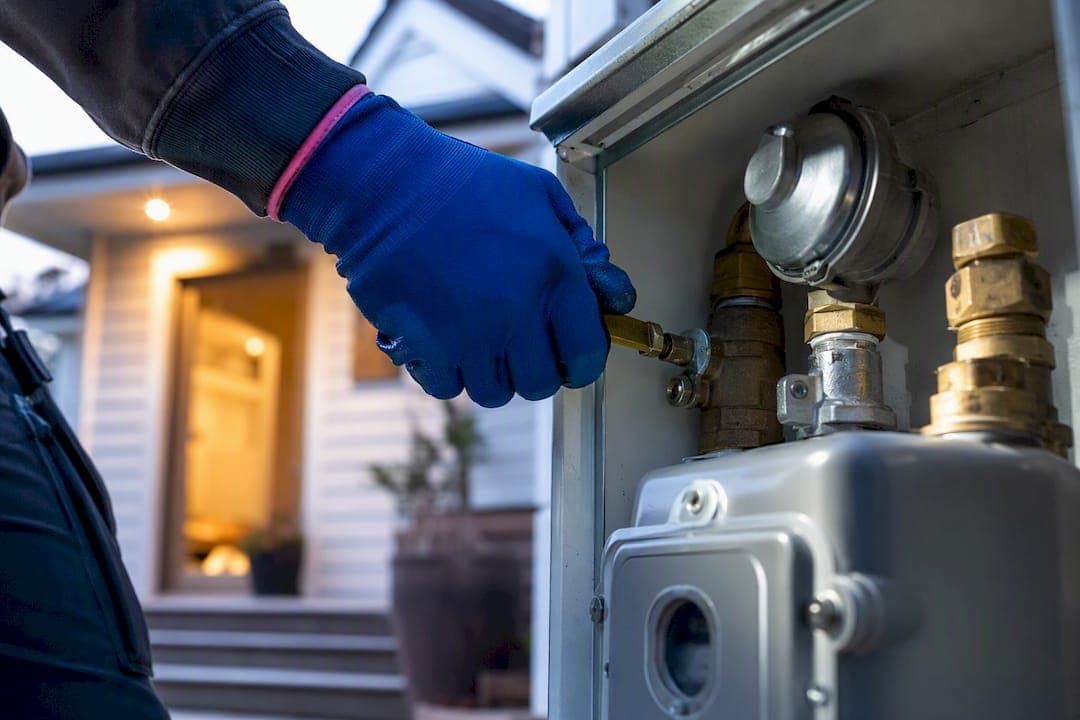
If you smell gas in your house, get everyone and every pet outside immediately, and do not touch light switches, phones, or appliances on your way out. Once you're clear of the property, call 000 if there's an immediate danger, such as a strong smell, hissing, or anyone feeling unwell. Otherwise, call your gas distributor's emergency line from a safe distance.
TL;DR:
- Only attempt to turn off the gas supply if you know exactly where the valve is and it is safe to do so; otherwise, leave it to licensed professionals.
- Call 000 immediately if the gas smell is strong, accompanied by hissing sounds, or if anyone shows symptoms of exposure; use the emergency line for suspected leaks without immediate danger.
- Install gas and carbon monoxide detectors properly and schedule regular servicing of appliances every two years to prevent leaks and ensure safety.
- Recognize that household smells like sewer gas or electrical faults can mimic gas leaks, so do not rely solely on smell but consider other clues and professional testing.
- Keep emergency contact information, including your gas distributor and a licensed gasfitter, easily accessible and verified before an emergency occurs.
Table of Contents
- What to do in the first five minutes of a gas smell in the house
- How do you turn off the gas supply safely?
- Who do you call for a gas leak?
- Could that smell be something else?
- What happens after the leak is fixed?
- How do you prevent a gas leak from happening again?
- What does a licensed technician actually check on a gas leak call-out?
- A tradesman's honest take on gas leak panic
- Need a licensed gasfitter on the Mornington Peninsula?
- Sources
- FAQ
What to do in the first five minutes of a gas smell in the house
The first few minutes decide whether a gas leak stays a scare or becomes something worse. Move fast, but move in the right order.
- Get everyone out. Leave belongings behind. Grab pets on your way if you can do it without delay, but don't go back for anything.
- Avoid any spark. No smoking, no matches, no flicking light switches, no using the garage door remote, no phone calls until you're outside.
- Open doors on your way out, not before. If a door is already open, leave it. Don't waste time forcing windows if it slows you down.
- Call from outside. Dial 000 if there's a strong smell, a hissing sound, or anyone showing symptoms. If the smell is faint and everyone's fine, call your gas distributor's emergency number instead.
- Stay out. Don't go back in to "just check" the stove or the water heater. That's a job for someone qualified, not a guess from you.
Pro Tip: Keep a torch and your phone charged in your car or a spot outside the house. If a leak happens at night, you don't want to be fumbling for light near the property.
How do you turn off the gas supply safely?
Only touch the gas supply yourself if you already know exactly where the valve is and it's safe to reach it without going back near a suspected leak source. If there's any doubt, skip this step entirely and let the distributor or a licensed technician handle it.
- Natural gas meters usually have an isolation valve with a lever or tap. Turning it 90 degrees, so it sits crosswise to the pipe, cuts the supply.
- LPG cylinders have a valve on top of the tank itself; turning it clockwise shuts it off, and cylinders are usually easier to isolate than a household meter.
- If the smell is coming from inside near an appliance, isolating at the meter or cylinder is safer than trying to isolate a single appliance.
- Never use a torch with an open flame, a lighter, or any electrical tool near the meter or cylinder while doing this.
- If you can't find the valve quickly, stop looking. Evacuate and wait for help.
Who do you call for a gas leak?
Two different problems need two different calls, and mixing them up wastes time you don't have.
Call 000 when there's an immediate threat to life or property: a strong, sustained smell, visible damage to a gas line, or anyone showing signs of exposure. For a suspected leak without immediate danger, your gas distributor's emergency contact is the right first call, and numbers like 1800 GAS LEAK exist precisely for this.
- Gas distributors repair faults at the meter and in the mains, the infrastructure between the street and your property boundary.
- Homeowners are responsible for everything inside that boundary, meaning internal pipework and appliances need a licensed gas fitter, not the distributor.
- Not sure who supplies your gas? The Australian Energy Regulator has a lookup tool that identifies your distributor by postcode.
- Keep a note of who you called, when, and what they told you. It matters later if insurance or compliance questions come up.
A dispatch call to your distributor will usually confirm within minutes whether the fault sits on their side of the meter or yours, which decides who turns up first.
Could that smell be something else?
Mains gas and LPG are naturally odourless, so suppliers add mercaptan, a sulphur compound that smells like rotten eggs, specifically so leaks get noticed. That smell is deliberate, and it's a genuine warning sign, not something to second-guess for long.
A handful of other clues point specifically to gas rather than something else: a hissing sound near a pipe or appliance, dead or discoloured patches of grass over a buried line, or bubbles in wet ground outdoors. Symptoms like headache, dizziness, nausea, or shortness of breath that ease once you're outside are also strong indicators of exposure, not just a bad smell.
But plenty of household smells mimic gas without being gas at all:
- A dry drain trap under a sink or shower lets sewer gas rise into the room, and it's often mistaken for a leak.
- Hot water systems can develop a sulphur-like smell from chemical reactions inside the tank, especially in areas with certain water chemistry.
- Overheating batteries or electrical faults produce an acrid smell that's different from mercaptan but easily confused under stress.
- Your nose adjusts to smells over time, so a leak you noticed strongly at first can seem to fade even though it hasn't. This is exactly why a proper detector matters more than relying on your sense of smell alone.
What happens after the leak is fixed?
Responsibility splits the same way it does for the emergency call itself. The distributor repairs anything on their side of the meter, mains and street infrastructure included. Everything past that point, your internal pipes, your stove, your heater, is on you, and it needs a licensed gas fitter to sign off.
- Don't relight pilot lights or restart any gas appliance until someone qualified has declared the property safe.
- Ask for written confirmation or a compliance certificate from whoever attends, especially if insurance or a future sale is in play.
- Record names, job numbers, and timestamps from every call and visit. It's tedious, but it's the paper trail you'll want if a dispute comes up later.
- If the technician flags a fault they couldn't fully resolve on the spot, get a clear timeline for the follow-up work in writing.
How do you prevent a gas leak from happening again?
Most leaks trace back to ageing connections, corroded flexible hoses, or appliances that haven't been regularly maintained as recommended in HVAC Services - Target Air Systems. None of that is exotic to fix, it just needs to happen on schedule rather than after something goes wrong.
- Install a natural gas detector high on a wall or ceiling, since natural gas rises, and an LPG detector low near the floor, since LPG is heavier than air.
- Fit a dedicated carbon monoxide alarm near sleeping areas. CO is odourless and a combustible gas detector won't catch it.
- Get gas appliances serviced roughly every two years, and replace any hose showing cracking or corrosion straight away rather than waiting.
- Call Before You Dig Australia before any excavation work, even something as simple as putting in a new fence post.
- If you've just moved into a new home, find the meter and any cylinders on day one, before you ever need to in an emergency.
Pro Tip: Save your distributor's emergency number in your phone under a name you'll actually recognise in a panic, like "GAS LEAK", not buried under a company name you'll forget.
What does a licensed technician actually check on a gas leak call-out?
When a Dualflow Services technician attends a suspected leak, the process follows a set sequence rather than guesswork. First, the supply gets isolated. Then comes a pressure and tightness test at the meter to confirm whether the fault sits there or further along the line.
From there, appliances get isolated one by one, and tracer detection narrows down the exact point of the leak rather than relying on smell alone. Licensing exists because this diagnostic sequence, done wrong, can mask a fault instead of finding it. Expect a written report after the visit, noting what was found, what was fixed, and any compliance notes for your records.

A tradesman's honest take on gas leak panic
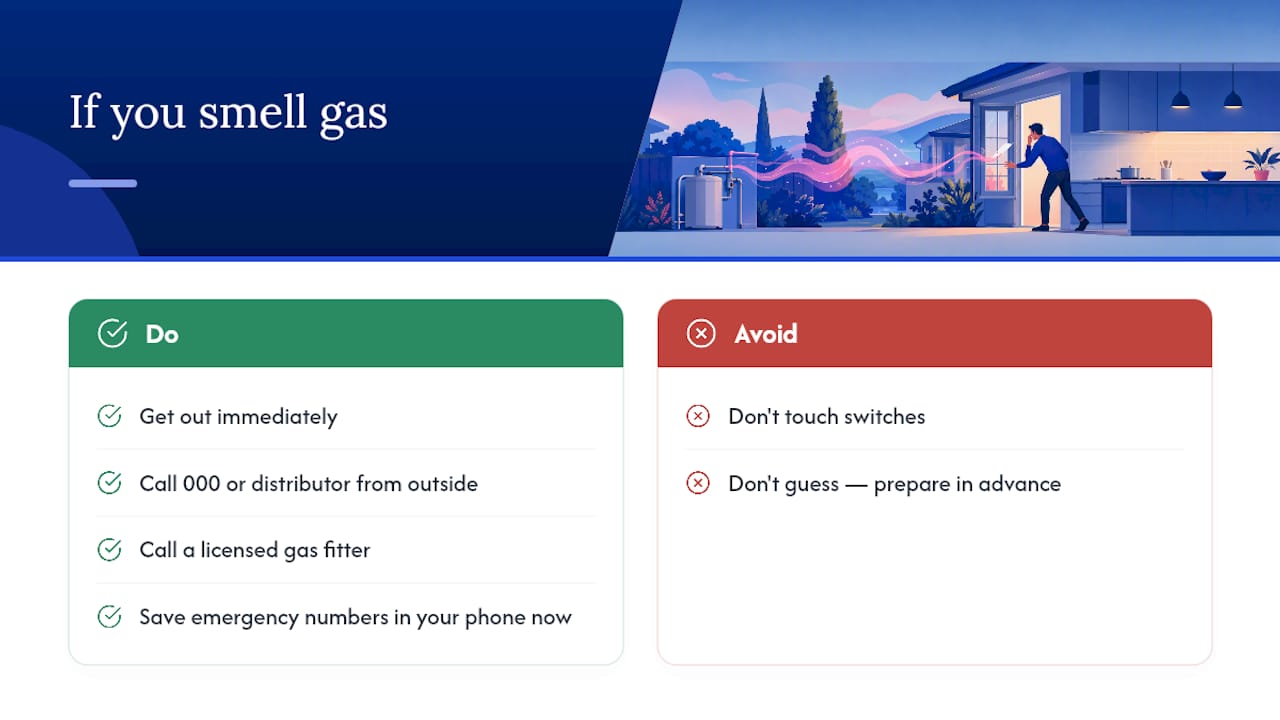
Most people either overreact to a faint hot water smell or underreact to a genuine leak, and both come from the same problem: nobody's rehearsed what to actually do. The instructions aren't complicated. Get out, don't touch switches, call the right number from outside.
What separates a scare from a disaster is preparation you do on a normal Tuesday, not during the emergency itself. Save 000, your distributor's emergency line, and a licensed local gas fitter in your phone now. Book a servicing check every couple of years and put a detector where it actually belongs. None of that takes long, and all of it means you're acting instead of guessing the one time it matters.
— Mike
Need a licensed gasfitter on the Mornington Peninsula?
There are local licensed gasfitters available for homeowners who need emergency call-outs alongside scheduled servicing for gas appliances, hot water systems, and internal pipework.

If your gas distributor has already confirmed the fault sits inside your property boundary, or your appliance simply needs its two-yearly service, Dualflow Services can attend and run the same diagnostic sequence a technician always follows: isolation, pressure testing, and targeted detection, with a written report at the end. Keep in mind that if the leak turns out to be on the distributor's side of the meter, they need to be your first call, not us. For everything inside your walls, from a corroded hose to an overdue heater service, book a service visit with Dualflow Services and get a same-day response where availability allows.
Sources
- Gas emergencies
- Emergency contacts | AGIG
- Who is my distributor? | AER
- Choosing and using a tradesperson | Energy Safe Victoria
FAQ
Should I be worried if my house smells like gas?
Yes. Treat any gas smell as genuine until proven otherwise, evacuate immediately, and call 000 or your gas distributor once you're safely outside.
What can be mistaken for a gas smell?
Sewer gas from a dry drain trap, chemical reactions inside a hot water tank, and overheating electrical components can all produce smells similar to the rotten egg odour added to gas.
Can you smell gas but have no leak?
It's possible if the smell is coming from a dry drain trap, a hot water system, or an appliance issue rather than an actual leak, but you shouldn't assume that without checking, since olfactory fatigue can also mask a real leak that's still present.
What are the first signs of a gas leak?
The rotten egg smell from added mercaptan is the clearest sign, often alongside a hissing sound near pipes or appliances, dead patches of grass over buried lines, or symptoms like dizziness and headache that ease once you're away from the property.