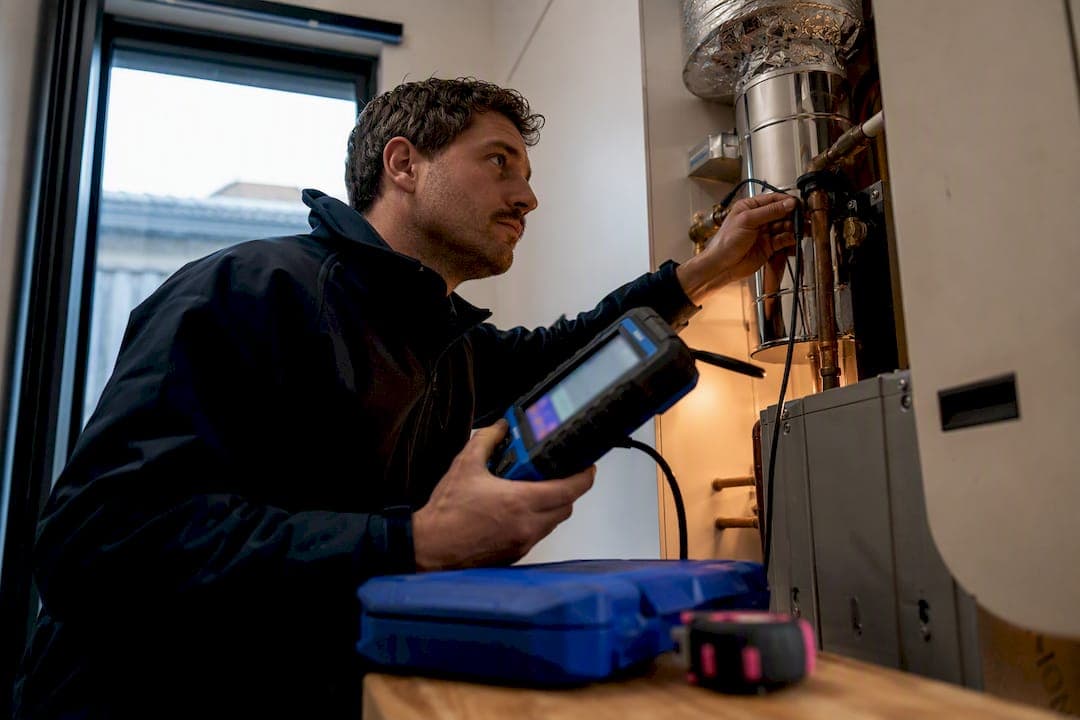
A licensed plumber holding the relevant endorsement must issue a Compliance Certificate for standard gas work in Victoria, then give a copy to the customer and lodge it with the BPC through VBA360 within five days of finishing the job. Certificates are triggered by installing, relocating or replacing Type A appliances, plus specified consumer gas piping work. Skip this step and you're carrying an uninsured, unverified gas installation.
TL;DR:
- Most domestic gas work requires a compliant certificate if installing, replacing, or relocating Type A appliances, or working on consumer gas piping.
- Gas certificates must be lodged with the BPC within five days by the licensed plumber; failure to do so leaves the installation unverified and uninsured.
- Complex installations, such as those with Type B appliances or high-pressure systems, need Energy Safe Victoria approval before certification; standard jobs do not.
- Landlords must conduct gas safety checks every two years and provide records, separate from the compliance certificates required during installation or alteration.
- Ensuring the plumber's endorsement, verifying testing results, and confirming lodgement are essential steps to avoid penalties and compliance issues.
Table of Contents
- Quick checklist: when a compliance certificate is required
- How to get a compliance certificate: step by step for owners and landlords
- Rental properties: two-year gas safety checks and landlord obligations
- Standard versus complex gas installations: when Energy Safe Victoria steps in
- What a compliance certificate must contain and how it's lodged
- Records and retention: service records, Appendix E and carbon monoxide tests
- Compliance, audits and penalties: what happens when paperwork is missing
- Local trades perspective: on-site checks and common compliance pitfalls
- Booking a compliance visit with Dualflow Services
- Sources
Quick checklist: when a compliance certificate is required
Not every gas job triggers a Compliance Certificate, but most domestic work does. Use this as your first filter before booking a tradesperson.
- Always required: installing, replacing or relocating Type A appliances (heaters, cook tops, hot water units, most household gas fittings).
- Always required: consumer gas piping work, including new runs or alterations to existing pipework.
- Often required: service or repair work above the prescribed value threshold, even when no appliance is swapped out.
- Possibly complex: Type B appliances, high operating pressure systems, multiple gas supply points, or installations in large or multi-storey buildings, which may need Energy Safe Victoria acceptance instead of standard self-certification.
Whichever category the job falls into, you're entitled to a copy of the certificate, and the plumber has five business days to lodge it. If five days pass with nothing in your inbox, that's your cue to ask.
How to get a compliance certificate: step by step for owners and landlords
Getting a valid certificate isn't complicated, but skipping a step is exactly how paperwork goes missing.
- Check the licence before booking. Ask for the plumber's licence number and, for rental or aged care work, their Type A Gas Appliances Servicing endorsement. A general plumbing licence alone doesn't cover mandatory rental gas checks.
- Confirm the scope of work in writing. Get a plain description of what's being installed, replaced or serviced, and whether it's a standard or complex installation.
- Watch the testing happen. A proper job under AS 4575 includes carbon monoxide and spillage testing, not just a visual check. Ask to see the results before the tradesperson leaves.
- Collect your paperwork. You should receive a signed gas servicing record and the Compliance Certificate itself, both listing the plumber's name, licence number, date, scope of work and a declaration that the work meets the required standard.
- Confirm lodgement. The plumber must lodge the certificate with the BPC via VBA360 within five days. If you haven't seen confirmation, follow up. Chasing a missing certificate is far easier the same month than a year later.
Pro Tip: Photograph the plumber's Plumbers Identity Card at the start of the job, and keep it with your service records. If a dispute or audit ever comes up, that photo settles the licensing question in seconds.
For appliance-specific servicing detail, our guide on how gas appliance servicing works walks through what a thorough job actually looks like on site.
Rental properties: two-year gas safety checks and landlord obligations
Rental providers carry a separate obligation on top of any Compliance Certificate. For agreements starting after 29 March 2021, gas safety checks must happen every two years, carried out by someone endorsed in Type A appliance servicing.
This check is not the same thing as a Compliance Certificate. A Compliance Certificate applies when gas work is installed, replaced or altered. A gas safety check applies to existing appliances already in service, confirming they're still operating safely.
- Landlords must disclose the date of the last known gas safety check to new renters before they move in.
- Tenants can request a copy of the latest safety check report, and landlords should provide it within seven days.
- Records must include the plumber's details, date, results, any repairs required and what action was taken.
Confusing the two obligations is one of the most common non-compliance issues we see during tenancy changeovers, largely because both involve a similar-looking piece of paper from a gasfitter.
Standard versus complex gas installations: when Energy Safe Victoria steps in
Most residential jobs are standard installations. That means Type A appliances, ordinary domestic pressure, and a straightforward setup a licensed plumber can self-certify with a Compliance Certificate lodged to the BPC.
Complex installations are a different category entirely, and they need Energy Safe Victoria's acceptance before the work can be commissioned. Whether a job flips from standard to complex generally comes down to a handful of technical factors:
- Type B appliances rather than Type A (commercial catering equipment, larger commercial heaters).
- Operating pressure above the standard domestic threshold.
- Multiple gas supply points feeding one property or building.
- Large-scale or multi-storey buildings where total gas consumption in MJ/h crosses regulatory thresholds.
If your property is a standard house or unit with a domestic hot water system and a few Type A appliances, you're almost certainly in standard territory. Retirement villages, aged care facilities and larger commercial sites are where complex classification becomes far more likely.
What a compliance certificate must contain and how it's lodged
A valid certificate isn't just a signature on a page. It has to carry specific information for the BPC to accept it and for you to rely on it later.
- The plumber's full details and licence number.
- A clear description of the work performed.
- Any relevant consent numbers, where applicable to the job.
- A declaration that the work meets the required plumbing and gasfitting standards.
The plumber issues you a copy and lodges the same details with the BPC via VBA360 within five days of completion. That's separate from the full gas servicing record, which is a more detailed document covering testing results and Appendix E checklist items. If your certificate arrives incomplete or the five-day window passes without lodgement confirmation, contact the plumber first, then the BPC directly if you get no response.
Records and retention: service records, Appendix E and carbon monoxide tests
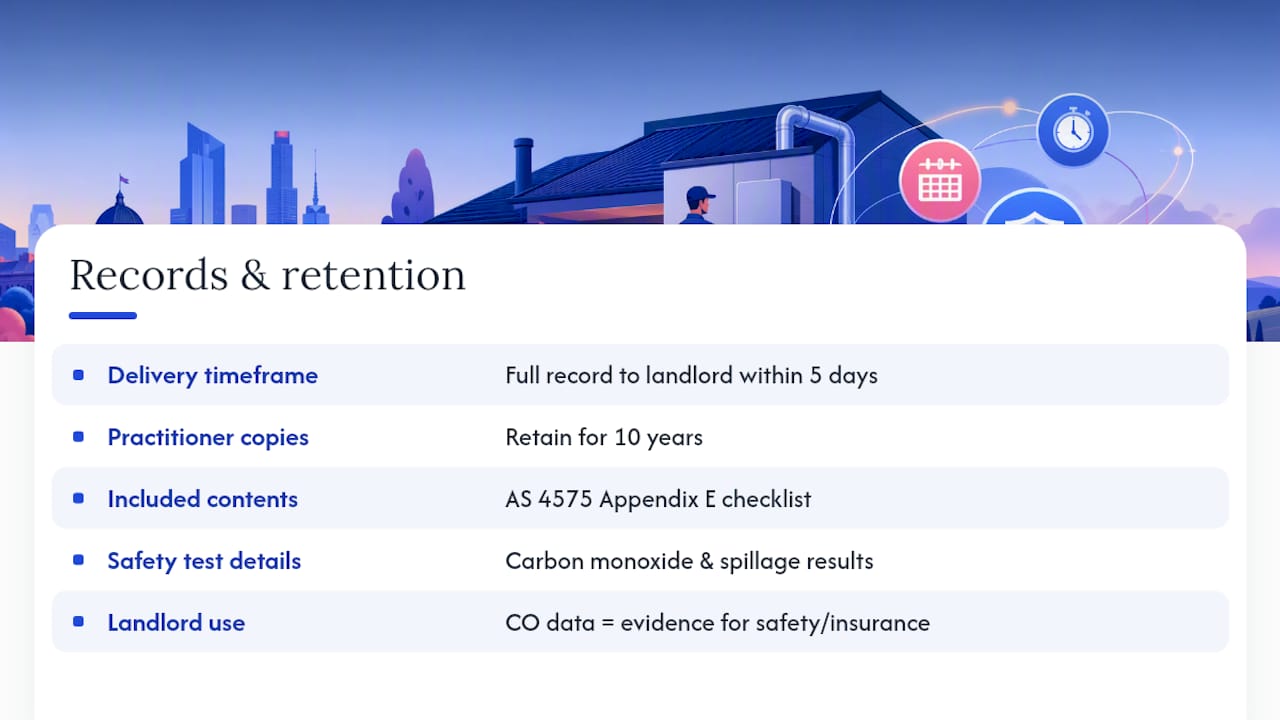
Your full gas servicing record, including the AS 4575 Appendix E checklist, must reach you within five days of the job finishing. That record documents exactly what was tested, including carbon monoxide and spillage results, not just what was installed.
Practitioners are required to retain their own copies for 10 years and provide them to the BPC on request. For landlords, that CO test data is your evidence trail if a tenant ever raises a safety concern or an insurer asks questions after an incident. Our piece on carbon monoxide test requirements covers exactly what to check for in those results.
Compliance, audits and penalties: what happens when paperwork is missing
The BPC and VBA run random audits on self-certified gas work, while Energy Safe Victoria investigates complex installations and serious safety incidents. That split matters: it's the regulatory line between everyday domestic jobs and higher-risk commercial or multi-storey work.
Failing to issue or lodge a required Compliance Certificate is an offence under the Building Act 1993, and outcomes can include formal directions, fines or orders to fix the work. If you discover a gap in your paperwork, don't wait for an audit to find it first. Contact the original tradesperson for retrospective certification, or arrange an independent safety check and raise the issue with the regulator directly.
Local trades perspective: on-site checks and common compliance pitfalls
We check whether a job is standard or complex during the first inspection, before any appliance is touched, by looking at appliance type, pressure and how many gas points feed the property. The mistakes we see most often on other people's jobs: nobody checked the Type A endorsement, paperwork arrived without CO test results, or the certificate never made it past a verbal promise. If you ask for the licence, the endorsement and the test results upfront, you eliminate most of this before it becomes a problem.
— Mike
Booking a compliance visit with Dualflow Services
Professional gas compliance services typically cover the AS 4575 servicing, carbon monoxide testing, and the Compliance Certificate paperwork, issued to you and lodged with the BPC within the five-day window, no separate call-backs required. That matters most for landlords juggling multiple properties, aged care operators, and retirement villages where a missed lodgement becomes an audit risk rather than a minor inconvenience.
Technicians carrying the necessary Type A Gas Appliances Servicing endorsement can often be requested to show their credentials before work starts. Full servicing records are generally kept on file past the mandatory retention period, so if a tenant or auditor asks for evidence later, it should be available. If you're managing several properties or a facility with mixed appliance types, a tool like CivroBuild can help track which units are due for their next check. To book a compliance visit or get a quote for your property, head to our booking page and mention whether the job looks standard or complex, we'll confirm on inspection either way.
Sources
- Issuing compliance certificates | Victorian Building Authority
- Gas acceptance scheme | Energy Safe Victoria
- Rental providers: gas and electrical safety | Consumer Affairs Victoria
- AS 4575 guidance | Victorian Building Authority