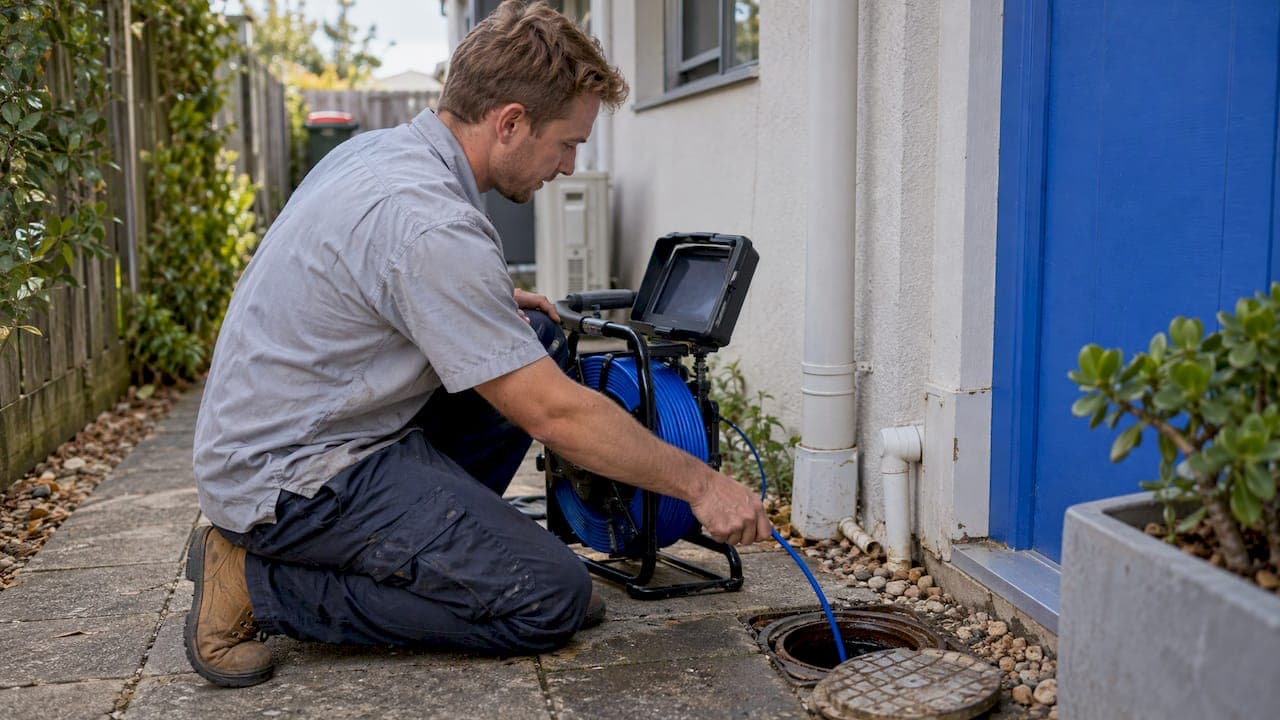
A drain camera inspection is a plumber feeding a small waterproof camera into your drain to see the pipe from the inside, live, and record it. It finds the cause of repeat blockages, cracked or displaced pipes, tree roots and sagging sections without digging up your yard, floor or car park. You get footage, and usually a written report you can hand to a builder, insurer or strata manager.
This guide explains how an inspection works, what it can and cannot see, when to book one, what you should receive afterwards and what moves the price. It is written for homeowners, business owners and facility managers on the Mornington Peninsula and across Melbourne's south-east.
TL;DR
- A drain camera inspection shows the real condition of a drain from inside the pipe, so repairs can target the actual fault instead of guessing.
- Book one for repeat blockages, slow drains, sewer smells, wet patches, before buying a property, or before and after drainage work.
- Ask for the footage, a note of where each defect sits (distance and, ideally, location marked on the surface) and written findings.
- Price depends on access, pipe length, the type of camera needed and time on site, so a plumber should quote after hearing about your property.
- Care facilities and commercial sites get the most from a scheduled inspection that sits inside a wider maintenance plan.
Table of Contents
- What a drain camera inspection is
- How the inspection works, step by step
- What a drain camera can find
- When to arrange a drain camera inspection
- Without digging: what the camera can and cannot do
- What you should receive afterwards
- What affects the cost of a drain camera inspection
- Cleaning and caring for a drain camera
- Drain cameras in care facilities and commercial sites
- Our perspective
- Book a drain inspection on the Mornington Peninsula
- How to prepare for the visit
- What to do with the findings
- FAQ
- Sources
What a drain camera inspection is
A drain camera, also called a CCTV drain inspection, is a waterproof camera head on a flexible cable or a small wheeled unit. The plumber feeds it into the drain through an access point such as an inspection opening, a cleaning eye or a removed trap. A screen shows the pipe interior in real time, and the system records the run.
The method is used well beyond houses. In Australia, the water industry's WSA 05:2020 Conduit Inspection Reporting Code covers internal condition assessment of sewers, sanitary and stormwater drains and structures such as manholes. That tells you the idea is standard practice: look inside, describe what you see in a consistent way, and base decisions on it.
For a home or small business, the same principle applies on a smaller scale. A pipe is a hidden asset, and the camera replaces assumption with evidence.
How the inspection works, step by step
- Briefing. The plumber asks about the symptoms: which fixtures are slow, where the smell is strongest, what was done before, and how old the property is. Any plans you have for the drains help.
- Access. The plumber finds a suitable entry point. Good access means a faster, clearer inspection.
- Cleaning, if needed. A drain full of grease, silt or debris blocks the view. Sometimes the line needs to be cleared first so the camera can see the pipe wall rather than a wall of sludge.
- The run. The camera travels along the pipe. The plumber watches the screen, pausing at anything unusual and noting how far along the pipe it sits.
- Locating. Many cameras carry a transmitter. A hand-held receiver at the surface picks it up, so the plumber can mark where a defect lies and estimate its depth.
- Recording and findings. Footage is saved, defects are noted, and the plumber explains what it means and what options you have.
A typical residential inspection is usually completed in a visit rather than a day of work, but long runs, difficult access or heavy blockages take longer.
Push rod or crawler camera
Two main camera types are used. A push rod camera on a flexible cable suits domestic pipes and tight bends. A wheeled crawler (often called a tractor camera) suits larger diameter lines, long runs and commercial or stormwater drainage. The right choice depends on pipe size, length and access, which is why a reputable plumber asks questions before quoting.

What a drain camera can find
The camera shows what the pipe is actually doing. Common findings include:
- Tree roots. Fine roots enter through joints and keep growing, catching paper and fat and causing repeat blockages. Our guide on stopping tree roots returning to drains explains why seeing the roots first changes the fix.
- Cracks, fractures and collapsed sections. Ageing clay, cement or earthenware pipes can crack or break, and ground movement can shift them.
- Displaced or open joints. Pipe sections that have drifted apart let in soil and roots and let out water.
- Sags (bellies). A low spot holds water and waste, so the drain blocks again soon after clearing.
- Build-up. Grease, scale, soap and silt narrow the pipe over time.
- Foreign objects. Wipes, toys, building debris or a collapsed repair left behind.
- Incorrect connections. Stormwater connected to sewer, or a pipe that does not run where the plans say it does.
- Where the line runs. With a locator, the plumber can show the path and depth, which is valuable before landscaping, extensions or excavation.
If a smell is what brought you here, start with the quick checks in our sewer smell guide. If those do not settle it, the camera is the logical next step. For outdoor drainage, the five routine checks for blocked stormwater drains help you work out whether the problem is surface debris or something in the pipe.
When to arrange a drain camera inspection
Repeat blockages
One blockage can be bad luck. The same drain blocking again within weeks or months points to a cause the clearing did not address: roots, a sag, a broken joint. Inspecting it once is cheaper than clearing it repeatedly.
Slow drains, gurgling or smells
Several fixtures draining slowly, gurgling pipes, or a sewer smell inside or outside the home suggest a problem in the shared line, not in a single trap.
Wet patches, sunken ground or unexplained lush growth
Soggy lawn, a damp patch near the house or sunken paving can indicate a leaking or broken drain. The camera helps confirm whether it is the drain before anyone digs.
Before you buy, renovate or build
The drains under a property are one of the biggest unknowns at purchase. An inspection before settlement gives you a picture of their condition. Before an extension, pool, driveway or landscaping, it shows where the lines run and whether they are sound. If you are building or doing drainage work, our guide on stormwater drainage compliance in Victoria covers the regulatory side, and the page on the legal point of discharge explains where your stormwater is allowed to go.
After drainage work
A post-work inspection records that new pipes were laid correctly and that nothing was left in the line. It is useful evidence if a question arises later.
For insurance or a defect report
Insurers and property managers often want documented evidence of a plumbing fault. Footage and a written report are the kind of evidence that supports that conversation. See what insurers look for in our plumbing report for insurance guide, and how findings are written up in what a plumbing defect report is.
How often should drains be inspected?
There is no single schedule that fits every property. As a working rule, we look at age, tree cover, history and use:
| Situation | Sensible approach |
|---|---|
| Newer home, no problems | Inspect when symptoms appear, or before major work or sale |
| Older home with clay or earthenware pipes | Consider a baseline inspection, then a regular check |
| Large trees near drain lines | Inspect after any blockage and keep a periodic check |
| Past root or blockage history | Inspect after each clearing and revisit on a set schedule |
| Aged care, retirement village, disability home or commercial kitchen | Build inspections into scheduled maintenance |
The more people depend on a site, the less acceptable an unplanned drain failure becomes. That is why we treat the camera as a planning tool and not only as a fault-finder.
Without digging: what the camera can and cannot do
The big advantage is that it is non-destructive. You see the problem, the plumber marks it, and any excavation is limited to the exact spot that needs repair. That saves floors, gardens, concrete and time.
It is also worth knowing the practical limits, because they explain why a good inspector prepares the line first:
- Debris and water. Heavy build-up or high flow hides the pipe wall. Technical specifications for sewer inspection work, such as Dubbo's CCTV inspection schedule, call for clear viewing and recording, low-flow conditions and accurate distance measurement.
- Obstructions. If something stops the camera, the same specification says the survey must be completed from an alternative maintenance hole. In a home, that means the plumber may need a second access point to view the rest of the line.
- Pipe size and bends. Small pipes and tight bends need the right camera head. This is why one tool does not suit every job.
- Interpretation. Footage needs to be read by someone who can tell a harmless stain from a defect. That is the plumber's job, and it is why a recording alone is less useful than a recording with findings.
A well-run inspection works around all of these, using cleaning, a different entry point or a different camera where needed.
What you should receive afterwards
The value of an inspection sits in what you can do with it. Ask for:
- The footage, in a format you can keep and share, so a second tradesperson, an insurer or a body corporate can view the same evidence.
- Defect locations, given as distance along the pipe and, where a locator is used, marked on the surface with an approximate depth.
- Plain-language findings, which problems are present, how serious each is and what repair options exist.
- A recommendation with options, for example clear and monitor, spot repair, relining or replacement.
Standardised reporting exists because defects vary in severity. The WSA code reports internal asset condition to support asset-management decisions, with scoring and grading that reflect defect severity and impact. Domestic reports are less formal, but the same thinking helps: separate the urgent faults from the ones to watch. For a broader picture of how inspections and reports fit together, read our homeowner's guide to plumbing inspections.
What affects the cost of a drain camera inspection
Plumbers price drain camera inspections in different ways, some by a set fee for a first period on site and some by the job. We do not publish a fixed price, because the honest answer depends on the property. The main factors are:
- Access. An existing inspection opening is quick. Having to remove a fixture or locate a buried access point takes longer.
- Length and complexity of the run. Long drains with several branches take more time.
- Pipe size and camera type. A larger line needing a crawler is a different job from a household push rod inspection.
- Pre-cleaning. If the drain must be cleared first, that is additional work.
- Locating and marking. Tracing and marking defects on the surface adds time but makes repairs far more accurate.
- Reporting. A short verbal summary and a full written report with images are different deliverables.
- Urgency. After-hours and emergency call-outs are priced differently from scheduled visits.
Ask for a quote that states what is included: the time on site, the footage, whether locating is part of it and whether you get a written report. Compare quotes on those terms rather than on the headline number alone. And weigh the fee against what it replaces: unnecessary digging, or repeat call-outs for the same blockage.
Cleaning and caring for a drain camera
If you are reading this because you are searching for how to clean a drain camera, the main point is that the equipment is a professional tool and its upkeep is part of how a plumber keeps results reliable. After use, a plumber washes the cable and camera head to remove waste, disinfects them, dries them and checks the lens for scratches or residue so the next image is clear. The same hygiene matters between jobs for the safety of staff and clients, especially in care environments. Because this is professional equipment used in sewage, we leave the camera work, and its cleaning, to trained tradespeople.

Drain cameras in care facilities and commercial sites
For aged care homes, retirement villages, disability accommodation and commercial buildings, a blocked or leaking drain is not only an inconvenience. It can affect hygiene, residents' comfort and day-to-day operations. A few practical points:
- Plan the inspection. Schedule it with maintenance, not after an overflow. Our commercial plumbing maintenance practices outline how to build this in.
- Keep records. Footage and reports from each visit build a history of each line, which helps compliance and budgeting.
- Think beyond sewer lines. Air conditioning condensate drains can also block and cause leaks. See our guide to condensate drain blockage for safe fixes and when to call.
- Minimise disruption. A non-digging method means less noise, fewer closed areas and faster return to normal use.
Our perspective
Most drain problems we are called to started as small, invisible faults. A root through a joint, a slight sag, a crack that has been weeping for years. The blockage is just the part you notice.
That is why we start with evidence. A camera inspection lets us show you what is in the pipe and what we recommend, so you can decide with the footage in front of you. For a facility manager, it also becomes a record you can keep.
We are plumbers, electricians and heating and cooling tradespeople under one roof, with 24/7 emergency availability and experience in care sector environments. When a drain fault touches other systems, such as a hot water unit, a pump or a condensate line, you deal with one team instead of coordinating three. Our aim is to cut the complexity and get the fault fixed properly the first time.
Mike
Book a drain inspection on the Mornington Peninsula
If you have a drain that keeps blocking, a smell you cannot trace or a property you are about to buy, talk to us. We cover plumbing, electrical, heating and cooling, hot water, scheduled maintenance and emergency call-outs for homes, businesses, aged care, retirement villages and disability care homes across the Mornington Peninsula and surrounding Melbourne suburbs.

Tell us the symptoms and the age and type of property, and we will advise on the right approach. See our plumbing services or visit Dualflowservices to arrange a visit or an emergency call-out.
How to prepare for the visit
A little preparation makes an inspection quicker and the findings clearer:
- Note which fixtures are affected and when the problem started.
- Clear the area around inspection openings and gullies so the plumber can reach them.
- Gather any plans, previous plumbing reports or footage you already have.
- Tell us about any trees, extensions or earlier repairs near the drain.
- For a sale or purchase, share the timeline so findings arrive when you need them.
- On a managed site, have the building or facility manager available to approve access to rooms and plant areas.
What to do with the findings
The footage will usually point to one of a few paths:
- Nothing serious found. You get a baseline record and a sensible re-check interval.
- Maintenance needed. Clearing, descaling or root cutting, with a plan to stop the problem returning.
- A localised fault. A spot repair at the marked location, which keeps excavation small.
- Widespread deterioration. A longer-term plan, which might include relining or replacement, staged around your budget and use of the site.
In each case, keep the footage and report with your property records. If you later sell, claim or renovate, it saves repeating the work.
FAQ
How much does a drain camera inspection cost?
The price depends on access, the length and size of the drain, the camera needed, any cleaning beforehand and whether you want locating and a written report. Ask for a quote that lists what is included. We can advise once we know your symptoms and property.
How often should drains be inspected?
There is no one schedule for every property. Older homes, sites with large trees and anywhere with a blockage history benefit from regular checks, and care facilities and commercial kitchens are best served by inspections built into scheduled maintenance. Newer homes can usually wait for symptoms or a sale or renovation.
Does a drain camera inspection involve digging?
No. The camera goes in through an existing access point, so the pipe is seen without excavation. If the camera finds a fault, digging may be needed to repair it, but it can be limited to the marked spot.
Can I clean and use a drain camera myself?
We recommend leaving it to a trained plumber. Interpreting the footage takes experience, and the equipment needs proper cleaning and handling after use in sewage. If you suspect a fault, book a professional inspection.
Sources
- WSA 05:2020 Conduit Inspection Reporting Code
- Dubbo CCTV Inspection of Gravity Sewers technical schedule