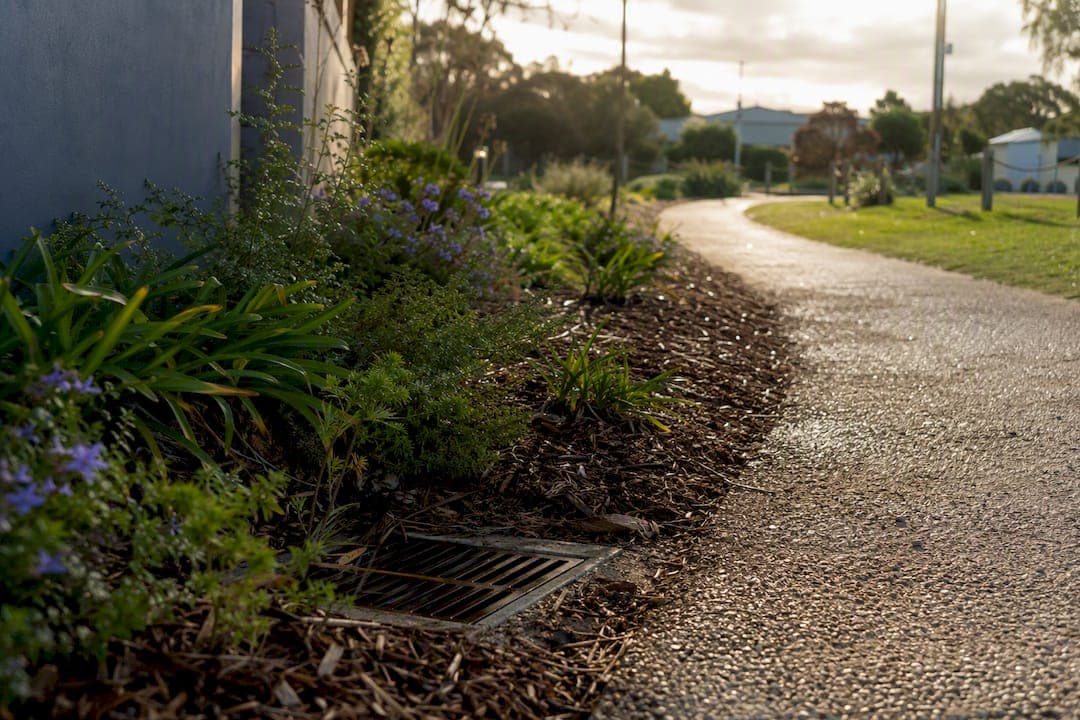
The legal point of discharge (LPoD) is the exact spot, nominated by your local council, where your property's stormwater must legally connect into the public drainage system. Under Building Regulations (2018), reg.133(2), stormwater drainage has to run to that council-approved point, not wherever a builder finds convenient. If you're planning a build, an extension, or a new drainage connection anywhere in Victoria, your first move is to request an LPoD report from your council, or have your builder or licensed plumber apply on your behalf as an authorised agent.
A few things to know before you pick up the phone:
- Common LPoD types: a piped council drain, a kerb and channel, or a rural table drain, depending on what infrastructure sits near your property.
- Turnaround: councils commonly issue the written LPoD report within around 10 business days of a complete application.
- Who applies: the property owner, or an authorised agent such as a builder or plumber acting with written permission.
Pro Tip: Request your LPoD report before you finalise site plans. Redesigning a drainage layout after a builder's already ordered materials costs far more than a two-week wait upfront.
Key takeaways
Getting your legal point of discharge sorted early, and pairing council paperwork with a licensed plumber's site inspection, is what actually prevents costly rework on Victorian building projects.
| Point | Details |
|---|---|
| Request LPoD before design finalises | Apply to council or authorise your builder/plumber early, since reports commonly take around 10 business days. |
| LPoD marks a boundary, not a route | The report tells you where to connect, not how your private pipes are laid out on site. |
| Owners maintain drains to the LPoD | This includes pipework running beneath public footpaths, even though the land itself is council-owned. |
| Councils hold no private pipe plans | Engage a licensed plumber for CCTV tracing before digging, since council records simply don't cover this. |
| Declared roads add DTP consent | Check early whether your LPoD sits on a declared road, as this runs as a separate approval to council permits. |
| Dualflow Services supports the tracing step | Its licensed plumbers handle CCTV drain tracing and site briefings once you've received your council LPoD report. |
Table of Contents
- What is a legal point of discharge (LPoD)?
- When do you need an LPoD report or permit?
- Who applies, and who's responsible for drainage up to the LPoD?
- What an LPoD report contains, and what it won't tell you
- How do you apply for an LPoD report or permit?
- Connection, construction work, and road opening requirements
- Working with a licensed plumber to trace your private drains
- Where to check official LPoD guidance
- How Dualflow Services can help once you have your LPoD report
- What I'd tell every owner before they touch a shovel
- Sources
What is a legal point of discharge (LPoD)?
An LPoD is the location your council nominates, usually at the lowest practical point of your property boundary, where stormwater runoff from your roof, paving, and site drainage must discharge into the council's drainage network. It's a statutory requirement, not a suggestion. Regulation 133(2) of the Building Regulations (2018) requires every property's stormwater drainage to connect to a council-nominated discharge point before a building permit can be finalised.
Councils nominate a specific point rather than leaving it to guesswork because uncontrolled discharge creates real problems downstream: flooding on neighbouring properties, erosion, and pressure on drains never designed for the volume they're suddenly carrying. The council looks at existing infrastructure, ground levels, and drainage capacity, then tells you exactly where your water is allowed to go.
Here's where people get tripped up: the LPoD is not the same as your private drainage layout. It marks the boundary between your responsibility and the council's. What happens between your downpipes and that nominated point, the actual pipe routing across your block, is entirely on you and your plumber to design and install.
- LPoD locations vary by property, street, and existing drainage assets nearby.
- The nominated point tells you where to connect, not how to route pipes to get there.
- Some properties, particularly rural ones, might have unconventional LPoDs like a table drain instead of underground pipe.
When do you need an LPoD report or permit?
Not every renovation triggers an LPoD requirement, but more projects need one than most owners expect. You'll almost certainly need a report in these situations:
- Any building permit application involving stormwater drainage, including new homes, extensions, granny flats, and sheds over a certain footprint.
- Connecting your property to the council drainage network for the first time, common with older properties upgrading from a rural table drain to piped infrastructure.
- Works that change the volume or flow rate of runoff leaving your site, think large extensions, new paved driveways, pools, or landscaping that adds significant hard surface area.
- When your nominated LPoD sits on a declared road, which means you'll also need consent from the Department of Transport and Planning before any connection work proceeds.
That fourth trigger catches a lot of owners off guard. Declared roads include freeways and major arterial state roads, and DTP treats them differently to a standard council-managed street. If your block backs onto one of these, budget extra time into your project timeline. It's a separate approval process running alongside, not instead of, your council application.
Builders extending a home by even a modest amount often assume drainage is a non-issue because "the pipes are already there." If the extension increases hard surface area enough to change how much water leaves the site, and how fast, council will usually want to see it addressed in the permit documentation regardless of what already exists.
Who applies, and who's responsible for drainage up to the LPoD?
Only the property owner, or someone the owner has formally authorised, can lodge an LPoD application. In practice that means builders and licensed plumbers submit most requests, working under written authorisation from the owner. Councils won't process a request from a tradesperson with no documented connection to the property.
Responsibility splits cleanly at the LPoD, and this is where owners regularly get it wrong:
- You're responsible for every metre of private drain and pipe from your building up to the LPoD, including sections that run beneath a public footpath.
- Council is responsible for maintaining drainage assets from the LPoD onward into the broader network.
- Liability follows the split: if a poorly designed connection on your side causes flooding or damage to a neighbouring property, that liability sits with you, not the council.
Pro Tip: Just because a pipe runs under council-owned footpath doesn't mean council maintains it. If it's carrying water from your property to the LPoD, it's yours to fix when it blocks or fails.
What an LPoD report contains, and what it won't tell you
A council LPoD report is a genuinely useful document once you know how to read it, and equally useful to know what it deliberately leaves out.
Expect the report to include:
- The nominated LPoD location, described relative to your property boundary.
- Connection type and standard drawing, showing council's approved method for tying into that specific asset.
- Offsets and depth of the relevant council drain where that data exists.
- Conditions, easement notes, or flood-related requirements specific to your site.
What it almost never includes is any record of your property's existing private pipe layout. Councils simply don't hold that information, a point worth sitting with, because it's the single biggest gap between "council says connect here" and "builder actually knows where to dig." Reports from councils like Darebin typically arrive by email within about 10 business days of a complete application, but that turnaround only tells you where to connect, not what's already buried in your yard.
Hand the LPoD report to your builder and plumber as a starting brief, not a finished plan. It answers "where does the water need to end up?" It does nothing to answer "what's already running under my driveway?" That second question needs a licensed plumber on site, which we'll get to shortly.
How do you apply for an LPoD report or permit?
The process is straightforward once you know the sequence, and most delays come from missing documents rather than council backlogs.
Before you apply, gather:
- A current certificate of title for the property.
- A site plan showing the building footprint and boundaries.
- Floor and ground levels, particularly if you're altering existing levels.
- A written description of the proposed works.
- Signed authorisation if a builder or plumber is applying on your behalf.
Submitting the application:
Most Victorian councils accept LPoD requests through an online portal, and many also allow submission by email, mail, or in person at a service centre. City of Darebin and other councils process applications in the order they're received, so a complete application submitted early beats an incomplete one submitted urgently. Fees differ from council to council, generally a modest administrative charge rather than anything scaled to project size, and most accept payment online at the time of lodgement or by invoice afterward.
What happens next:
Once your application and fee are in, expect a written LPoD report back within roughly 10 business days, though some councils move faster and others take longer during peak building seasons. The report typically arrives by email.
That report isn't the end of the paperwork. It's usually the trigger for the next round:
- Stormwater connection permit, authorising the physical tie-in to council infrastructure.
- Road opening permit, if any works disturb the footpath, nature strip, or roadway to reach the LPoD.
- DTP consent, only if your LPoD sits on a declared road, running as a parallel approval alongside council processes.
Builders juggling multiple permits on one project sometimes bundle these applications together. Ask your council whether concurrent lodgement is an option. It can shave weeks off a project timeline compared with lodging each permit sequentially and waiting for one approval before starting the next.
Connection, construction work, and road opening requirements
Once you've got your LPoD report and connection permit sorted, the physical works have their own set of rules, particularly if anything happens in the road reserve.
A road opening permit covers any excavation or disturbance in council-owned land, including the nature strip and footpath, not just the bitumen itself. You apply through your local council's engineering or infrastructure department, generally as a separate process from the building permit itself. Expect conditions around reinstatement standards, traffic management if you're working near a live road, and sometimes a bond held until council confirms the surface has been restored properly.
DTP consent becomes non-negotiable if your nominated LPoD sits on a declared road, freeways and major arterial state roads fall into this category. This runs alongside your council approvals, not instead of them, and it typically takes longer than a standard council permit because DTP is assessing traffic and infrastructure impacts on state-managed roads.
- If no council drain exists near your property, your LPoD might be a kerb and channel or rural table drain rather than a piped connection.
- In that scenario, you're often responsible for designing and constructing your own outfall to meet council specifications.
- This almost always requires a qualified engineer to prepare drainage plans, particularly where the private outfall crosses a nature strip or crossover.
Skipping engineering input on a private outfall is one of the more expensive mistakes owners make. Get it wrong and you're not just facing a council rejection, you're facing a rework of concrete and pipework that's already in the ground.
Working with a licensed plumber to trace your private drains
Here's the gap nobody warns you about until you're standing in a half-dug trench: councils genuinely don't have plans of your private stormwater pipes. That means the LPoD report tells you the destination, but finding out what's currently happening underground is a job for a licensed plumber, not council records.
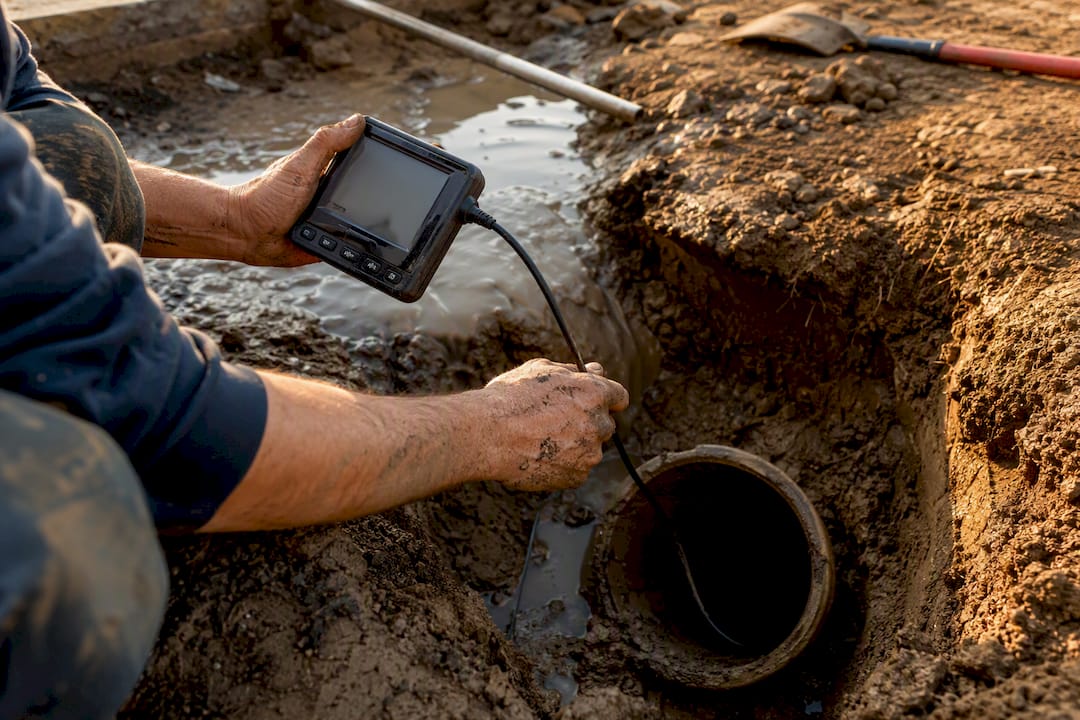
Plumbers trace private drains using CCTV camera inspections, pit-to-pit checks, and physical site observations. That combination reveals where pipes actually run, where cross-connections might exist from previous renovations, and what condition the existing pipework is in before anyone commits to new works. This kind of tracing work is the same skillset used in general emergency plumbing investigations, just applied proactively rather than after something's already failed.
A licensed plumber checking your property against an LPoD report will typically verify:
- Pit locations and whether they match what old plans (if any) suggest.
- Pipe grades and whether existing drainage actually flows the direction it should.
- Any cross-connections between stormwater and sewer lines.
- Easement access and how offsets from the LPoD affect your connection route.
Pro Tip: Give your plumber the full LPoD report, your certificate of title, and a site plan before they arrive. A plumber working from a proper brief traces drains faster and gives you a more useful CCTV record than one working from a phone call and a guess.
Book a compliance visit once you've got the council report in hand but before you finalise builder quotes. It's the cheapest point in the process to find a problem.
Where to check official LPoD guidance
Your own council's website is the authoritative source for application forms, current fees, and standard connection drawings specific to your property. Start with your local council's building and planning section, and cross-check against comparable guidance from councils such as Monash, Moorabool Shire, and Boroondara if your council's page is light on detail.
How Dualflow Services can help once you have your LPoD report
Once council hands you that LPoD report, the real question becomes: what's actually happening underground on your property, and who's going to verify it before you commit to construction? That's the work Dualflow Services does day to day across the Mornington Peninsula.
Dualflow Services' licensed plumbers carry out CCTV drain tracing to map exactly where your private stormwater pipes run, identify any private drain repairs needed before connection works begin, and attend site to brief builders on how the existing plumbing lines up with council's nominated discharge point. For commercial sites managing trade waste alongside stormwater, it's also worth checking Pressure Works' guide to trade waste compliance in Victoria, since separator and waste systems often intersect with drainage planning. Dualflow Services also attends compliance inspections on behalf of aged care, retirement village, and disability care home managers who need a qualified plumber present when council or building surveyors visit. If you've got an LPoD report in hand and need someone to trace what's actually in the ground before your builder starts, book a site assessment with Dualflow Services and get a clear picture before the trenches open.
What I'd tell every owner before they touch a shovel
The single most common mistake I see is sequencing. Owners get excited about a renovation, brief a builder, sometimes even order materials, and only then discover they need an LPoD report that takes a fortnight to come back. Flip that order. Request the report first, then brief your plumber with it in hand, then lodge your connection and road opening permits, then schedule the physical works.
The second mistake is assuming council maintains everything with a pipe in it. It doesn't. Anything upstream of your LPoD, including sections under your own footpath, is your problem the day it blocks. I've seen owners genuinely shocked to learn this after a plumber's already on site with a CCTV camera. Get that private drain traced before you need it traced in an emergency, and you'll spend a fraction of what a reactive callout costs. Dualflow Services deals with exactly this handover between council paperwork and on-ground reality across the Mornington Peninsula, and the pattern rarely changes: early tracing saves money, late tracing costs it.
— Mike
Sources
- Legal point of discharge | Moorabool Shire Council
- Legal Point of Discharge (LPoD) | City of Monash
- Legal point of discharge | City of Boroondara
- Stormwater legal point of discharge | City of Darebin