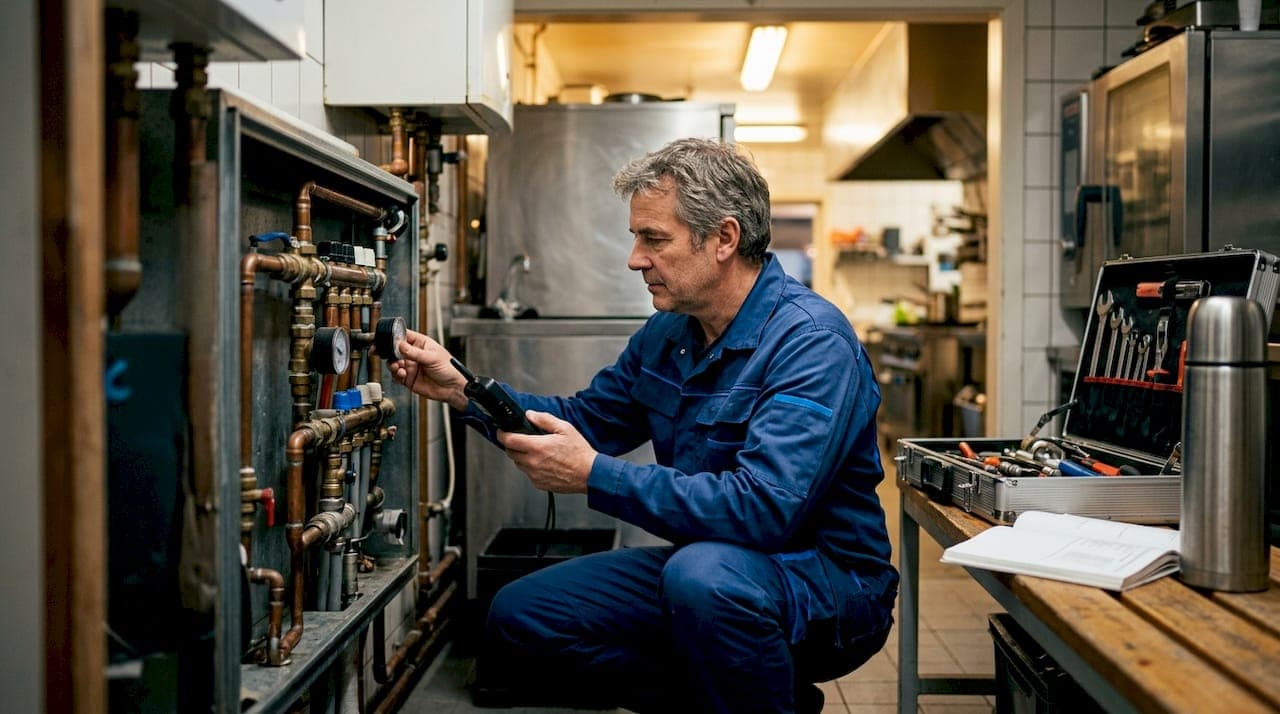
Commercial plumbing maintenance is defined as a structured programme of scheduled inspections, proactive servicing, and documented compliance checks that keep a building's water and drainage systems operating without failure. For property managers and facility operators, best practices commercial plumbing maintenance means following the International Plumbing Code (IPC) standards, meeting backflow prevention requirements, and building a layered inspection schedule that catches problems before they become shutdowns. Dualflowservices works with commercial clients across the Mornington Peninsula to deliver exactly this kind of structured, compliance-focused maintenance. The cost of reactive repairs far exceeds the cost of prevention, and the operational disruption of an unplanned outage is rarely acceptable in a commercial setting.
1. What inspection schedule should commercial buildings follow?
A practical maintenance schedule combines monthly and quarterly checks of high-use components, annual professional inspections, and pressure testing of supply lines every 2–3 years. This layered approach means no single component goes unmonitored long enough to fail without warning.
Monthly and quarterly tasks focus on the items that accumulate problems fastest. Grease traps, restroom fixtures, floor drains, and visible pipe connections all warrant regular visual checks by your facilities team. These walkthroughs do not require a licensed plumber, but they must follow a written checklist to be defensible.
Annual inspections require a licensed plumber and cover drain line camera work, backflow device testing, water heater servicing, and a full fixture walkthrough. These are the inspections that generate the compliance documentation your water authority and insurer expect to see.
Every 2–3 years, pressure testing of ageing supply lines and a formal pipe condition assessment are warranted, particularly in buildings constructed before the 1990s. Older galvanised or copper pipe systems degrade in ways that visual inspection alone cannot detect.
Pro Tip: Adapt your schedule to building use, not just building age. A high-volume commercial kitchen runs its grease trap to capacity far faster than a low-traffic office block, so the same calendar interval will not serve both.
2. How to manage grease trap and interceptor maintenance
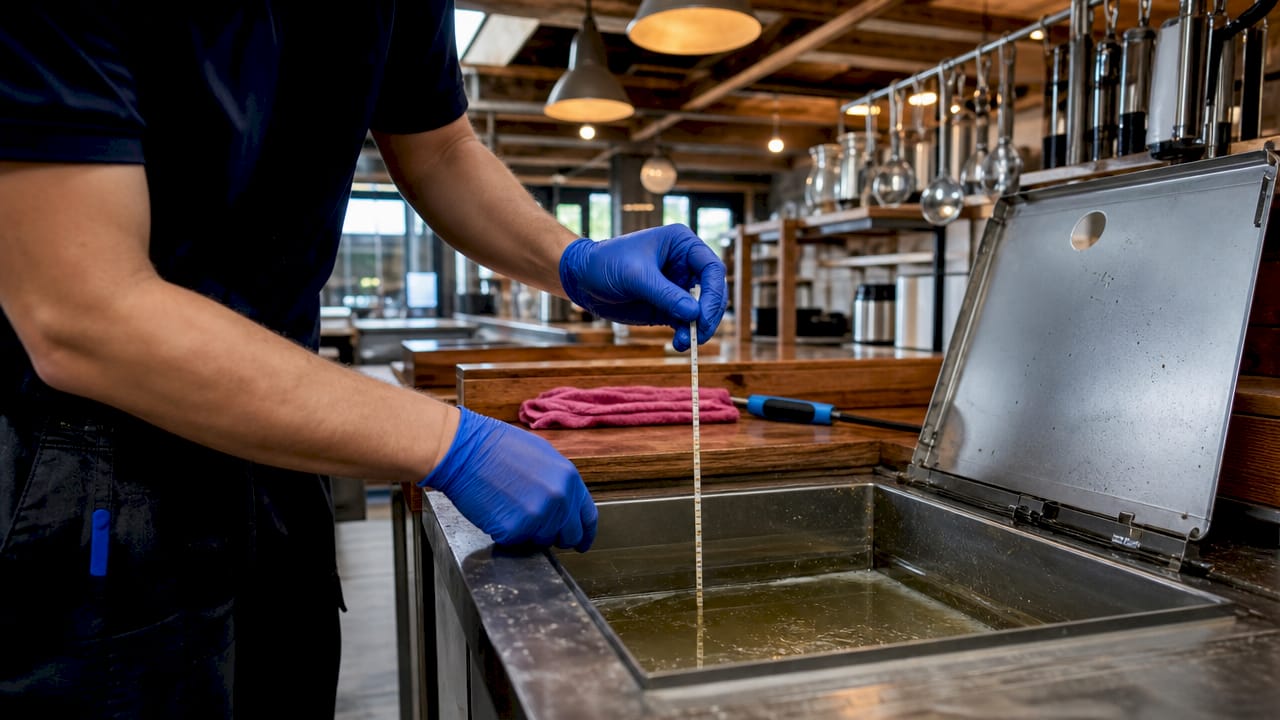
Grease interceptors must be serviced every four weeks, or sooner if grease and solids exceed 25% of the interceptor's liquid volume. That threshold is the compliance trigger, not the calendar date. Many operators miss this distinction and end up with overloaded interceptors between scheduled pump-outs.
Effective grease trap management requires both interval servicing and active measurement. Tracking how close accumulation is to the 25% threshold lets you adjust pump frequency dynamically rather than waiting for a fixed date. This approach keeps you compliant and reduces the risk of a blockage during peak service hours.
Key practices for grease interceptor compliance:
- Remove solids from strainers daily, before they enter the interceptor body.
- Schedule pump-outs with a licensed waste carrier who provides a manifest for your records.
- Avoid chemical additives or enzyme treatments that simply push grease further downstream into the sewer line.
- Maintain servicing logs for a minimum of seven years, including dates, volumes removed, and the carrier's licence number.
- Photograph the interceptor condition before and after each service for dispute resolution and insurance purposes.
Disposal must comply with Australian environmental regulations. Only licensed liquid waste carriers are permitted to remove and transport interceptor contents. Keep copies of all waste transport certificates alongside your servicing log.
Pro Tip: Install a sight glass or use a dip stick measurement at each service visit. Recording the actual accumulation depth gives you the data to justify a change in pump frequency to your regulator, not just your gut feeling.
3. Proactive drain and sewer line maintenance
Effective drain care combines daily staff habits, quarterly professional cleaning, and annual camera inspections to maintain flow and meet compliance requirements. No single element works without the others.
Daily staff practices are the first line of defence. Plates scraped before washing, strainers in every sink and floor drain, and a clear protocol for reporting slow drains all reduce the fats, oils, and grease load entering the system. These habits cost nothing and prevent the majority of blockages in commercial kitchens and amenity areas.
Quarterly professional cleaning, including hydro jetting of main drain lines, removes the buildup that daily habits cannot prevent entirely. Hydro jetting uses high-pressure water to clear grease, scale, and debris without damaging pipe walls, making it the preferred method over chemical drain cleaners in commercial settings.
Annual camera inspections identify root intrusion, pipe deformation, and heavy buildup before these issues cause a full blockage or structural failure. The footage becomes part of your maintenance record and informs the next inspection interval.
| Task | Frequency | Responsible party |
|---|---|---|
| Strainer cleaning and plate scraping | Daily | Facilities or kitchen staff |
| Slow drain reporting and visual checks | Weekly | Facilities team |
| Hydro jetting of main lines | Quarterly | Licensed plumber |
| Drain camera inspection | Annual | Licensed plumber |
| Pipe condition and pressure assessment | Every 2–3 years | Licensed plumber |
Camera findings should trigger an asset management decision, not just a written note. If a camera reveals root intrusion, the follow-up plan should specify whether the solution is targeted cleaning, pipe lining, or excavation and replacement. That decision belongs in your maintenance record.
4. Backflow prevention and water heater compliance
Backflow prevention devices connected to a municipal water supply require annual testing by a licensed plumber and submission of the test certificate to your water authority. Missed or failed testing often results in immediate water service interruption. That is not a theoretical risk; water authorities enforce it.
Backflow compliance tasks to schedule annually:
- Book a licensed backflow tester at least four weeks before your certification expiry date.
- Submit the test certificate to your water authority within the required timeframe.
- Retain a copy of the certificate in your digital maintenance records.
- Inspect the device physically for corrosion, leaks, or mechanical damage at the time of testing.
- For buildings with multiple backflow devices, stagger testing appointments to avoid simultaneous access conflicts.
Water heater servicing follows a similar annual rhythm. Flushing the tank removes sediment that reduces heating efficiency and accelerates corrosion. Anode rod inspection determines whether the sacrificial rod has degraded to the point where the tank wall is at risk. Thermostat calibration confirms the unit is holding the correct temperature for both energy efficiency and Legionella risk management.
Legionella control is a compliance obligation in commercial hot water systems, not an optional extra. Victorian health regulations require that hot water systems in commercial and aged care settings maintain water at temperatures that prevent bacterial growth. Dualflowservices includes Legionella temperature checks as part of scheduled water heater servicing for commercial clients.
Coordinate inspection schedules for multiple water heaters across a building so that no unit goes beyond its annual service window. A simple asset register listing each unit's location, capacity, installation date, and last service date makes this straightforward to manage.
5. Documentation and digital recordkeeping
Structured checklists turn inconsistent inspections into repeatable, defensible processes that support insurance claims, regulatory audits, and dispute resolution. A checklist completed once and filed is useful. A checklist completed consistently over three years is an asset.
Digital records with GPS-tagged photos provide timestamped evidence of asset condition at each inspection point. This matters when a tenant disputes responsibility for a blockage, when an insurer requests proof of maintenance, or when a regulator audits your compliance programme. Paper logs stored in a filing cabinet do not offer the same protection.
Comprehensive digital documentation compounds in value year over year. A three-year record of camera inspection footage, grease trap pump-out manifests, backflow certificates, and water heater service reports tells a complete story of how the building's plumbing has been managed. That story has real dollar value when it comes to insurance renewals, asset sales, and regulatory inspections.
Assign one person in your team as the maintenance records custodian. That person is responsible for uploading service reports, filing certificates, and flagging upcoming compliance deadlines. Without a named owner, records accumulate gaps.
Key takeaways
Preventative plumbing maintenance is the most cost-effective way to protect a commercial building's operations, compliance standing, and asset value.
| Point | Details |
|---|---|
| Layer your inspection schedule | Combine monthly staff checks, quarterly professional cleaning, and annual licensed inspections for full coverage. |
| Measure grease interceptors, not just the calendar | Service when accumulation reaches 25% of liquid volume, not just on a fixed date. |
| Annual backflow testing is non-negotiable | Missed certification risks immediate water service shutoff from your water authority. |
| Camera inspections drive asset decisions | Use footage to plan targeted repairs or pipe lining, not just to note a problem. |
| Digital records compound in value | Timestamped photos and service logs protect you in disputes, audits, and insurance claims. |
What I've learned from years of commercial plumbing maintenance
The property managers who avoid expensive plumbing failures share one habit: they treat their maintenance programme as a living document, not a fixed schedule. They review it after every camera inspection, after every grease trap pump-out, and after every backflow test. When the data tells them something has changed, they change the schedule.
The biggest mistake I see is treating the maintenance calendar as the compliance programme. A calendar tells you when to act. Measurement tells you whether the action was enough. Grease interceptors are the clearest example. A kitchen that increases its output by 30% will fill its interceptor faster than the calendar expects. If you are not measuring accumulation at each service, you will not know until you have a blockage or a failed inspection.
Camera inspection results are underused in most commercial buildings. Facility operators watch the footage, note that the pipe looks acceptable, and file the report. The more useful question is: what does this footage tell me about the next inspection interval? If a line shows early-stage root intrusion, the answer is not "inspect again in 12 months." The answer is "inspect again in six months and plan for pipe lining."
Digital recordkeeping is where most programmes fall short, not because the data does not exist, but because it lives in different places. Service reports from one contractor, pump-out manifests from another, backflow certificates in a filing cabinet. Consolidating these into a single digital system, even a shared folder with a consistent naming convention, changes the quality of your compliance programme immediately.
— Mike
Dualflowservices commercial plumbing maintenance
Property managers on the Mornington Peninsula trust Dualflowservices for scheduled commercial plumbing maintenance that covers inspections, documentation, and priority response when something goes wrong.
Dualflowservices provides commercial maintenance contracts that include grease trap servicing, backflow testing, drain camera inspections, and water heater servicing, all with the compliance documentation your building needs. Scheduled visits reduce emergency callouts and keep your maintenance records current. Contact Dualflowservices to arrange a maintenance plan tailored to your building's usage, age, and compliance obligations.
FAQ
How often should commercial plumbing be inspected?
Commercial plumbing inspections follow a layered schedule: monthly and quarterly staff checks for high-use components, annual professional inspections by a licensed plumber, and pressure testing of supply lines every 2–3 years.
What happens if backflow testing is missed?
Missed backflow device testing typically results in immediate water service interruption by the water authority. Annual testing and certificate submission are legal requirements for commercial properties connected to a municipal supply.
How do I know when to pump out a grease interceptor?
Service the interceptor when grease and solids reach 25% of liquid volume, or every four weeks, whichever comes first. Measuring accumulation at each visit is more reliable than a fixed calendar interval alone.
What records should I keep for commercial plumbing compliance?
Maintain service logs, pump-out manifests, backflow certificates, and camera inspection reports in a digital system with timestamped photos. Grease interceptor records should be retained for a minimum of seven years.
Why are drain camera inspections worth the cost?
Annual camera inspections detect root intrusion, pipe degradation, and heavy buildup before they cause a full blockage or structural failure, reducing emergency repair costs and operational downtime.