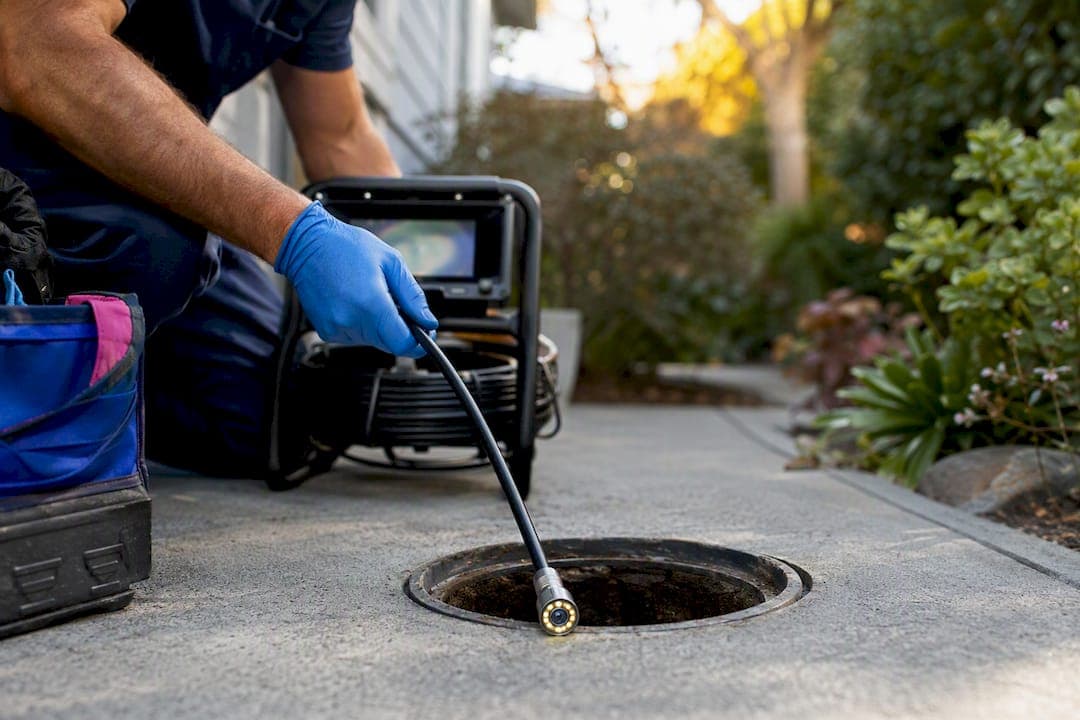
If your drains keep blocking despite clearing, tree roots are a likely cause. Recurring blockages across multiple fixtures, gurgling, and slow drainage after a clear usually point to root ingress rather than a one-off clog. The right first step is a CCTV inspection followed by professional mechanical clearing, not a bottle of chemical root killer, which only ever plays a secondary, preventive role once the pipe is actually flowing again.
TL;DR:
- A CCTV inspection is essential to accurately locate tree root entry points, assess the extent of intrusion, and identify pipe damage or joint failure.
- Mechanical cutters and hydro-jetting are effective for clearing roots but do not repair the underlying pipe defects that allow roots to enter in the first place.
- Chemical root killers are ineffective for dense root masses and can damage older pipe materials; they work best as a preventive measure after physical clearing.
- Proactive measures like pipe relining, repairs, tree placement, and root barriers provide long-term solutions that prevent recurring root intrusions.
- Costs vary based on pipe condition and access, with responsibility generally falling on homeowners for lateral lines, and immediate issues like sewage backups require prompt professional response.
Table of Contents
- How tree roots get into drains and why they keep coming back
- Diagnosing root intrusion: what a camera actually shows you
- Professional removal methods: cutting, augers and jetting
- Why chemical root killers should not be your first move
- Long-term fixes: relining, repairs and smarter landscaping
- Costs, who's responsible, and when to stop and call a plumber
- A tradesman's checklist for talking to your plumber
- Get your drains checked properly with Dualflowservices
- Sources
How tree roots get into drains and why they keep coming back
Roots don't go looking for pipes out of spite. They chase moisture and warmth, and a sewer or stormwater line leaking even a trace of vapour through a hairline crack, a loose joint, or a worn seal is exactly the kind of target they're built to find. Once a root tip finds that gap, it doesn't just sit there. It thickens, widens the defect, and eventually a fine hair-root becomes a fist-sized mass strangling the pipe's flow.
Modern PVC pipe, properly laid, rarely gets cracked open by root pressure alone. The vulnerability sits at joints, at existing hairline fractures, and overwhelmingly in older materials like clay and cast iron, where seals degrade over decades and give roots an easy foothold. That's an important distinction for anyone with an older property: the pipe material tells you a lot about your risk level before a single root ever shows up.
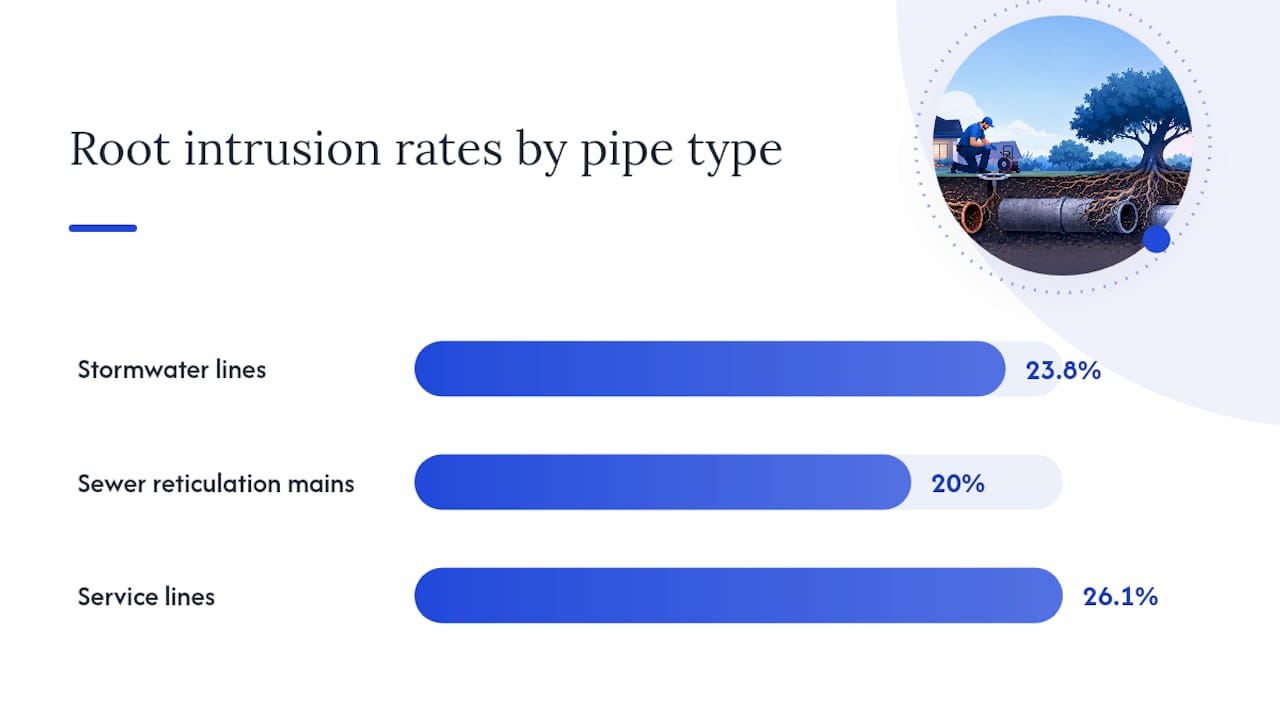
A council guidance summary from Shoalwater puts it plainly: roots are drawn to the moisture and vapour escaping from sewer pipes, and catching the problem early is what keeps it from becoming a full excavation job later. This isn't rare, either. A 2025 review found tree roots affect roughly 23.8% of stormwater lines, 20% of sewer reticulation mains and 26.1% of service lines in the networks surveyed.
How do you tell root intrusion apart from a simple clog? Look for a pattern:
- The same drain blocks again within weeks of being cleared, not months.
- Multiple fixtures back up together, not just one sink or toilet.
- You hear gurgling from a drain when a different fixture is running.
- Wet or unusually green patches appear in the yard along the pipe run.
Diagnosing root intrusion: what a camera actually shows you
A CCTV sewer camera is the single most useful diagnostic tool for this problem, and it's worth understanding exactly what it reveals before you pay for one.
- The precise entry point. The footage shows exactly where the root has broken through, whether that's a joint, a crack, or a collapsed section, down to the metre mark from the access point.
- Pipe deflection and joint failure. A camera picks up sagging, offset joints, or bellied sections that are inviting roots in and that a simple clear won't fix.
- The extent of the root mass. Some intrusions are a few fine tendrils; others are a dense, pipe-choking tangle. That difference changes whether cutting alone will hold for a year or a month.
Before you even call a plumber, you can narrow things down yourself. Note whether the problem is confined to one fixture (often a local trap or a shorter branch line) or hits the whole house at once, which usually means the main lateral running to the street. Watching a street-side manhole or inspection point after flushing can tell you whether water is backing up in the shared line. Wet patches in the lawn along a known pipe route are a useful clue too.
These checks have limits, though. They tell you that something's wrong, not where exactly or how bad. That's the gap only a camera survey closes.
Professional removal methods: cutting, augers and jetting
Once you know roots are the problem, two established methods do the actual clearing work, and most professional jobs use one or both together.
Mechanical root cutters and augers work like a rotating blade or coring head pushed through the pipe on a cable, physically slicing through the root mass and dragging debris back out. They're the go-to when a root ball is dense enough to have stopped flow completely, because nothing else will punch through it quickly.
Hydro-jetting uses high-pressure water, delivered through a specialised nozzle, to blast roots and built-up debris off the pipe walls rather than just cutting a channel through the middle. It's more thorough on the pipe's internal surface and tends to be the better call for older clay or cast iron lines where you don't want an aggressive cutting head chewing at already-weak walls. On sound modern PVC, jetting and cutting are both viable, and plumbers will often pick based on what the camera footage showed.
Here's the catch that a lot of homeowners miss: cutting or jetting restores flow, it doesn't fix the pipe. The crack or joint gap that let the roots in is still there. Cut roots often regrow faster than the original intrusion, because slicing through a root tip can stimulate new lateral growth right at the same weak point. Repeated cutting without addressing the entry defect is a cycle, not a solution.
- Ask what water pressure the jetting equipment runs at and whether it suits your pipe material.
- Ask whether they'll run a follow-up CCTV pass to confirm the pipe is actually clear, not just flowing.
- Ask what guarantee period applies to the clearing work, and whether that guarantee covers regrowth at the same spot.
Pro Tip: Get the CCTV footage saved or sent to you after the job. If the same blockage comes back in six months, that footage is your proof for a warranty claim or for comparing against a second opinion.
Why chemical root killers should not be your first move
A chemical root killer needs to physically touch live root tissue to do anything at all. If your pipe is already fully blocked by a dense root mass, pouring a chemical treatment down the drain doesn't reach the roots doing the damage. It sits on top of standing water and goes nowhere.
Industry guidance is blunt about this: store-bought chemical drain cleaners are largely ineffective against dense root masses, and using them on older, already-degraded pipe materials can do more harm than good. Homeowner forums back this up too, with tradespeople and DIYers alike generally steering people toward mechanical clearing over improvised chemical mixes.
- Chemicals cannot clear a fully blocked line by themselves. Mechanical clearing has to come first.
- Misused chemicals can degrade ageing pipe joints and seals faster.
- Used correctly, a labelled sewer-safe root killer applied after clearing can slow regrowth at the treated spot, but it's a preventive top-up, not a fix.
Long-term fixes: relining, repairs and smarter landscaping
Clearing a blocked pipe buys you time. Fixing the actual defect is what stops the problem coming back every year.
- Patch repair or trenchless pipe relining seals the specific crack or joint the roots exploited, without digging up the yard. A cured-in-place liner is fed through the existing pipe and cured to form a new internal surface, sealing off the entry point roots used to get in. CCTV footage is what determines whether a local patch will bond properly or whether a longer liner section is needed.
- Full excavation and replacement becomes necessary when a pipe has collapsed, sagged badly, or has so many failed joints along its length that patching one spot just shifts the problem to the next weak point.
- Tree siting and species choice matter more than most homeowners realise. Keep new plantings at a distance roughly matching their mature canopy spread from any known pipe run, and favour species with less aggressive root systems near sewer lines.
- Root barriers, physical panels sunk into the ground between a tree and the pipe run, redirect root growth downward and away rather than sideways into your service line. Combined with sensible drainage detailing around garden beds and retaining walls, this is one of the more overlooked preventive landscaping measures available.
A 2025 review of the research on this backs a clear conclusion: reactive fixes, cutting and chemicals after the fact, give only partial, temporary solutions, while proactive maintenance planning built around pipe age, tree location, and soil conditions produces better long-term results. If your property has clay or cast iron pipes over a few decades old, scheduling a CCTV check every couple of years, even without symptoms, is far cheaper than an emergency dig.
Costs, who's responsible, and when to stop and call a plumber
Costs vary a lot depending on pipe access, depth, and how much of the run needs work, so treat any figure you read online as a rough guide, not a quote, and get an actual assessment for your property. A CCTV inspection alone costs less than a full clearing job; relining sits well above a simple mechanical clear but below a full excavation and pipe replacement.
Responsibility usually splits at the property boundary. The homeowner typically owns and maintains the lateral line running from the house to the boundary or the main sewer connection, while the utility or council is responsible for the shared main beyond that point. If you're unsure where that line sits, your local water authority or council can usually confirm it, and a documented plumbing defect report is useful evidence if a dispute over responsibility comes up.
Stop using water and call a licensed plumber immediately if you notice any of these:
- Sewage backing up into a bath, shower, or floor drain.
- A strong sewage odour around the yard or near an inspection point.
- Ground that's visibly sinking or slumping along a suspected pipe run.
A tradesman's checklist for talking to your plumber
Before you call, jot down which fixtures are affected, how often the blockage recurs, and whether you've had any recent digging or landscaping done nearby. Note any soggy or unusually lush lawn patches too.
On site, the staging is always the same: CCTV first to see what we're dealing with, mechanical clearing second to restore flow, then a decision on patching, relining, or replacement based on what the footage actually shows. The surprises are rarely the roots themselves. It's the second weak joint you didn't know about, or a junction fitting hidden under a paved area that nobody flagged until the camera found it.
— Mike
Get your drains checked properly with Dualflowservices
A licensed plumbing service can provide homeowners a clear process: CCTV inspection, mechanical clearing or hydro-jetting, and relining or replacement when the pipe itself needs fixing, rather than relying on shop-bought chemicals that won't touch a proper root mass. That means one licensed team handling diagnosis through to repair, instead of paying for a clear now and a bigger dig later.

If drains keep backing up despite clearing, or you've spotted wet patches and gurgling across more than one fixture, that's worth booking a proper look. Have the affected fixtures, how often it recurs, and any recent yard works noted down before you call, it speeds up the diagnosis. For repeat blockages that suggest a bigger issue, our guide on why drains block frequently is worth a read too. Book a CCTV inspection or request a quote through Dualflowservices and get an actual answer instead of another temporary clear.
Sources
- Impacts of tree root intrusion on stormwater and sewer systems (Charles Sturt research output)
- Tree root intrusion in sewer systems: A review of extent and costs (MDPI, 2025)
- Five ways to remove and prevent tree roots in sewer lines (Oatey blog)