
Most drains that keep blocking have one of two problems: a buildup of user-sourced waste (grease, hair, wipes) that has never been fully cleared, or an underlying structural fault such as root intrusion, a sagging pipe run, or a cracked joint that re-traps debris no matter how many times you clear the surface. Knowing which one you are dealing with changes everything about how you respond.
If a drain has just blocked, here is what to do right now:
- Stop using the affected fixture to prevent backflow or overflow.
- Remove visible debris from the drain cover, plug hole, or gully grate.
- Run a hot-water flush (not boiling, which can soften PVC) if the pipe is only partially blocked.
- Avoid chemical drain cleaners if the blockage is complete or the pipe is old — they can damage seals and corrode older PVC or cast iron.
- Plunge gently for a sink or shower, but stop if water backs up into a second fixture.
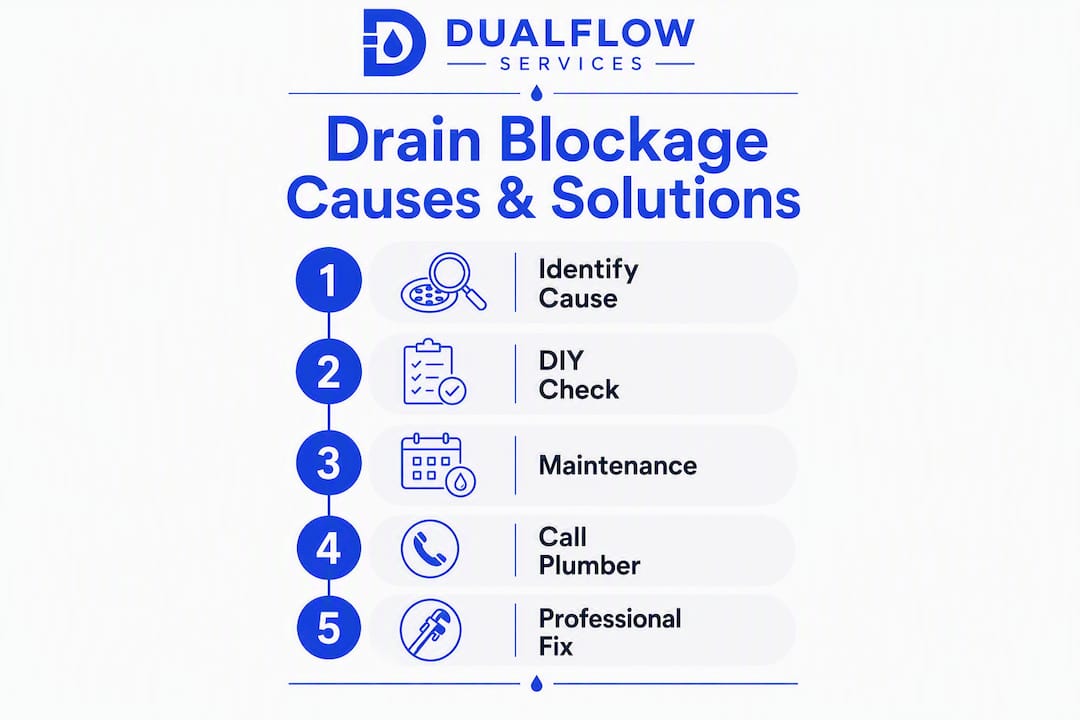
Five quick checks before you decide whether to DIY or call a plumber:
- Is only one fixture affected, or are two or more draining slowly at the same time?
- Can you hear gurgling from a nearby drain when you flush the toilet?
- Is there pooling water or a soggy patch in the yard near the sewer line?
- Has this same drain blocked more than twice in the past six months?
- Is there a sewage smell indoors or outside near the inspection chamber?
If you answered yes to any of questions 2–5, stop the DIY and call a licensed plumber.
Pro Tip: Pour a kettle of hot (not boiling) water slowly down a kitchen sink once a week. It costs nothing and softens grease deposits before they harden against the pipe wall.
Table of Contents
- 1. Why drains block frequently: the real culprits behind repeat clogs
- 2. How to tell whether a clog needs DIY or a plumber
- 3. Practical steps to stop drains blocking again
- 4. When to call a plumber: timelines and costs in Australia
- 5. Why recurring blockages often point to structural issues
- 6. How water quality and sediment affect drains in regional Australia
- 7. How seasonal changes and weather affect drain blockages
- Key takeaways
- What we see on repeat jobs
- Persistent drain problems? Dualflowservices can fix the cause, not just the symptom
- Further reading and useful sources
1. Why drains block frequently: the real culprits behind repeat clogs
Understanding the common drain blockage causes is the fastest way to stop them recurring. Most fall into three groups: what goes down the drain, what grows into the pipe from outside, and what happens to the pipe itself over time.
Kitchen drains
Fats, oils, and grease (FOG) are the single biggest cause of kitchen drain blockages. The problem is not that grease is poured down the drain hot. It is that grease cools further down the pipe and solidifies, coating the pipe wall in a sticky film that narrows the bore with every wash-up. Coffee grounds, food scraps, and starchy residues from pasta or rice add to the layer. Garbage disposals make this worse when people treat them as a general food-waste bin — they grind solids into a fine slurry that settles in the trap and the first horizontal run.
Bathroom drains
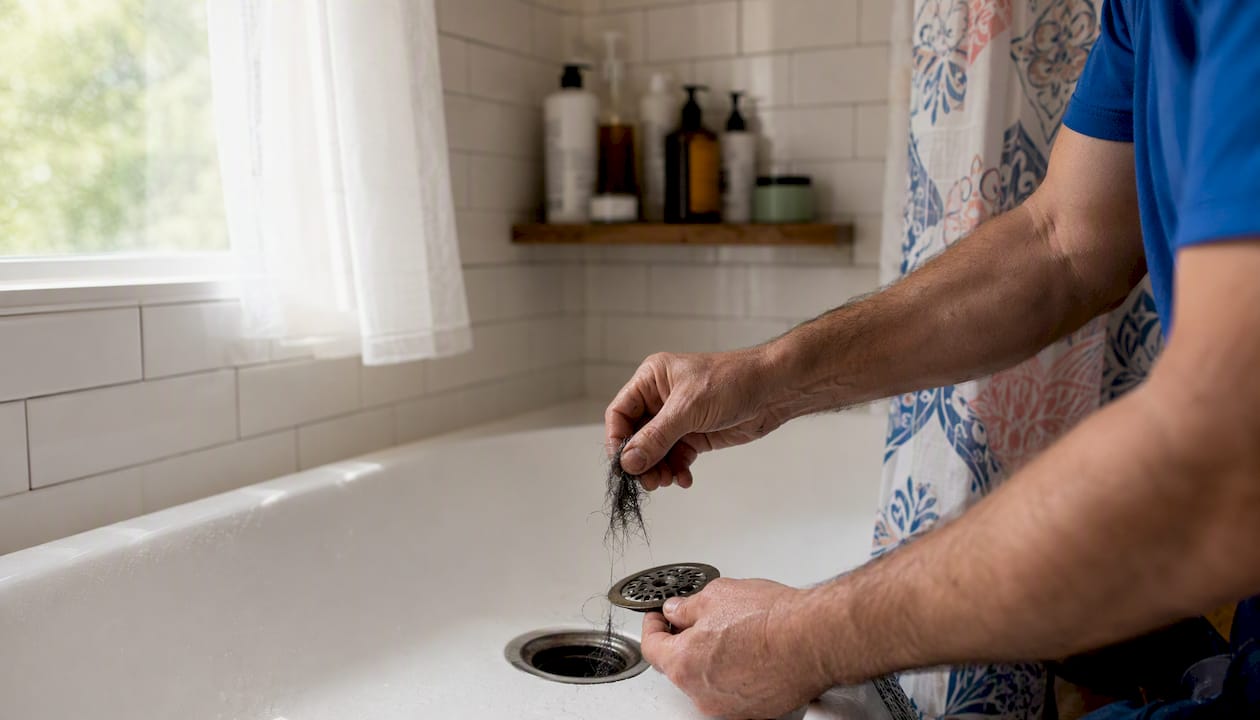
Hair is the primary offender in showers and bathroom basins. A single shower produces enough loose hair to start a mesh across the drain opening, and that mesh catches soap scum, conditioner residue, and skin cells. Within weeks it forms a dense plug that a plunger barely shifts. Cosmetic products containing waxes, oils, and silicones compound the problem because they coat the pipe wall in the same way kitchen grease does.
Toilets
Wet wipes and so-called "flushable" products do not break down like toilet paper. They stay intact, snag at rough joints or corroded sections, and collect more debris until the line is fully blocked. Sanitary products, cotton buds, and excessive toilet paper cause the same result. The label "flushable" refers to the product's ability to pass through the toilet pan, not to its behaviour 10 metres down the sewer line.
External and main-line drains
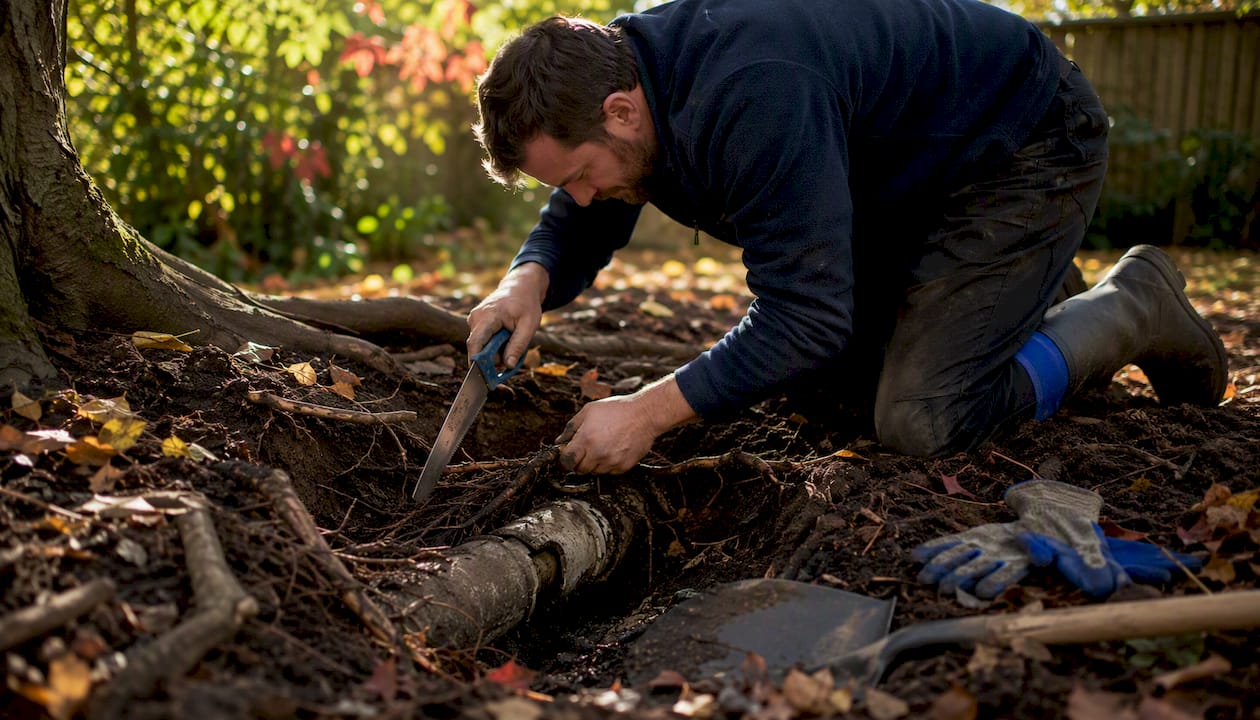
Tree root intrusion is the most common cause of recurring main-line blockages. Roots enter through hairline cracks or loose joints, then grow into dense mats that trap waste and reform within weeks of mechanical clearing. Outdoor gullies and stormwater drains collect leaves, silt, and storm debris, particularly after heavy rain. Blocks following a storm may be network surcharge rather than a domestic pipe fault.
Structural and system faults
| Fault type | How it causes repeat blockages |
|---|---|
| Bellied or sagging pipe | Low point traps solids; clears temporarily but refills |
| Poor fall (incorrect grade) | Slow flow lets solids settle before reaching the main |
| Cracked or collapsed pipe | Debris catches at the break; roots enter through the gap |
| Misaligned joints | Step or lip inside the pipe snags hair, wipes, and grease |
| Blocked plumbing vent | Reduced pressure differential slows drainage; solids settle |
| Mineral scale (hard water) | Rough, narrowed bore catches debris faster |
Hard-water mineral deposits and internal corrosion reduce pipe bore and create rough surfaces that accelerate re-blockage. This is particularly relevant in regional Victoria and parts of the Mornington Peninsula where water hardness varies by supply zone.
2. How to tell whether a clog needs DIY or a plumber
A single slow shower drain is usually a hair-and-soap-scum problem you can fix in ten minutes. A drain that blocks again three weeks after you cleared it is telling you something different.
Follow this sequence before reaching for the phone:
- Check which fixtures are affected. Run the kitchen tap, flush the toilet, and check the laundry tub. If more than one fixture drains slowly or gurgles, the blockage is downstream of where the branch lines meet — that is a main-line issue.
- Listen for gurgling. A gurgling toilet when you run the basin tap points to a venting problem or a partial main-line blockage reducing air pressure in the system.
- Check the inspection chamber (the black or grey lid in the yard, usually near the boundary). If it is full or overflowing, the blockage is in the sewer line, not inside the house.
- Look for soggy ground or yard sinkage near the sewer run. Soft ground above a pipe often means a leak or collapse, not just a blockage.
- Try a plunger on a single fixture. If it clears and stays clear for more than a month, it was an isolated clog. If it returns within weeks, the surface clearing only punched through the soft centre of a larger deposit.
- Remove and clean the trap under the basin or kitchen sink. A trap full of black sludge that refills quickly after cleaning suggests the problem is further down the line.
Red flags that mean stop DIY and call a licensed plumber:
- Sewage backing up into a shower or bath when you flush the toilet
- Foul sewer odour indoors or in the yard
- Two or more fixtures failing at the same time
- The same drain has blocked more than twice in six months
- Visible yard sinkage or a patch of unusually green grass over the sewer run
- Any sign of sewage pooling on the surface
Pro Tip: Plunging and snaking often create a temporary passage through soft material but leave hardened grease, scale, or root mass behind. If the same spot blocks again within a month, the fix was never the plunger — it was always going to need a CCTV pipe inspection.
3. Practical steps to stop drains blocking again
Prevention is mostly about keeping the wrong things out of the drain and giving the right things a clear path through.
Daily and weekly habits
- Scrape plates into the bin before washing; never rinse food scraps down the sink.
- Cool cooking grease in a container, then bin it — never pour it down the drain, even with hot water chasing it.
- Brush hair before showering to reduce the volume that reaches the drain.
- Use a fine-mesh strainer in every sink and shower — the $5 investment prevents most bathroom and kitchen blockages.
- Bin wet wipes, cotton buds, and sanitary products rather than flushing them.
Monthly and seasonal maintenance
Monthly: Pour a kettle of hot water down kitchen and bathroom drains. Follow with a cup of baking soda and a cup of white vinegar, wait 15 minutes, then flush with hot water. This is a safe, pipe-friendly alternative to chemical cleaners for routine maintenance.
Every three months: Remove and clean sink traps. Clear outdoor gully grates of leaves and debris. Check that the inspection chamber lid is seated and undamaged.
Before storm season (autumn in Victoria): Clear all external gullies and stormwater grates. Trim back any tree or shrub roots growing near the sewer line. If you have large trees within three metres of the sewer run, schedule a preventative maintenance inspection before the wet season starts.
Appliance and fixture guidance
Garbage disposals handle soft food scraps well, but coffee grounds, eggshells, fibrous vegetables (celery, corn husks), and starchy foods (pasta, potato peelings) should go in the bin. Overloading the disposal with a large volume at once pushes unground material into the trap. Run cold water for 30 seconds after the disposal stops to carry waste fully into the main line.
What not to use
Chemical drain cleaners (caustic soda, sulphuric acid products) dissolve soft organic matter but leave grease and scale untouched. They also degrade rubber seals, can crack older PVC, and are hazardous if they contact skin or splash back. For a partial blockage, enzyme-based biological cleaners (available at most hardware stores) are slower but safer for pipes and the environment. For a complete blockage, skip the chemicals entirely and call a plumber.
Safe small fixes worth installing:
- Fine-mesh sink strainers (stainless steel lasts longer than plastic)
- Hair catchers for shower drains (clean weekly)
- Gully guards on all external drain grates
- A rodding access point if your system does not already have one — it saves significant labour cost on future call-outs
4. When to call a plumber: timelines and costs in Australia
Some blockages genuinely need a professional from the first moment. Others are fine to attempt yourself, but only once.
Call a plumber immediately if:
- Sewage is backing up into the house
- Multiple fixtures are failing at the same time
- There is external pooling or a sewage smell in the yard
- The drain has blocked more than twice in six months despite clearing
- You can see or suspect yard sinkage above the sewer run
A licensed plumber will typically start with a CCTV camera inspection to locate the exact cause before recommending a fix. This matters because the right remedy depends entirely on what is causing the blockage. Hydro-jetting (high-pressure water) clears grease, scale, and soft root mass. Mechanical root cutting removes larger root intrusions. Pipe relining repairs cracks and misaligned joints from the inside without excavation. Pipe replacement is reserved for collapsed or severely deteriorated sections.
Typical Australian cost ranges (indicative only — vary by region, access, and job complexity):
These are indicative ranges for the Melbourne and Mornington Peninsula region. Rural and remote areas typically attract higher call-out fees.
What to expect during a diagnostic visit:
- The plumber will ask about recurrence frequency, which fixtures are affected, and any recent changes (new trees planted, recent earthworks, age of the property).
- A CCTV inspection takes 30–60 minutes and produces footage you can keep.
- A written report following the inspection gives you a documented basis for any insurance claim or strata dispute.
- A single thorough inspection prevents repeated call-outs for the same problem.
A UK drainage-industry report found that approximately 83.1% of drain blockages stem from user behaviour (unsuitable items flushed and FOG accumulation), with roughly 15.3% linked to structural defects. The practical implication is that most blockages are preventable, but those that keep coming back despite behavioural changes almost always have a structural cause underneath.
5. Why recurring blockages often point to structural issues
The pattern that experienced plumbers recognise immediately is a drain that clears fine with a snake or plunger, then blocks again within two to four weeks. That cycle is the clearest signal that the surface clearing never reached the actual problem.
Surface clearing methods like plunging or a hand snake often only remove the loose portion of a blockage, leaving hardened grease, scale, or root mass behind. A camera inspection reveals what is actually there. Without it, you are guessing.
Bellied or sagging pipes, poor fall, and misaligned joints create sediment traps where solids settle every time flow slows. Even after a thorough hydro-jet, the geometry of the pipe means the same spot will collect debris again. The only lasting fix is relining or replacing the affected section.
Root intrusion follows a similar cycle. Roots are cut back mechanically, flow is restored, and within weeks new growth re-enters through the same crack. Until the entry point is sealed — through relining or replacement — the blockage will return on a predictable schedule.
Statistic: Industry data indicates approximately 83.1% of drain blockages are caused by user behaviour, while roughly 15.3% are structural. For drains that keep blocking despite changed habits, that 15.3% is where to look first.
Pro Tip: Schedule a CCTV survey after the second blockage at the same location, not the fifth. The cost of one inspection is almost always less than three call-outs to clear the same recurring clog.
6. How water quality and sediment affect drains in regional Australia
Water hardness varies considerably across Victoria and regional Australia. Areas supplied by groundwater or older reticulated systems tend to have higher mineral content, particularly calcium and magnesium bicarbonates. Over time, these minerals precipitate out of solution and form scale on the inside of pipes.
Hard-water mineral deposits and internal corrosion reduce pipe bore and produce rough internal surfaces. Hair, soap scum, and food particles catch on those rough surfaces far more readily than they would in a smooth new pipe. The result is a drain that blocks more frequently than its age or usage would otherwise suggest.
In parts of the Mornington Peninsula and the outer Melbourne suburbs, older galvanised steel pipes are particularly prone to this. Galvanised steel corrodes from the inside out, and the rough, pitted surface it develops is almost magnetic for debris. Properties built before the 1980s that have never had their pipes inspected or relined are the most likely candidates.
Sediment from stormwater is a separate issue. In areas with sandy or loamy soils, heavy rain washes fine particles into stormwater gullies and, if the grates are not maintained, into the drainage system. Silt accumulates at low points and bends, reducing flow capacity over time. This is a slow process, but after several years it produces a drain that seems to block for no obvious reason.
For properties on tank water or in areas with high iron content, sediment filters on the incoming supply can reduce the rate of scale formation inside hot-water pipes and appliances. A licensed plumber can advise on the right filter type for your supply.
7. How seasonal changes and weather affect drain blockages
Drain blockages in Australia follow a seasonal pattern that most homeowners do not connect until they have seen it a few times.
Autumn is the highest-risk season for external drains. Leaf fall from deciduous trees fills gully grates and stormwater pits quickly. A single heavy rain after a dry spell can wash a season's worth of leaf litter into the system in an hour. Clearing external grates before the first autumn rains is one of the most effective preventive steps a property owner can take.
Winter brings sustained rainfall across Victoria and the Mornington Peninsula. Saturated ground softens the soil around pipes, which can accelerate root intrusion and, in older properties, cause minor pipe movement at joints. Outdoor drains and gullies commonly block from leaves, silt, and storm debris, and blocks after heavy rain may reflect network surcharge rather than a domestic fault. If your drain blocks only during or after heavy rain, check with your local water authority before assuming the problem is on your property.
Summer heat affects grease-related blockages differently. Warm ambient temperatures keep grease softer for longer in the pipe, which sounds helpful but actually means it travels further down the line before solidifying — making it harder to reach with a plunger and more likely to accumulate at a bend or low point.
Spring is the fastest growth period for tree roots. If you have had root intrusion before, spring is when new growth re-enters the pipe most aggressively. A preventive root-cutting or hydro-jet service in September or October, before the growth peak, is cheaper than an emergency call-out in November.
For commercial kitchens and high-use properties, the Christmas and summer holiday period concentrates cooking activity and increases FOG load significantly. Scheduling a hydro-jet service in late November is standard practice for commercial plumbing maintenance in the hospitality sector.
Key takeaways
Most recurring drain blockages are caused by user habits or structural faults that surface clearing never fully addresses; identifying which one applies determines whether a DIY fix or a professional inspection is the right next step.
| Point | Details |
|---|---|
| User habits cause most blockages | Grease, hair, and non-degradable wipes account for the large majority of domestic drain incidents. |
| Structural faults cause recurrence | Bellied pipes, root intrusion, and misaligned joints re-trap debris after every surface clear. |
| Two blockages at the same spot | Book a CCTV inspection after the second recurrence, not the fifth, to avoid repeated call-out costs. |
| Seasonal prevention matters | Clear external gullies before autumn rains; schedule root-cutting in spring before peak growth. |
| Dualflowservices for persistent issues | Dualflowservices provides CCTV inspections, hydro-jetting, and pipe relining across the Mornington Peninsula for drains that keep blocking despite DIY clearing. |
What we see on repeat jobs
The honest pattern from repeat call-outs is this: the drain was cleared once, the homeowner assumed the problem was solved, and nobody changed the habit or checked the pipe. Six weeks later, same drain, same symptom.
The behavioural causes are almost always the same — grease rinsed down the sink, wipes flushed, hair left to accumulate. But the reason those habits cause a recurring problem rather than a one-off is usually something in the pipe: a rough corroded section, a slight belly in the run, or a root that got in years ago and was never properly addressed.
The most useful thing you can tell a technician on arrival is how often the drain has blocked, which fixtures are affected, and whether it started after any earthworks, new planting, or a particularly wet season. That information cuts diagnostic time significantly. A plumber who knows the blockage recurs every four weeks in the same spot, affects only the kitchen, and started two years after a large tree was planted nearby has a very short list of likely causes before the camera even goes in.
Older properties on the Mornington Peninsula — particularly those built in the 1960s and 1970s with original clay or galvanised steel pipes — need more proactive maintenance than newer builds. The pipe condition alone makes them more likely to snag debris, and a CCTV survey every few years is genuinely cheaper than the cumulative cost of reactive call-outs.
Persistent drain problems? Dualflowservices can fix the cause, not just the symptom
Clearing a blocked drain is straightforward. Stopping it from blocking again requires knowing what is actually happening inside the pipe.
Dualflowservices provides emergency call-outs, CCTV drain inspections, hydro-jetting, pipe relining, and scheduled maintenance across the Mornington Peninsula and surrounding Melbourne suburbs. When a drain keeps blocking despite repeated clearing, the inspection is where the answer is. A CCTV survey locates the exact fault, the right repair is done once, and the recurrence cycle stops.
For homeowners, property managers, and facility managers in aged care or retirement villages dealing with persistent drainage problems, the fastest path to a lasting fix is a single diagnostic visit rather than repeated reactive call-outs.
Book an inspection or enquire about scheduled maintenance with Dualflowservices today.
Further reading and useful sources
- Barwon Water — Sewer blockages: causes and responsibilities
- Healthy WA — Domestic wastewater overflows
- Why drains keep blocking: underlying causes — Plumbing Inspectors AU
- Understanding the causes of blocked drains: insights from a plumber — Coastal News