
A plumbing defect report is a formal document prepared by a licensed plumber that assesses a property's water supply, drainage, and waste systems against Australian regulatory standards. Specifically, that means compliance with the Plumbing Code of Australia (PCA) and Australian Standard AS/NZS 3500, the two benchmarks every licensed plumber works to in this country. The report identifies any defects found, categorises them by severity, and provides repair recommendations backed by photographic and video evidence.
A standard plumbing defect report typically includes:
- A summary of all identified defects, each categorised as minor, major, or critical severity
- Photographic and video evidence showing the location and extent of each problem
- CCTV footage and thermal imaging captures from drain and pipe inspections
- A compliance assessment against the PCA and AS/NZS 3500
- Repair recommendations with urgency ratings
- Maintenance advice to extend the life of the plumbing system
The report functions as a legal evidence document, not just a maintenance checklist. Property buyers use it to negotiate or walk away before settlement. Insurers require it for water damage claims. Tribunals such as VCAT rely on it to resolve plumbing disputes.
What are the most common plumbing defects in Australian homes?
Common plumbing defects in Australian residential properties include leaks, corrosion, water penetration, slow drainage, damaged pipes, faulty fixtures, and cracked joints. These issues appear across every system in the home, from the water supply lines feeding your taps to the sewer lines running beneath the slab.
Water supply pipes and joints
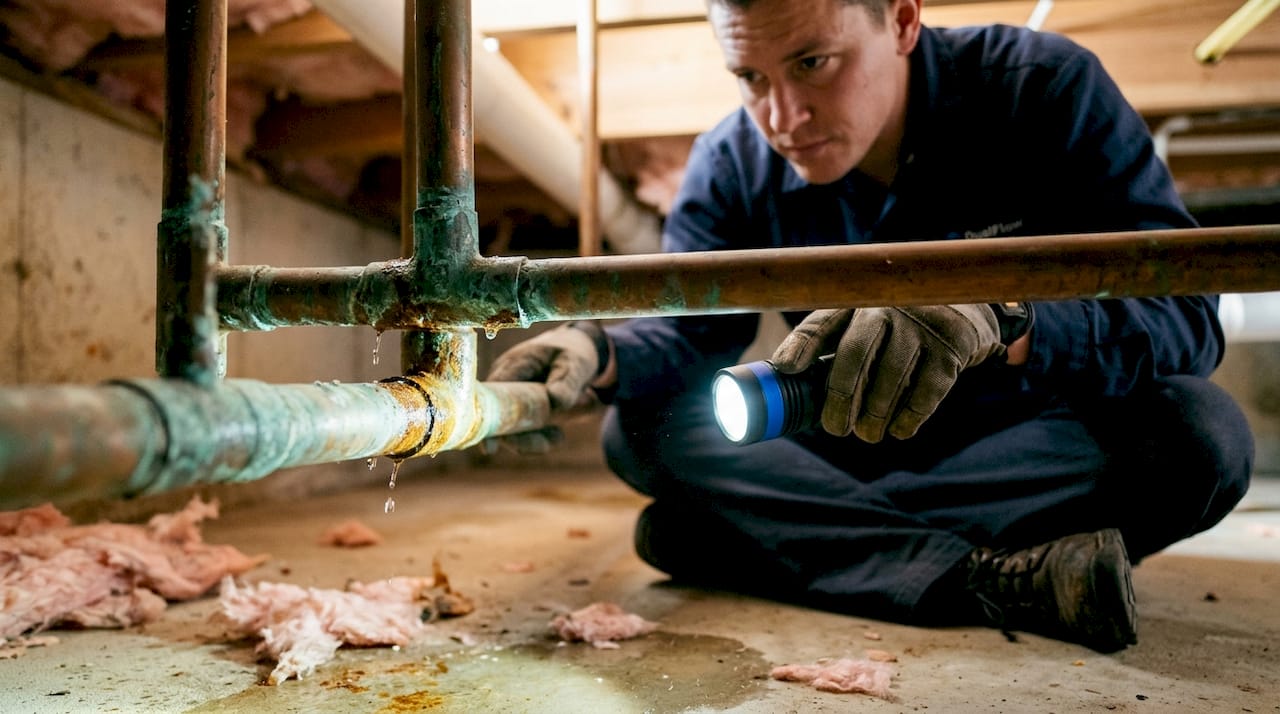
Corroded copper pipes and failed joint seals are particularly common in homes built before the 1990s. Pinhole leaks in copper can go undetected for months inside wall cavities, causing significant structural damage before anyone notices a wet patch.
Hot water systems
Failing pressure relief valves, corroded sacrificial anodes, and sediment build-up inside storage tanks are the most frequently reported hot water defects. A tank running past its service life often shows no obvious external signs until it fails completely.
Drainage and sewer lines
- Cracked or collapsed sewer pipes from ground movement or tree root intrusion
- Blocked drains from grease, debris, or root ingress
- Inadequate fall on drainage lines causing recurring slow drainage
- Damaged or missing inspection openings
Fixtures and waterproofing
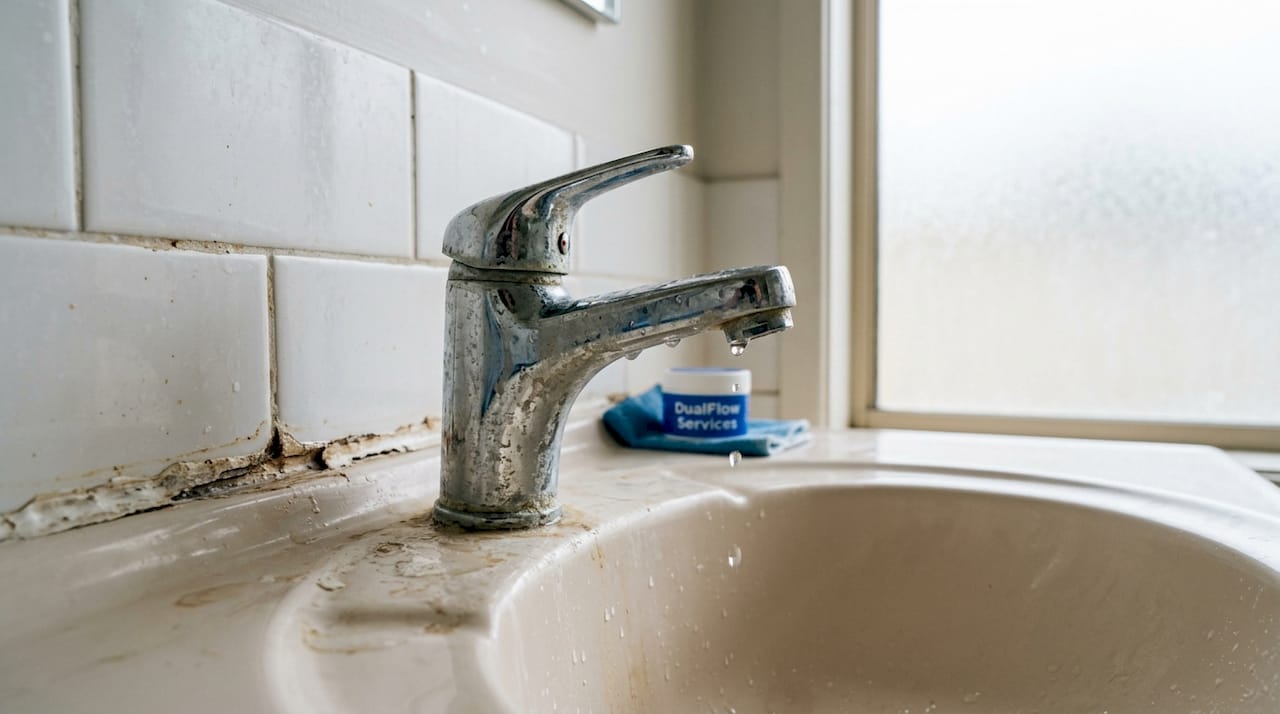
Faulty tapware, deteriorated toilet seals, and failed waterproofing membranes in wet areas are among the defects most likely to cause secondary water damage. A shower recess with a compromised membrane can saturate the subfloor for years before the damage becomes visible.
Any of these defects can affect property value, safety, and liveability. A minor slow drain is an inconvenience; a cracked sewer line under a slab is a five-figure repair.
When should you get a plumbing defect report?
The four situations that most commonly call for a plumbing inspection report are property purchase, renovation planning, insurance claims, and formal dispute resolution.
- Pre-purchase: A plumbing defect assessment before settlement uncovers hidden issues a standard building inspection may not cover in depth. It gives buyers real negotiating leverage or grounds to withdraw.
- Before or after renovations: A condition report confirms whether existing plumbing can support a kitchen or bathroom upgrade, and post-renovation it verifies the new work meets code.
- Insurance and water damage claims: Insurers and councils often require an official licensed plumbing report before processing a claim for flood, burst pipe, or water ingress damage.
- VCAT and dispute resolution: A report prepared to evidentiary standards is often the deciding document in a Victorian Civil and Administrative Tribunal (VCAT) proceeding between owners, builders, or strata bodies.
- Recurring or unexplained plumbing problems: Persistent low water pressure, intermittent blockages, or unexplained damp patches warrant a diagnostic assessment rather than repeated reactive repairs.
Pro Tip: Tell your inspector the purpose of the report before the inspection begins. A report prepared for a VCAT dispute requires a higher evidentiary standard than one prepared for routine maintenance planning, and the inspector needs to know this upfront to document findings accordingly.
How does a plumbing inspection actually work?
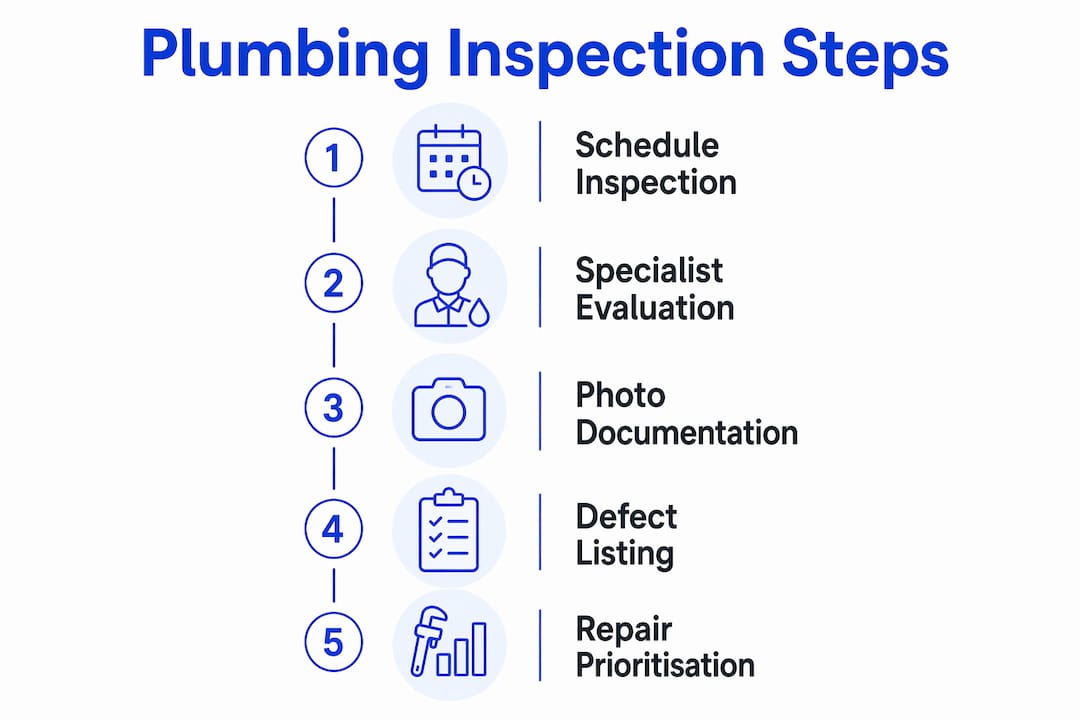
A professional plumbing inspection follows a structured process, moving from visual checks through to specialist diagnostic testing. The sequence matters because each stage informs the next.
Typical inspection steps:
- Visual inspection of all accessible pipes, joints, fixtures, valves, and hot water systems
- Water pressure testing to identify supply issues or hidden leaks
- Fixture checks covering tapware, toilets, showers, and drainage points
- CCTV drain camera inspection of sewer and stormwater lines
- Thermal imaging scan of walls, ceilings, and floors to detect hidden moisture
- Moisture meter readings in wet areas and around known risk points
- Acoustic leak detection where pipe routing is concealed
The specialist tools are what separate a plumbing defect inspection from a general visual check. Thermal imaging cameras, moisture meters, acoustic leak detectors, and CCTV drain cameras find problems invisible to the naked eye, including leaks inside wall cavities, root intrusion in underground pipes, and waterproofing failures beneath tiles.
Everything found during the inspection is documented with photographs, video footage, and written descriptions. The final report maps each defect to its location, assigns a severity rating, and recommends a course of action. For a plumbing diagnostic inspection, understanding what each stage covers helps you ask the right questions when reviewing the findings.
Why a plumbing defect report protects your property investment
A plumbing defect report is a strategic evidence document, not a routine maintenance record. The distinction matters because the way you use the report determines how much value it delivers.
For buyers, the report translates directly into negotiating power. A documented list of defects with repair cost estimates gives you a factual basis to request a price reduction or require rectification before settlement. Without it, you are relying on the vendor's disclosure, which covers what they know and choose to share.
For property investors, the report provides a point-in-time assessment that prioritises repairs by urgency. Catching a minor defect early, before it escalates into a major one, is consistently cheaper than reactive repair. A slow drain that signals root intrusion is far less expensive to address than a collapsed sewer line.
For legal and insurance purposes, a well-prepared report must withstand tribunal scrutiny. That means it needs to be prepared by a licensed professional who understands the evidentiary requirements of VCAT or an insurer's assessment process, not just someone who can spot a leaking tap.
Pro Tip: Ask whether the plumber preparing your report holds a current licence with the Victorian Building Authority (or the relevant state regulator). A report signed by an unlicensed or unregistered tradesperson carries no weight in a legal or insurance context.
Reducing long-term exposure to costly repairs is another clear benefit. Understanding how to reduce plumbing repair costs starts with knowing exactly what you are dealing with, which is precisely what a defect report delivers.
What does a plumbing defect report look like?
A standard Australian plumbing defect report follows a consistent structure, though the depth and format vary depending on the inspector and the report's purpose. Most reports open with a property summary covering the address, inspection date, inspector's licence number, and the scope of the assessment.
The body of the report lists each defect identified, typically organised by system or location. Each entry includes a written description of the defect, its location within the property, a severity rating (minor, major, or critical), photographic evidence, and a recommended action. CCTV footage and thermal imaging captures are usually attached as appendices or embedded directly alongside the relevant defect entries.
The report closes with a compliance summary referencing the PCA and AS/NZS 3500, a prioritised repair schedule, and any maintenance recommendations. A well-structured report reads clearly enough that a property buyer with no plumbing knowledge can understand what needs fixing, how urgently, and roughly what it will cost.
What to do after you receive a plumbing defect report
The report is only useful if you act on it. Once you have the document in hand, the first step is to read the severity ratings carefully and separate the critical and major defects from the minor ones.
Critical defects require immediate attention, things like active gas leaks, major water leaks, or safety hazards that pose a risk to occupants. Major defects, such as corroded pipes or moderate drainage failures, need attention within a defined timeframe before they worsen. Minor defects, like a slow-draining sink, can be scheduled as part of routine maintenance.
For property buyers, the report findings feed directly into your pre-settlement negotiations. Use the repair cost estimates in the report to support a price reduction request or to require the vendor to rectify specific items before you proceed. If the vendor refuses and the defects are significant, the report gives you documented grounds to reconsider the purchase.
For dispute resolution through VCAT or an insurer, submit the full report including all photographic and video evidence. The post-report corrective action process, where defects are repaired, verified, and formally closed out, is what satisfies compliance and limits ongoing liability. Keep records of all rectification work carried out in response to the report findings.
How does a plumbing defect report differ from other property inspection reports?
The most important distinction is scope. A standard building inspection covers the whole property at a surface level, including structure, roof, and electrical, but plumbing is typically assessed visually and briefly. A plumbing defect report goes deeper into the plumbing systems specifically, using specialist equipment and referencing the PCA and AS/NZS 3500 directly.
Within plumbing reports themselves, there is a further distinction worth understanding. A leak detection report is narrow in scope, designed only to locate the source of a known water ingress problem. It does not assess code compliance or document the broader condition of the plumbing system. A plumbing compliance or defect report is a full code-based audit covering all accessible systems, and it carries the evidentiary weight needed for legal or insurance outcomes.
A plumbing non-conformance report (sometimes called an NCR in construction contexts) is different again. It is a formal process document used in construction projects to record deviations from contractual or regulatory requirements, track corrective actions, and close out the issue once verified. A defect is the physical problem in the plumbing work; the non-conformance report is the controlled record used to manage and resolve it. For residential property owners, the plumbing defect report is the relevant document. The NCR format applies in commercial construction and project management contexts.
Pairing a plumbing defect report with a broader home safety review, such as an electrical safety checklist, gives property owners a complete picture of their property's condition before purchase or renovation.
Key takeaways
A plumbing defect report is the most reliable way to understand the true condition of a property's plumbing systems before you commit to buying, renovating, or making an insurance claim.
| Point | Details |
|---|---|
| Formal, standards-based document | Reports assess compliance with the Plumbing Code of Australia and AS/NZS 3500, not just visible condition. |
| Severity ratings guide action | Defects are classified as minor, major, or critical to help you prioritise repairs and spending. |
| Specialist tools find hidden defects | Thermal imaging, CCTV cameras, and acoustic leak detectors locate issues invisible to the naked eye. |
| Costs vary depending on property size and inspection scope | Typical costs for plumbing defect reports in Australia range from approximately $300 to $800, depending on property size and inspection scope. |
| Purpose determines report type | Pre-purchase, insurance, and VCAT reports each require different evidentiary standards, so specify your need upfront. |
Dualflowservices provides licensed plumbing inspections and defect reports across the Mornington Peninsula, Victoria. Whether you are buying a property, managing a water damage claim, or dealing with a recurring plumbing problem, the team at Dualflowservices prepares thorough, evidence-based reports that hold up when it counts.