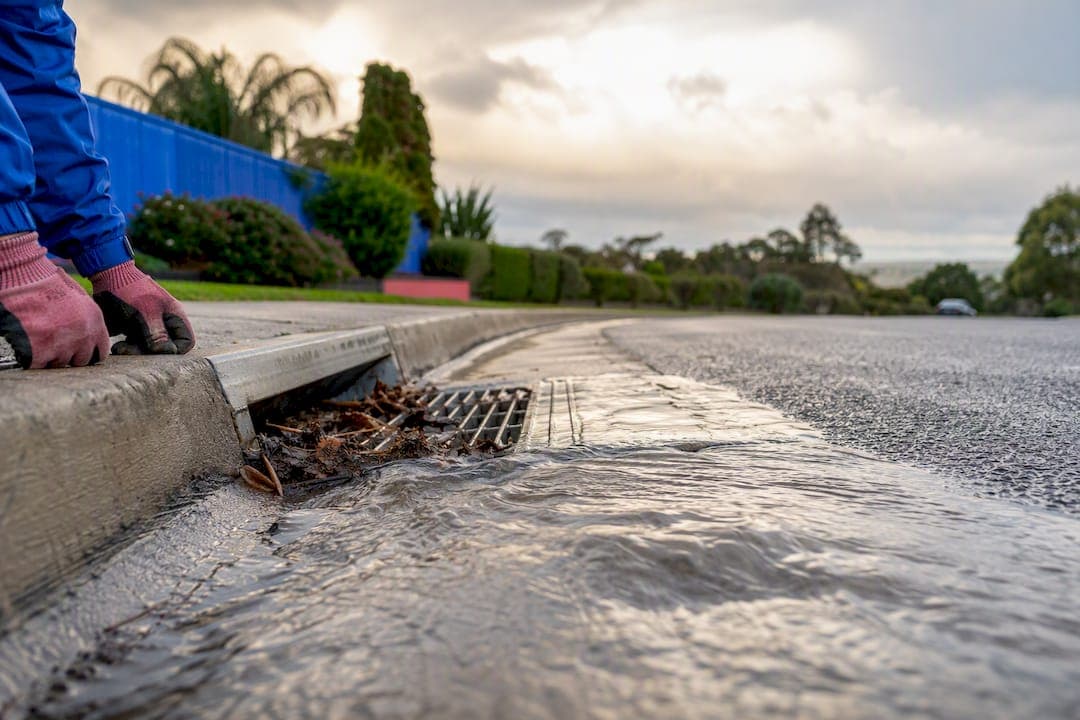
Most blocked stormwater drains come down to tree roots, garden debris and built-up silt inside pits and pipes. Clear whatever surface debris you can safely reach, check your gutters and downpipes, and if the blockage keeps returning or you suspect a cracked or collapsed pipe, call a registered plumber. Council guidance backs this up as the standard first response.
TL;DR:
- Tree roots are the most persistent cause of blockages, infiltrating pipes over years and causing cracks that trap debris and silt.
- Common signs of a blockage include water pooling after rain, gurgling noises, strange smells, and recurring obstructions despite clearing efforts.
- DIY efforts should focus on surface debris removal and gutter flushing; avoid chemical cleaners and forcing tools past grates without professional guidance.
- CCTV inspections help identify internal damage or root intrusion, guiding targeted repairs like jetting, root cutting, relining, or replacement.
- Regular maintenance, including gutter cleaning and choosing less invasive trees, prevents most blockages and reduces emergency repairs.
Table of Contents
- Common causes of blocked stormwater drains
- Signs your stormwater drain is blocked
- DIY: what you can safely try and what to avoid
- Professional fixes and diagnostics
- Prevention and routine maintenance to stop blockages returning
- Who's responsible: you or the council?
- A trades team's take on staying ahead of blockages
- Book a stormwater inspection with Dual Flow Services
- Sources
Common causes of blocked stormwater drains
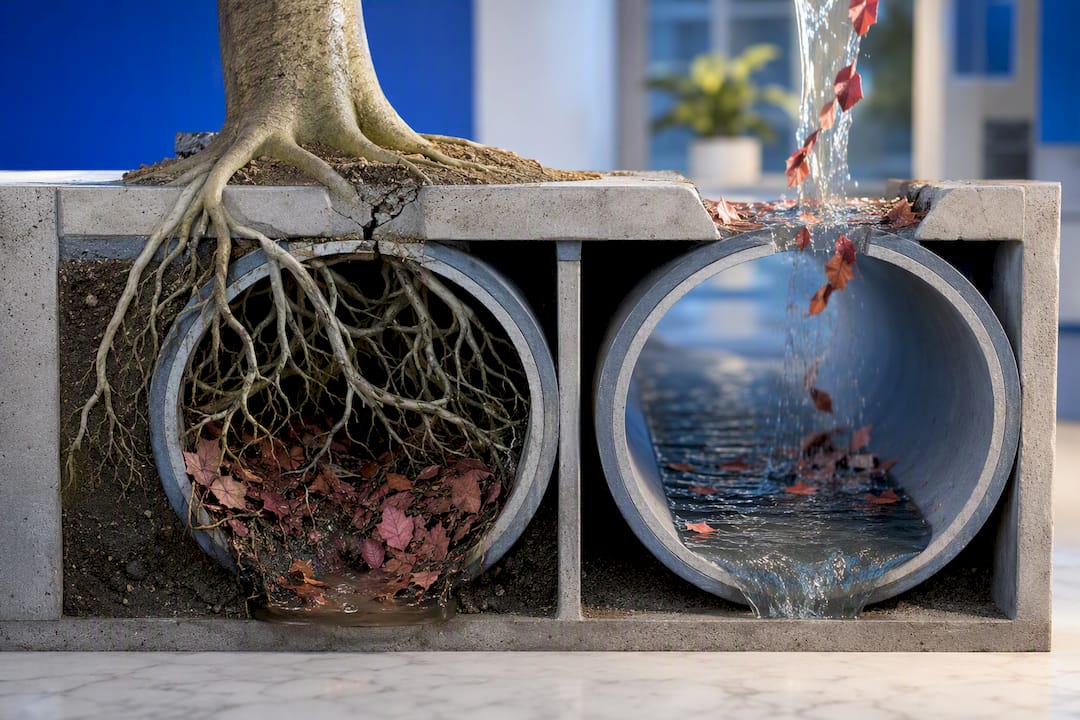
Stormwater systems fail for reasons that are almost always visible once you know what to look for. Root intrusion is the most persistent offender: tree roots find their way into pipe joints and hairline fractures chasing moisture, then widen the gap over years until the pipe cracks properly. Once inside, roots act like a net, snagging leaves and silt until the pipe is choked solid.
Debris is the everyday culprit. Leaves, twigs, mulch and bark wash straight off garden beds and roofs into grates and downpipes, especially after autumn or a big storm. Bayside City Council notes that leaves, sand and tree roots are the most commonly reported causes across residential streets, which lines up with what plumbers see on service calls.
Silt and sand buildup is quieter but just as damaging. Sediment washes in during heavy rain and settles at the bottom of pits and pipes, gradually narrowing the channel until even light rainfall overwhelms it.
Physical damage to the pipe itself changes the equation entirely. A few common scenarios show up again and again:
- Pipes crushed by vehicle weight, renovation works or ground movement, creating a permanent choke point
- Poor fall (not enough slope) leaving water sitting instead of draining, which lets silt settle faster
- Undersized pipework installed decades ago that simply can't handle modern roof and paved areas
- Multiple downpipes plumbed into one outlet, overloading it during heavy rain
- Foreign objects and construction debris, like offcuts, tennis balls or rubble, left in the system
Whittlesea City Council lists tree roots, debris and silt as the recurring trio behind most reported stormwater problems in its area, and that pattern holds pretty much anywhere with established gardens and ageing pipework. A breakdown of frequent drain failures covers how these causes overlap on typical residential blocks.
Signs your stormwater drain is blocked
The earliest sign is usually water sitting where it shouldn't. Pooling on the lawn or driveway after rain, water draining noticeably slower than it used to, or a stormwater pit that overflows and pushes water back toward the house are all red flags worth acting on quickly.
Other warning signs are audible or smell-based rather than visual:
- Gurgling noises from pits or grates during and after rain
- A musty or sulphurous smell near pits, even on dry days
- Water backing up at the lowest point of the yard first
- Blockages returning within weeks of clearing them yourself
A single grate clogged with leaves usually clears in minutes and stays clear. If the same spot blocks again after light rain, or several outlets across the property are struggling at once, that pattern points to something further down the line, root intrusion or a collapsed section, rather than a surface problem. Recurring blockages after modest rainfall are one of the clearest signals that the issue sits deeper in the pipe.
DIY: what you can safely try and what to avoid
Start with the easy wins. Clear leaves and mulch away from grates by hand, flush gutters with a hose, and remove any obvious surface debris sitting in pits. A simple order of operations keeps you from wasting time:
- Clear visible debris from grates and pits with gloved hands
- Check gutters and downpipes are free-flowing and properly connected
- Run a hose into the grate to see whether water drains or backs up
- Note how quickly water clears, and whether the noise or smell changes
- Stop and call a plumber if none of this improves drainage within a day
Ladder safety matters here, footing on wet grass or a sloped driveway is genuinely risky, so use a stable ladder and have someone nearby if you're clearing roof gutters. Gloves protect against sharp debris and whatever's been sitting in stagnant water.
Some things are worth avoiding altogether. Chemical drain cleaners are designed for sewer lines, not stormwater, and can damage pipe linings or simply wash straight through without touching the blockage. Don't force a plumber's snake or garden hose blindly past a grate hoping to hit the problem. Practical clearing guidance is consistent on this point: surface clearing fixes shallow clogs but does nothing for root intrusion or a cracked pipe, and pushing tools around bends risks jamming debris further down or damaging the pipe itself.
Pro Tip: If the hose test shows water draining fine at the grate but still pooling somewhere else on the property, the blockage is downstream, not at the surface. That's your cue to stop DIY and call in a diagnostic inspection.
Professional fixes and diagnostics
A CCTV inspection is usually the first real step once DIY hits its limit. A camera run through the pipe shows exactly where the blockage sits, whether it's root mass, silt, or a collapsed section, and how bad the damage actually is. Perth First Plumbing points out this saves homeowners from paying for excavation when the fix might only need jetting or root cutting.
From there, the method depends on what the camera finds:
- High-pressure water jetting clears silt, sand and grease buildup effectively but won't touch a genuinely collapsed pipe
- Root cutting combined with jetting removes root intrusion and flushes the debris it's been trapping, often the go-to fix for tree-affected lines
- Pipe relining repairs cracked or root-damaged sections from the inside without digging up the yard, generally preferred over excavation when the pipe's structure allows it
- Excavation and replacement is reserved for pipes that are crushed, severely collapsed, or too undersized to reline
JR Gas and Water matches these methods to specific causes, silt calls for jetting, a collapsed section calls for replacement, which is exactly the logic a CCTV inspection is designed to support before any work starts.
Sometimes the blockage isn't on your property at all. If neighbouring properties or the street are also flooding, the problem may sit in the council's network downstream, and no amount of clearing your own pipe will solve it. A homeowner's guide to plumbing inspections walks through what a typical CCTV report covers and how it feeds into a quote.
Prevention and routine maintenance to stop blockages returning
A seasonal cleaning habit beats emergency call-outs every time. Clear gutters and pits in late autumn once deciduous trees have dropped most of their leaves, then again before the wet season peaks.
- Check and clear gutters, downpipes and grates every three to four months
- Fit gutter guards and pit grates to stop leaves and mulch entering in the first place
- Keep garden mulch and loose soil at least a hand's width back from drain openings
- Choose tree species with less aggressive root systems, or plant well clear of underground pipes
- Book a CCTV check every few years on older properties, especially if blockages have happened before
JR Gas and Water makes the point plainly: basic maintenance, cleaning grates and gutters, prevents most small blockages before they start, while anything recurring almost always needs proper diagnostics rather than another round of clearing.
Pro Tip: Keep a simple log of when you clear gutters and pits, and note anything unusual (slow drainage, smells, gurgling). That record turns "it's blocked again" into a pattern a plumber can actually diagnose faster.
Who's responsible: you or the council?
Generally, the pit and pipework on your own property are your responsibility, while the connecting network under the street belongs to council. City of Monash confirms this split and recommends a registered plumber for anything on the private side, so check your own council's guidance if you're unsure where the line sits.
Call a plumber when:
- The blockage keeps recurring despite clearing it yourself
- You suspect a cracked, crushed or collapsed pipe
- Water is pooling near foundations or entering the house
- The street or kerb is flooding beyond what a single property would cause
A registered plumber will typically inspect, sometimes with CCTV, then hand you a written report and quote before any major work starts. If the problem sits in the council network, Bayside City Council and similar councils take reports and inspect public drains directly. Our legal point of discharge guide explains exactly where that property line sits.
A trades team's take on staying ahead of blockages
After heavy rain, walk the property: check every grate, gutter and pit for pooling or debris before it compounds. Dual Flow Services inspects and repairs stormwater drains across the Mornington Peninsula, and the properties that avoid emergency call-outs are the ones with a written record of past checks, not just a good memory.
— Mike
Book a stormwater inspection with Dual Flow Services
Dual Flow Services gets to the actual cause instead of guessing, with CCTV inspection, high-pressure jetting and repair work handled by the same local team, so you're not juggling separate contractors for diagnosis and the fix. That matters most when a blockage keeps returning: skipping straight to a camera inspection saves you paying for guesswork twice.

If your stormwater drain is overflowing, gurgling, or blocking again after you've already cleared it, book an inspection through our emergency plumbing checklist for Victorian homeowners or get in touch directly via Dualflowservices to arrange a CCTV inspection and quote before the next heavy rain finds the weak point in your system.
Sources
- Stormwater drains | City of Monash
- Report a blocked stormwater drain | Bayside City Council
- Stormwater runoff issues | City of Whittlesea
- How to clear a blocked stormwater drain | Perth First Plumbing
- Stormwater pit overflowing in heavy rain? Causes & fixes | JR Gas and Water