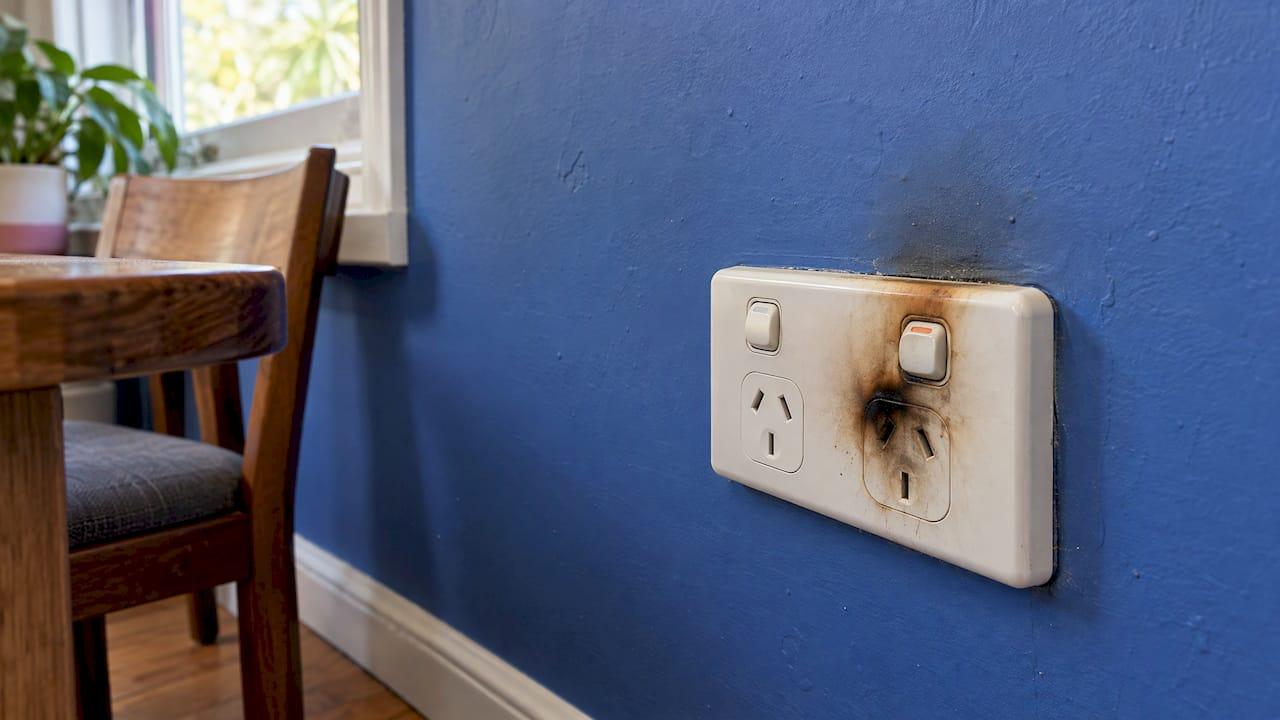
If a power point smells like burning plastic, hot metal or fish, treat it as an electrical fault until a licensed electrician proves otherwise. Stop using it, switch off the circuit if it is safe to do so, keep people away, and call a licensed electrician the same day. If you see smoke, flames or scorching that is spreading, leave the house and call Triple Zero (000).
This guide covers what to do in the first five minutes, why an outlet can smell fishy, what you can safely check yourself (and what you must not touch), and how long a smell can hang around. It is written for homeowners, business owners and facility managers on the Mornington Peninsula and across Victoria.
TL;DR
- A burning or fishy smell from a power point means something is overheating. Stop using it and do not plug anything else in.
- If there is smoke, flames or a crackling, hot or scorched fitting, get everyone out and call 000.
- Do not open the power point, switchboard or fitting yourself. Switch off at the main switch only if you can reach it safely.
- A tripped breaker or a smell that fades does not mean the problem has gone. Have a licensed electrician inspect it before it is used again.
- If you are in our service area, we offer 24/7/365 emergency call-outs for electrical faults.
Table of Contents
- What to do in the first five minutes
- When to call 000 and when to call an electrician
- Why a power point smells like burning plastic or fish
- Warning signs that point to a fire risk
- Is it safe to use the outlet again?
- How long does a burning smell last?
- Can a burnt-plastic smell harm you?
- Preventing a repeat: habits that reduce the risk
- Our perspective
- Need an electrician on the Mornington Peninsula?
- FAQ
- Sources
What to do in the first five minutes
Speed matters less than doing the right things in the right order. Work through these steps.
- Look and listen first. Is there visible smoke, a flame, a melted or blackened faceplate, or a crackling or buzzing sound? If yes, skip to step 5.
- Stop using the outlet. Unplug the appliance only if the plug and the wall around it are cool and clean, and you can do it without touching anything scorched. If anything looks melted, leave the plug where it is.
- Switch off at the source if it is safe. Guidance for Australian households is to switch off at the main switch if it is safe to do so, and to get out if there is smoke. Do not open the switchboard, the power point or a light fitting.
- Keep people and pets away. In an electrical emergency, keep people away from the affected area and stop using equipment that is producing unusual sounds, smells or sparks.
- Call for help. With smoke, flames or an immediate threat to life, evacuate and call 000. If there is no fire but the smell is real, call a licensed electrician now, not next week.
A useful way to think about risk is the one Energy Safe Victoria sets out for people dealing with electrical hazards: consider the shock risk, the arc and spark fire risk, and the risk of toxic fumes or gas before you go near the problem. A smelly outlet can carry all three.
What not to do
- Do not take the faceplate off to "have a look". Live terminals sit behind it.
- Do not spray water or use a water extinguisher on a burning power point or appliance.
- Do not keep using the outlet because the smell seems to have eased.
- Do not reset a tripped breaker repeatedly. A tripped breaker does not prove the hazard is harmless.
- Do not tape over, plug in a power board, or push a heavier appliance into a suspect outlet.
When to call 000 and when to call an electrician
The split is simple. Fire or the threat of fire is a 000 call. A smell without fire is an urgent electrician call.
| What you notice | What it suggests | What to do |
|---|---|---|
| Flames, visible smoke, or smoke filling a room | Active fire | Leave, close doors behind you if you can, call 000 |
| Burning smell plus a hot, scorched or melted faceplate or plug | Serious overheating at a connection | Switch off at the main switch only if safe, keep clear, call a licensed electrician urgently, and 000 if it worsens |
| Burning or fishy smell with buzzing, crackling or sparks | Loose connection or arcing | Treat as urgent, stop using the circuit, call an electrician now |
| Smell appears only when one appliance runs | Possibly the appliance or its plug, possibly the outlet | Unplug it, leave it unused, and have both checked |
| Smell with shocks or tingles from fittings or appliances | Possible live fault | Keep away, call 000 if life-threatening, otherwise call your electrician and your distributor |
Guidance for householders says a burning smell from a power point, switch or switchboard that is hot, buzzing or scorched is serious, and a licensed electrician is needed every time. Shocks and tingles are also electrical emergencies. If the situation is life-threatening, call Triple Zero (000), and keep away from the area until a licensed electrician has made it safe.
For major problems, NSW Fair Trading advises that you contact a licensed electrician and, where needed, the emergency number on your electricity bill to make the installation safe. That page is for NSW, but the sensible habit applies anywhere: keep your distributor's fault number somewhere you can find it.
For more on telling these situations apart, see our guide to types of emergency electrical situations and what to do first.
Why a power point smells like burning plastic or fish
The smell is the first symptom of heat. Heat in a wall fitting is almost always caused by resistance: electricity struggling to pass through a poor connection, a damaged component or too much load.
Loose or deteriorating connections
A wire that has worked loose at the terminal, or a terminal that has corroded, creates resistance. Resistance makes heat, and heat scorches the plastic body of the outlet and the insulation on the cable. Buzzing or crackling is often a sign of a loose connection or arcing, which are exactly the symptoms householder guidance lists as serious warning signs. Vibration, thermal cycling over years and heavy appliances that run for long stretches all make loose terminals more likely.
Overloading
Plugging too many devices into one outlet, or running a heater, kettle or air conditioner through a double adaptor, pushes more current through the outlet than it was built to carry. Safe Work Australia notes that overloading socket outlets by using adaptors can cause fires. Fire and Rescue NSW likewise advises homeowners not to overload power points and power boards, and not to use faulty leads or appliances.
The same Safe Work Australia fact sheet makes a point that catches people out: if a circuit keeps overloading, raising the fuse or breaker rating is not the fix. It creates a fire risk because the wiring can overheat without the protection tripping. The answer is a proper assessment of the circuit, not a bigger breaker.
A worn or failing outlet
Older outlets lose their grip. The internal contacts weaken, the plug sits loosely, and the connection arcs a little every time something draws power. Outlets near kitchens, laundries, bathrooms and outdoor areas also take more heat, steam and moisture over the years.
A faulty appliance or plug
Sometimes the outlet is fine and the problem is the plug, lead or appliance. A hair straightener, heater or old extension lead can overheat and leave the smell near the wall. Before you assume it is the appliance, though, have the outlet looked at too. If you want to compare what a smell from an appliance can mean, our partners' explainer on air fryer burnt smell shows how common causes differ from a wiring fault.
Why some outlets smell fishy
A fishy, ammonia-like or urine-like smell is a commonly reported way a hot outlet or switch announces itself. Many older electrical fittings use plastics that give off a sharp, fish-like odour when they overheat. Whatever the exact chemistry in your fitting, the meaning is the same as a burning-plastic smell: something in the wall is too hot. Do not wait to see whether it passes.
Warning signs that point to a fire risk
The smell rarely arrives alone. Watch for these signs around the outlet and the circuit it belongs to:
- Brown, yellow or black discolouration on the faceplate or the wall
- A faceplate, plug or cord that is warm or hot to the touch
- Buzzing, humming, crackling or popping from the wall
- Lights that flicker or dim when an appliance starts
- A breaker or safety switch that trips repeatedly on the same circuit
- Plugs that fall out of the socket or feel loose
- Sparks when plugging something in
If you have a repeating trip alongside any of these, read why electrical safety switches trip and the common causes of circuit breaker trips. A trip is the system protecting you, and the underlying fault is still there.
A related symptom is a switch rather than an outlet making noise. Our page on a buzzing light switch explains the causes and risks. If switches are not turning anything off properly, or you get a mild tingle from fittings, it is also worth reading about reverse polarity outlets, a hidden risk when switches are off.
Is it safe to use the outlet again?
Not until a licensed electrician has inspected it. The advice is to arrange an urgent professional assessment before the affected equipment is used again, and not to assume it is harmless because the lights have gone out or a breaker has tripped.
In practice, until the electrician arrives:
- Leave the outlet unused and, if the circuit is safe to isolate, switch it off at the switchboard.
- Do not plug a different appliance in "just to test".
- Leave any scorched plug in place if it is stuck. The electrician will deal with it.
- Move furniture, curtains and anything flammable away from the wall, without touching the outlet.
- Make a note of when you noticed the smell, which appliance was running and any sounds. It speeds up the diagnosis.
What the electrician will usually do
A licensed electrician isolates the circuit, removes the faceplate, and inspects the terminals, the cable insulation and the outlet body for heat damage. Depending on what is found, the repair can range from re-terminating a loose connection to replacing the outlet, the damaged section of cable, or in some cases the circuit. They will also look at what is connected to the circuit, since an overloaded circuit can cause the same damage again. This is work that only a licensed electrician may lawfully do, and it is why we do not recommend opening the wall plate yourself.

How long does a burning smell last?
There is no reliable timetable, and that is why the smell is a poor guide to whether the danger is over. A brief, faint smell from a new appliance running for the first time is different from a smell coming from a wall. A faulty connection can overheat, cool down and overheat again, so a smell that fades after you stop using the outlet may simply mean the load has gone, not that the fault has been fixed.
Once a licensed electrician has repaired the cause, air the room by opening windows and doors. If a smell lingers after the repair, mention it to the electrician, as it can point to damaged material that was missed or to residue on nearby surfaces.
Can a burnt-plastic smell harm you?
Burning plastic and insulation can give off irritating fumes. This is why the Energy Safe Victoria guide asks you to think about toxic fumes as one of three risks in an electrical situation, alongside shock and fire. Ventilate the area, keep children, older residents and anyone with breathing problems away from it, and move outside if the smell is strong. If anyone has a persistent cough, headache, dizziness, or breathing difficulty after exposure, see a doctor, and call 000 if someone is struggling to breathe.
Preventing a repeat: habits that reduce the risk
Most overheating outlets give plenty of notice. A few habits reduce the odds:
- Run high-draw appliances such as heaters, kettles and portable air conditioners straight into a wall outlet, not through adaptors or cheap power boards.
- Check leads and plugs for damage regularly and retire any that are cracked, discoloured or hot in use.
- Replace loose or worn outlets rather than living with plugs that fall out.
- If a circuit keeps tripping, have it assessed instead of resetting it again and again.
- Keep working smoke alarms in every required location. Our guide on annual smoke alarm testing requirements in Victoria covers the basics.
- Run through our electrical safety checklist for homeowners once a year, and learn why Victoria's electrical safety rules matter.
For aged care, retirement villages and disability homes
In a facility, one overheating outlet can affect many residents who cannot evacuate quickly. Report any burning or fishy smell immediately, isolate the area if it is safe, follow your facility's emergency plan, and bring in a licensed electrician at once. Scheduled maintenance and compliance checks across electrical, plumbing and heating and cooling systems reduce the chance of a fault going unnoticed between inspections. If the power is affected, our power outage checks for homeowners and facility managers are a useful reference.
Our perspective
We see the same pattern again and again. Someone notices a faint smell near a power point, tells themselves it is probably the appliance, and lives with it for days. The fault does not wait. Heat builds at a loose connection a little at a time, and the smell is the only warning most people get.
Our view is simple: a smell from the wall is never a "maybe later" job. Stop using the outlet, make the area safe, and get a licensed electrician to find the cause, not just swap the faceplate. That means checking the circuit, the connections and the load, not only the outlet that smells.
This is also why we built DualFlow Services around being a single point of contact. Electrical faults often overlap with other building systems, especially in aged care, retirement villages and disability homes, where a facility manager needs one team that understands the whole site. With plumbing, electrical, and heating and cooling under one roof, and emergency availability 24/7/365, there is one number to call and no handing the problem between trades.
If you are unsure whether what you smell is serious, treat it as serious and call. We would rather attend a loose terminal early than a damaged switchboard later.
Mike
Need an electrician on the Mornington Peninsula?
If you have a burning or fishy smell from a power point, we can help. DualFlow Services provides emergency electrical call-outs, scheduled maintenance, compliance checks, installation and servicing for homes, businesses, aged care facilities, retirement villages and disability care homes across the Mornington Peninsula and surrounding Melbourne suburbs.

See our electrical services, or visit the DualFlow Services home page to get in touch. If there is smoke or fire, call 000 first.
FAQ
Why does my power point smell like fish?
A fishy or ammonia-like smell from an outlet or switch is a known sign of overheating components, most often from a loose connection, overload or ageing fitting. Treat it exactly like a burning smell. Stop using the outlet and have a licensed electrician inspect it the same day.
Is it safe to plug something into an outlet that smells burnt?
No. Leave it unused until a licensed electrician has inspected it. A tripped breaker or a lights-out moment does not mean the hazard has gone, so professional assessment should come before the outlet is used again.
When should I call 000 for a burning smell?
Call 000 if there is smoke, flames or an immediate threat to life, and evacuate if necessary. If there is a smell only, with no fire, call a licensed electrician urgently. If it is a shock or tingle that is life-threatening, call 000 as well.
Can I fix a burnt power point myself?
No. Opening a power point exposes live parts, and electrical work must be done by a licensed electrician. Your safest steps are to stop using it, switch off the circuit if it is safe, and book an urgent call-out.
Is the burnt plastic smell toxic?
Burning plastic and insulation can release irritating fumes, so ventilate the area and keep children, older people and anyone with breathing problems away from it. See a doctor if symptoms such as coughing, headache or dizziness persist, and call 000 if someone has trouble breathing.
Sources
- Electricity hazards safety guide, Energy Safe Victoria
- Electrical hazards fact sheet, Safe Work Australia
- Shocks and tingles, Ausgrid
- Electrical safety requirements and consumer rights, NSW Fair Trading
- Fire safety and prevention, Fire and Rescue NSW
- What safety steps should you take before an electrician arrives, Times Media
- Who should I call? Problem to trade, in plain English