If your taps are running weak, the fastest first move is checking whether neighbours have the same problem or your supplier's outage page shows local works, because most sudden pressure drops are supply-side, not a fault inside your home. If neighbours are fine and there's no listed outage, the next step is your main stop valve: water utilities are generally only responsible for supply up to your property connection point, so anything past that is yours to investigate.
TL;DR:
- Most sudden water pressure drops are caused by supply issues outside the home, such as outages or topography, rather than internal plumbing faults.
- Checking your main stop valve, PRV handle, and removing debris from fixtures can quickly identify common internal causes of low pressure.
- Conducting a litres-per-minute test at the tap and recording measurements helps determine if the problem is system-wide or fixture-specific before calling a plumber.
- Persistent low pressure due to topography, distance, or aging pipework often requires structural solutions like a pressure booster pump or re-piping, which should only be installed by a licensed professional.
- Seasonal demand fluctuations or weather-related pipe stress can temporarily affect pressure, making it important to observe patterns and inform your plumber of timing and conditions.
Table of Contents
- Quick checks homeowners can run in 5 to 10 minutes
- How to test water pressure and flow yourself
- Common causes and practical fixes
- When to try DIY fixes and when to call a licensed plumber
- Impact of low water pressure on household appliances and fixtures
- Temporary solutions and DIY fixes to improve water pressure
- Long-term solutions such as installing pressure boosters or re-piping
- How seasonal changes and weather can affect water pressure
- Costs associated with diagnosing and fixing low water pressure issues
- Tradesman's perspective: common mistakes, on-site realities and realistic timelines
- How we can help with low pressure
- FAQ
- Sources
Quick checks homeowners can run in 5 to 10 minutes
Before touching any tools, work through this short sequence. It separates supply problems from internal plumbing faults and takes less time than a phone call to a plumber.
- Check your neighbours and the outage page. If houses nearby have normal pressure, the fault sits inside your property. Urban Utilities recommends this as the first move, alongside checking supplier pages for scheduled works or bursts in your area.
- Find your main stop valve and confirm it's fully open. A valve that's only part-open after recent works (yours or the council's) is one of the most common causes of sitewide low pressure.
- Look for a pressure limiting valve (PLV or PRV) handle near the meter. If it's been bumped or sits at an odd angle, it may be restricting flow more than it should.
- Unscrew and inspect tap aerators and showerheads. Grit, scale and rust flakes collect in the fine mesh and choke flow at individual fixtures, even when the rest of the house is fine.
- Turn off every tap and appliance, then test one fixture alone. If pressure improves with nothing else running, several fixtures are competing for limited supply rather than there being a single fault.
- Walk the property looking and feeling for damp patches, soft ground or unusually green grass. A hidden leak upstream of a fixture can starve it of pressure while wasting water elsewhere.
Write down what you find for each step: whether the stop valve was open or partly closed, what the aerators looked like, which fixtures were affected. That record saves time whether you end up calling your water corporation or a licensed plumber.
- Note the time of day and whether other households on your street are affected.
- Record which taps are weak and which, if any, are normal.
- Photograph any PRV or stop valve position before you touch it.
Pro Tip: Never force a stop valve that feels stuck. A seized valve is a job for a plumber, and forcing it can snap the spindle and turn a minor fault into an emergency.
How to test water pressure and flow yourself
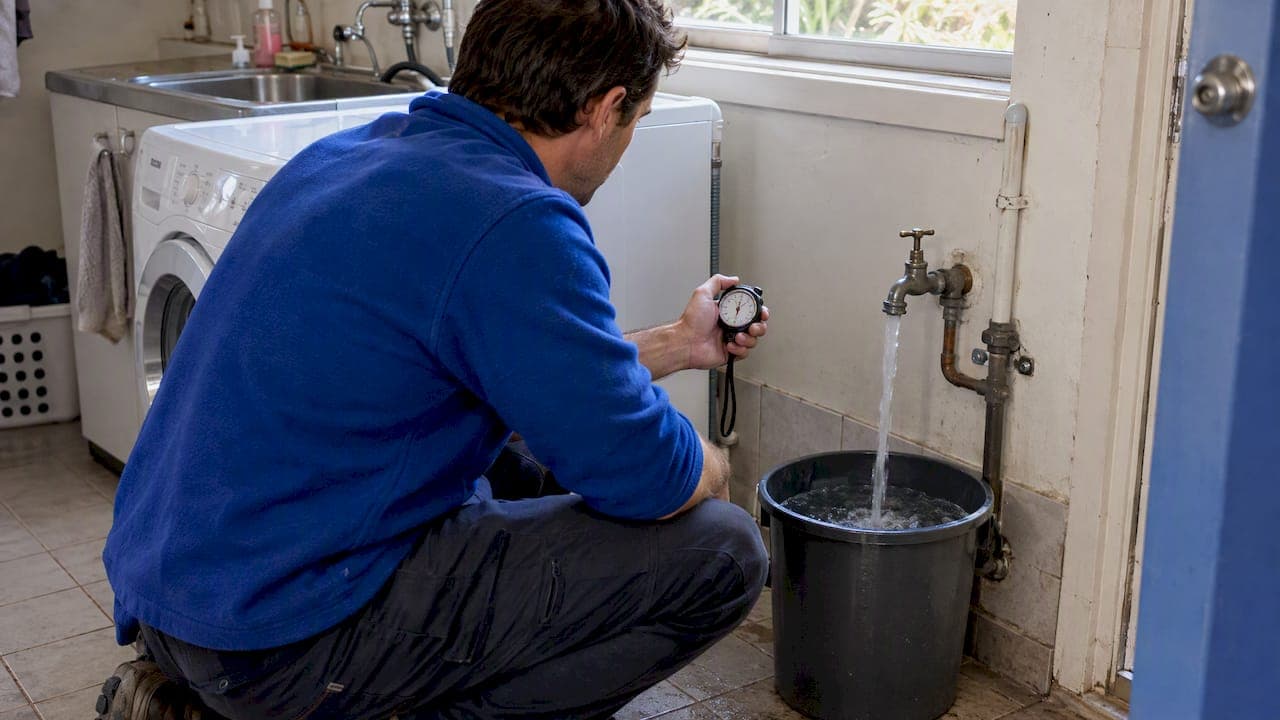
A bucket, a stopwatch and a calculator will tell you more about your pressure problem than a quick squeeze of the tap ever will. This is the same basic method utilities use to triage reported faults.
Step 1: Run the litres-per-minute test. Place a 10-litre bucket under a fully open tap (bathroom or kitchen, away from any filter or aerator restriction you've already identified) and time how long it takes to fill. Divide 600 by the number of seconds to get litres per minute. Water Corporation describes this as a simple way to estimate your flow rate before organising a formal test.
Step 2: Compare against a rough benchmark. Flow at an individual tap will always read lower than flow at the meter, because household pipework, fittings and elevation all add resistance along the way. Utilities aim for a benchmark closer to the meter itself.
| Pressure or flow concern | What the reading means |
|---|---|
| Around 20 litres per minute at the meter | Water Corporation references this as an example service target at the meter |
| Around 27 litres per minute at the meter | SAWater references this as an approximate target in its own guidance |
| Noticeably lower reading at an individual tap | Expected, due to internal pipework and fittings between meter and fixture |
Water Corporation aims for an example target flow rate at the meter that is often around 20 litres per minute, a figure that shows just how much a true supply fault can cut into usable flow once household pipework is accounted for, according to Water Corporation.
Step 3: Use a pressure gauge if you have one. A tap-mounted gauge (sold at most hardware stores) reads in kilopascals (kPa). Static pressure is simplest to think of in terms of height: every 10 metres of elevation a pump or the mains has to push water up costs roughly 100 kPa, which is why homes on hills or at the end of a long supply run often report weaker flow than homes closer to the main.
Step 4: Record everything before you call anyone. Note the litres-per-minute result, the gauge reading if you took one, the time and tap used, and whether the result changed with other fixtures off. Utilities and plumbers both move faster when a homeowner can hand over numbers instead of a description like "it's been weak for a few days."
Common causes and practical fixes
Low pressure almost always traces back to one of a handful of causes, and knowing which one you're dealing with decides whether it's a five-minute fix or a job for a professional.
Supply-side issues sit outside your control. Mains works, a burst nearby, or simply living at the end of a long supply run or on elevated ground can all reduce the pressure reaching your property. SAWater notes that some properties experience lower pressure purely because of topography or distance from supply infrastructure, and recommends speaking with a certified plumber about boosting options in those cases.
Valves and pressure limiting valves (PLVs/PRVs) are the next most common culprit. Since November 2005, the national plumbing standard AS/NZS 3500.1 has required pressure limiting devices on properties where incoming pressure exceeds set thresholds, so most homes built or replumbed after that date have one fitted near the meter. These devices can be knocked out of position during other work, or fail with age, and either fault tends to choke flow across the whole house rather than a single tap.
- Confirm the main stop valve is fully open, turning gently and never forcing a stiff one.
- Check whether a PRV handle looks bumped, rotated or visibly damaged.
- Leave PRV adjustment and replacement to a licensed plumber: these devices protect your whole system from pressure spikes, and an incorrect setting can cause as many problems as it solves.
Blockages and scale are the easiest fix of the lot. Aerators and showerheads trap grit, rust flakes and mineral scale over time, particularly in hard water areas, and a five-minute soak in vinegar or a simple scrub with an old toothbrush often restores full flow. If scale keeps coming back quickly, it points to an ageing hot water system or galvanised pipework shedding material internally, which is worth raising with a plumber rather than cleaning repeatedly.
Leaks reduce pressure because water escaping underground or inside a wall cavity is water that never reaches your tap. Signs include unexplained damp patches, a water meter that keeps ticking over with everything off, or a sudden jump in your water bill. If you suspect a leak, isolate the section of plumbing you can (via an isolating valve) and call a plumber rather than leaving it running, since leaks rarely improve on their own.
Household demand and pipe size show up as a pattern rather than a single fault: pressure drops noticeably whenever two or more fixtures run at once, but is fine with just one tap open. This usually points to pipework that was adequate for the home's original fixture count but is now stretched by renovations, extra bathrooms or modern high-flow appliances.
Regulatory caution matters here too. Fitting a pump directly onto a mains-fed supply is generally prohibited, and whether boosting is even appropriate depends on whether your property is mains-fed or gravity-fed from a tank. Diagnosing that system type correctly is the first job a licensed plumber does, because getting it wrong can mean an unsafe or non-compliant installation. If your home's hot water specifically is the weak point rather than cold supply, our guide to low hot water pressure covers the causes unique to hot water systems.
Pro Tip: If swapping a showerhead or aerator doesn't help within a day, stop guessing at fixture-level fixes and get a flow test done at the meter instead. It tells you immediately whether the problem is supply-wide or isolated.
When to try DIY fixes and when to call a licensed plumber
Cleaning an aerator or checking a stop valve is safe for any homeowner, following practical homeowner steps from What to Do When You Have Low Water Pressure. Anything involving the PRV, suspected leaks inside walls or slabs, or work on the supply pipe itself needs a licensed plumber, both for safety and because unlicensed work on regulated fittings can breach plumbing standards.
A plumber arriving to diagnose low pressure typically works through a structured sequence:
- Confirms meter and stop valve status, checking the valve is fully open and the meter itself isn't restricted.
- Tests the PRV, checking its setting against the supply pressure and replacing it if it's faulty or incorrectly calibrated.
- Takes flow and pressure readings at multiple points in the house to isolate whether the problem is sitewide or fixture-specific.
- Runs leak detection, using listening equipment or pressure-drop testing on isolated sections of pipe.
- Assesses pipe condition, checking for scale build-up or corrosion in older galvanised systems that might be restricting flow throughout the property.
Common outcomes range from a straightforward PRV replacement or valve repair, often completed within a single visit, through to leak repairs or descaling work that may need a return trip if parts or extensive excavation are involved. Before booking, have your litres-per-minute result, any gauge reading, when the problem started, and details of any recent plumbing or council works ready to go. It cuts down the diagnostic time on-site and helps the plumber bring the right parts the first time. Our emergency plumbing checklist covers what else to have ready if the issue has turned into something more urgent.
Impact of low water pressure on household appliances and fixtures
Weak pressure doesn't just mean an unsatisfying shower. Dishwashers and washing machines rely on a minimum flow rate to fill and run their cycles properly, and persistently low supply can trigger fault codes, extend cycle times or leave dishes and clothes under-rinsed. Hot water systems, particularly instantaneous (continuous flow) units, often need a minimum flow before the burner or element even activates, so low pressure can mean no hot water at all rather than just a weaker stream.
Fixtures suffer too. Dual-flush toilets may take longer to refill between uses, and multi-head showers or rainfall shower fixtures, which are designed around a decent flow rate to work properly, are often the first fixtures in a house to expose a pressure problem. Irrigation and garden systems depending on consistent pressure can also underperform, leaving dry patches in a lawn that otherwise looks evenly watered.
Over time, consistently low pressure can mask a developing fault rather than just being an inconvenience: a slow leak, a failing PRV or scale building up in ageing pipework. Treating the symptom with a bigger showerhead or ignoring a sluggish dishwasher cycle can let the underlying cause run unchecked for months before it becomes an obvious, more expensive problem.
Temporary solutions and DIY fixes to improve water pressure
While you're waiting on a plumber or working through diagnosis, a few safe, temporary measures can take the edge off low pressure. Cleaning aerators and showerheads is the quickest win, since mineral scale and debris are among the most common causes of weak flow at individual fixtures and this fix costs nothing but ten minutes.
Staggering household water use helps where the cause is simultaneous demand: running the dishwasher, washing machine and shower at different times rather than together can noticeably improve pressure at whichever fixture you're using. If your home has a PRV and you suspect it's set too conservatively, do not adjust it yourself. Leave that to a licensed plumber, since incorrect settings can either starve your fixtures or put unsafe pressure through ageing pipework.
Low-flow shower fixtures designed to work well at reduced pressure can also mask the symptom while you organise a permanent fix, and some of these upgrades double as long-term solutions if your pressure never fully recovers. Our guide to common bathroom plumbing upgrades runs through aerator, showerhead and PRV replacement options in more detail.
These measures treat symptoms, not causes. If pressure hasn't improved within a few days of trying them, it's a sign the fault sits deeper in the system and needs proper diagnosis rather than another workaround.
Long-term solutions such as installing pressure boosters or re-piping
Where low pressure is a permanent feature of a property, usually due to topography, distance from the main, or genuinely undersized pipework, the fix needs to be structural rather than cosmetic. SAWater specifically recommends consulting a certified plumber about boosting options for properties affected by elevation or distance from supply infrastructure.
A pressure booster pump can raise flow to a usable level, but it is never a simple retrofit you install yourself. Whether a booster is even appropriate, and how it should be configured, depends entirely on whether your property is mains-fed or gravity-fed from a tank, and installing a pump directly onto a mains supply without the right setup is generally not permitted. This is exactly why diagnosing your system type correctly is a licensed plumber's first job before any booster goes in.
Re-piping is the more involved option, usually reserved for older homes still running on narrow or corroded galvanised pipework that can no longer support modern fixture counts or appliance demand. It's a bigger job and a bigger cost than a booster pump, but it solves the problem at its source rather than compensating for it. If low pressure is turning up alongside other ageing-system symptoms, discoloured water, frequent leaks, or repeated valve failures, it may be one signal among several that point toward a broader overhaul rather than a single repair. Our piece on signs your plumbing system needs a full overhaul walks through how to tell the difference.

How seasonal changes and weather can affect water pressure
Pressure isn't always constant throughout the year. Hot, dry summers push household and community-wide water demand up sharply, as more people water gardens, fill pools and run irrigation systems at the same time, and that extra draw on the network can show up as a temporary pressure drop, particularly in early morning or evening peak periods.
Cold weather brings its own pattern. Ground movement from frost in cooler climates can shift or stress underground pipes, occasionally causing small leaks or joint failures that weren't there the season before. Heavy rain and storms can also trigger supply interruptions if mains infrastructure is damaged or if utilities need to carry out emergency works, which is another reason checking your supplier's outage page is worth doing before assuming the fault is internal.
If your pressure seems to dip at predictable times, same time of day, same season each year, that pattern itself is a useful diagnostic clue. It points toward demand-driven supply fluctuation rather than a fixed internal fault, and it's worth mentioning to a plumber or your utility if you do end up reporting the issue.
Costs associated with diagnosing and fixing low water pressure issues
What you'll pay to resolve low pressure depends entirely on the cause, and the gap between the cheapest and most expensive fixes is wide. Cleaning an aerator or showerhead costs nothing beyond your own time. A call-out for a licensed plumber to diagnose the problem is the next step up, and pricing for that visit, along with any follow-up repair, is specific to the job and best confirmed directly with the plumber you book, since it depends on access, the cause found and parts required.
From there, costs scale with complexity. A straightforward PRV replacement or a minor valve repair is typically a single, contained job. Leak repairs vary enormously depending on whether the leak is exposed or requires excavation or wall access to reach. Installing a pressure booster pump or re-piping a section of an older home sits at the top end of the cost range, reflecting the labour and materials involved in a structural fix rather than a component swap.
The most reliable way to manage cost is avoiding unnecessary call-outs: running the checks and tests covered earlier (neighbour check, stop valve, aerators, a litres-per-minute reading) before you book anyone means a plumber arrives with useful information instead of starting from zero, which shortens the diagnostic time you're paying for.
Tradesman's perspective: common mistakes, on-site realities and realistic timelines
On most call-outs for low pressure, the cause turns out to be something small: a PRV handle knocked out of position during unrelated work, a stop valve left part-closed after a repair, or an aerator nobody's cleaned in years. Older pipework, particularly galvanised sections in homes built well before 2005, shows up often enough that it's worth asking about during any pressure complaint, not just when a homeowner mentions discoloured water.
Simple fixes, cleaning a fixture, resetting a valve, are usually a single short visit. Larger jobs, a failed PRV, a hidden leak, or pipework that needs replacing, can run from a day to several, depending on access and whether excavation is involved.
The most common mistake homeowners make is adjusting a PRV themselves or forcing a stuck valve, both of which can turn a minor fault into a bigger repair. If you're not certain what you're looking at, it's worth getting it checked rather than guessing.
— Mike
How we can help with low pressure
If the checks above haven't fixed things, or you'd rather skip straight to a proper diagnosis, we handle pressure testing, PRV servicing and replacement, and leak detection and repair as part of our plumbing service.

A typical visit starts with us confirming your stop valve and meter, taking flow and pressure readings, and checking your PRV before we quote any repair, so you know exactly what's being fixed and why before work starts. Because we also cover electrical and heating and cooling, a pressure problem tied to your hot water system or a booster pump's wiring doesn't mean juggling a second tradesman.
Book a visit through our website and bring your litres-per-minute reading if you've already run the test, it helps us get straight to the fix.
FAQ
Can you fix low water pressure in a house?
Yes, in most cases. Once the cause is identified, whether that's a part-closed stop valve, a faulty PRV, a blocked aerator or a hidden leak, a licensed plumber can resolve it, and some causes (like cleaning an aerator) can be fixed by homeowners themselves.
How do you boost low water pressure in your house?
Simple boosts include cleaning aerators and showerheads and making sure your main stop valve is fully open. For a lasting fix where pressure is permanently low due to topography or distance from the main, SAWater recommends consulting a certified plumber about pressure booster options.
Who is responsible for low water pressure in my house?
Water utilities are generally responsible for supply up to your property's connection point, while anything past that, including internal pipework, valves and any private booster pump, is the property owner's responsibility. If your checks show the fault starts before your meter, report it to your water utility; if it's internal, a licensed plumber is the right call.
How do I fix low water pressure in a house?
Start with the quick checks: confirm neighbours aren't affected, check your main stop valve is fully open, and clean tap aerators and showerheads. If pressure is still low after that, run a litres-per-minute test and book a licensed plumber to check your PRV, test for leaks and assess your pipework.
Sources
- Water Corporation - Low water pressure
- Urban Utilities - Low water pressure or flow
- SAWater - Water pressure