The most valuable bathroom plumbing upgrades for Australian homeowners are water-efficient WELS-rated toilets, modern thermostatic shower valves, PEX supply-pipe replacement, mixing/tempering valves for hot-water safety, and smart leak detection. Before you order a single fixture, inspect your pipe material and rough-in dimensions, then consult a licenced plumber.
Here is the full list of upgrade types worth knowing:
- WELS-rated toilets and dual-flush systems — water savings and lower bills
- Modern shower systems — thermostatic or pressure-balancing valves, rain heads, hand-held combos
- Tapware and basin upgrades — vessel basins, undermount basins, quarter-turn ceramic disc tapware
- Bath replacements and bath-to-shower conversions — space and accessibility gains
- Hot-water system upgrades — tankless (continuous flow), heat pump, solar-boosted
- Mixing and tempering valves — scald prevention, mandatory in many Australian settings
- Supply-pipe replacement — PEX, copper, or poly; often done while walls are open
- Drain and sewer relining or replacement — fixes slow drains and root intrusion
- Greywater and water-reuse plumbing — recycles basin and shower water for garden or toilet flushing
- Underfloor heating — hydronic or electric, installed under tiles
- Smart leak detection and automatic shut-off valves — prevents catastrophic water damage
Table of Contents
- Before you upgrade: how to assess your existing plumbing
- The main types of bathroom plumbing upgrades explained
- How to choose the right upgrades for your home
- Typical costs and timelines for bathroom plumbing upgrades in Australia
- What professionals always check behind the walls
- Permits, standards, and who can legally do the work in Australia
- Key takeaways
- The upgrades worth doing first, and the ones that can wait
- Dualflowservices: licenced inspections, installations, and emergency support on the Mornington Peninsula
- Useful sources and further reading
Before you upgrade: how to assess your existing plumbing
Skipping this step is the single most expensive mistake homeowners make. Ordering a new freestanding bath before confirming the drain location, or buying a rain-head shower before checking your water pressure, leads to returns, extra labour, and delays.
What you can check yourself:
- Locate every shut-off valve (under basins, behind toilets, at the meter) and confirm they actually turn off
- Check the age and visible condition of your hot-water heater — most units have a manufacture date stamped on the label
- Look for corrosion, discolouration, or white mineral deposits on exposed pipe fittings under vanities
- Measure the toilet rough-in (centre of the waste outlet to the finished wall) — Australian standard is typically 140 mm or 165 mm, and mismatched rough-ins are a leading cause of fixture returns
- Note the shower rough-in height for the valve and the position of the waste
When to open walls before buying anything:
Rough-in work covers supply lines, waste pipes, and vent stacks, all installed before walls are closed. Inspectors check the entire system during the rough-in stage and can issue correction notices if something is wrong. If you are moving a drain, adding a fixture, or changing the layout, walls need to open before any cosmetic work begins.
Who you need on the team:
A licenced plumber handles supply, waste, and venting. Bring in an electrician for heated floors, pump controls, or LED mirror circuits. For layout changes, an architect or bathroom designer can confirm whether your proposed rough-in shifts are structurally and hydraulically feasible before you commit to a plan.
Pro Tip: Ask your plumber to photograph the inside of the wall cavity before it is closed. That record is invaluable for future repairs and for insurance claims.
The main types of bathroom plumbing upgrades explained
1. WELS-rated toilets and dual-flush systems
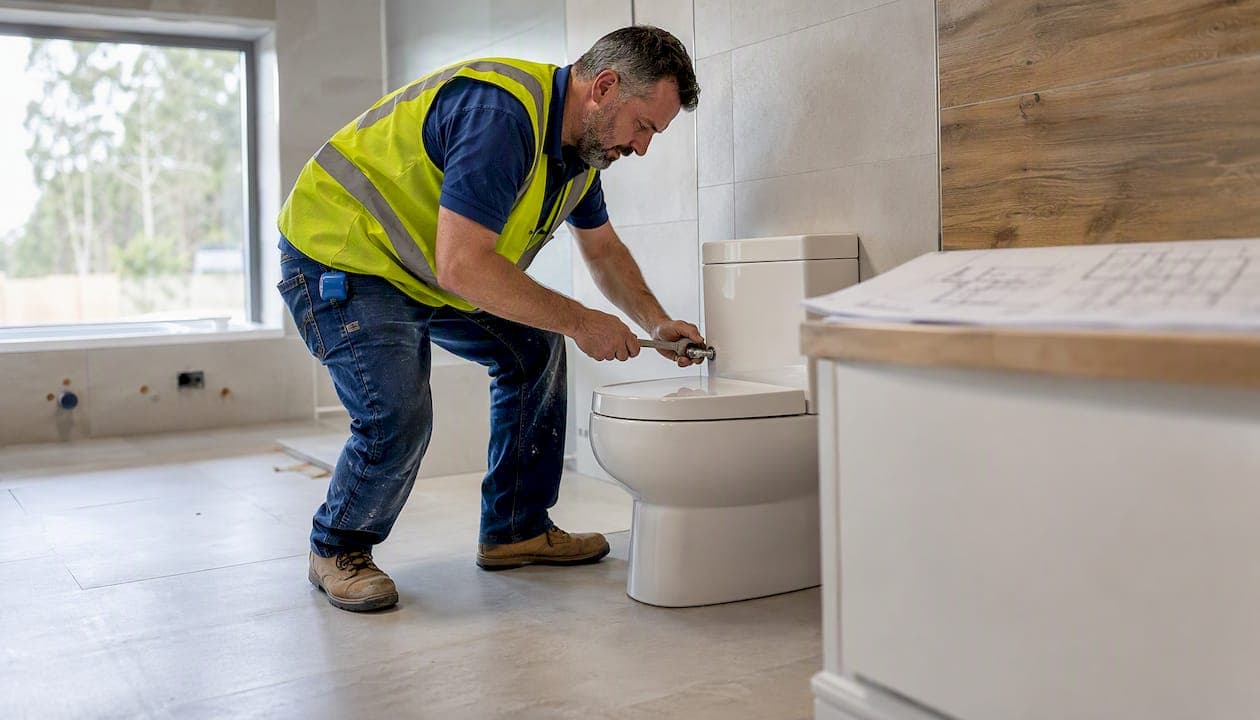
Replacing an older toilet with a water-efficient model reduces household water use and eases strain on sewer systems. Australia's Water Efficiency Labelling and Standards (WELS) scheme rates toilets from one to six stars; a six-star dual-flush unit uses significantly less water per flush compared with older toilets.
Complexity: Low to medium. A direct rough-in swap is a half-day job. Moving the waste outlet triggers a permit. Cost cue: Fixture-for-fixture toilet replacement is one of the more affordable upgrades; budget extra if the rough-in needs adjusting.
2. Modern shower systems and thermostatic valves
Thermostatic valves hold water temperature within one degree regardless of pressure fluctuations elsewhere in the house. Pressure-balancing valves are the entry-level alternative and prevent sudden cold or scalding surges when someone flushes a toilet. Rain heads and multi-head systems require sufficient water pressure or a dedicated feed — a large overhead rain head at low pressure delivers a disappointing trickle, so confirm your dynamic pressure before specifying one.
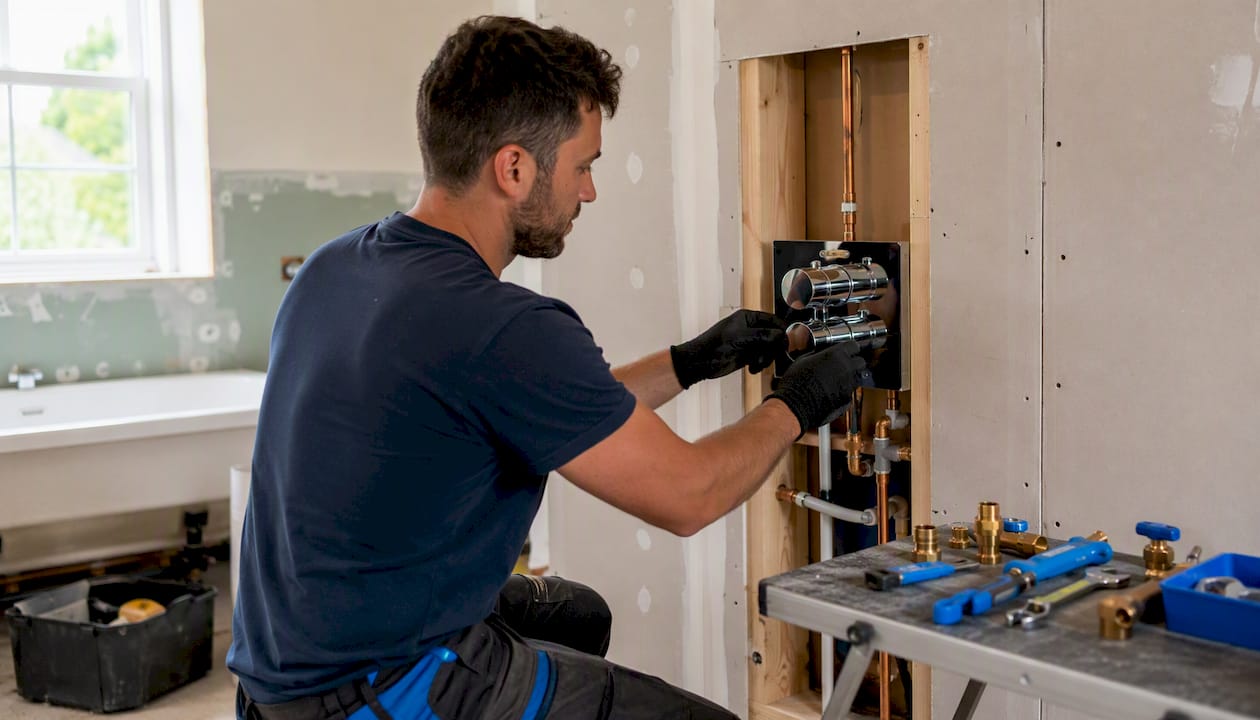
Complexity: Medium. Valve replacement is straightforward; adding a body-spray rail or overhead feed may require new supply runs. Cost cue: Mid-range. Thermostatic valves cost more upfront but reduce long-term hot-water waste.
3. Tapware and basin upgrades
Quarter-turn ceramic disc tapware has largely replaced rubber-washer taps in Australian renovations because it does not drip and requires almost no maintenance. Stainless steel and brass finishes withstand corrosion far better than chrome-plated zinc alloy, which pits within a few years in humid bathrooms.
For basins, vessel sinks make a visual statement but are less practical in a busy family bathroom — they sit high, collect grime around the base, and the exposed trap is vulnerable to knocks. Undermount basins suit high-traffic bathrooms; vessel basins work well in a powder room where aesthetics matter more than daily punishment.
Complexity: Low. Tapware swaps are typically a few hours; basin changes may require adjusting the waste and supply connections. Cost cue: Low to medium depending on fixture quality.
4. Bath replacements and bath-to-shower conversions
Converting a bath to a walk-in shower is the most common layout change in Australian bathroom renovations, particularly in homes where the second bathroom is rarely used for bathing. It frees up floor space, improves accessibility, and removes a fixture that is expensive to fill with hot water. Retaining a bath in at least one bathroom is generally recommended if you plan to sell, as buyers with young children still value it.
Complexity: Medium to high. Moving the waste, waterproofing the new shower floor, and tiling all require licenced trades. Cost cue: Mid-range to high, depending on whether the drain moves and how much tiling is involved.
5. Hot-water system upgrades
Tankless (continuous-flow) gas units heat water on demand and eliminate the standby heat loss of a storage tank. Heat-pump hot-water systems are increasingly popular in Victoria because they extract heat from ambient air and use roughly a third of the electricity of a conventional electric element. Energy.gov.au provides current rebate and incentive information for heat-pump and solar hot-water systems in Australia.
Complexity: Medium to high. Gas continuous-flow units need a licenced gasfitter; heat-pump units need an electrician and adequate outdoor space. Cost cue: Higher upfront than a like-for-like storage replacement, but ongoing running costs are significantly lower.
6. Mixing and tempering valves
Mixing valves blend cold and hot water automatically to prevent dangerously high temperatures at the outlet. In Australia, tempering valves are mandatory on all new and replacement hot-water systems serving bathrooms in residential buildings under the Plumbing Code of Australia. They are also required in aged-care facilities, disability homes, and any setting where vulnerable people use the bathroom. For more on hot-water safety in disability settings, the requirements go further than a standard residential install.
Complexity: Low to medium. Retrofitting a tempering valve to an existing system is a half-day job for a licenced plumber. Cost cue: Low. One of the highest-value safety upgrades relative to cost.
7. Supply-pipe replacement (PEX vs copper vs poly)
PEX is now the preferred supply-line material for many Australian plumbers because it resists corrosion, handles thermal movement without cracking, and installs faster than copper. Galvanised steel pipes corrode from the inside out, restricting flow and discolouring water. Polybutylene pipe, installed in some Australian homes during the 1980s and 1990s, is prone to failure and should be replaced whenever walls are open. The Australian Building Codes Board provides guidance on acceptable materials and inspection requirements.
Complexity: Medium to high. A full replumb is a multi-day job; replacing exposed runs while walls are open during a renovation is the most cost-effective time to do it. Cost cue: Medium for partial replacement; high for a full replumb.
8. Drain and sewer relining or replacement
Slow drains and gurgling vents are often the first sign of a collapsed or root-invaded drain. Relining inserts a resin-impregnated liner into the existing pipe and cures it in place, avoiding the need to excavate. It suits straight runs in good condition; badly offset or collapsed sections still need excavation and replacement. A CCTV drain inspection before any renovation confirms what you are dealing with.
Complexity: Medium to high. Relining is less disruptive than excavation but still requires a licenced plumber. Cost cue: Medium for relining; high for excavation and replacement under a slab.
9. Greywater and water-reuse plumbing
Greywater systems collect water from basins, showers, and baths and redirect it to toilet cisterns or garden irrigation. Yourhome.gov.au outlines the treatment levels and approval requirements for greywater reuse in Australian homes. A basic laundry-to-garden diversion is low-cost and low-complexity; a full treatment system that feeds toilet cisterns requires council approval and a licenced plumber.
Complexity: Low (diversion) to high (full treatment system). Cost cue: Low to high depending on system type and council requirements.
10. Underfloor heating
Hydronic underfloor heating circulates warm water through pipes embedded in a screed layer and connects to your hot-water or boiler system. Electric mat systems sit directly under tiles and are simpler to retrofit in an existing bathroom. Both require an electrician for controls; hydronic systems also need a plumber for the manifold and pipe connections.
Complexity: Medium. Best installed during a full renovation when the floor is already being tiled. Cost cue: Medium to high. Electric mats are cheaper to install; hydronic is cheaper to run over time.
11. Smart leak detection and automatic shut-off valves
Leak sensors placed under vanities and behind toilets send an alert to your phone the moment moisture is detected. Automatic shut-off valves go a step further and close the water supply without any human action. For a bathroom above a living area or in a multi-storey home, these devices pay for themselves the first time they prevent a ceiling collapse.
Complexity: Low to medium. Sensors are DIY-friendly; automatic shut-off valves should be installed by a licenced plumber. Cost cue: Low to medium. One of the best value-for-money upgrades available.
How to choose the right upgrades for your home
Decision criteria
Match upgrades to your situation before you commit to anything:
- Budget — safety and pipe condition first, then water efficiency, then luxury fixtures
- Existing rough-ins — confirm centre-to-wall and centre-to-floor measurements against the new product's installation guide before purchasing
- Pipe material and condition — galvanised or polybutylene pipes should be replaced while walls are open, regardless of the renovation scope
- Household hot-water demand — a family of five has different needs from a couple; size the system accordingly
- Water-efficiency goals — WELS ratings on toilets and tapware reduce bills and may satisfy council requirements
- Accessibility needs — grab rails, wider doorways, and tempering valves are worth planning for now even if not immediately needed; see plumbing upgrades for disability homes for what is involved
- Resale impact — a functional, code-compliant bathroom with quality tapware and a WELS-rated toilet appeals to buyers; a bath in at least one bathroom remains a selling point in family homes
Questions to ask a licenced plumber
- What is the scope of work, and does any part of it require a permit or council approval?
- Will the rough-in need to change, and if so, what does that add to the cost and timeline?
- What pipe material do you recommend for the supply lines, and why?
- Are the existing waste and vent stacks adequate for the new layout?
- Does the work come with a warranty, and is it covered by your plumber's licence insurance?
Red flags to watch for
- A quote that does not mention permits or inspections for work that clearly requires them
- Rough-in measurements that do not match the new fixture's installation guide
- Polybutylene or badly corroded galvanised pipes left in place when walls are already open
- Missing cleanouts or vents on the waste system
- Any suggestion that a licensed plumber is not needed for supply or waste work
Typical costs and timelines for bathroom plumbing upgrades in Australia
Cost ranges below are indicative ballparks for Australian conditions. Actual quotes vary by location, access, fixture quality, and whether slab work or permits are involved. Always request a written, itemised quote that includes permit fees and disposal costs.
| Upgrade type | Typical scope | Rough cost range (AUD) | Typical timeline |
|---|---|---|---|
| Toilet replacement (WELS, same rough-in) | Fixture swap, no drain move | — | Half day |
| Tapware and basin swap | Like-for-like, no pipe relocation | — | Half to one day |
| Shower valve upgrade (thermostatic) | Valve and head replacement | — | One day |
| Tempering/mixing valve installation | Retrofit to existing hot-water system | — | Half day |
| Bath-to-shower conversion | Drain, waterproofing, tiling | — | 3–5 days |
| Hot-water system (heat pump) | Full replacement, new unit | — | One to two days |
| Supply-pipe replacement (partial, PEX) | Open walls during renovation | — | 2–4 days |
| Full bathroom replumb | All supply and waste lines | — | 3–7 days |
| Drain reline (single run) | CCTV inspection plus reline | — | One to two days |
| Smart leak detection | Sensors and shut-off valve | — | Half to one day |
Key pricing drivers:
- Moving a drain on a concrete slab adds excavation and reinstatement costs
- Council permits add time (typically one to four weeks for approval) and fees
- Wet-area tiling must follow waterproofing cure times, extending the schedule
- Access to pipe runs inside walls or under floors affects labour significantly
- Fixture quality varies enormously; a $200 tapware set and a $2,000 one both need the same installation time
For a moderate bathroom renovation involving a toilet swap, new tapware, shower valve upgrade, and partial pipe replacement, budget for permits and a contingency of at least 15–20% above the base quote.
What professionals always check behind the walls
The most impressive-looking bathrooms are often defined by what you cannot see. Replacing old galvanised or polybutylene pipes during a renovation prevents the leaks that ruin new tiles and cabinetry within a few years of completion.
The pro hidden-infrastructure checklist:
- Hot-water system condition — inspect the pressure relief valve, anode rod (on storage systems), and flue condition
Code compliance issues, especially moving drains or altering venting without permits, are among the most common and expensive mistakes made during bathroom renovations. A rough-in inspection before walls are closed is the single most important quality checkpoint in any bathroom project.
Pro Tip: Request a plumbing inspection report before and after rough-in work. It protects you legally and gives you documented evidence of compliance for insurance and resale.
Stat to know: Mismatched rough-in measurements are a leading cause of fixture returns and additional labour costs. Confirm centre-to-wall and centre-to-floor dimensions against the new product's installation guide before purchasing — not after delivery.
Permits, standards, and who can legally do the work in Australia
In Australia, all plumbing work on supply, waste, and vent systems must be carried out by a licenced plumber. This is not optional, and it is not a formality. Unlicenced work voids home insurance, creates liability on resale, and can result in substantial fines.
When permits and inspections are typically required:
- Moving or adding any drain or waste connection
- Changing the number of fixtures in a bathroom
- Altering or extending vent stacks
- Any work inside a roof space or under a concrete slab
- Installing a new hot-water system or relocating an existing one
- Greywater treatment systems (council approval also required in most states)
WELS water-efficiency labelling:
The WELS scheme requires toilets, showerheads, tapware, and urinals sold in Australia to carry a star rating. Higher-rated products use less water per minute or per flush. Specifying WELS-rated fixtures is not just good practice; some councils require minimum ratings for new installations and renovations. A six-star showerhead uses 6 litres per minute or less, compared with 15–20 litres for an unrated older head.
Numbered compliance checklist:
- Confirm your plumber holds a current licence for your state (in Victoria, check the Victorian Building Authority)
- Ask for a copy of the permit application before work begins on any notifiable work
- Arrange the rough-in inspection before walls are closed
- Request the certificate of compliance (or equivalent) on completion
- Keep all compliance documents with your property records for insurance and resale
For aged-care and disability settings, compliance obligations go further. Plumbing compliance in aged-care facilities in Victoria involves additional inspection and documentation requirements beyond a standard residential renovation.
Bathroom doors and joinery also need to meet moisture-resistance standards; choosing the right bathroom door materials is worth considering alongside your plumbing choices to avoid premature warping or mould issues.
Key takeaways
The most cost-effective bathroom plumbing upgrades combine pipe condition fixes and water-efficiency improvements before spending on luxury fixtures.
| Point | Details |
|---|---|
| Prioritise safety and pipes first | Replace galvanised or polybutylene pipes while walls are open; add a tempering valve to every hot-water system. |
| Check rough-ins before buying fixtures | Mismatched rough-in dimensions are a leading cause of returns and extra labour — measure before you order. |
| WELS ratings reduce bills and meet council requirements | Specify WELS-rated toilets and tapware; a six-star showerhead uses 6 litres per minute or less. |
| Permits protect your investment | Unlicenced or unpermitted work voids insurance and creates liability on resale — always use a licenced plumber. |
| Dualflowservices covers the full scope | Dualflowservices handles inspections, licenced installations, permits, and emergency call-outs across the Mornington Peninsula and surrounding Melbourne suburbs. |
The upgrades worth doing first, and the ones that can wait
Most bathroom renovation guides lead with the glamorous stuff: freestanding baths, brushed brass tapware, frameless shower screens. The plumbers who have seen the aftermath of a renovation gone wrong tend to have a different view.
The hidden infrastructure is where the real value lives. A bathroom with $500 tapware and sound pipes, correct drain slope, a compliant tempering valve, and a fresh waterproofing membrane will outlast one with $3,000 tapware sitting on a failed membrane and corroded galvanised supply lines. Every time.
The priority order I recommend for a tight budget: safety first (tempering valve, pressure relief valve check), then pipes (replace galvanised or poly while the walls are already open — it is a fraction of the cost compared with doing it as a standalone job later), then water efficiency (WELS toilet and showerhead), and finally the fixtures that make the room look good. That sequence also happens to be the one that protects resale value most reliably, because a building inspector or a buyer's conveyancer will find the compliance gaps even if the tiles look perfect.
One more thing worth saying plainly: the most common regret I hear from homeowners is not buying the wrong tapware. It is ordering fixtures before confirming the rough-in, then discovering the drain is in the wrong spot or the pipe material needs replacing. Measure twice, open the walls once.
Dualflowservices: licenced inspections, installations, and emergency support on the Mornington Peninsula
Knowing which upgrades to prioritise is one thing. Having a licenced plumber who can inspect what is actually behind your walls, confirm rough-in feasibility, and handle permits from start to finish is another.
Dualflowservices provides on-site plumbing inspections, full bathroom plumbing installations, tempering valve retrofits, hot-water system upgrades, and emergency call-outs across the Mornington Peninsula and surrounding Melbourne suburbs. Every job is carried out by licenced tradespeople, with permits arranged and compliance certificates provided on completion. Whether you are planning a full renovation or just want to know whether your pipes are worth keeping, book an inspection or get a quote and get a straight answer from a plumber who will actually look at your bathroom, not just give you a number over the phone.
Useful sources and further reading
- waterrating.gov.au — The official Australian WELS scheme site. Check star ratings for toilets, showerheads, and tapware before specifying fixtures, and confirm minimum ratings required in your council area.
- energy.gov.au — Hot water systems — Australian Government guidance on hot-water system types, running costs, and current rebates for heat-pump and solar systems.
- yourhome.gov.au — Wastewater reuse — Explains greywater treatment levels, approval requirements, and design considerations for Australian homes.
- Australian Building Codes Board (ABCB) — The national authority for building and plumbing standards. Useful for understanding when permits are required, acceptable pipe materials, and inspection obligations.
- What is a plumbing inspection? A homeowner's guide — Explains rough-in and final inspections in plain language, including what inspectors check and how to prepare.
- Plumbing compliance in aged-care facilities: Victoria guide — Covers the additional regulatory requirements for plumbing in aged-care and disability settings in Victoria.
- Choosing bathroom doors: materials and moisture resistance — A practical guide to door materials that hold up in humid bathroom environments, useful when coordinating finishes with a plumbing renovation.