Do these three things before the next storm hits: clear your gutters and drains, secure or store loose outdoor items, and pack an emergency kit sufficient for several days. Then set up alerts through the Bureau of Meteorology and your state SES app. If a storm is already underway, stay inside away from windows, and treat any fallen powerline as live.
TL;DR:
- Proper gutter and drain maintenance before storm season reduces the risk of water entry and flood damage, with most household tasks being safe to do from the ground.
- Building a household emergency plan with clear evacuation triggers, alternative locations, and communication strategies increases safety during severe weather events.
- Securing outdoor items, trimming trees, and installing temporary protections like plywood panels can prevent injury and property damage when storms arrive.
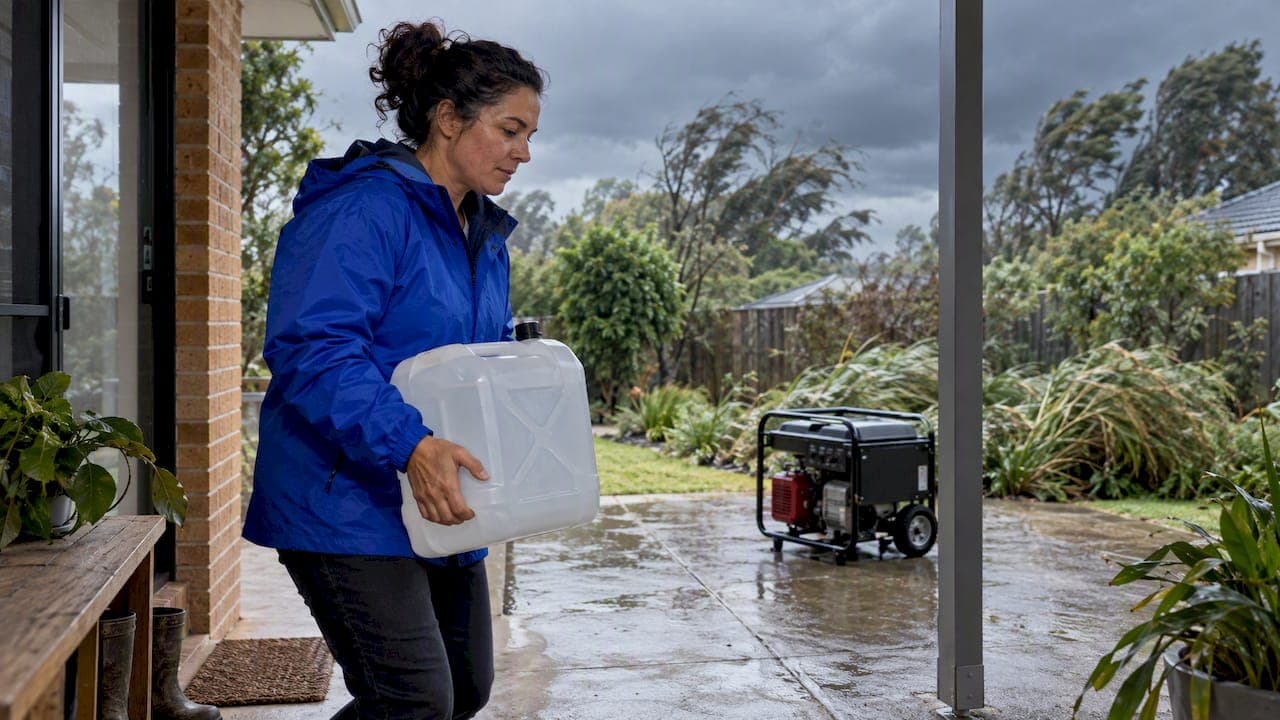
- Stocking enough water for three days and maintaining backup power sources like charged power banks or generators ensures essential needs during outages.
- Regular professional trades inspections of key systems improve storm resilience and help communities recover faster after severe weather.
Table of Contents
- How do you know your storm and flood risk?
- Build a household emergency plan today
- Pre-storm home maintenance: what to check and who should do it
- What to do in the hours before and during a storm
- Staying safe once the storm passes
- Where to get real-time warnings and official guidance
- Dualflow Services' trades checklist for storm season
- Water storage and backup power options
- Looking after your mental health during severe weather
- Why early trades maintenance changes storm outcomes
- Getting your home storm-ready with Dualflow Services
- Sources
- FAQ
How do you know your storm and flood risk?
Start with your council's flood mapping and the Bureau of Meteorology's storm and storm-tide forecasts to see whether your property sits in a flood-prone pocket or near a creek line that rises fast. VICSES notes that storms bring destructive wind, heavy rain, hail, lightning and flash flooding together, so your plan needs to cover both wind-borne debris and water entering through doors, subfloors or stormwater backflow.
Warnings mean different things depending on the source, so it pays to know the channels before you need them:
- BOM severe weather warnings cover damaging wind, heavy rainfall and flash flooding forecasts for your region.
- VicEmergency, NSW SES and GetReady QLD apps push local alerts and evacuation notices straight to your phone.
- Storm-tide advisories matter most for coastal and low-lying properties near estuaries.
Victorian homeowners should treat readiness as a year-round habit, while NSW SES points to September to April as the state's typical storm season window, with a warning that major storms can strike outside it too. Whatever your state, tighten up checks as warmer months approach.
Build a household emergency plan today
A plan only works if everyone in the house knows their job before the wind picks up. Assign one person to check on elderly or disabled neighbours, another to manage pets, and a third to handle the emergency kit and documents.
- Agree on evacuation triggers in advance: a storm-tide warning, a flood warning for your catchment, or a direct instruction from emergency services.
- Identify one or two alternative locations (a relative's house, a community centre) that sit outside flood and fall zones.
- Choose the safest internal room for sheltering in place: pick a sturdy, centrally located space, and avoid low-lying rooms that flood first.
- Keep at least one escape route clear from every room in case you need to leave in a hurry.
- Set up a communications plan with backup options: mobile, a battery radio, SMS (which often gets through when calls don't), a family meeting point, and a dry, accessible spot for important documents.
Pro Tip: Write your plan on paper and stick it to the fridge. Phones die, batteries fail, and a printed plan doesn't need charging.
Pre-storm home maintenance: what to check and who should do it
Most storm damage traces back to water finding a way in or wind finding something loose to throw. Working through this list in the weeks before storm season cuts both risks.
- Gutters, downpipes and drains: clear leaves and debris by hand or with a garden hose, and flush downpipes to confirm water exits freely; blockages most often form at gutter joints and downpipe elbows, and VICSES recommends this as a first line of defence against both wind and water damage.
- Roof and eaves: walk the perimeter and look up for missing tiles, lifted flashing or loose roofing clips; if you spot damage or can't get a clear view, book a roofer rather than climbing up yourself.
- Trees and branches: prune dead limbs and branches overhanging the roof or power lines, keeping a safe distance from electrical infrastructure, and check with your council before removing anything protected or near a footpath.
- Loose items and fittings: bring in furniture, pot plants and bins, tie down trampolines, and stow anything that could become airborne in a wind gust.
- Temporary protections: pre-cut plywood panels for large windows, brace garage doors (a common failure point in high wind), and check that solar panel mounts are secure.
A gutter and downpipe clean is one job most households can do safely from the ground; for anything requiring a ladder on a steep roof, a licensed roofer is worth the call. Property maintenance specialists also offer seasonal gutter clearing if you'd rather not do it yourself.
What to do in the hours before and during a storm
Once a warning is issued, work fast through the essentials, then hunker down.
- In the hour before: bring in or secure any remaining loose items, fill containers with drinking water in case supply is affected, charge every phone and power bank, and fuel the car if evacuation is a possibility.
- During the storm: stay away from windows and glass doors, avoid using taps, showers or landlines while lightning is active, since Queensland Government guidance warns that plumbing and telephone lines can conduct a strike, and switch to a battery radio for updates once power drops.
- Electricity and generators: never attempt your own rewiring or reconnection, and if you're running a generator, keep it outside, well ventilated, and never hard-wired into household circuits without an approved changeover switch and licensed installer, since improvised connections risk electrocution and backfeed into the grid.
Power and communications failure is common during severe storms, which is why Emergency Victoria advises keeping a battery radio and multiple charged devices on hand before outages hit.
Staying safe once the storm passes
The period right after a storm carries its own risks, often worse than the storm itself.
- Avoid walking or driving through floodwater, since it can hide debris, contamination or a live electrical hazard.
- Stay at least eight metres from any fallen powerline as advised by Energy Safe Victoria and assume it's live, as Energy Safe Victoria instructs; check for gas smells and obvious structural damage before re-entering the house.
- Call emergency services for immediate danger, and book a licensed electrician or plumber for anything involving damaged wiring, water-affected appliances or compromised plumbing, rather than touching it yourself.
- Photograph damage with time stamps before you start cleaning up, contact your insurer early, keep every receipt, and ask tradespeople for compliance certificates where the work requires one.
Our guide to emergency electrical situations covers what counts as dangerous damage and what to do the moment you spot it.
Where to get real-time warnings and official guidance
Bookmark these before storm season starts, not during it.
- Bureau of Meteorology for live warnings, radar and storm-tide forecasts.
- State SES apps including VicEmergency, NSW SES and GetReady QLD for localised alerts and evacuation notices.
- Emergency phone lines for flood and storm damage assistance in your state.
- Offline backups: a battery radio, a printed copy of your emergency plan, torches and a charged power bank.
Dualflow Services' trades checklist for storm season
Beyond the general home checklist, a few jobs benefit from a trades eye. Clear stormwater outlets and secure downpipe brackets, then test external valves and any sump or stormwater pumps so they're ready to work under load. Locate your main electrical switches, test RCDs (the safety switches that cut power during a fault), and never touch a water-damaged appliance; Energy Safe Victoria recommends a licensed inspection instead. Secure outdoor HVAC and hot water units, label all shut-offs clearly, and book a pre-season service to catch small faults before they become storm-week failures.
- Clear and test stormwater outlets, downpipes and pumps.
- Test RCDs and locate main power, water and gas isolations.
- Book a pre-season HVAC and hot water service.
Pro Tip: Label your main water, gas and electrical shut-offs with a tag before storm season. In an emergency, you don't want to be guessing which valve does what.
Water storage and backup power options
A few days without mains water or power is common after a severe storm, so plan for both. Queensland's severe weather guidance recommends stocking enough water for at least three days, allowing roughly enough for drinking, cooking and basic hygiene per person, stored in sealed, food-grade containers and rotated every few months so it stays fresh.
For power, a charged power bank covers phones for a day or two, but if you rely on medical equipment or want to keep a fridge running, a generator is the next step up. Run it outdoors only, well clear of windows and doors, since exhaust fumes build up fast in enclosed spaces. If you want a generator to power part of the house rather than just individual appliances, it needs an approved changeover switch fitted by a licensed electrician, never a direct connection into your switchboard.
Battery packs for solar systems are another option if you already have panels installed, though they need to be sized and installed by a licensed professional to work safely during an outage. Whichever option you choose, test it before storm season rather than during your first blackout.

Looking after your mental health during severe weather
Storm warnings, power outages and property damage bring a particular kind of stress, and it's worth planning for that alongside the physical preparation. Uncertainty about what's coming, disrupted sleep from wind and rain noise, and the after-effects of cleaning up damage can wear people down even when nobody's hurt.
Simple steps help: keep a consistent routine where you can, stay connected with neighbours and family by phone or text when services are patchy, and avoid doom-scrolling warning updates once you've got the information you need to act. Checking on elderly neighbours or people living alone also works both ways, easing isolation for them and giving you something concrete to focus on. If the stress lingers after the storm has passed, especially after property damage or a difficult clean-up, it's worth talking to a GP or reaching out to a support line rather than pushing through alone.

Why early trades maintenance changes storm outcomes
Trades checks catch what DIY inspections miss: compliance issues, certification and the safety margin around live systems. Communities with well-maintained gutters, wiring and drainage recover faster, with fewer emergency call-outs competing for the same tradespeople.
— Mike
Getting your home storm-ready with Dualflow Services
Storm season puts plumbing, electrical and heating systems under pressure all at once, and professional trades services can cover all three under one roof for homeowners in affected areas. Ahead of the season, it is recommended to book a pre-season inspection to check RCDs, stormwater outlets and HVAC units before a warning is issued, and keep contact details handy for emergency call-outs if something fails mid-storm.

| Service | What it covers | Best timed for |
|---|---|---|
| Emergency Call-out | Urgent plumbing, electrical and heating faults | During or right after a storm |
| Scheduled Maintenance | Gutter-linked drainage, RCD and HVAC checks | Weeks before storm season |
| Legal Compliance | Certification for storm-related repairs | Post-storm insurance claims |
To prepare for a visit, clear access to your switchboard, stormwater points and outdoor units, and note down any faults you've noticed. Book online or call us through the Dualflow Services website to arrange an inspection or emergency visit.
Sources
- Storms - Victoria State Emergency Service (VICSES)
- Severe weather safety guide — Queensland State Emergency Service
- Storms and energy safety — Energy Safe Victoria
- Storm season — NSW State Emergency Service
- Prepare for outages — Emergency Victoria
FAQ
How do you prepare your house for a storm?
Clear gutters, downpipes and drains, secure or store loose outdoor items, and prune overhanging branches well before a warning is issued. Pack an emergency kit with water, medication and a battery radio, and confirm your household's shelter and evacuation plan, following guidance from VICSES and your state SES.
What is storm season in Australia?
Storm season varies by state, with NSW SES identifying September to April as its typical window, though severe storms can occur outside that period. Victoria treats storm readiness as a year-round habit rather than a fixed season.
What is the safest place in the house during a cyclone or severe storm?
The safest spot is a strong, centrally located internal room, away from windows and glass, and ideally not on a low floor that could flood. Keep at least one escape route clear in case you need to leave quickly.
Can you shower in a thunderstorm in Australia?
It's best to avoid showers, baths and running taps during a thunderstorm, because Queensland Government guidance warns that plumbing can conduct a lightning strike. Wait until the storm passes before using water fixtures.
When should you call a licensed electrician after a storm?
Call a licensed electrician any time you see damaged wiring, a fallen powerline, or appliances affected by water, and never attempt the repair yourself. Energy Safe Victoria advises treating all storm-damaged electrical equipment as live until a professional inspects it.