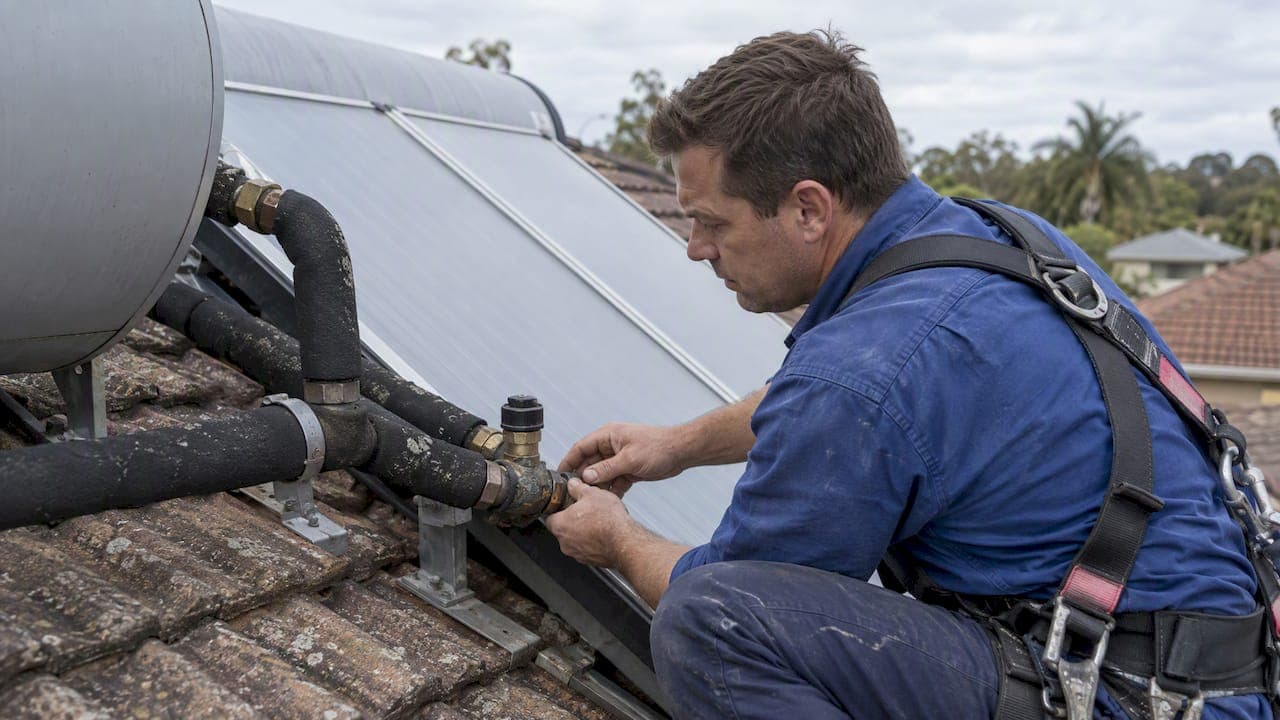
A proper solar hot water service inspects the collectors, pump station, and control unit, checks system pressure and antifreeze quality, tests the booster and tempering valve, and resolves common faults on the spot. If you have no hot water or the pressure relief valve is discharging, book a qualified technician now; otherwise, run the quick checks below first. We can carry out this work for homes and facilities that need it done properly.
TL;DR:
- Most systems need a technician’s inspection every 2 to 4 years; pressurized systems need antifreeze replacement about every 3 to 5 years.
- For lukewarm water, check the booster and tempering valve before suspecting collectors; poor circulation instead points toward the pump or solar circuit.
- Keep the booster thermostat between 60°C and 65°C to limit legionella risk, while the tempering valve reduces scalding risk at the tap.
- Photograph the controller display with the time and weather before booking, and switch off power if you suspect an electrical fault; never open the control unit.
- Check warranty terms before paying for diagnostics, since accredited installers often handle warranty faults and coverage may include problems that resemble ordinary wear.
Table of Contents
- What a standard solar hot water service includes
- How often to service and what it typically costs
- Common problems and safe homeowner checks before you call
- Safety and boosters: temperature settings and legionella prevention
- When to call a professional and what to ask when you book
- Dualflow Services: expertise, services and proof points
- The real problem with solar hot water isn't the panels
- How to book Dualflow Services for solar hot water servicing
- FAQ
- Sources
- Authoritative guidance and official resources
What a standard solar hot water service includes
A technician arriving on-site starts with isolation and safety checks before touching anything electrical or climbing a ladder. From there, the visit follows a fairly consistent sequence.
- Isolate power and water to the system before any inspection begins.
- Inspect and clean the collectors, checking roof fixings, glazing and panel surfaces for damage or grime.
- Test the pump station and controller, including sensors, wiring and any LED or error codes, then confirm flow.
- Check system pressure and inspect the pressure relief valve discharge vessel, along with antifreeze condition where the system uses a closed loop.
- Test the booster and tempering valve, recording delivery temperature at the tap.
- Identify leaks, airlocks or corroded fittings, fixing minor issues on-site and flagging larger repairs for a follow-up booking.
- Provide a written report outlining what was done and what to watch for.
Antifreeze quality matters more than most homeowners realise. Heat-transfer fluid degrades over time, and a full health check tests that fluid rather than assuming it still protects the system from freezing or corrosion. This full workflow is also why regular flushing matters as much for solar systems as it does for standard hot water units: sediment and degraded fluid both shorten the life of pumps and valves.
How often to service and what it typically costs
Solar hot water systems reward owners who stick to a schedule, rather than waiting for something to fail.
- Visual checks: do a quick look at collectors and fittings yourself each season.
- Technician inspection: have a professional inspect the system every 2 to 4 years, depending on manufacturer guidance and system type.
- Full health check: pressurised systems should get a complete check, including an antifreeze change roughly every 3 to 5 years.
Cost drivers worth knowing: the price of a visit depends on system type (thermosiphon units are generally simpler to service than split or evacuated-tube systems), travel distance, whether parts like pumps, sensors or valves need replacing, and whether the work falls under warranty.
Before paying for a call-out, it is worth checking your warranty terms. Accredited installers typically handle warranty diagnostics, and some faults that look like wear and tear may still be covered.
Common problems and safe homeowner checks before you call
Most solar hot water faults fall into a short list: a failed pump, a faulty controller or sensor, an air lock, pressure relief valve discharge, a leak, or a tempering valve that is not holding its setpoint. Corroded connectors are a common culprit too, particularly on older installations.
Before calling anyone, there are a few checks you can safely run yourself.
- Look at the controller's LED or display for error codes or unusual readings.
- Feel the collector on a sunny day. It should be warm to the touch within a few hours of good sun exposure.
- Listen or feel for the pump running when the system calls for circulation.
- Check the pressure relief valve discharge vessel for signs of recent discharge.
- Confirm the booster is activating when expected, which tells you whether the problem sits on the solar side or the booster side.
Pro Tip: Photograph the controller display and note the time of day and weather before you call a technician. It saves a diagnostic step and often speeds up the visit.
Do this, not that: switch off power at the isolator if you suspect an electrical fault, but never open the control unit or touch rooftop wiring yourself. Note any recent storms or power outages too, since these often explain sudden faults that otherwise look mysterious. For a faster first pass, our guide to fixing no hot water walks through the same checks in more detail.
Safety and boosters: temperature settings and legionella prevention
Booster thermostat settings are a safety feature, not a comfort setting. Installers advise keeping the booster set between 60°C and 65°C to reduce the risk of legionella growth in stored water, while the tempering valve protects whoever is standing in the shower from scalding.
Health authorities treat this temperature range as a genuine public health measure. Queensland Health's legionella prevention guidance links stored water temperature directly to legionella control, which is why a technician checks delivery temperature at the tap during every service, not just the temperature inside the tank.

A booster or tempering valve fault often masquerades as a solar-side failure: cold or lukewarm water can look like a collector problem when the real issue is downstream. That is one reason electrical work and control-unit repairs are left to accredited electricians rather than DIY fixes.
When to call a professional and what to ask when you book
Some signs mean it is time to pick up the phone rather than keep troubleshooting.
- Persistent loss of hot water or repeated pressure relief valve discharge.
- Visible leaks, pressure loss, or a pump and sensor that will not respond.
- Warranty-related faults, which usually need diagnosis by an accredited installer.
- Antifreeze nearing its 3 to 5 year replacement window on a pressurised system.
A genuine emergency, such as no hot water at all or an active leak, usually justifies same-day attendance. A routine inspection or scheduled health check can wait for a convenient booking slot.
When you call, ask about licensing and accreditation, experience with your specific system type, warranty and parts policy, and an estimate of fees before the technician arrives. Having your system model, recent photos, control unit readouts and any warranty paperwork on hand speeds up the whole process.
Dualflow Services: expertise, services and proof points
We bring plumbing, electrical and heating and cooling trades together, which matters for solar hot water systems because faults often sit at the boundary between the solar side and the electrical booster. Our scheduled maintenance and emergency call-out work covers homes and facilities that need it done properly, including installation and repair of solar roller shutters to improve energy efficiency.
Relevant practice areas include gas hot water servicing best practices, support for centralised hot water systems in multi-tenanted buildings, and the regular flushing and antifreeze checks that keep closed-loop systems running well. On every visit, we leave a written service report with safety checks and compliance notes, which matters for facility managers who need a paper trail.
The real problem with solar hot water isn't the panels

The conventional advice on solar hot water servicing fixates on the collectors, as if a dirty panel were the main threat to performance. In practice, the booster and tempering valve cause more customer confusion and more false alarms than the collectors ever do. A homeowner sees lukewarm water and assumes the solar side has failed, when the actual fault sits in a thermostat or a valve that never touches sunlight.
That misdiagnosis wastes time and money, because people often replace or inspect the wrong component first. The guidance that matters most is simple: treat the booster and tempering valve as the first suspects for temperature complaints, and treat the collectors and pump as the first suspects for a system that will not circulate at all. Reviews of popular systems also show that installation quality and servicing affect long-term reliability more than brand choice does. A solar hot water system is a hybrid appliance with several failure points, not a passive fixture you can ignore between services.
— Mike
How to book Dualflow Services for solar hot water servicing
We handle the full range of solar hot water work described in this guide: emergency call-out, scheduled servicing, diagnostics, repairs and compliance checks for homeowners and facility managers alike.

Booking goes faster when you have a few details ready:
- Your system model and age.
- A short description of the symptoms, plus photos if you have them.
- Your warranty status, if known.
Reach out through our Dualflow Services landing page to arrange a visit. We are available for call-outs around the clock, every day of the year.
FAQ
How often should a solar hot water system be serviced?
A technician should inspect most domestic systems every 2 to 4 years, with a full health check and antifreeze change recommended roughly every 3 to 5 years for pressurised systems. Visual checks of the collectors and fittings are worth doing yourself each season.
How much does a solar hot water service cost?
Pricing depends on system type, travel distance, parts needed and whether warranty covers the visit, so costs vary between jobs. Checking your warranty terms before booking can avoid paying for a repair that is already covered by an accredited installer.
What are some common problems with solar hot water systems?
The most frequent faults are a failed pump, a faulty controller or sensor, air locks, pressure relief valve discharge, leaks and tempering valve issues. Practitioner service guides list these as the typical failure modes technicians find during a health check.
What is the lifespan of a solar hot water system?
Solar hot water systems can run for many years when they receive regular inspections and a full health check on the recommended schedule. Reviews of common systems show that installation quality and ongoing servicing influence long-term reliability as much as the equipment itself.
Sources
- Energy
- Energy
- Solar thermal service & maintenance (Rayotec)
- Legionnaires' prevention (Queensland Government)
Authoritative guidance and official resources
- Energy
- Energy
- Legionnaires' prevention (Queensland Government)
- Solar thermal service and maintenance (Rayotec)
- Energy
- Energy
- Productreview