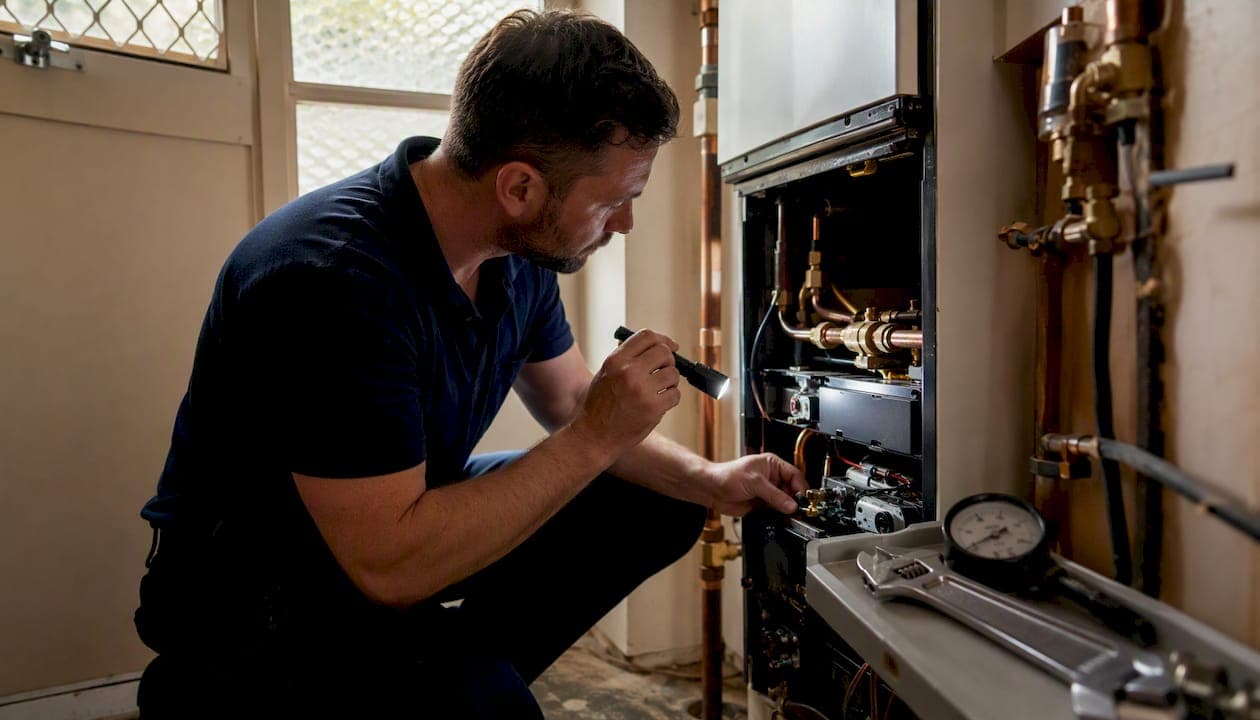
The single most important best practice is simple: get your gas hot water system professionally serviced on a schedule matched to its age and how hard your household works it and never let anyone but a licensed gasfitter touch the gas lines, burner or flue. Everything else in gas hot water maintenance flows from that one decision.
If you're not sure where you stand, act now:
- Check the date of your last service. If it's been more than two years, book one.
- Book a licensed gasfitter immediately if you notice any warning signs (more on those below).
- Ask for a written checklist and service report every time, not just a verbal "all good."
A system serviced on schedule by a licensed gasfitter runs safer, uses less gas to heat the same water, and lasts years longer than one left to chance.
Key Takeaways
Reliable gas hot water performance depends on servicing frequency matched to system age and use, carried out exclusively by a licensed gasfitter, with a written record kept after every visit.
| Point | Details |
|---|---|
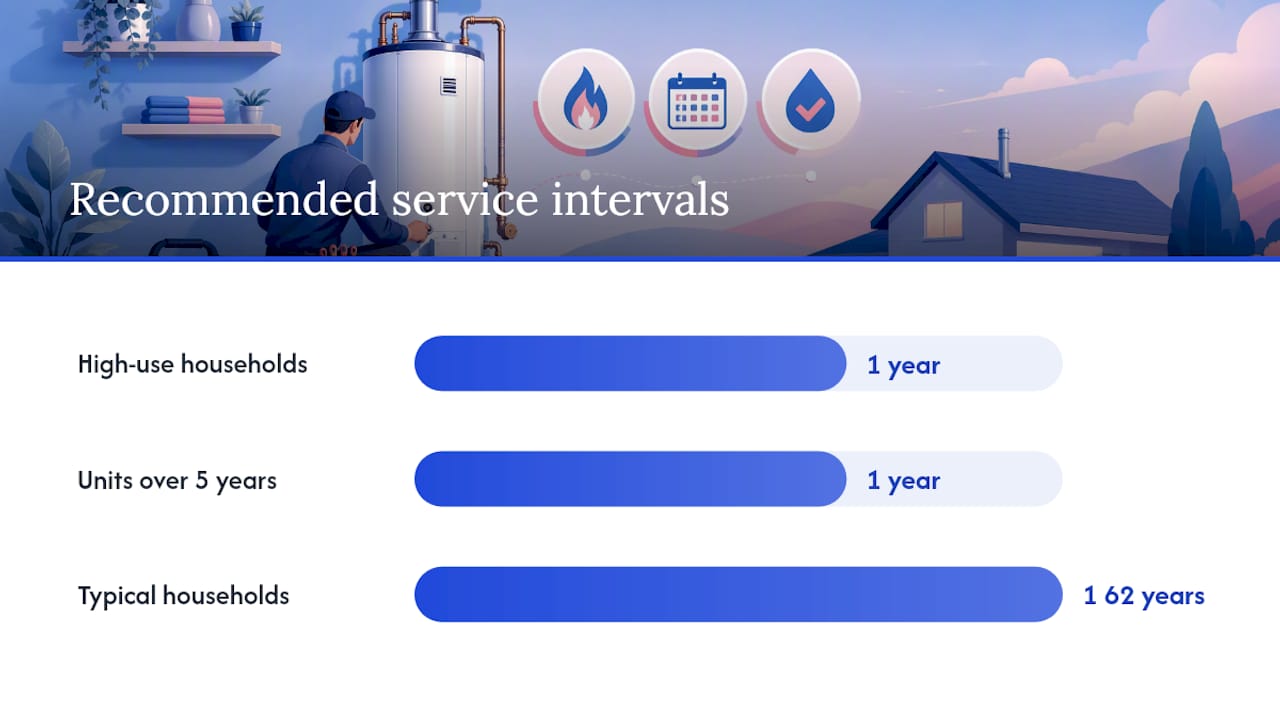
| Match frequency to use | Service every 1–2 years, annually for high-use households or units over five years old. |
| Licensed gasfitter only | Gas line, burner and flue work must never be attempted as a DIY job. |
| Watch for urgent signs | Gas smell, pilot faults or discoloured water mean call a gasfitter immediately. |
| Keep written records | Save service reports and invoices for warranty claims and rental compliance. |
| Book through Dualflowservices | Scheduled maintenance and compliance checks across the Mornington Peninsula, with a written checklist every visit. |
Table of Contents
- Why regular gas hot water servicing matters
- How often should you schedule a professional service?
- What warning signs mean you should book a service now
- What does a professional gas hot water service include?
- Who should carry out servicing? Licences, safety and legal obligations
- DIY tasks you can do vs jobs to leave to a professional
- What affects the cost of a service and how to budget
- How to prepare your property before a service visit
- Compliance for rentals and recordkeeping best practice
- A tradesperson's view on what actually goes wrong
- How Dualflowservices makes servicing straightforward
- Sources
Why regular gas hot water servicing matters
Safety comes first. A neglected burner or blocked flue can produce carbon monoxide, and Energy Safe Victoria flags poorly maintained gas appliances as a genuine risk factor in the home. Servicing verifies combustion is clean and venting is doing its job.
There's a cost side too. Sediment build up, scaled burners and a dying anode all quietly drag efficiency down long before the unit fails outright, and by the time you notice hot water running out faster, you've already been paying for the wasted gas for months. Catching that early with a scheduled visit beats an emergency callout on the coldest morning of the year.
Pro Tip: Ask your gasfitter for a written checklist and itemised quote before the visit. It gives you a paper trail for warranty claims and something concrete to compare if you ever switch providers.
How often should you schedule a professional service?
For most households, every one to two years is the standard guidance, with annual servicing recommended once a unit passes five years old or the household is heavy on hot water.
- Single or dual occupants, newer unit: every two years is usually fine.
- Family households or units over five years old: annual servicing.
- High-use households (large families or very frequent use): annual, with closer inspection each visit.
- Rental properties: some jurisdictions mandate biennial checks regardless of household size, so check your local rules.
Hard water areas complicate this timeline. Mineral-heavy water accelerates scale build up, and manufacturer guidance for tank and tankless systems sometimes calls for flushing or descaling every six months in the worst cases. As a rough timeline: year one is a baseline check, years three to five bring closer attention to the anode and burner, and year eight onward means budgeting for likely part replacement or eventual system change over.
What warning signs mean you should book a service now
Some symptoms mean pick up the phone today, not next week. Others are worth watching but aren't an emergency.
- Smell of gas anywhere near the unit. Turn off the gas supply if you safely can, leave the area, and call a licensed gasfitter immediately.
- Pilot light won't stay lit, or the burner keeps cutting out. This often points to a combustion or venting fault that needs professional diagnosis.
- Discoloured or rusty water. Usually a failing anode or internal tank corrosion, and it's a sign the tank is ageing faster than expected.
- Unexplained leaks around the base or fittings. Even a small drip can indicate a failing valve or tank seam.
- Fluctuating temperature or a sudden drop in pressure. Often sediment or a thermostat fault, less urgent but worth booking within the week.
- Popping or rumbling noises from the tank. A classic sign of sediment build up hardening at the base of the tank.
NSW Health notes that any sign of a combustion problem or gas leak warrants prompt action, given the health risks tied to carbon monoxide exposure.
What does a professional gas hot water service include?
A full service aims to confirm three things: the unit burns gas safely, vents properly, and has no leaks anywhere in the system. A gasfitter working through a standard checklist will typically move through each component methodically rather than just glancing at the unit.
| Check | What it verifies |
|---|---|
| Burner and combustion | Clean, complete burn with no soot or irregular flame |
| Flue and venting | Exhaust gases escaping safely, no blockages |
| Gas connections | No leaks at joints or fittings |
| T&P relief valve | Valve trips and reseats correctly under pressure |
| Anode rod (storage tanks) | Corrosion level, replacement if worn down |
| Thermostat and controls | Accurate temperature regulation |
| Sediment flush (tanks) | Tank drained and cleared of built up sediment |
| Inlet filter and descale (tankless) | Scale removed, flow restored |
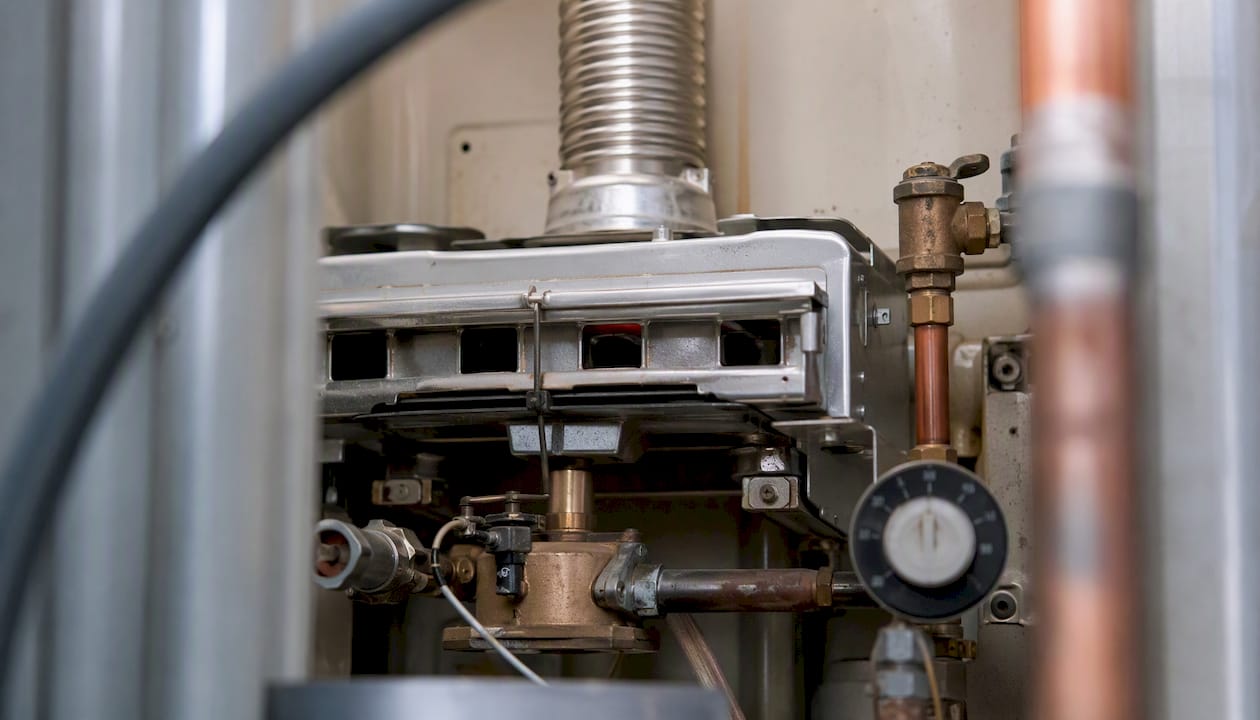
You should walk away with one of three outcomes: a clean pass, a note that something needs follow up, or a repair estimate. Insist on a written record either way, since it protects your warranty and gives the next tradesperson a starting point if something goes wrong later.
Who should carry out servicing? Licences, safety and legal obligations
Gas hot water servicing, repairs and any work touching the burner, flue or gas lines must be done by a licensed gasfitter. This isn't a formality. Getting combustion wrong risks carbon monoxide, and a poorly resealed gas connection is a leak waiting to happen.
When hiring, look for:
- A current gasfitting licence they're willing to show you.
- Public liability insurance.
- A written checklist and upfront quote before work starts.
Any work on gas lines, burners or flue systems demands a licensed gasfitter. DIY attempts here don't just void warranties, they create real risk of gas leaks and dangerous combustion byproducts.
DIY tasks you can do vs jobs to leave to a professional
You can handle low-risk visual checks between professional visits without any special tools.
Safe to do yourself:
- Visual inspection for rust, corrosion or moisture around the base.
- Checking visible fittings and joints for signs of leaking.
- Testing the T&P valve's lift lever (briefly, following the manufacturer's instructions).
- Insulating exposed pipes to reduce heat loss.
Leave to a licensed gasfitter:
- Any gas line, burner or flue work.
- Replacing the T&P valve or anode rod, both often need specific tools and confined-space access.
Pro Tip: Keep a simple log with dates and photos of your DIY checks. It's useful for warranty claims and gives your gasfitter a head start diagnosing anything unusual.
What affects the cost of a service and how to budget
Price varies more than people expect, and the biggest swing factor is usually accessibility rather than the unit itself.
- System type: tankless units often cost more to service due to descaling requirements.
- Age: older systems are more likely to need parts replaced during the visit.
- Accessibility: a unit tucked in a tight roof cavity costs more in labour time than one in an open garage.
- Call-out type: an emergency weekend call-out costs noticeably more than a scheduled daytime visit.
Ask three questions when you call for quotes: what's included in the base fee, whether there's a separate call-out charge, and whether replaced parts carry a warranty. A fixed-price scheduled service beats an emergency callout on cost almost every time.
How to prepare your property before a service visit
A little preparation turns a one-hour job into forty minutes and gives the gasfitter better information to work with.
Before they arrive:
- Locate the manufacturer's manual and any past service records.
- Write down symptoms you've noticed and when they started.
- Clear a safe path to the unit and flue, moving stored items or garden equipment out of the way.
- Secure pets away from the work area.
Have ready for the fitter:
- Model and serial number.
- Recent service invoices.
- Access permission sorted in advance for rental properties.
Pro Tip: Take photos of the unit, and of any leaks or discolouration, before the visit. It helps the gasfitter diagnose faster and gives you a dated record if you ever need to make a warranty claim.
Compliance for rentals and recordkeeping best practice
Some jurisdictions require regular gas safety checks for rental properties, and Victorian rental rules are a clear example worth checking against your own state or territory. Property managers should treat this as non negotiable rather than optional.
Keep dated service reports, invoices and compliance certificates in the tenancy file, not just in an inbox somewhere.
Pro Tip: Set a recurring calendar reminder for each property and ask providers for digital copies of every service report. It turns compliance auditing from a scramble into a five minute task.
A tradesperson's view on what actually goes wrong
Most call outs we see trace back to a missed service, not a random failure. A tank that's never had its anode checked, or a burner nobody's looked at in four years, tends to fail at the worst possible time. Working across the Mornington Peninsula, we prioritise a written checklist and clear reporting on every visit, because that record is what protects you later.
How Dualflowservices makes servicing straightforward
Dualflowservices handles scheduled maintenance, compliance checks and emergency call-outs for gas hot water systems across homes, businesses, aged care facilities and retirement villages on the Mornington Peninsula. Rather than waiting for a breakdown, you get a licensed gasfitter on a schedule that matches your system's age and household use, with a written checklist after every visit so you always know exactly what was checked and what to watch for next.

Getting started is straightforward: book online or call to arrange a scheduled service or a compliance report for a rental property. You'll be sent a short pre-visit checklist so the appointment runs smoothly. Every job is carried out by a licensed gasfitter, and every visit ends with a written service record you can keep for warranty and compliance purposes. Book a service with Dualflowservices and get your next appointment on the calendar before a small issue becomes an emergency call-out.
Sources
- Gas hot water servicing guide — Australian Gas Networks
- How to keep your tank and tankless water heaters running at peak performance — Rheem