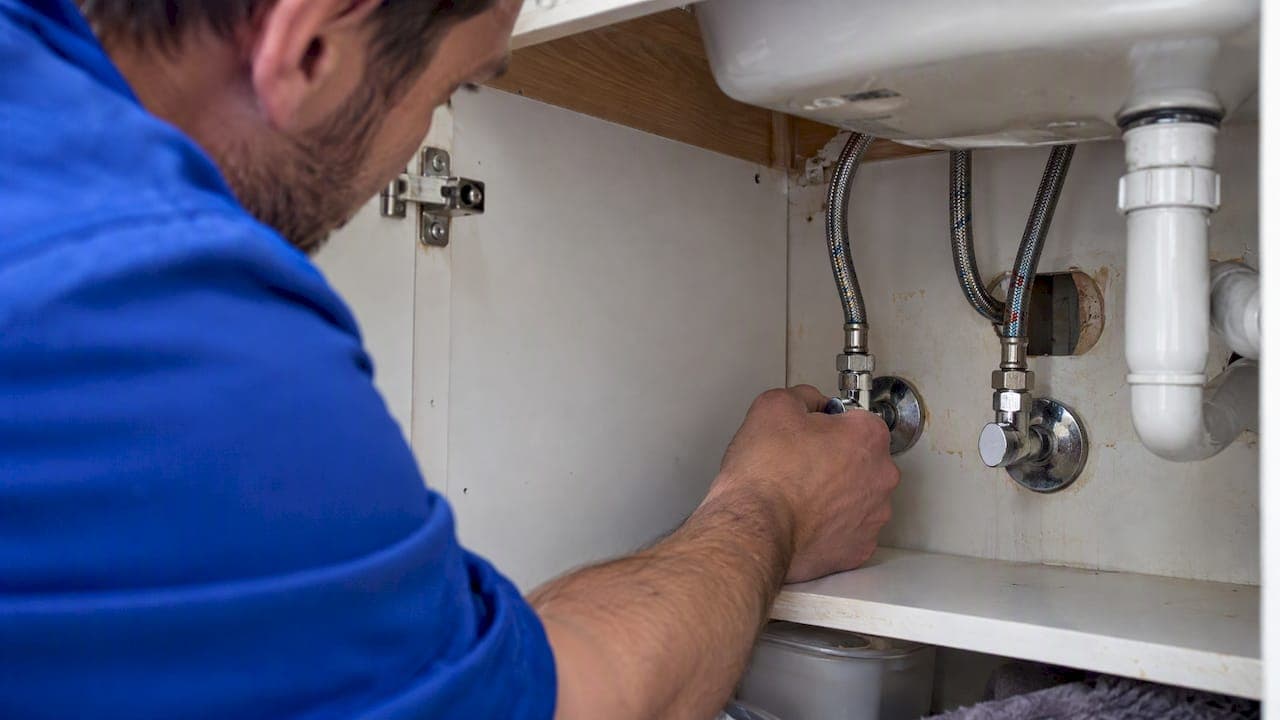
Prevent burst flexi hoses by inspecting them every six months, replacing ageing or damaged hoses before they fail, and fitting isolation or flood-stop devices on high-risk fixtures. Corroded braiding, kinked fittings and old age are the main triggers. If a hose does burst, shut off the mains, keep clear of any nearby power points and call an emergency plumber straight away.
TL;DR:
- Inspect all accessible flexi hoses every six months for signs of corrosion, bulging, fraying, or kinks to prevent unexpected failures and damage.
- Replace hoses proactively every five to ten years, especially if visible deterioration or warning signs appear, to reduce reliance on visible failure or bursting.
- Install isolation valves and flood-stop devices at high-risk fixtures like washing machines and dishwashers to contain water and mitigate damage from hose bursts.
- Use only WaterMark-certified hoses within AS 3499:2022 specifications, avoiding sharp bends and ensuring correct tightening to maintain hose integrity.
- Call a licensed plumber promptly if you detect leaks, damage, or suspect installation issues, and keep detailed inspection records for insurance purposes.
Table of Contents
- What a flexi hose is and where you'll find them
- Common causes of flexi-hose failure
- Inspection checklist: warning signs and how to check flexi hoses safely
- Prevention measures: materials, correct installation and protective devices
- Maintenance schedule: inspection cadence and record keeping
- Immediate actions if a flexi hose bursts
- When to call a licensed plumber and what professional checks they will perform
- Insurance and cost context: claim impact and insurer expectations
- Tradesperson perspective: common failures seen on call-outs and quick wins
- How DualFlowServices can help with inspections and hose replacement
- Sources
- FAQ
What a flexi hose is and where you'll find them
A flexi hose is a short, flexible water connector: a rubber or polymer inner tube wrapped in a braided metal or polymer sleeve, fitted with metal connectors at each end. You'll find them behind taps, toilets, dishwashers, washing machines and hot water units, anywhere a rigid pipe needs to connect to an appliance that might shift slightly or need regular disconnection.
Their placement is exactly why they're risky. The WaterMark specification for AS 3499:2022 covers flexible hose assemblies intended for above-ground, accessible installation, with set limits on length, working pressure and maximum heated water temperature. Hoses tucked behind a vanity or under a sink are easy to forget about, and ones hidden in wall cavities or ceiling spaces are harder still to catch before they fail.

Common causes of flexi-hose failure
Most failures come down to a handful of mechanical and environmental stresses working on the hose over time.
Rust and corrosion in the braided exterior weaken the structure from the outside in, often invisibly until the hose gives way. Kinking, twisting or overstretching at the fitting point creates a stress line that eventually cracks, and poor installation (overtightened fittings, sharp bends) accelerates that damage. Age plays a part too: materials degrade even when a hose looks fine, which is why "burst-proof" marketing claims don't hold up in practice, as industry commentary on flexi hose failures points out. High or fluctuating water pressure, along with repeated thermal stress on hot water connections, adds further wear that shortens a hose's working life.
Inspection checklist: warning signs and how to check flexi hoses safely
A six-monthly visual check takes a few minutes per fixture and catches most problems before they become emergencies.
- Rust spots or discolouration on the braided exterior or fittings
- Bulging, swelling or an uneven shape along the hose length
- Frayed or broken strands in the braid
- Kinks, twists or tight bends near the connection points
- Damp patches, mould or a musty smell in cupboards and under sinks
- A missing or illegible manufacture date tag
Turn off the water at the isolation valve before touching any fitting, and never attempt to tighten or repair a failed connector yourself. If you spot any of the signs above, stop using that fixture and call a licensed plumber rather than waiting for the next scheduled check.
Pro Tip: Photograph each hose during your inspection, even when it looks fine. A dated photo record makes the next check faster and supports an insurance claim if something goes wrong later.
Prevention measures: materials, correct installation and protective devices
The hose you choose and how it's fitted matter as much as how often you check it.
- Choose WaterMark-certified flexible hoses sized and rated within the limits set by AS 3499:2022, including length and working pressure
- Avoid sharp bends at the fitting, tighten connectors correctly (not over-tightened) and renew washers and ferrules whenever a hose is replaced
- Check household water pressure and fit a pressure-reducing valve if it runs above the recommended range
- Install isolation valves and flood-stop or burst-stop devices at toilets, washing machines and dishwashers so water can be cut off quickly
- Replace hoses on a schedule rather than waiting for visible failure, typically within five to ten years depending on condition
Flood-stop devices fitted at appliance connections limit the water lost from a single failed hose, and insurer guidance from Allianz recommends fitting them whenever a hose is replaced.
Insurer guidance from QBE notes that flexi hoses are typically designed to last five to ten years, and recommends checking or replacing them on that cycle rather than relying on them to signal failure visibly. Waiting for a hose to look damaged means waiting until the risk is already high: proactive replacement, paired with a quality hose and correct installation, is the more reliable route.
Maintenance schedule: inspection cadence and record keeping
A simple, repeatable schedule turns these recommendations into habit. Do a visual check of every accessible flexi hose every six months, as recommended by insurer guidance from Suncorp, and book a professional check every twelve to twenty-four months. Plan for proactive replacement at the five to ten year mark, or sooner if any warning sign appears.

Keep a short record for each hose: installation date, photos from each inspection, and receipts for replacements. For managed properties, folding flexi-hose checks into the broader preventative maintenance cycle keeps the task from falling through the cracks across multiple units or tenancies.
Immediate actions if a flexi hose bursts
Acting fast limits both water damage and safety risk.
- Shut off the water at the mains, or at the isolation valve for that fixture if you can reach it safely.
- If water is near power points or wiring, turn off power at the switchboard only if you can do so without stepping in water.
- Move valuables and furniture away from the flow and use towels or buckets to contain what you can.
- Call an emergency plumber and take photos of the damage for your insurance claim.
Never touch electrical switches or appliances with wet hands or while standing in water, and if the flooding threatens the building's structure, leave the area and wait for help.
When to call a licensed plumber and what professional checks they will perform
Call a plumber when you see visible damage, when an isolation valve fails to stop the flow, when you don't know a hose's installation date, when a leak sits near electrical wiring, or when more than one fixture shows a problem at once.
A professional visit typically covers hose condition and fitting integrity, compliance with AS 3499:2022, a water pressure test, and recommendations for isolation or flood-stop devices where none exist.
Insurance and cost context: claim impact and insurer expectations
Burst flexi hoses carry real financial weight. Some insurers report that escaping water claims linked to flexi hoses can account for up to 27% of contents claims, with average claim costs exceeding $27,500, according to Suncorp. Insurers increasingly expect evidence of maintenance, such as inspection photos and replacement receipts, when assessing a claim. Weighed against the cost of a six-monthly check or a routine hose swap, consistent upkeep is the cheaper path by a wide margin.
Tradesperson perspective: common failures seen on call-outs and quick wins
Most emergency call-outs for burst hoses trace back to corroded braiding, often on several ageing hoses installed around the same time in one property. The quick wins are consistent: check every visible hose twice a year, fit isolation valves at washing machines and dishwashers, and keep a replacement schedule rather than waiting for a failure to force the issue.
— Mike
How DualFlowServices can help with inspections and hose replacement
Emergency call-outs are available 24/7 for plumbing, electrical, heating and cooling services, alongside scheduled maintenance and compliance checks for homes and care facility settings.
- Emergency call-out for active leaks or bursts
- Scheduled inspections that check hoses, fittings and water pressure
- Hose replacement with record-keeping for insurance or compliance purposes
For a broader remediation option after water damage, Pipe Relining Melbourne offers no-dig pipe repairs worth knowing about. For a scheduled check or an emergency callout, book a visit with DualFlowServices.
Sources
- Flexi hoses: the ticking time bomb under Australian sinks | Suncorp group
- Flexi Hoses: A Simple Way to Prevent Water Damage | QBE AU
- How to prevent flexi-hose bursts | Allianz Australia
- WM Specification | WaterMark — AS 3499:2022
FAQ
What causes a flexi hose to burst?
Flexi hoses usually burst because the braided exterior corrodes, the fitting is kinked or overstretched, or the hose has simply aged past its working life. High or fluctuating water pressure adds extra stress that speeds up this process.
How do I prevent a flexi hose from bursting?
Inspect every visible hose every six months for rust, bulging, fraying or kinks, and replace any hose showing these signs straight away. Fitting isolation or flood-stop devices at appliances, and replacing hoses proactively within five to ten years as recommended by QBE, further limits the risk.
What are some common problems with flexi hoses?
The most common problems are corroded braiding, cracked fittings from poor installation, and age-related material breakdown that isn't always visible from the outside. Hidden hoses behind vanities or in wall cavities are harder to inspect and more likely to fail undetected.
Why does my expanding hose keep bursting?
Repeated bursts usually point to water pressure above the recommended range, a hose rated below the pressure it's exposed to, or an installation fault such as a kink at the fitting. A licensed plumber can test your household pressure and confirm the hose matches the requirements set out in AS 3499:2022.