
An HVAC maintenance schedule is a planned programme of service activities designed to keep your heating, ventilation, and air conditioning system running efficiently and safely. Understanding how HVAC maintenance schedules work is the difference between a system that lasts 15 years and one that fails at 8. The standard framework combines two professional tune-ups annually with regular homeowner tasks performed monthly and seasonally. Brands like Carrier, Trane, Lennox, and Daikin all build this bi-annual structure into their warranty conditions, and the industry standard ANSI/ASHRAE/ACCA 180-2018 formalises it for commercial properties.
How HVAC maintenance schedules work: the standard framework
The residential HVAC maintenance schedule follows a clear two-track structure. Professionals visit twice a year, and homeowners handle lighter tasks in between. Both tracks are necessary. Skipping either one creates gaps that shorten system life and raise running costs.
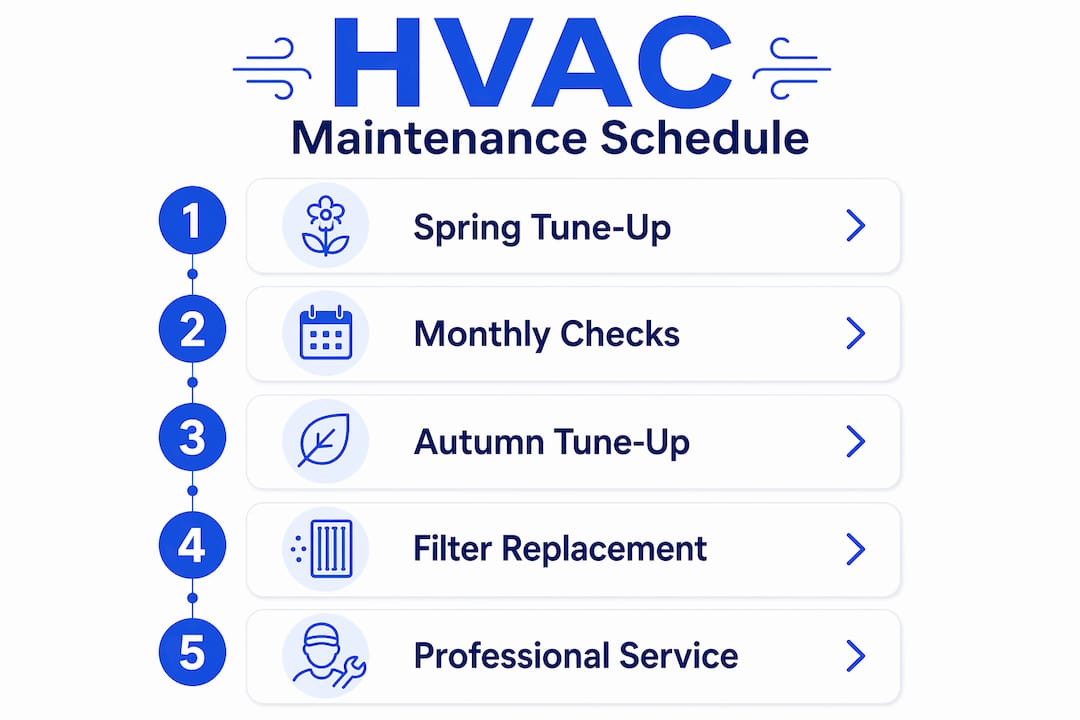
The two professional visits follow the seasons deliberately:
- Spring tune-up (september to october in Victoria): A technician prepares your cooling system before summer demand peaks. This includes checking refrigerant pressure, cleaning evaporator coils, testing electrical connections, and measuring amp draw. These are readings homeowners cannot safely take themselves.
- Autumn tune-up (march to april in Victoria): The focus shifts to heating. The technician inspects the heat exchanger, tests ignition, checks gas pressure, and verifies that safety controls function correctly before winter.
- Monthly filter check: Inspect your filter every month. Replace it when it looks grey and clogged, typically every 60–90 days for most households.
- Seasonal outdoor unit care: Before summer, clear at least 600mm of space around the outdoor condenser unit. Remove leaves, grass clippings, and any debris that has accumulated over winter.
- Vent and register inspection: Walk through the property each season and confirm that supply and return vents are open, unblocked by furniture, and free of visible dust build-up.
Professional tune-ups cost $75–$250 per visit, or $150–$300 combined annually when bundled under a maintenance agreement. Agreements typically include priority scheduling and discounted repair rates, which matters most when your system fails on a 38-degree day in february and every technician in the region is booked out.
Pro Tip: Book your spring and autumn tune-ups at least six weeks before the season starts. Technicians fill their schedules fast as temperatures shift, and early bookings often attract better rates.
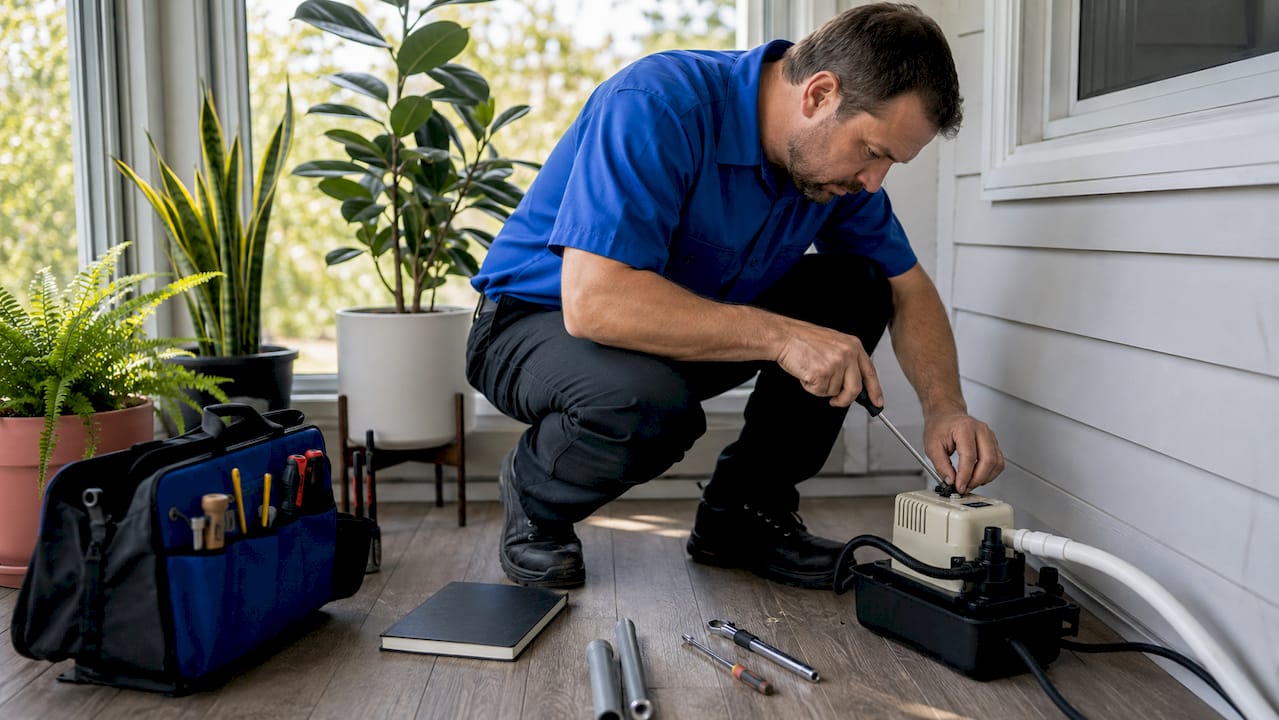
Why do manufacturers require bi-annual professional servicing?
Neglecting regular maintenance increases annual energy use by 5–20%. That figure represents real money on your electricity bill, not a theoretical risk. A system working harder to deliver the same output also wears components faster, compressing its usable life.
Major manufacturers including Carrier, Trane, Lennox, and Daikin require documented professional servicing to keep warranty coverage valid. This is not a suggestion buried in fine print. It is a condition. If a compressor fails and you cannot show a service record, the manufacturer can decline the claim. That compressor replacement can cost $1,500 or more out of pocket.
"The most overlooked warranty condition in residential HVAC is the requirement for documented professional maintenance. Homeowners assume the warranty covers everything automatically. It does not." — industry observation consistent with manufacturer documentation from Carrier, Trane, and Lennox.
Commercial standards like ANSI/ASHRAE/ACCA 180-2018 set twice-yearly professional servicing as the minimum baseline. Critical facilities such as aged care homes and data centres require monthly professional inspections. The residential standard mirrors the commercial baseline for good reason: the physics of coil fouling, refrigerant loss, and electrical degradation do not change based on whether the building is a house or an office.
Heat pumps carry an additional consideration. Because they operate year-round for both heating and cooling, they accumulate wear at roughly twice the rate of a single-purpose system. Bi-annual professional inspections are not optional for heat pumps. They are the minimum required to maintain reliability.
How do homeowners balance DIY upkeep with professional servicing?
Consistent homeowner maintenance prevents the vast majority of premature HVAC failures. The tasks within a homeowner's reach are straightforward and require no specialist tools or training.
Monthly and seasonal DIY tasks:
- Check the air filter monthly and replace it when visibly dirty
- Keep the outdoor condenser unit clear of vegetation, mulch, and debris
- Wipe supply and return vents with a damp cloth to remove dust build-up
- Check the condensate drain pan under the indoor unit for standing water
- Test your thermostat by cycling between heating and cooling modes each season
Where DIY stops:
- Refrigerant levels and pressure checks require a licensed technician
- Electrical component testing, including capacitor and contactor inspection, is not safe for homeowners
- Coil cleaning requires care. High-pressure sprayers damage delicate fins, reducing airflow and efficiency. Use a low-pressure garden hose or a purpose-made coil cleaner only.
Standing water in the condensate drain line triggers automatic safety shutdowns and requires mechanical clearing. This is a professional job. If you notice water pooling under the indoor unit or a musty smell from the vents, call a technician rather than attempting to clear the blockage yourself.
Pro Tip: Households with pets or allergy sufferers should change filters more frequently, up to 50% more often than the standard 90-day interval. That means checking every 45–60 days rather than quarterly.
How do maintenance schedules vary by property type and system?
The standard residential two-visit-per-year schedule suits most homes with a single ducted system. Property type, usage intensity, and system design all shift that baseline.
| Property or system type | Recommended service frequency | Key reason |
|---|---|---|
| Standard residential home | Two professional visits per year | Aligns with seasonal demand peaks |
| Residential with heat pump | Two professional visits per year (minimum) | Year-round operation doubles wear rate |
| Rental property or investment | Two visits per year plus tenant checks | Higher occupancy increases system load |
| Small commercial premises | Two visits per year per ANSI/ASHRAE/ACCA 180-2018 | Regulatory baseline for commercial use |
| Aged care or critical facility | Monthly professional inspections | Downtime risk is unacceptable |
| Homes with pets or allergies | Filter checks every 45–60 days | Increased particulate load clogs filters faster |
Property managers overseeing multiple tenancies should treat each system as independent. A unit occupied by a family with two dogs needs filter checks twice as often as a single-occupant unit. Evaporator coils in high-use properties also accumulate biological growth faster, which means annual coil cleaning may not be sufficient. Some property managers schedule coil inspections every six months in high-occupancy buildings.
Heat pumps need strict bi-annual servicing because they never get a seasonal rest period. A conventional split system used only for summer cooling sits idle for six months each year. A heat pump runs continuously. That continuous operation means refrigerant, electrical components, and moving parts all reach their wear thresholds sooner.
Key takeaways
An HVAC maintenance schedule built on two annual professional tune-ups and consistent monthly homeowner checks is the most reliable way to protect system performance, preserve warranty coverage, and reduce long-term running costs.
| Point | Details |
|---|---|
| Two professional visits per year | Schedule one in spring and one in autumn to align with peak seasonal demand. |
| Manufacturer warranty depends on it | Carrier, Trane, Lennox, and Daikin all require documented professional servicing to keep warranty valid. |
| Monthly filter checks are non-negotiable | Replace filters every 45–90 days depending on household conditions, including pets and allergies. |
| Heat pumps need strict servicing | Year-round operation doubles wear rate, making bi-annual professional inspections the minimum. |
| Know when to call a professional | Standing water, reduced airflow, or unusual sounds require a technician, not a DIY fix. |
What I have learned from years of HVAC maintenance calls
The single most common mistake I see is homeowners booking a professional tune-up once and then assuming the system is covered for years. It is not. A tune-up is a point-in-time assessment, not a long-term fix. Filters clog, coils foul, and drain lines block in the months between visits. The homeowner tasks between professional visits are what actually keep the system healthy day to day.
The second mistake is waiting until something goes wrong. By the time a system is making noise, losing airflow, or tripping the safety switch, the damage is usually already done. A compressor that fails in january could have been flagged in an autumn tune-up if the booking had been made. Condition-based maintenance approaches that use performance metrics to detect early faults are becoming more common, and they catch problems weeks earlier than fixed-schedule servicing alone. That technology is worth asking your technician about.
My honest recommendation is this: treat the spring and autumn tune-ups as fixed appointments in your calendar, the same way you treat a car service. Then do the monthly filter check without exception. Those two habits alone will prevent the majority of costly breakdowns. The cost of two professional visits per year is a fraction of one emergency call-out or one compressor replacement.
— Mike
Dualflowservices keeps your system running all year
Dualflowservices provides scheduled HVAC maintenance for homeowners and property managers across the Mornington Peninsula in Victoria. The team handles bi-annual tune-ups timed to the spring and autumn seasons, so your system is ready before summer heat and winter cold arrive.
Dualflowservices covers heating and cooling servicing alongside plumbing, electrical, and hot water, which means one trusted local provider handles the full picture for your property. Maintenance agreements include priority scheduling and repair discounts, which is exactly what you want when the peak season hits and wait times stretch out. Aged care facilities, retirement villages, and disability care homes are also serviced, with the reliability those environments require.
FAQ
How often should HVAC systems be professionally serviced?
Residential HVAC systems require two professional tune-ups per year, one in spring and one in autumn. Heat pumps follow the same minimum frequency due to their year-round operation.
What happens if I skip HVAC maintenance?
Skipping maintenance increases annual energy use by 5–20% and can void manufacturer warranties from brands like Carrier, Trane, and Lennox. It also raises the risk of unexpected system failures during peak seasons.
Can homeowners do their own HVAC maintenance?
Homeowners can safely change filters, clear debris from the outdoor unit, and check vents monthly. Refrigerant checks, electrical testing, and coil cleaning with pressure equipment require a licensed technician.
How often should I change my HVAC filter?
Most households should replace filters every 60–90 days. Homes with pets or allergy sufferers need filter changes every 45–60 days to prevent system strain.
What is the ANSI/ASHRAE/ACCA 180-2018 standard?
ANSI/ASHRAE/ACCA 180-2018 is the commercial HVAC maintenance standard that mandates a minimum of two professional service visits per year. Critical facilities such as aged care homes may require monthly inspections under this standard.