The three funding routes worth chasing for business energy efficiency upgrades in Australia are Victorian Energy Upgrades, Environmental Upgrade Agreements where your council participates, and federal or state grant rounds. Each cuts upfront cost through discounts, rebates or financed repayments. The first move is to book an energy audit or, for larger sites, a measurement and verification scope, then check the VEU Registry or your council's EUA status before you sign anything.
TL;DR:
- Choose Victorian Energy Upgrades for immediate rebates on lighting and refrigeration, with small businesses saving up to $500 annually and larger ones up to $74,000.
- Opt for Environmental Upgrade Agreements for large, capital-intensive projects with repayments tied to land, making transfers and sales easier to manage.
- Apply for energy efficiency grants before starting work, with funding rounds offering up to $25,000 and a minimum expenditure of $10,000 on audits, metering, or high-efficiency equipment.
- Prioritize projects with controls like sensors and VSDs, as ongoing savings heavily depend on intelligent energy management rather than just equipment upgrades.
- Coordinate upgrades through a single, accredited trades team to streamline the assessment, installation, and certification process, ensuring eligibility and maximizing savings.
Table of Contents
- What funding and incentive routes are available in Australia?
- Which upgrades qualify and what actually saves the most energy?
- How do you actually access the funding and get the work done?
- How do you choose a contractor who protects your eligibility?
- How would a trades team coordinate an upgrade in practice?
- Treat upgrades as a programme, not a one-off
- Get your upgrade started with a local audit
- FAQ
- Sources
What funding and incentive routes are available in Australia?
Victorian businesses have the clearest path through Victorian Energy Upgrades, a program that covers commercial lighting, space heating and cooling, water heating and refrigeration. Small businesses can save up to $500 a year, while larger operations can save up to $74,000 annually through approved upgrades under VEU. The discount is applied upfront by an accredited provider, so you are not waiting on a reimbursement.

Environmental Upgrade Agreements work differently. An EUA is a three-way contract between a building owner, a finance provider and a participating council, and repayments are collected through council rates rather than a standard loan. Because the charge sits with the land rather than the owner, a sale or transfer does not cancel it, which tends to make lenders more comfortable with the terms.
Federal and state grants fill a third gap. The Energy Efficiency Grants for SMEs Round 2 offers up to $25,000 per project, with a minimum eligible expenditure commonly set at $10,000. Eligible activities include energy audits, metering equipment and the purchase and installation of higher-efficiency equipment.
Picking the right route comes down to project size and timing:
- Choose VEU when you are replacing standard equipment like lighting or refrigeration and want an immediate price reduction.
- Choose an EUA when the project is large, capital-intensive and better suited to financing tied to the building rather than your balance sheet.
- Choose a grant round when you have a defined, smaller project and can move within the funding window, since these rounds are time-limited and demand-driven.
Which upgrades qualify and what actually saves the most energy?
Programs tend to fund a consistent set of measures. The prescriptive activities most commonly supported are:
- LED lighting replacements across offices, warehouses and common areas.
- Efficient refrigeration units in hospitality, retail and food service settings.
- Heat-pump water heaters and, following recent VEU updates, induction cooktops, including efficient solutions like tile floor heating.
- Approved HVAC units that meet program efficiency thresholds.
Beyond swapping equipment, controls are where a lot of the ongoing saving happens. Variable speed drives on motors, building management system tuning, occupancy sensors and submetering let you see where energy is actually going, rather than guessing. Commercial air conditioning servicing that includes control tuning often finds savings that a straight unit swap misses.
For larger or more complex sites, prescriptive rebates are not always the best fit. Project-based activities under VEU use Measurement & Verification or NABERS Benchmark Rating to calculate custom, site-specific savings, and this approach often produces a better incentive outcome than a standard rebate because it rewards measured performance rather than a generic assumption.

Pro Tip: Include metering and a clear baseline in your project scope from day one. An M&V plan aligned to AS/NZS practice heads off disputes about how much energy you actually saved.
A small business swapping lighting and refrigeration might land in the hundreds of dollars a year in savings, while a larger facility running a project-based upgrade can reach savings of up to $74,000 annually under VEU, depending on the scale of equipment involved.
How do you actually access the funding and get the work done?
The sequence matters more than most business owners expect, because starting work before an agreement is signed can disqualify a grant claim entirely.
- Commission an energy audit under AS/NZS 3598, or an M&V scoping exercise for larger projects before you approach any program.
- For VEU, confirm your installer is listed on the VEU Registry of Accredited Persons or works under an accredited provider.
- For an EUA, find a participating finance provider and confirm your council is enrolled, since not every council offers the scheme.
- For grants, check Business for open rounds, confirm the minimum eligible expenditure, and apply before starting work.
- Install, then verify savings through metering or NABERS benchmarking to close out the program paperwork.
Each route handles cash flow differently, which affects how you budget the project.
| Route | When funds arrive | Who holds the paperwork |
|---|---|---|
| VEU | Upfront discount at point of sale | Accredited provider |
| EUA | Financed upfront, repaid via council rates | Finance provider and council |
| SME grant | Reimbursed after completion | Business, with grant body |
How do you choose a contractor who protects your eligibility?
A few checks before signing anyone up will save you grief later.
- Confirm VEU accreditation directly, or confirm the installer works under an accredited provider, and ask for licence and insurance evidence alongside any program-relevant warranty.
- For large projects, ask whether the contractor has handled Measurement & Verification work or is familiar with NABERS, and request a short M&V plan outline before work starts.
- Clarify who lodges the program paperwork and who ends up holding the resulting certificates, since this affects who can legally claim the incentive.
Pro Tip: Treat any installer who wants to start before paperwork is signed as a red flag. A properly accredited provider will never ask you to begin early, because doing so can void the claim.
How would a trades team coordinate an upgrade in practice?
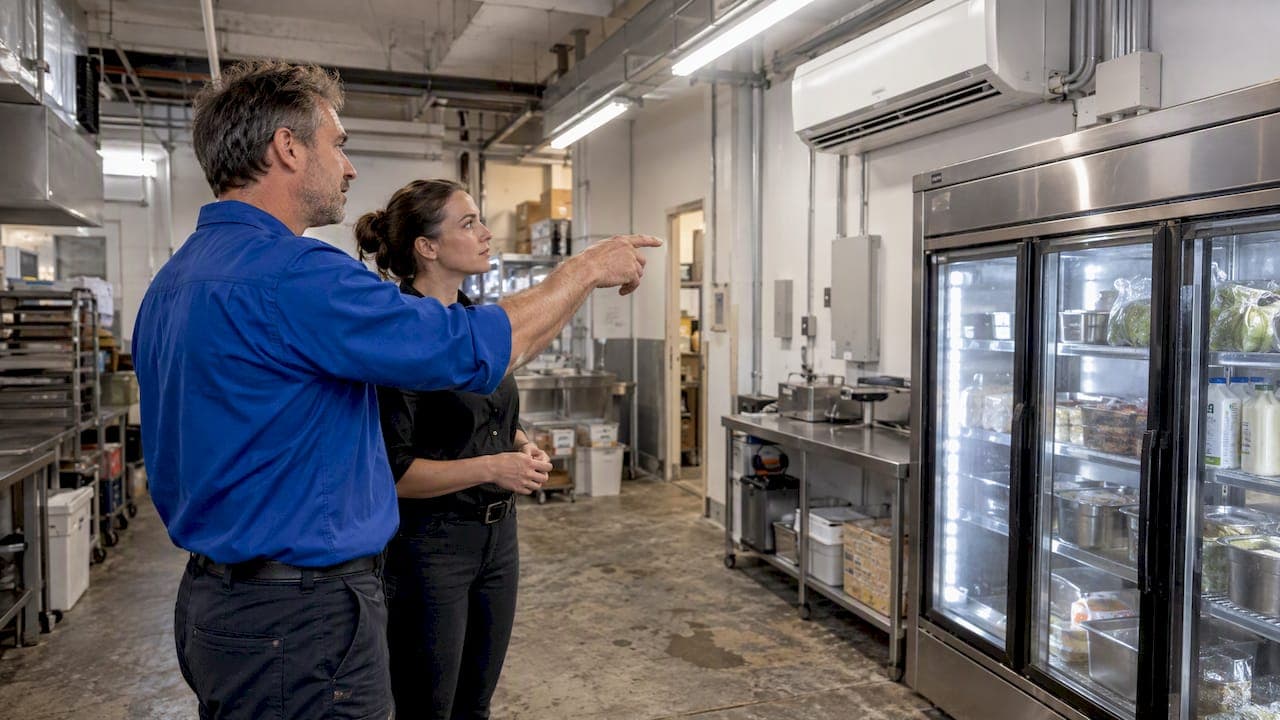
A typical sequence starts with a site walk and energy audit, then a scope of works referencing the relevant AS/NZS standards. From there, the next step is liaising with a VEU accredited provider to lock in the discount before ordering equipment, followed by scheduling plumbing, electrical and HVAC trades to install and certify the work. Combined trades under one provider, as we offer across the Mornington Peninsula, cuts the coordination that otherwise falls to a facility manager juggling three separate contractors. Electrical inspections and, where relevant, AS 1851 maintenance checks sit alongside the installation. Larger or more complex sites, such as disability care facilities with specific ventilation needs, are often better suited to project-based M&V or NABERS benchmarking rather than a prescriptive rebate.

Treat upgrades as a programme, not a one-off
Businesses that get the most out of these programs treat upgrades as an ongoing budget line, not a single project. Staging replacements into existing maintenance cycles means you are never paying full price for everything at once, and a small funded measure, like a lighting retrofit, can build the case and the cash flow for a bigger project later. Accredited providers and a proper M&V plan matter less for the paperwork and more because they are what actually locks in the saving over time. Skip that discipline and you end up with equipment that looks efficient on paper but drifts back toward old consumption patterns within a couple of years.
— Mike
Get your upgrade started with a local audit
We coordinate plumbing, electrical and heating and cooling trades together under one booking to reduce handovers and delays when arranging a VEU accredited provider or lodging a grant application. Our team can scope the audit, coordinate the accredited provider paperwork, and carry out installation and compliance checks.
- Book an energy audit or phone consultation to establish your baseline.
- Get a scope of works that lines up with VEU or grant eligibility requirements.
- Have plumbing, electrical and HVAC work delivered and certified by one team.
Start by visiting our services page to arrange an audit or discuss your upgrade.
FAQ
What is the Victorian Energy Upgrades program?
Victorian Energy Upgrades is a state scheme that gives eligible businesses upfront discounts on energy-efficient equipment such as lighting, refrigeration, heating and cooling. Savings range up to $500 a year for small businesses and up to $74,000 a year for larger businesses, according to Victorian Energy Upgrades.
How do Environmental Upgrade Agreements work?
An Environmental Upgrade Agreement is a three-way arrangement between a building owner, a finance provider and a participating council, where repayments are collected through council rates rather than a conventional business loan. Because the charge is tied to the land, selling the building does not cancel the repayment obligation.
How much can an SME grant cover for energy efficiency projects?
The Energy Efficiency Grants for SMEs Round 2 provides up to $25,000 per eligible project, with a minimum eligible expenditure commonly set at $10,000. Eligible costs include audits, metering and higher-efficiency equipment.
What is the difference between a prescriptive rebate and a project-based incentive?
A prescriptive rebate applies a set discount to standard equipment like LED lighting, while a project-based incentive uses Measurement & Verification or NABERS benchmarking to calculate custom savings for larger or more complex sites. Larger facilities often get a better outcome from the project-based route because it rewards measured performance under VEU's industry project-based activities.
Who can help coordinate an energy efficiency upgrade and the paperwork involved?
A trades team that handles plumbing, electrical and HVAC work together can manage the audit, scope and installation while liaising with a VEU accredited provider on your behalf. This reduces the coordination load for facility managers juggling multiple contractors and program requirements.