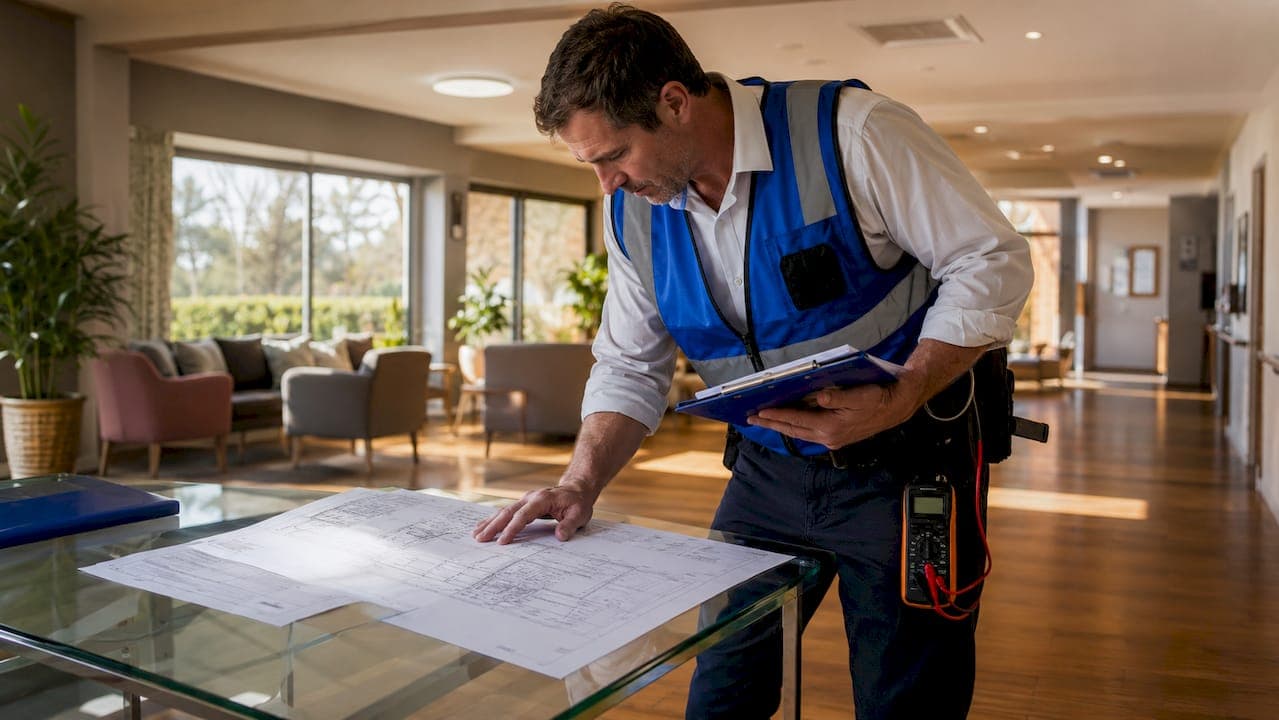
Upgrading an ageing electrical care facility means replacing outdated wiring, switchboards, and low-voltage systems to meet current safety standards and protect residents from electrical hazards. The process, formally known as electrical infrastructure retrofitting, covers everything from arc flash analysis and temporary power planning to installing Category 6A cabling and GFCI/AFCI protection. For aged care operators in Victoria, getting this right is not optional. Residents depend on uninterrupted power for nurse call systems, monitoring equipment, and climate control. A structured, risk-based approach is the only way to modernise these systems without putting residents or staff at risk.
What prerequisites are essential before upgrading an aged care facility?
A thorough electrical audit is the starting point for any facility upgrade. Proactive audits before formal inspections reduce last-minute emergency repairs by verifying GFCI and AFCI protection and identifying moisture risks early. Catching these issues before a regulator does gives you time to plan repairs properly rather than scrambling under pressure.
Power studies are equally non-negotiable. Arc flash analyses provide actionable data for safer maintenance and expose hazards buried in legacy infrastructure. This data tells your electricians exactly what personal protective equipment is required and where the highest-risk work zones are located.
One of the most underestimated problems in older facilities is missing documentation. Without accurate as-built electrical room documentation, maintenance risks causing accidental outages increase significantly. Before any works begin, commission a full site survey to map every circuit, switchboard, and distribution board.
Preparation steps that facility managers must complete before works begin:
- Conduct a full electrical audit covering all switchboards, wiring, and outlets
- Commission a power study including arc flash analysis
- Verify GFCI and AFCI protection across all wet areas and patient zones
- Survey and document all existing electrical infrastructure to create accurate as-built records
- Plan temporary power arrangements to maintain uptime during works
- Confirm compliance with Victorian Electricity Safety Act requirements and AS/NZS 3000 wiring rules
Pro Tip: Schedule your electrical audit at least three months before any planned upgrade works. This gives you time to source replacement parts for obsolete equipment, which can take weeks to procure.
Which components should be prioritised when modernising care facility wiring?
Not every system fails at the same rate or carries the same risk. The right approach is to prioritise life-safety and critical systems first, then work outward to general infrastructure. A risk-based phased upgrade that targets life-safety and critical systems first reduces downtime and prevents cascading failures across the facility.
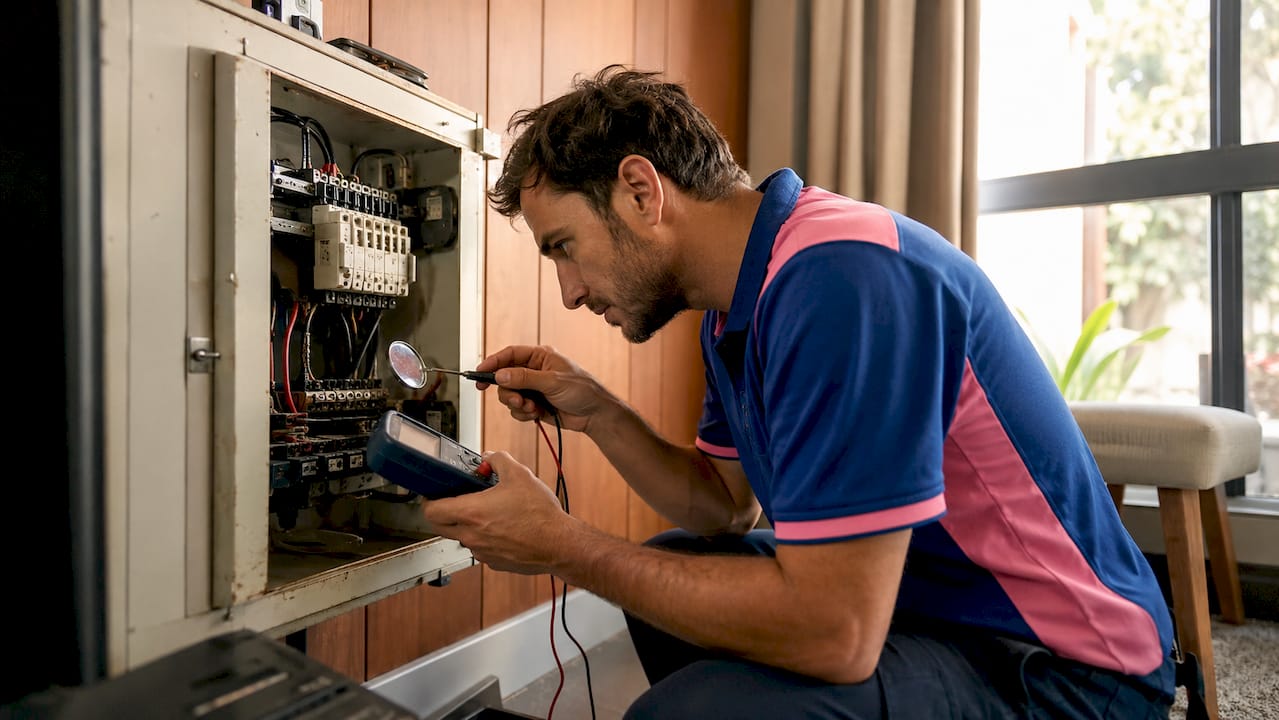
Switchboards and transformers are the highest priority. Aged care facilities built 50–70 years ago frequently contain obsolete switchgear with no available replacement parts, requiring bespoke retrofit solutions from specialist contractors. Burnt cables, corroded connections, and undersized conductors are common findings in these panels and all represent fire risks.
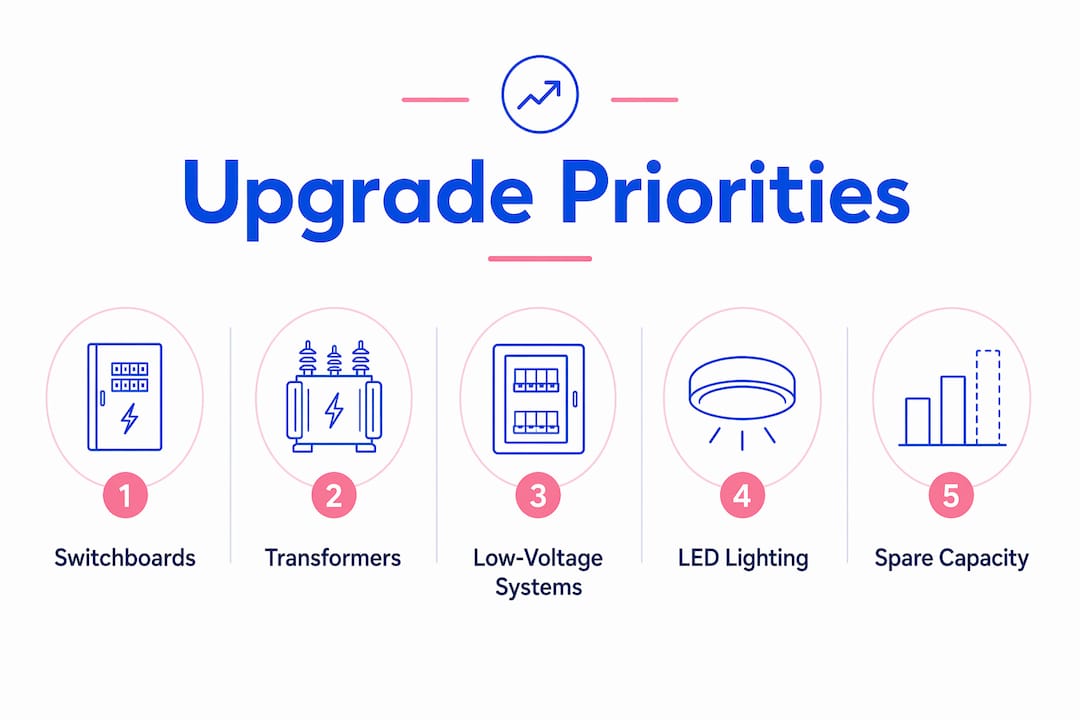
Low-voltage systems are the next priority. Medical and assisted living facilities require 99.999% uptime for critical care systems, and Category 6A structured cabling is the current standard for nurse call and monitoring networks. This level of reliability is not achievable on ageing Cat 5e or coaxial infrastructure.
| System | Upgrade priority | Key benefit |
|---|---|---|
| Switchboards and transformers | Critical, first phase | Eliminates fire risk and obsolete equipment |
| GFCI and AFCI protection | Critical, first phase | Reduces electrical shock and arc fault hazards |
| Nurse call and monitoring cabling | High, second phase | Achieves 99.999% uptime on Category 6A |
| General wiring and conduit | Medium, third phase | Removes burnt cables and undersized conductors |
| LED lighting with blue-light filters | Lower, fourth phase | Supports resident sleep and wellbeing |
Energy-efficient LED lighting deserves a mention beyond the obvious cost savings. Lighting systems fitted with blue-light filters reduce sleep disruption for residents, which is a genuine clinical benefit in aged care settings. This upgrade is low-risk and can often be completed in parallel with higher-priority works.
Pro Tip: When upgrading low-voltage cabling, always install spare conduit capacity. Designing systems with spare capacity and physical network separation is critical to accommodate emerging clinical technologies without future disruption.
How can facilities perform upgrades without disrupting resident care?
Uninterrupted power is the central constraint of every aged care electrical upgrade. The good news is that major electrical infrastructure replacements can be completed within four months without disrupting patient care, using temporary power and coordinated overnight shutdowns. That timeline is achievable in Victorian facilities with the right planning.
The sequence that works in practice:
- Bring in external temporary power before any mains work begins. Mobile generator changeover systems bypass the mains supply and prevent outages during switchboard or transformer replacement.
- Schedule critical connection works as overnight shutdowns. Coordinating these windows with nursing staff means residents are asleep, monitoring loads are lower, and the risk of disruption to care routines is minimal.
- Implement works in phases, completing and commissioning each zone before moving to the next. This limits the footprint of any single outage window.
- Align the works schedule with infection control protocols. Electrical contractors working in clinical areas must follow the same hygiene and access rules as any other tradesperson entering resident spaces.
- Brief care staff before each works phase. Staff need to know which circuits will be affected, where temporary power is sourced from, and what the escalation path is if something goes wrong.
"Scheduling major electrical replacements with temporary power and overnight shutdowns minimises disruption and preserves critical medical functions." — Overlook Medical Center electrical infrastructure project
Temporary generator changeover systems maintain power uptime during capacity upgrades or switchboard replacements. This is not a luxury. For a facility running ventilators, infusion pumps, or powered beds, a mains outage without a backup plan is a clinical emergency.
What are common challenges when upgrading an ageing electrical care facility?
Obsolete equipment is the most consistent problem. Facilities built in the 1960s and 1970s contain switchgear from manufacturers that no longer exist. Replacement parts are discontinued, and the only path forward is a custom retrofit. This takes longer and costs more than a standard swap, so budget and timeline planning must account for it.
Missing documentation compounds every other problem. When no accurate wiring diagrams exist, electricians must trace circuits manually before any work can begin. This adds time and introduces risk. A single mislabelled circuit in an undocumented panel can cause an unplanned outage to a critical care zone.
Common challenges and how to address them:
- Obsolete switchgear: Engage a contractor with experience in bespoke retrofit solutions before committing to a timeline. Standard lead times do not apply.
- Missing as-built documentation: Commission a full site survey as the first task. Do not start any upgrade works until circuits are mapped and labelled.
- Moisture-related risks: Electrical panels in laundry, kitchen, and bathroom-adjacent areas frequently show moisture ingress. Inspect and seal these before upgrading the panels themselves.
- Burnt or degraded wiring: Burnt cables are a fire hazard and must be replaced immediately. Do not defer this finding to a later phase.
- Infection control conflicts: Coordinate with the facility manager to schedule works in unoccupied rooms or during low-census periods where possible.
Pro Tip: Never rely on a facility's existing circuit labelling. Labels applied decades ago are frequently wrong or missing entirely. Verify every circuit with a clamp meter before assuming the panel schedule is accurate.
Key takeaways
Upgrading an aged care facility's electrical infrastructure requires a phased, risk-based plan that prioritises life-safety systems first and uses temporary power to protect residents throughout the works.
| Point | Details |
|---|---|
| Audit before anything else | Commission a full electrical audit and power study before planning any upgrade works. |
| Prioritise life-safety systems | Replace switchboards, GFCI/AFCI protection, and nurse call cabling in the first phase. |
| Use temporary power | Mobile generator changeover systems prevent outages during switchboard and transformer replacement. |
| Document every circuit | Accurate as-built records reduce maintenance risk and prevent accidental outages. |
| Future-proof low-voltage cabling | Install Category 6A cabling with spare conduit capacity to support emerging clinical technologies. |
What I have learned from electrical upgrades in Victorian aged care
Working on electrical upgrades in aged care facilities across Victoria, the single biggest mistake I see is treating the project like a standard commercial refurbishment. It is not. The moment you cut power to the wrong circuit, you have a clinical incident, not just an inconvenience.
The facilities that handle upgrades well share one habit: they start with a detailed power study and treat the findings as a project brief, not a compliance checkbox. When you know exactly where your arc flash hazards are and which circuits feed critical care equipment, every subsequent decision becomes easier. You know what to phase first, what needs temporary bypass, and where you cannot afford to take shortcuts.
The other thing I would push back on is the assumption that older facilities are simply "too hard" to upgrade without major disruption. The evidence says otherwise. A structured approach with temporary power and overnight shutdowns can deliver a complete infrastructure replacement in four months without a single unplanned outage affecting residents. That outcome is achievable. It just requires planning that starts months before the first cable is pulled.
Future-proofing is worth the extra investment. Low-voltage cabling installed today needs to carry clinical data systems that do not yet exist. Installing Category 6A with physical separation between clinical and general data networks costs relatively little at the time of upgrade. Retrofitting it later, through occupied wards, costs a great deal more.
— Mike
Electrical upgrades for aged care facilities in Victoria
Aged care operators in Victoria need an electrical contractor who understands both the technical requirements and the care environment. Dualflowservices works with aged care facilities, retirement villages, and disability care homes across the Mornington Peninsula, providing scheduled maintenance, emergency call-out, and full electrical upgrade projects.

From temporary power planning and switchboard replacement to Category 6A cabling and LED lighting upgrades, Dualflowservices delivers works that meet AS/NZS 3000 standards without disrupting resident care. The team coordinates directly with facility managers and care staff to schedule works around resident routines and infection control requirements. Contact Dualflowservices to arrange a site assessment and receive a tailored upgrade plan for your facility.
FAQ
What does upgrading an aged care facility's electrical system involve?
Upgrading an aged care facility's electrical system covers replacing switchboards, wiring, GFCI and AFCI protection, and low-voltage cabling such as nurse call and monitoring networks. The process also includes power studies, arc flash analysis, and temporary power planning to maintain resident safety throughout the works.
How long does a full electrical infrastructure upgrade take in a care facility?
Major electrical infrastructure replacements can be completed within four months without disrupting patient care, using temporary power and coordinated overnight shutdowns. The timeline depends on facility size, the condition of existing infrastructure, and the availability of replacement parts for obsolete equipment.
What is Category 6A cabling and why does it matter in aged care?
Category 6A is a structured cabling standard that supports the high-reliability data transmission required for nurse call systems and patient monitoring networks. Aged care facilities require 99.999% uptime on these systems, and Category 6A cabling is the current standard to achieve that level of reliability.
How do you prevent power outages during a switchboard replacement?
Temporary generator changeover systems bypass the mains supply and maintain power to critical circuits during switchboard or transformer replacement. Overnight shutdown windows are coordinated with nursing staff to minimise the impact on resident care routines.
Why is missing electrical documentation a problem in older care facilities?
Without accurate as-built wiring diagrams, electricians must trace circuits manually before any upgrade work can begin. This increases the risk of accidental outages to critical care zones and adds significant time and cost to the project.