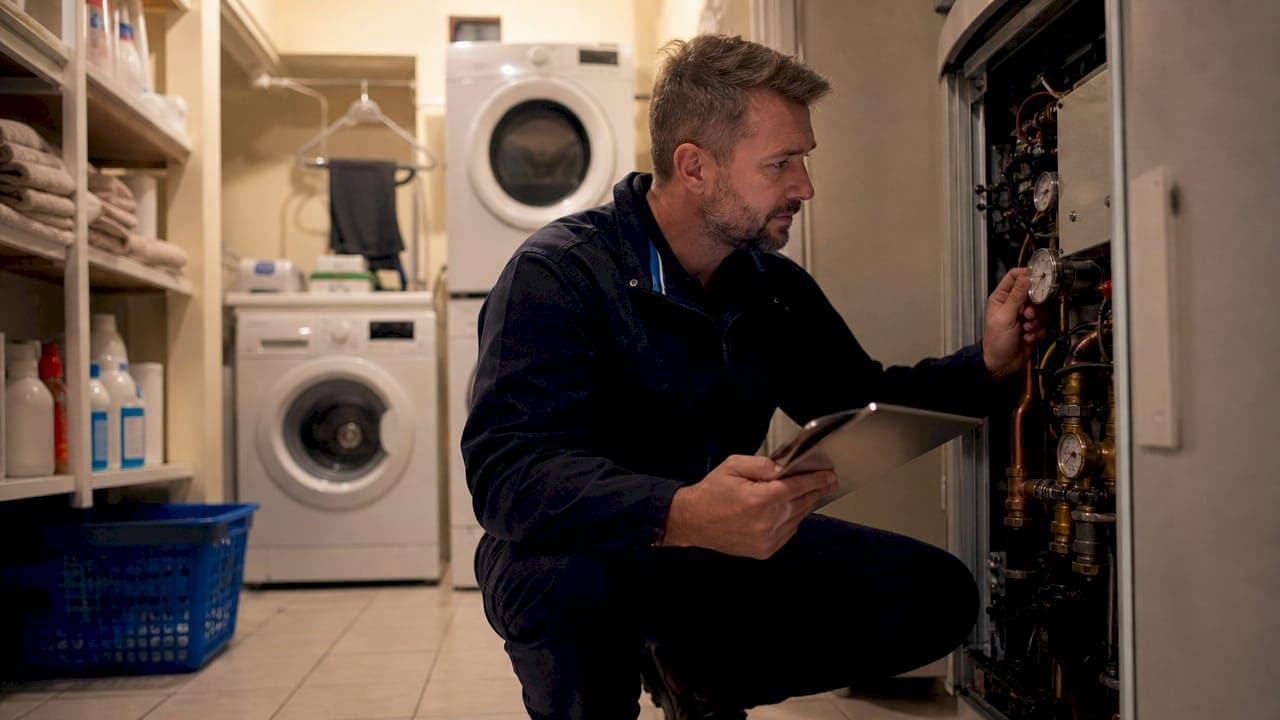
Winterising a care home heating system means preparing every component, from boilers and pipework to thermostats and hot water cylinders, to operate safely and reliably through the colder months. For facility managers in Victoria, this is not optional maintenance. Regulatory standards under frameworks like the Aged Care Quality and Safety Standards mandate stable indoor temperatures and safe hot water delivery for vulnerable residents. A heating failure in a care home is a clinical risk, not just a comfort issue. Getting ahead of winter before june arrives is the difference between a smooth season and an emergency call-out at 2:00 AM.
How to winterise a care home heating system: prerequisites and tools
The first step is a commercial-grade audit, not a quick visual check. Boilers should be serviced by a licensed technician before 1 November each year. That deadline matters because heating demand spikes quickly in Victoria's shoulder season, and any fault found in october is far cheaper to fix than one discovered mid-winter.
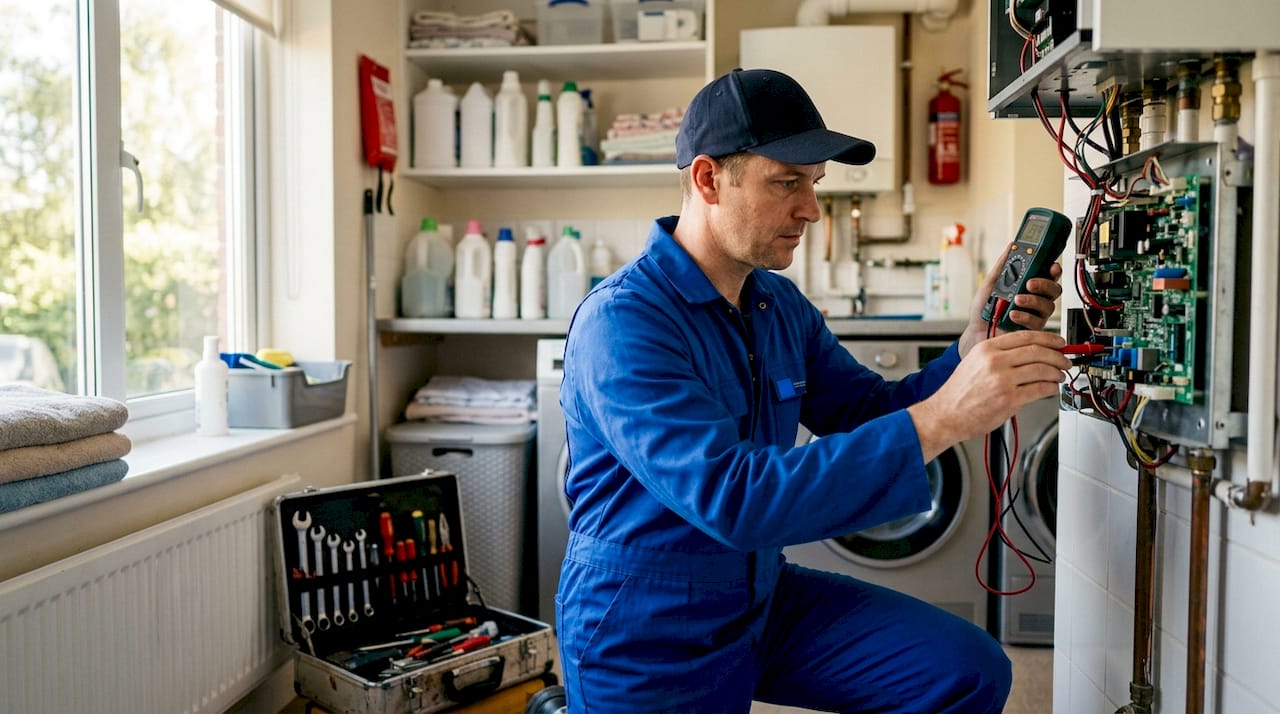
Before any technician arrives, gather your compliance documentation. Gas Safe certification, commissioning reports, and records of previous maintenance are all required for compliance inspections. Lack of documentation is one of the most common audit failure points for care home heating systems. A well-organised compliance folder saves hours during a CQC-style inspection.
The tools and materials your team needs on hand before winter include:
- Calibrated temperature monitors to verify room and water temperatures against regulatory minimums
- Thermostat calibrators to confirm controls are reading and responding accurately
- CO detector testers to verify carbon monoxide alarms are functioning before heating season begins
- Pipe insulation materials (foam lagging and heat tape) for exposed pipework in unheated spaces
- Pressure gauges to check system pressure across the heating circuit
Pro Tip: Schedule your pre-winter audit in august or september. Contractors are fully booked by october, and parts for older commercial boilers can take two to three weeks to source.
| Preparation task | Why it matters |
|---|---|
| Licensed boiler service | Identifies faults before peak demand |
| Compliance documentation review | Prevents audit failures and regulatory penalties |
| CO detector testing | Protects residents from carbon monoxide exposure |
| Pipe insulation inspection | Prevents burst pipes and heat loss in cold zones |
| Thermostat calibration check | Confirms accurate temperature control for resident safety |
What does a winter heating maintenance checklist look like for care homes?
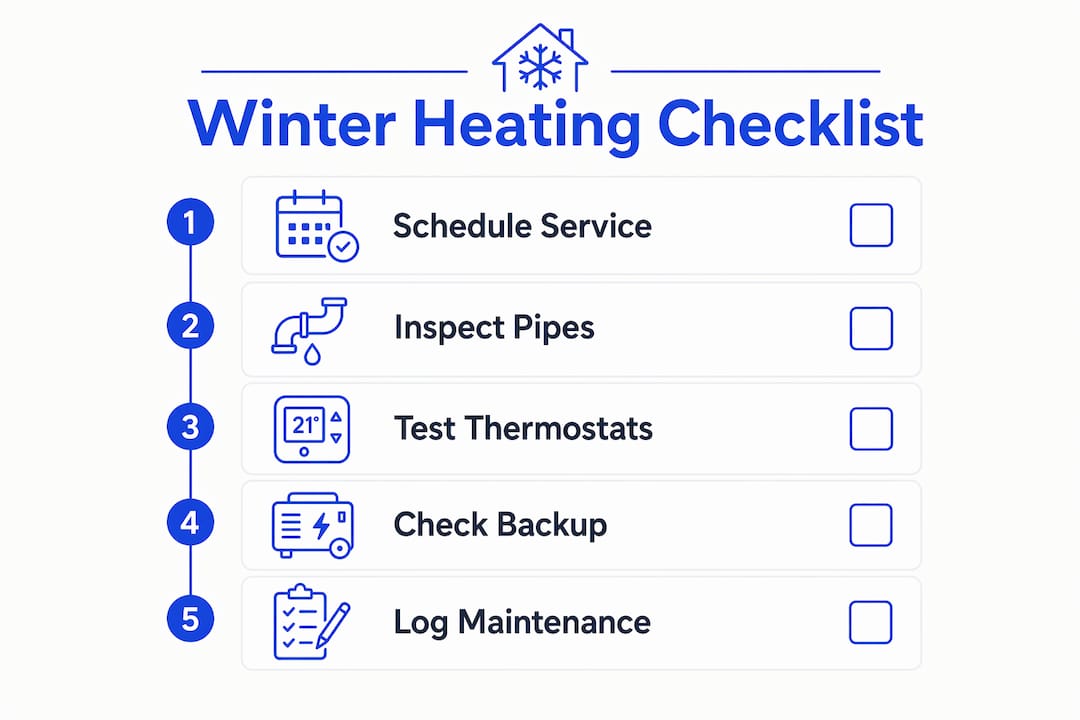
A structured checklist turns seasonal maintenance from a vague intention into a documented process. The following steps reflect industry best practice for commercial care settings in 2026.
-
Service boilers and heating controls before 1 November. A licensed technician should inspect heat exchangers, burners, flue integrity, and all safety controls. Annual professional inspections catch issues that routine monitoring misses.
-
Replace air filters every 30–60 days. Commercial filter replacement in care settings runs on a shorter cycle than standard commercial buildings because of higher occupancy and airborne contaminants. A blocked filter forces the system to work harder and reduces air quality for residents.
-
Calibrate all thermostats. A thermostat reading 2°C low means residents are sitting in rooms colder than the displayed temperature. Check calibration against a reference thermometer in each zone.
-
Inspect heat exchangers and flues for cracks or blockages. A cracked heat exchanger is a carbon monoxide risk. Flue blockages from bird nests or debris are common after summer. Both require immediate rectification before the system runs at full load.
-
Verify pipework insulation integrity and system pressure. Check all exposed pipes in plant rooms, roof spaces, and external walls. Confirm system pressure sits within the manufacturer's specified range. Low pressure causes uneven heat distribution across the building.
-
Conduct monthly sentinel outlet and storage cylinder temperature checks. Regulatory standards require monthly checks of sentinel outlet temperatures and storage cylinder temperatures, along with mandatory Type 3 thermostatic mixing valves to prevent scalding. These checks are not optional. They form part of your Legionella control programme.
-
Test all zone controls and time clocks. Confirm that heating zones activate correctly and that time schedules reflect current occupancy patterns. A zone that fails to activate overnight puts sleeping residents at risk.
Pro Tip: Log every maintenance task with a date, technician name, and outcome. A digital log accessible to your facility manager and maintenance contractor removes ambiguity during compliance reviews.
What types of backup heating systems suit care homes?
Single large boilers are the most common failure point in care home heating. When one unit fails, the entire building loses heat. Modular heating systems address this directly by using multiple smaller units. If one unit goes offline, the remaining units continue to supply heat. That redundancy is critical in a care setting where residents cannot simply put on an extra jumper and wait.
The main backup and upgrade options for Victorian care homes include:
- Modular boiler systems: Two or more smaller boilers operating in sequence. One unit failing does not interrupt heat supply. Modularity in plant rooms also allows maintenance on one unit while others continue running.
- Hybrid heat pump and solar thermal systems: Heat pumps paired with solar thermal achieve sustainable operation while maintaining the 60°C water flow temperature required for Legionella prevention. Heat pumps alone struggle to reach these temperatures efficiently, so the combination is the preferred approach for care settings.
- Electric portable space heaters as temporary backup: Safe portable heaters for care homes must have no exposed heating elements to reduce fire risk. They are a short-term measure only, not a replacement for a functioning central system.
- Building Management System (BMS) integration: A BMS enables early detection of heating issues before residents are affected. Real-time monitoring of boiler performance, zone temperatures, and water temperatures gives facility managers a live view of system health.
When planning upgrades, phase the work. Phased heating upgrades allow sections of the system to be isolated and replaced without a full shutdown. Residents stay warm throughout the works. This requires a contractor who understands care home operations, not just heating plant.
| System type | Best use case |
|---|---|
| Modular boiler system | Primary heating with built-in redundancy |
| Hybrid heat pump and solar thermal | Sustainable base load with Legionella-safe hot water |
| Electric portable heaters | Short-term emergency backup only |
| BMS integration | Ongoing monitoring and early fault detection |
How can insulation improvements complement heating system winterisation?
Insulation is the most underused tool in care home energy management. Improving building insulation and sealing draughts can reduce heating demand by up to 45%. That reduction means your heating system runs less, lasts longer, and costs less to operate.
The practical steps for improving thermal performance in a care home include:
- Seal draughts at windows, doors, and ventilation points. Cold air infiltration is the fastest way to lose heat. Draught-proofing strips on external doors and secondary glazing film on older windows deliver immediate results at low cost.
- Insulate hot water pipes and cylinders. Uninsulated pipes in plant rooms and roof spaces lose heat continuously. Foam lagging on pipes and a cylinder jacket on the hot water storage tank reduce standing heat loss.
- Add floor coverings in resident rooms. Tiled and hardwood floors in resident rooms feel cold underfoot and radiate heat away from the space. Rugs and carpet tiles improve perceived warmth without touching the heating system.
- Check ceiling and wall insulation in older buildings. Many Victorian-era care homes have minimal ceiling insulation. Adding bulk insulation to the ceiling space is one of the highest-return improvements available.
Improved insulation also reduces the load on your heating system during peak cold periods. A system running at 60% capacity lasts significantly longer than one running flat out every night. The two investments, insulation and heating maintenance, work together rather than independently.
What contingency plans should care homes have for heating failures?
Every care home needs a written emergency heating plan before winter begins. A verbal understanding between staff is not sufficient. The plan must cover what happens when the heating system fails, when power goes out, and when a CO alarm activates.
Key elements of a practical contingency plan include:
- Emergency protocols for power outages. Identify which heating equipment has battery backup or generator support. Know which zones lose heat first and which resident rooms are most vulnerable.
- Regular CO detector testing. Carbon monoxide alarms must be tested before heating season and checked monthly. A faulty CO detector in a care home is a life-safety failure.
- Safe temporary heating units on standby. Emergency contingencies should include safe electric portable heaters with no exposed heating elements. Store them in a known location with power leads tested and ready.
- Staff training on emergency response. Every staff member on shift should know the first three steps when heating fails: who to call, where the temporary heaters are stored, and which residents need immediate relocation to warmer areas.
Planning for winterisation must go beyond equipment. Staff training and emergency response preparation are what protect residents when systems fail. A well-maintained boiler and a trained team are both non-negotiable.
Document the contingency plan and review it annually. A plan written in 2023 and never updated does not account for new residents, new staff, or changes to the building layout.
Key takeaways
Winterising a care home heating system requires licensed servicing before 1 November, modular or hybrid backup systems, documented compliance records, and a tested emergency plan.
| Point | Details |
|---|---|
| Service before 1 November | Book a licensed technician in august or september before contractors are fully booked. |
| Replace filters every 30–60 days | Higher occupancy in care settings demands shorter filter replacement cycles than standard commercial buildings. |
| Use modular or hybrid systems | Multiple smaller units or heat pump and solar thermal combinations prevent total system failure. |
| Seal draughts and insulate | Improving building insulation can cut heating demand by up to 45%, reducing system load. |
| Document everything | Gas Safe certification, maintenance logs, and commissioning reports are required for compliance inspections. |
What I've learned from care home heating that most guides won't tell you
The most common mistake I see facility managers make is replacing an ageing boiler on a like-for-like basis. The old 300kW boiler fails, so they order another 300kW boiler. Nobody stops to ask whether the building actually needs 300kW anymore. Insulation improvements, zone changes, and reduced occupancy in some wings often mean the actual heating load is significantly lower. Assessing actual heating load demands before specifying a replacement saves money on the unit, on running costs, and on maintenance for the life of the system.
The second thing I'd push back on is the idea that backup heating is a luxury. In a care home, it is a clinical necessity. A modular system costs more upfront than a single large boiler. But the cost of a full heating failure, including emergency call-outs, temporary heaters, staff overtime, and the risk to residents, far exceeds the price difference. The maths are not close.
Finally, phased upgrade works are worth the extra planning effort. I have seen facilities try to replace an entire heating system over a long weekend. It never goes smoothly. Contractors who understand care home operations will sequence the work so that residents are never without heat. That expertise is worth paying for.
— Mike
Dualflowservices: heating support for Victorian care homes
Care home heating systems carry a level of responsibility that standard commercial maintenance does not. Dualflowservices works directly with aged care facilities, retirement villages, and disability care homes across the Mornington Peninsula and greater Victoria, providing scheduled maintenance, emergency call-outs, and full system installations.
Whether you need a pre-winter boiler service, a compliance audit, or advice on upgrading to a modular or hybrid system, Dualflowservices brings the licensed expertise your facility needs. The team handles heating and hot water services across plumbing, electrical, and HVAC, so you deal with one contractor rather than three. Contact Dualflowservices before the winter season to book your care home heating assessment.
FAQ
When should a care home service its boiler for winter?
Boilers in care homes should be serviced by a licensed technician before 1 November each year. Booking in august or september avoids the peak demand period when contractors are fully committed.
What is the minimum water temperature for Legionella prevention in care homes?
Hot water storage cylinders must maintain a minimum of 60°C to prevent Legionella growth. Monthly sentinel outlet and storage cylinder temperature checks are required under regulatory standards.
What backup heating is safe to use in a care home?
Safe temporary backup heating for care homes uses electric portable heaters with no exposed heating elements. These reduce fire risk and are suitable for short-term use while the primary system is restored.
How much can insulation reduce heating costs in a care home?
Improving building insulation and sealing draughts can reduce heating demand by up to 45%. This directly lowers running costs and reduces the load on the heating system during peak winter periods.
What documentation is required for a care home heating compliance inspection?
Compliance inspections require Gas Safe certification, commissioning reports, and a documented maintenance log. Missing documentation is one of the most common audit failure points for care home heating systems.