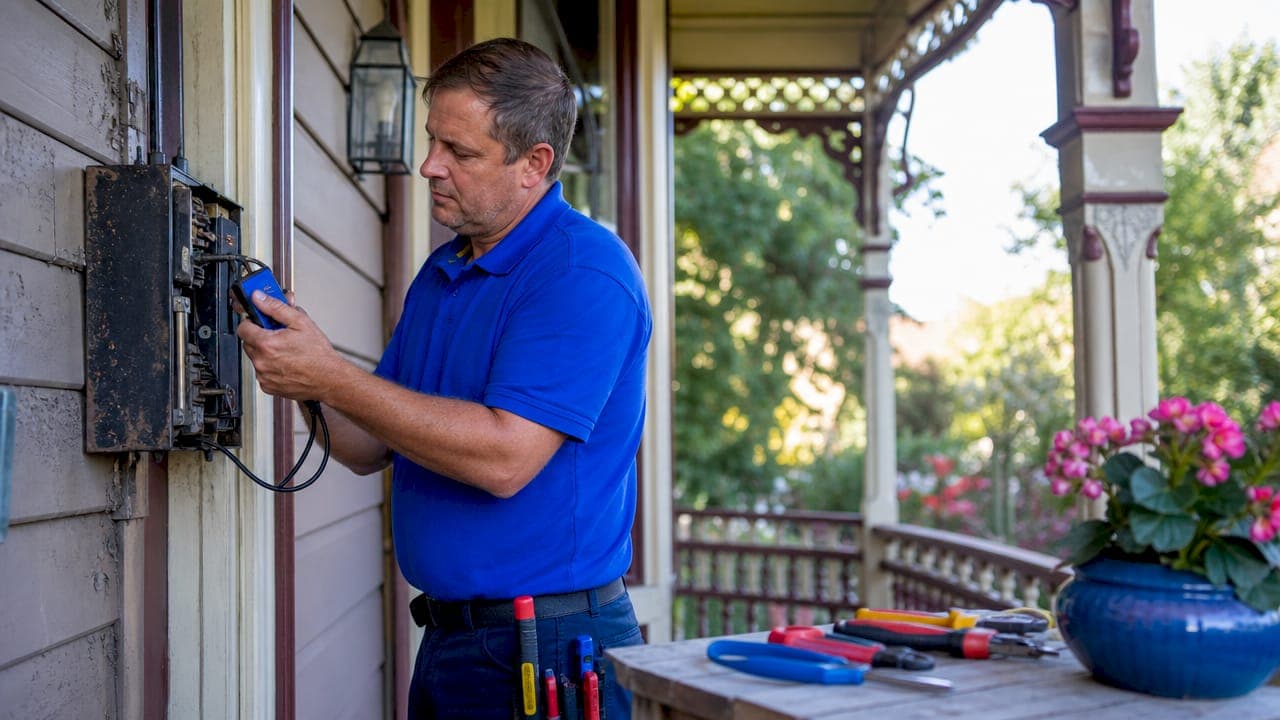
Electrical Residual Current Device (RCD) testing is the process of verifying that RCDs operate correctly to prevent electric shocks and electrical fires. RCDs are the small safety switches on your switchboard that cut power within milliseconds when a fault is detected. Understanding why electrical RCD testing is required goes beyond ticking a compliance box. Victorian property owners and managers face real legal obligations, genuine liability exposure, and most importantly, a duty to protect the people living or working on their properties.
Why is electrical RCD testing required for safety?
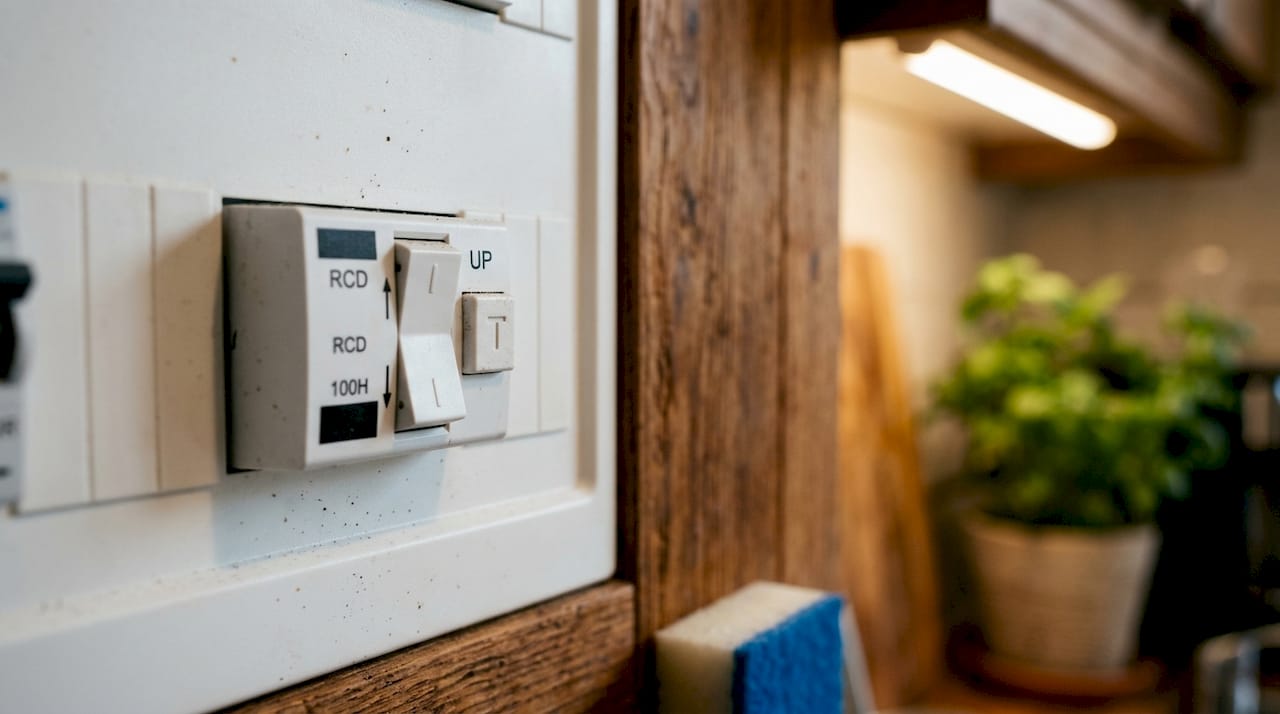
An RCD is defined as a device that monitors current flow and disconnects power the instant it detects a leakage to earth. That leakage is what causes electrocution. RCDs can disconnect power in as little as 30 milliseconds, which is faster than a human blink. That speed is what makes them life-saving rather than just helpful.
The critical problem is that RCDs do not announce when they stop working. Environmental factors such as dust, moisture, and wear cause RCDs to fail silently, meaning the device looks fine but will not trip under a real fault. A visual inspection tells you nothing about whether the device will actually operate when someone's life depends on it. Professional testing measures actual trip times in milliseconds to confirm the device performs within safe limits.
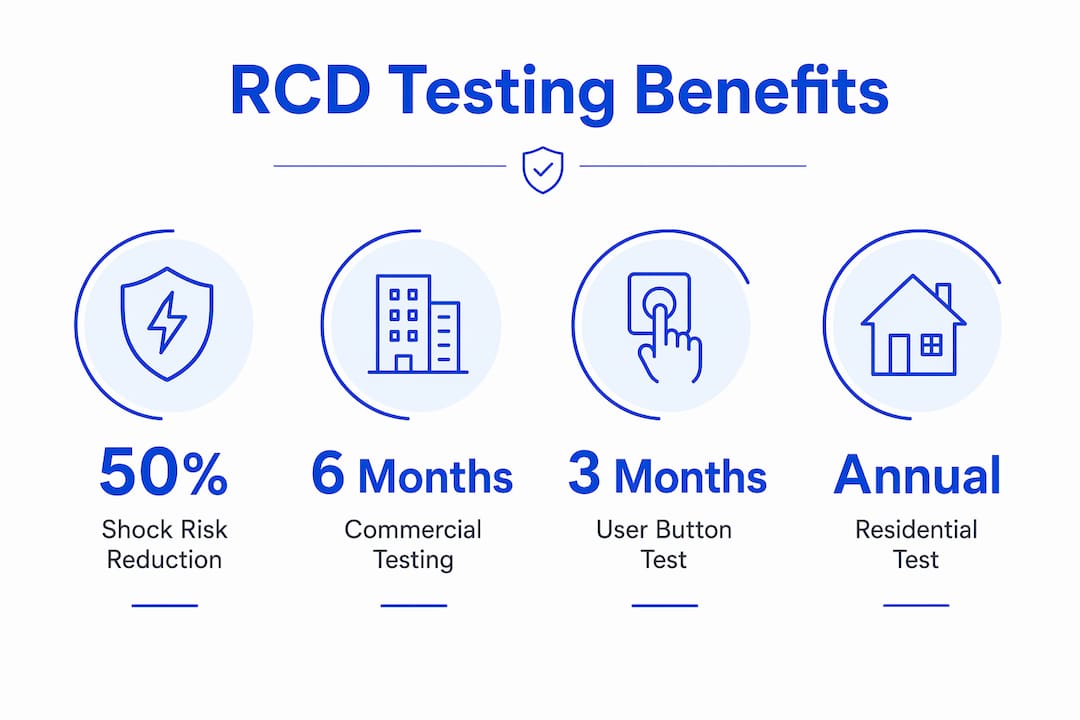
RCDs reduce the risk of death from electric shock by up to 50% when functioning correctly. That figure assumes the device works. An untested RCD that has silently failed offers no protection at all. Regular testing is the only way to confirm the device is still doing its job.
How RCD response times relate to risk
The table below shows how response time affects safety outcomes.
| Response time | Risk level | Outcome |
|---|---|---|
| Under 30 ms | Low | Power disconnects before lethal current flows |
| 30–300 ms | Moderate | Shock possible; severity depends on current path |
| Over 300 ms | High | Serious injury or death likely |
| No trip (failed RCD) | Critical | Full electrocution risk with no protection |
A functioning RCD sits firmly in the first row. An untested, silently failed RCD sits in the last. The difference between those two rows is a scheduled test.
Pro Tip: Press the 'Test' button on each RCD on your switchboard every three months. If the switch does not trip immediately, call a licensed electrician before using the circuit again.
What are the legal requirements for RCD testing in Victoria?
Victorian property owners and managers operate under a clear regulatory framework. Australian standard AS/NZS 3760:2022 sets the technical framework for RCD testing, covering required intervals, testing methods, and documented evidence. State WHS legislation aligns with this standard to define what is mandatory rather than merely recommended.
The key obligations for Victorian properties are:
- Commercial and workplace properties: Australian workplaces must conduct regular RCD testing for compliance under WHS legislation, typically every six months in commercial settings.
- Residential rental properties: Testing is strongly recommended at least annually, and property managers increasingly treat this as a baseline duty of care obligation.
- Documentation: Every test must be recorded. The date, result, device identifier, and tester's details all belong in a written log.
- Repairs: Licensed electricians must install RCDs and perform any repairs flagged during testing. Property owners cannot self-certify repairs.
- Landlord obligations: Landlords and property managers must meet these requirements to avoid legal consequences, including insurance disputes and regulatory action.
Non-compliance carries real consequences. An insurer can deny a claim if a fire or electrocution occurs and there is no testing record on file. A regulator can issue improvement notices or fines. In serious cases, a property owner can face prosecution under WHS legislation. The absence of a testing log is not a minor administrative gap. It is evidence of a failure to meet your duty of care.
What are the benefits of regular RCD testing beyond compliance?
Compliance is the floor, not the ceiling. Regular RCD testing delivers benefits that go well beyond avoiding a fine.
Reduced risk of fire and electrocution. Electrical faults cause a significant proportion of residential fires in Australia. A functioning RCD cuts power before a fault can generate enough heat to ignite surrounding materials. Regular RCD testing assures property owners that safety devices will operate under fault conditions, preventing both fires and electrocution.
Insurance protection. Insurers are paying close attention to maintenance records. Absence of documented RCD maintenance is increasingly viewed as a failure of duty of care by regulators and insurers as of 2026. A complete testing log strengthens your position in any claim and removes a common ground for denial.
Protecting tenants and occupants. Property managers in aged care, retirement villages, and disability care homes carry a heightened duty of care. The occupants in those settings are often less able to recognise or respond to electrical hazards. Regular testing is a direct investment in their safety.
Financial predictability. Catching a failing RCD during a scheduled test costs far less than responding to an electrical incident. Replacing a faulty device is a minor expense. Dealing with the aftermath of a fire or injury is not.
Pro Tip: Keep a dedicated testing log, either a physical folder or a digital record, for each property. Set a calendar reminder six weeks before each test is due so you have time to book a licensed electrician without rushing.
How is electrical RCD testing performed?
RCD testing happens at two levels: simple user checks and professional instrument testing. Both matter, and neither replaces the other.
User testing: the 'Test' button check
- Locate the RCD switches on your switchboard. They are labelled and have a small 'Test' button.
- Warn anyone in the property that power will briefly cut out to certain circuits.
- Press the 'Test' button firmly. The switch should trip immediately and cut power to the protected circuit.
- Reset the switch by pushing it back to the 'On' position.
- If the switch does not trip, or if it trips but will not reset, stop using the circuit and call a licensed electrician.
This check takes less than five minutes and should be done every three months. It confirms the basic mechanical function of the device but does not measure trip time or verify the device meets the precise performance requirements of AS/NZS 3760:2022.
Professional instrument testing
Simple user tests involve pressing the RCD 'Test' button periodically, but professional testing involves calibrated instruments measuring trip times and response accuracy. A licensed electrician connects a test instrument to the circuit and applies a controlled fault current. The instrument records exactly how long the RCD takes to trip. That result is logged against the device identifier and compared to the standard's acceptable limits.
Professional testing is recommended annually for residential properties and every six months for commercial ones. Mechanical wear and electrical surges can prevent RCDs from tripping even without visible issues, which is why instrument testing catches failures that the button check misses entirely.
Only a licensed electrical contractor should perform professional RCD testing and any subsequent repairs. This is not a cost-cutting opportunity. The legal and safety consequences of using an unlicensed person far outweigh any short-term saving.
Key takeaways
RCD testing is the only reliable method to confirm that a safety device will actually operate when a fault occurs, making it a non-negotiable obligation for Victorian property owners and managers.
| Point | Details |
|---|---|
| RCDs fail silently | Dust, moisture, and wear cause RCDs to stop working without any visible sign of failure. |
| Legal framework is clear | AS/NZS 3760:2022 and WHS legislation set mandatory testing intervals of six months for commercial and annually for residential properties. |
| Documentation is proof | A written testing log is your evidence of duty of care and your protection in an insurance claim. |
| Two testing levels required | Quarterly button checks and annual professional instrument tests together provide complete coverage. |
| Licensed electricians only | All professional testing and repairs must be carried out by a licensed electrical contractor. |
What I've learned from years of electrical safety work on the Mornington Peninsula
The shift from "best practice" to mandatory compliance has been the biggest change I've seen in electrical safety over the past decade. Property owners who used to treat RCD testing as optional are now facing real consequences when they skip it. Insurers are asking for records. Regulators are enforcing standards. The trend towards risk-based enforcement means that documented proof of RCD testing is becoming as important as the testing itself.
The most common mistake I see is property owners who press the Test button once a year and consider the job done. That check confirms the switch moves. It does not confirm the device trips within the 30-millisecond window that keeps someone alive. Those are two very different things, and only a calibrated instrument test tells you which one you have.
My practical advice: treat RCD testing the same way you treat smoke alarm checks. Schedule it, record it, and use a licensed professional for the annual instrument test. If you manage multiple properties, build a master schedule so nothing slips through. The cost of a missed test is always higher than the cost of doing it right.
— Mike
Dualflowservices: professional RCD testing for Victorian properties
Property owners and managers across the Mornington Peninsula trust Dualflowservices for scheduled electrical safety work, including professional RCD testing that meets AS/NZS 3760:2022 and Victorian WHS requirements.
Dualflowservices carries out instrument-grade RCD testing, provides written test records for your compliance files, and flags any devices that need repair or replacement. The team services residential homes, commercial premises, aged care facilities, retirement villages, and disability care homes. Scheduling is straightforward, and the documentation you receive is ready to present to an insurer or regulator. Contact Dualflowservices to book your next RCD test and keep your property compliant.
FAQ
What is an RCD and why does it need testing?
An RCD is a safety switch that cuts power within milliseconds when it detects a leakage current, protecting people from electrocution. Testing confirms the device will actually trip under fault conditions, since RCDs can fail silently without any visible sign.
How often should RCD testing be done in Victoria?
Commercial and workplace properties require testing every six months under WHS legislation, while residential rental properties should be tested at least annually in line with AS/NZS 3760:2022 recommendations.
Can a property owner test RCDs themselves?
Property owners can press the 'Test' button on each RCD every three months to check basic mechanical function. Annual professional testing with calibrated instruments must be carried out by a licensed electrician to meet regulatory requirements.
What happens if RCD testing is not done?
Without documented testing, property owners risk insurance claim denial, regulatory fines, and potential prosecution under WHS legislation if an electrical incident occurs on the property.
Does an RCD that passes the button test still need professional testing?
Yes. The button test only confirms the switch moves. Professional instrument testing measures the actual trip time in milliseconds and verifies the device meets the performance limits set by AS/NZS 3760:2022, which the button test cannot do.