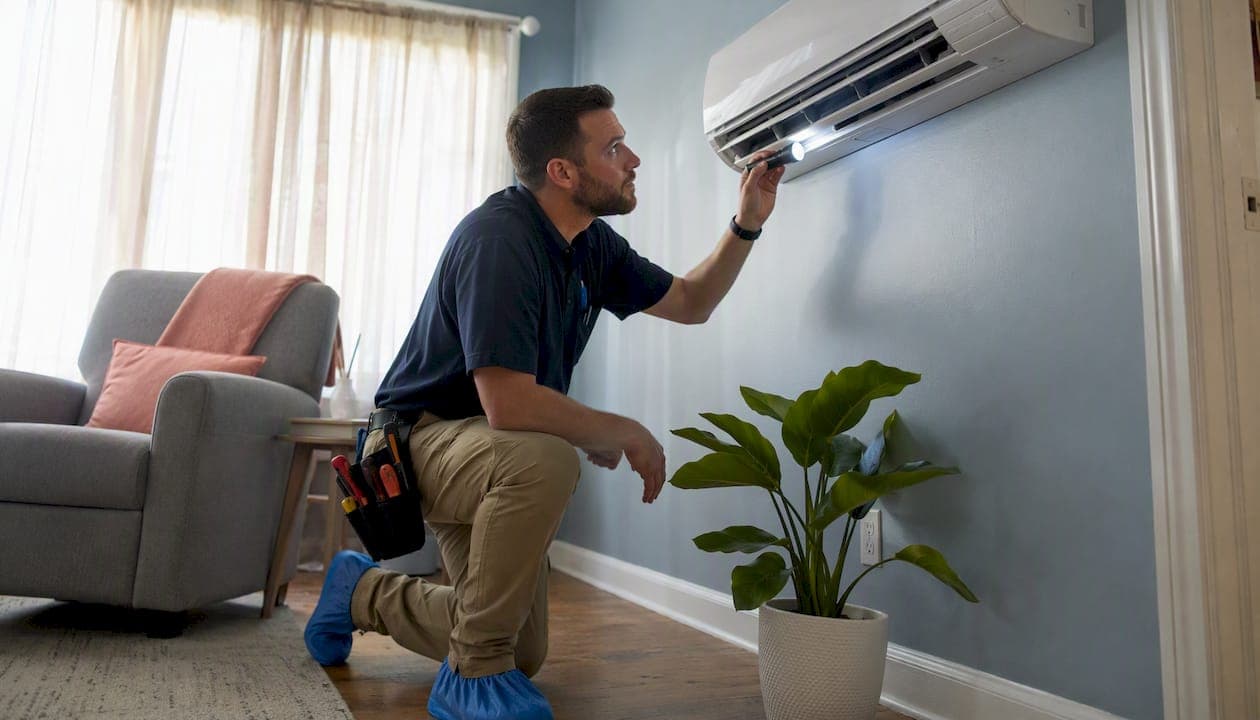
A musty smell from your air conditioner almost always means mould, mildew, or bacterial growth has taken hold somewhere moisture collects — most often the evaporator coil, drain pan, condensate line, or a clogged filter. The National Asthma Council Australia flags mould spores and bacteria as genuine respiratory irritants, particularly for children, the elderly, and anyone with asthma. The good news: a dirty filter is the most common simple cause and takes five minutes to fix.
Do these right now:
- Turn the system off if the smell is very strong or you feel unwell
- Check the air filter — if it looks grey or clogged, clean or replace it immediately
- Switch to fan-only mode for 20–30 minutes to help dry the indoor unit
- Open a window to ventilate while you investigate
- If the smell is chemical, sweet, burning, or like rotten eggs — shut the system down and call a licensed technician; do not attempt DIY
ARCtick-licensed technicians (Australia's refrigerant-handling licence) must handle any refrigerant or sealed-system work. Dualflowservices covers emergency call-outs and scheduled maintenance across the Mornington Peninsula for exactly these situations.
Table of Contents
- Why your air conditioner smells musty: the specific causes
- Is a musty AC smell dangerous?
- Step-by-step DIY fixes you can safely try first
- When DIY isn't enough: signs you need a technician
- How to stop the musty smell coming back
- How Dualflowservices can help with odour remediation
- Key takeaways
- A technician's perspective on recurring musty smells
- Dualflowservices: book a check for your Mornington Peninsula property
- Useful Australian and industry sources
Why your air conditioner smells musty: the specific causes
The musty odour from an air conditioner comes from volatile organic compounds released by mould, mildew, and bacteria as they colonise wet surfaces inside the system. Knowing which component is the culprit helps you fix it faster.
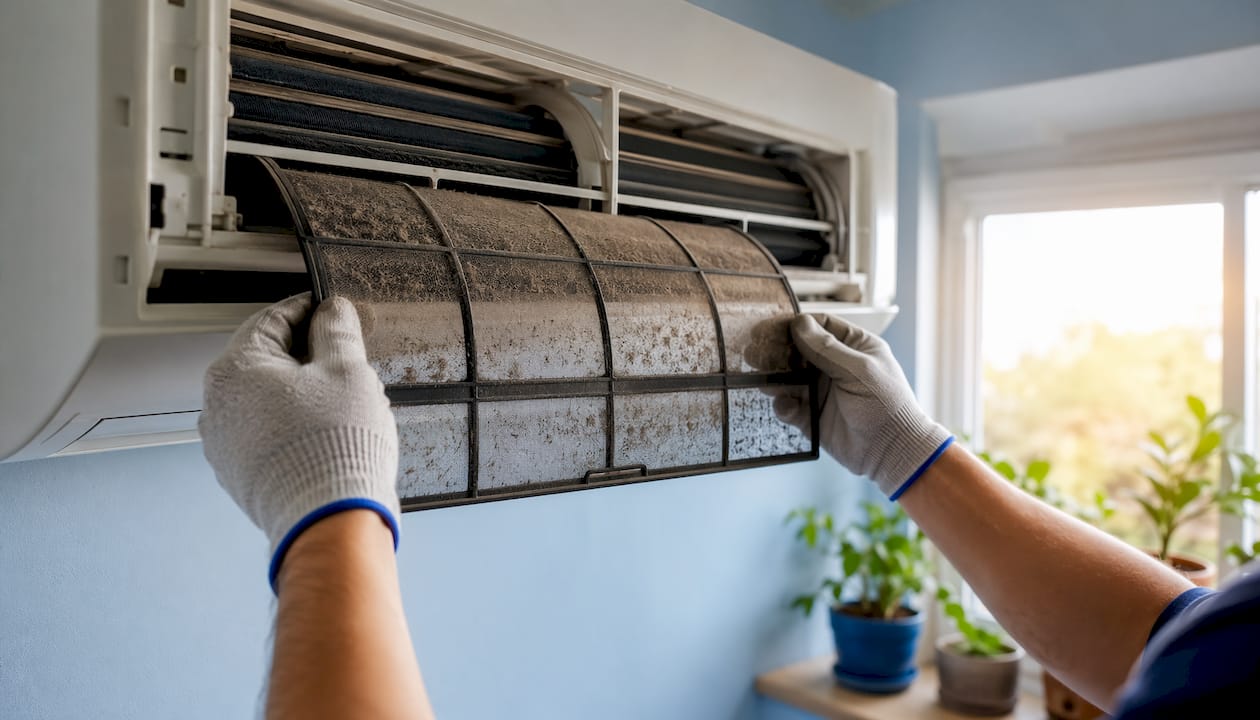
Evaporator coil. The coil sits in a perpetually damp environment. Repeated wet-dry cycles let biofilm, mould, and bacteria build up on its surface. Industry technicians call the resulting smell "Dirty Sock Syndrome" — a gym-locker odour that is particularly common after seasonal inactivity or when a system first starts up in spring.
Condensate drain and drain pan. A clogged condensate drain line lets water stagnate in the drain pan, creating ideal conditions for algae, mould, and bacterial slime. If the exterior drain outlet looks dry or water is pooling near the indoor unit, a blocked drain is the likely culprit.
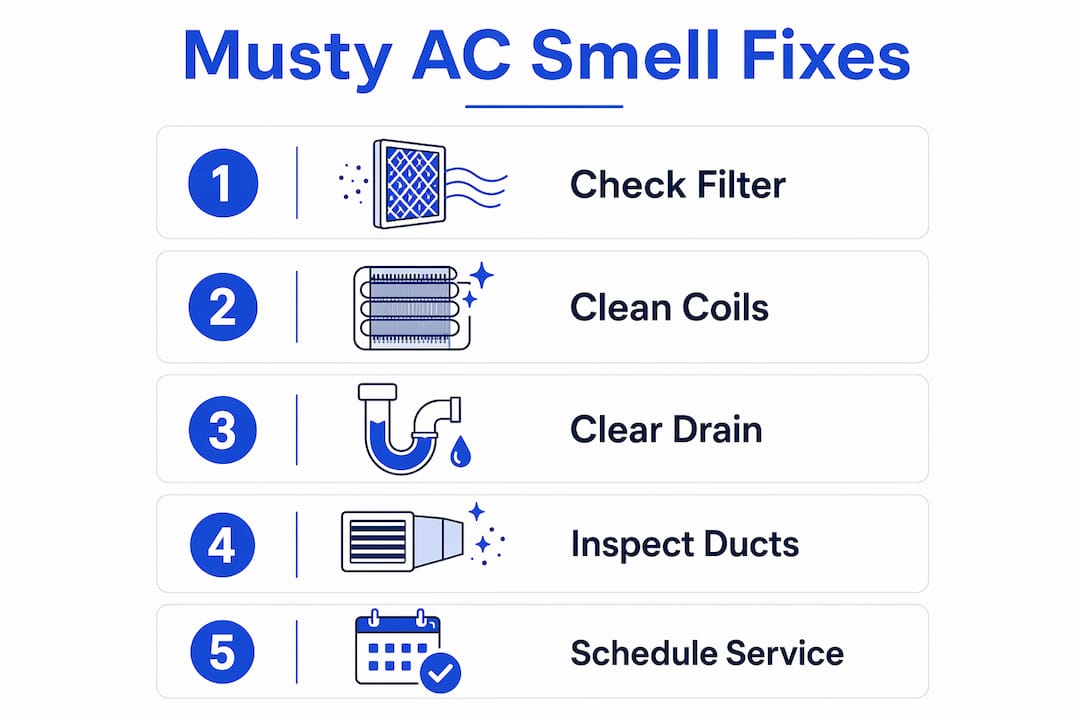
Air filters. Dirty filters restrict airflow, which keeps the evaporator coil colder and wetter for longer — accelerating mould growth. A clogged filter also traps organic matter that smells on its own.
Ductwork. Leaking or poorly insulated ducts, especially in uninsulated roof spaces, can harbour mould colonies. If the smell comes from multiple rooms simultaneously, ducts are worth investigating.
Australian climate factors. Coastal and tropical regions see more mould-related service calls because high indoor humidity keeps coils and ducts damp enough to support growth. Infrequent seasonal use — common in Melbourne's shoulder months — compounds the problem.
Is a musty AC smell dangerous?
For most people, a musty air conditioner is an annoyance rather than an emergency. That said, mould spores and bacteria circulated through the system can aggravate asthma, trigger allergies, and cause respiratory irritation — especially for children, the elderly, and immunocompromised occupants. Aged care and disability care facilities face a higher duty of care here; see Dualflowservices' aged care cooling maintenance guide for compliance-specific guidance.
A musty smell that fades after a few minutes of running does not mean the problem has resolved. The initial burst of air simply expels stale, moisture-laden air from internal components. The mould or biofilm causing it is still there.
Red-flag smells that need immediate action:
- Chemical or sweet odour: possible refrigerant leak — shut down the system and call an ARCtick-licensed technician. Do not attempt DIY.
- Burning or acrid smell: electrical fault — turn off the system at the switchboard and call a licensed electrician.
- Rotten egg smell: possible gas leak — evacuate and call emergency services (000).
If anyone in the building experiences headaches, dizziness, or worsening respiratory symptoms while the system runs, turn it off immediately and seek professional help.
Step-by-step DIY fixes you can safely try first
Most musty odours respond to one of these steps. Work through them in order before calling a technician.
- Switch off and isolate power. Turn the unit off at the remote and, for split systems, at the isolator switch near the outdoor unit.
- Check and clean or replace the air filter. Remove the filter and hold it to the light. If it is visibly grey or blocked, wash a reusable filter with warm water and mild detergent, rinse thoroughly, and let it dry completely before reinserting. Replace disposable filters outright.
- Flush the condensate line. Locate the condensate drain outlet (usually a small pipe exiting near the outdoor unit or into a drain). Pour a 1:1 solution of distilled white vinegar and water into the drain access point to break down slime and minor blockages. This is an unsourced home remedy, but widely used; if the line remains blocked after flushing, call a plumber.
- Dry the indoor unit. Run the system on fan-only mode for 20–30 minutes to evaporate trapped moisture from the coil and drain pan.
- Vacuum vents and registers. Use a vacuum with a brush attachment to clear dust from supply and return vents.
What not to touch: refrigerant lines, sealed panels, electrical components, and the outdoor compressor unit. These require ARCtick or electrical licences under Australian law.
Pro Tip: Run fan-only mode for 20–30 minutes after every cleaning session. It dries residual moisture from the coil surface and significantly slows mould regrowth.
When DIY isn't enough: signs you need a technician
Call a professional when:
- The musty smell persists more than 24 hours after cleaning the filter and flushing the drain
- The odour returns every time the system starts up
- You can see visible mould on the coil, in the drain pan, or around vents
- Water is leaking or overflowing from the indoor unit
- Any chemical, burning, or rotten-egg smell is present
What a technician will do. A professional service visit typically covers evaporator coil deep-cleaning and sanitisation, condensate line clearing or replacement, drain pan inspection and replacement if corroded, duct inspection, and refrigerant leak detection (licensed work). For persistent mould, coil decontamination with a biocide treatment is often needed — surface cleaning alone cannot penetrate biofilm. Without professional cleaning of the coil, drain pan, and ductwork, mould spores continue to circulate, and the smell returns.
Rough cost and timeline guide:
| Job | Typical scope | Rough timeframe |
|---|---|---|
| Filter replacement (DIY) | Low cost, owner-supplied | 5–10 minutes |
| Condensate flush and drain clean | Moderate; single visit | 1–2 hours |
| Evaporator coil clean and sanitise | Moderate; single visit | 1–3 hours |
| Duct inspection and cleaning | Higher; may be multi-stage | Half to full day |
| Refrigerant leak detection and repair | Higher; ARCtick required | Single visit + follow-up |
Costs vary by system size, access, and region. Dualflowservices provides written quotes after an on-site inspection.
How to stop the musty smell coming back
Prevention is straightforward once you know the triggers: moisture, restricted airflow, and infrequent maintenance.

| Task | Frequency | Notes |
|---|---|---|
| Check air filter | Monthly in summer | Replace or clean if visibly dirty |
| Clean/replace filter | Every 1–3 months | More often with pets or high use |
| Flush condensate line | Every 3 months | Vinegar solution or professional flush |
| Professional service | Annually, before summer | Coil clean, condensate check, full inspection |
| Mid-season check | High-humidity regions | Extra visit for coastal/tropical climates |
| Duct inspection | Every 2–3 years | Sooner if smell persists after coil clean |
Humidity control matters. Keeping indoor humidity below 60% significantly reduces mould risk on coils and in ducts. A portable dehumidifier in high-humidity rooms, combined with adequate ventilation, helps. In coastal Victoria, this is particularly relevant during summer.
Additional steps worth taking:
- Seal and insulate ducts, especially in roof spaces, to prevent condensation on duct surfaces
- Fix any plumbing leaks near the air handler promptly — moisture ingress is a fast track to mould
- Ask your technician about UV light sanitisers installed on the coil, which inhibit biofilm growth between services
- Follow a structured HVAC maintenance schedule to stay ahead of seasonal issues
How Dualflowservices can help with odour remediation
Dualflowservices provides heating and cooling services across the Mornington Peninsula and surrounding Melbourne suburbs, covering homes, businesses, aged care facilities, retirement villages, and disability care homes. For musty odour issues specifically, the team handles evaporator coil cleaning and sanitisation, condensate drain repairs, drain pan replacement, and duct hygiene advice.
All refrigerant work is carried out by ARCtick-licensed technicians, and plumbing work meets Australian standards. For facilities with vulnerable occupants, Dualflowservices follows the additional care requirements outlined in the Victoria cooling system hygiene guide and the disability care HVAC ventilation guide.
Service visits include a full inspection, safety checks, a written quote, and follow-up recommendations covering dehumidification, UV light options, and a maintenance plan suited to the property.
Key takeaways
A musty air conditioner almost always traces back to mould or bacterial growth on wet internal components, and it will not clear on its own unless the source is professionally cleaned.
| Point | Details |
|---|---|
| Check the filter first | A clogged filter is the most common cause; clean or replace it before anything else. |
| Flush the condensate line | Stagnant water in a blocked drain pan feeds mould growth; a vinegar flush clears minor blockages. |
| Call a pro if it persists | Odour lasting more than 24 hours after DIY steps needs professional coil cleaning and drain inspection. |
| Prevent with regular maintenance | Monthly filter checks, a condensate flush every three months, and an annual professional service stop most recurrences. |
| Dualflowservices for local help | Emergency call-outs and scheduled maintenance across the Mornington Peninsula, with ARCtick-licensed technicians for all refrigerant work. |
A technician's perspective on recurring musty smells
The mistake most homeowners make is treating a musty AC smell as a one-off cleaning job. They replace the filter, the smell improves for a week, and then it comes back. What they have missed is that the filter was a symptom, not the source. The real problem is usually a biofilm colony on the evaporator coil that surface cleaning cannot reach. Biofilms are protective structures — bacteria essentially build a shield around themselves — and a standard coil spray will not penetrate it. That is why persistent odours need a proper decontamination treatment, not just a wipe-down.
The other thing worth knowing: a smell that fades after the system runs for a few minutes is not a sign the problem is minor. It means the initial airflow has pushed the stale, mould-laden air out of the unit. The colony is still there, growing between cycles.
When you call a technician, give them three pieces of information upfront: what the smell is like (musty, sour, chemical), when it happens (startup only, or constant), and whether you have noticed any water pooling near the unit. That narrows the diagnosis before the technician even arrives and usually means a faster, cheaper fix.
Dualflowservices: book a check for your Mornington Peninsula property
Persistent musty odours from your air conditioner rarely fix themselves. Unless the source is professionally cleaned, mould spores will continue to circulate and the smell will return.

Dualflowservices offers emergency call-outs and scheduled maintenance for homes, businesses, and care facilities across the Mornington Peninsula and surrounding Melbourne suburbs. A first visit covers a full system inspection, condensate drain check, coil assessment, and a written quote with recommended next steps. ARCtick-licensed technicians handle all refrigerant work on-site.
Book a service or get in touch to arrange an inspection at a time that suits you.
Useful Australian and industry sources
- National Asthma Council Australia — health guidance on mould, indoor air quality, and risk groups
- Trane HVAC troubleshooting guides — technical explanations of coil odours, duct moisture, and drain issues
- Carrier safety guidance — advice on non-musty odours (refrigerant, electrical) that require urgent professional attention
- ALC Air Conditioning blog — Australian industry perspective on regional humidity and Dirty Sock Syndrome
- ARCtick licensing — find licensed refrigerant handlers in Australia; required for any refrigerant-related work
- Dualflowservices resource pages — local guidance on heating, cooling, and plumbing maintenance for the Mornington Peninsula
This article provides general information only and is not a substitute for professional advice. Confirm current standards and licensing requirements with a qualified technician or the relevant Australian authority for your specific situation.