
What does an electrical maintenance contract actually cover?
An electrical maintenance contract is a formal, legally binding agreement between a property owner or business and a licensed electrical contractor. It specifies the scope of work, how often services are performed, and the standards those services must meet. Think of it as the rulebook for keeping your electrical systems safe, reliable, and compliant over time.
The core elements you will find in most agreements include:
- Scope of work: which systems, assets, and locations are covered
- Service frequency: scheduled visits, whether quarterly, semi-annual, or annual
- Standards of work: compliance with Australian and New Zealand Standards, such as AS/NZS 3000 (Wiring Rules)
- Response obligations: defined timeframes for emergency call-outs
- Responsibilities: who supplies materials, who holds licences, and who manages safety documentation
Without these elements spelled out in writing, disputes over what was agreed become almost inevitable.
What types of electrical maintenance contracts are available?
Maintenance contracts generally fall into three categories, each suited to different operational needs:
- Preventive maintenance contracts focus on scheduled inspections, cleaning, and system checks to catch problems before they cause failures. These suit businesses that want to stay ahead of faults without paying for repairs they may not need.
- Predictive maintenance contracts use diagnostics and condition monitoring, such as infrared scanning and thermal imaging, to anticipate failures based on real equipment data. This approach works well for facilities with critical or high-value electrical assets.
- Corrective or full-service contracts cover everything: inspections, repairs, spare parts replacement, and emergency response. Large facilities seeking predictable costs and maximum coverage tend to favour this model.
Some providers also offer inspection-only agreements, which deliver periodic compliance checks without including repairs. These are a lower-cost entry point for smaller properties or landlords who simply need documented evidence of system condition.

What should a well-drafted electrical maintenance contract include?
A contract that protects both parties goes well beyond a list of tasks. Key clauses to look for include:
- Detailed scope of work: tasks, systems covered, and explicit exclusions to prevent scope creep
- Compliance references: specific standards such as AS/NZS 3000, plus any relevant manufacturer specifications
- Payment terms: whether the pricing model is a fixed fee, time and materials, or a hybrid arrangement
- Change order procedure: any variation from the original scope must be documented, priced, and approved in writing before work begins, preventing budget surprises
- Warranty on workmanship: duration and what defects are covered, typically for a defined period after each service visit
- Insurance requirements: confirmation that the contractor holds current public liability and workers' compensation cover
- Dispute resolution: a clear process, often starting with mediation, before escalating to arbitration or litigation
Pro Tip: Ask to see a sample contract before signing anything. A contractor who cannot produce a clear, written agreement is a red flag regardless of how competitive their pricing looks.

What are the real benefits of having a maintenance contract?
The practical case for a maintenance agreement comes down to cost control, safety, and peace of mind. Reactive repairs, the kind you pay for when something breaks unexpectedly, almost always cost more than scheduled servicing. A contract shifts the model from "fix it when it fails" to "prevent it from failing."
Specific benefits include:
- Reduced emergency repair costs through proactive identification of faults before they escalate
- Regulatory compliance maintained consistently, reducing the risk of fines or insurance complications
- Budget predictability because fixed-fee contracts let you plan maintenance spend across a financial year
- Extended asset life through regular servicing of switchgear, circuit breakers, UPS systems, and other critical components
- Access to qualified tradespeople who already know your site, reducing call-out time and diagnostic delays
For aged care facilities, retirement villages, and disability care homes in particular, the safety dimension carries extra weight. Electrical faults in those environments carry consequences that go well beyond property damage.
What legal and regulatory obligations apply in Australia?
Australian electrical maintenance contracts must align with several overlapping legal frameworks. Compliance with Australian Consumer Law, state and territory electrical licensing rules, and Work Health and Safety legislation is not optional. These obligations shape what a contract must contain and what a contractor must demonstrate before work begins.
Key requirements include:
- Electrical licensing: contractors must hold the appropriate licence for the work performed in each state or territory
- WHS obligations: contracts should require the contractor to comply with all Work Health and Safety laws, complete site inductions, and provide Safe Work Method Statements (SWMS) before each task
- Site Specific Safety Management Plans (SSMP): for larger or higher-risk sites, the contract should explicitly require adherence to the site's SSMP
- Insurance verification: verify contractor insurance certificates annually, covering public liability and workers' compensation, to avoid gaps in coverage
- Documentation: written records of all work performed, including test results and compliance checks, protect owners in the event of an incident or audit
Pro Tip: Include a clause requiring the contractor to provide updated Certificates of Insurance at the start of each contract year. Annual verification is the standard recommended by insurance professionals in the electrical trade.
For property managers, the electrical certification guide for property firms is a useful reference for understanding what documentation landlords and managers need to retain.
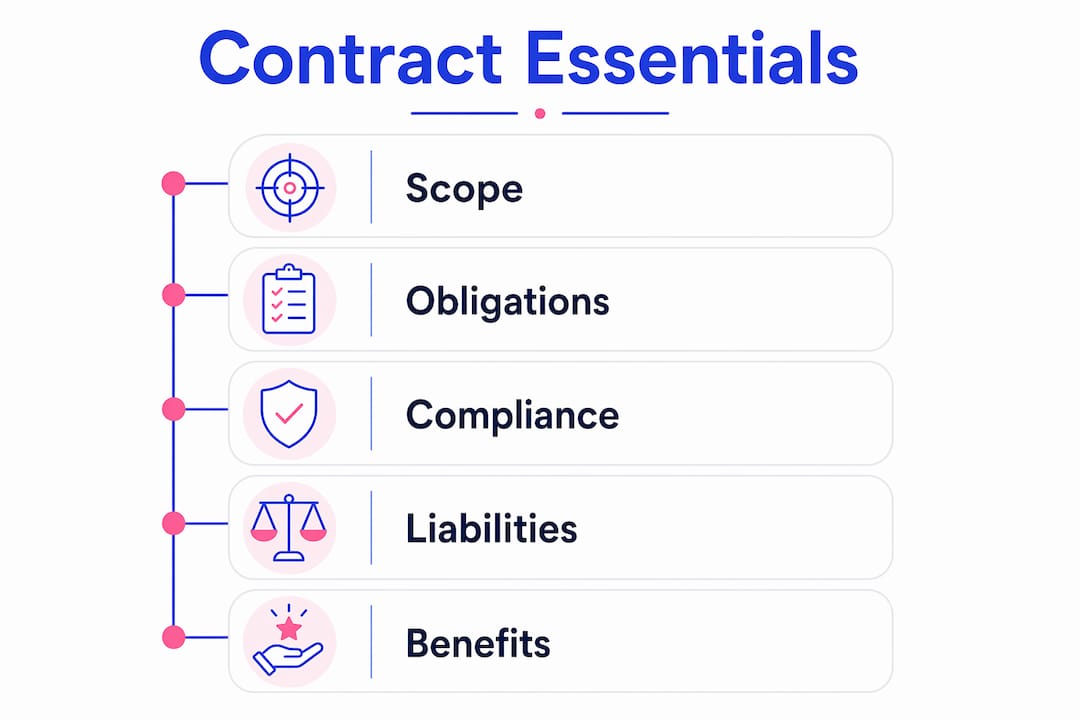
What Dualflowservices recommends about electrical maintenance contracts
Dualflowservices works with homeowners, business owners, aged care facilities, and retirement villages across the Mornington Peninsula, and the most common issue they encounter is contracts that are vague about scope. When the scope of work is not clearly defined, both parties end up in disagreement about what was included in the price.
A few practical points from their experience:
- Document everything from day one: a clear scope of work, signed by both parties before any work begins, is the single most effective way to prevent disputes
- Do not assume compliance is automatic: explicitly reference the relevant Australian standards and require the contractor to warrant that all work meets those standards
- Change orders protect everyone: when scope changes mid-contract, a written change order signed before the additional work starts keeps the relationship clean and the budget on track
- Review your contract annually: electrical systems evolve, and a contract written three years ago may not reflect the assets or risks on your site today
You can use Dualflowservices' electrical safety checklist as a starting point for understanding what a thorough maintenance programme typically covers in a residential or light commercial setting.
Dualflowservices: electrical maintenance for the Mornington Peninsula
Sorting out an electrical maintenance contract should not mean weeks of back-and-forth with contractors who give you vague quotes and generic paperwork.

Dualflowservices provides scheduled electrical maintenance, emergency call-outs, and installation services for homeowners, businesses, aged care facilities, and retirement villages across the Mornington Peninsula. Every agreement is written clearly, with a defined scope, documented compliance checks, and transparent pricing. No guesswork about what is included, no surprises when the invoice arrives.
Get in touch with Dualflowservices to discuss a maintenance arrangement that fits your property and your budget.
Key takeaways
A well-drafted electrical maintenance contract protects your property, controls costs, and keeps your systems legally compliant under Australian law.
| Point | Details |
|---|---|
| Core definition | A legally binding agreement specifying scope, frequency, and standards for electrical system upkeep. |
| Three main contract types | Preventive, predictive, and full-service contracts suit different operational needs and budgets. |
| Essential clauses | Scope of work, change order procedure, insurance requirements, and dispute resolution are non-negotiable. |
| Legal obligations | Australian contracts must address WHS laws, electrical licensing, SWMS requirements, and annual insurance verification. |
| Dualflowservices | Provides clear, documented electrical maintenance agreements for homes, businesses, and care facilities on the Mornington Peninsula. |