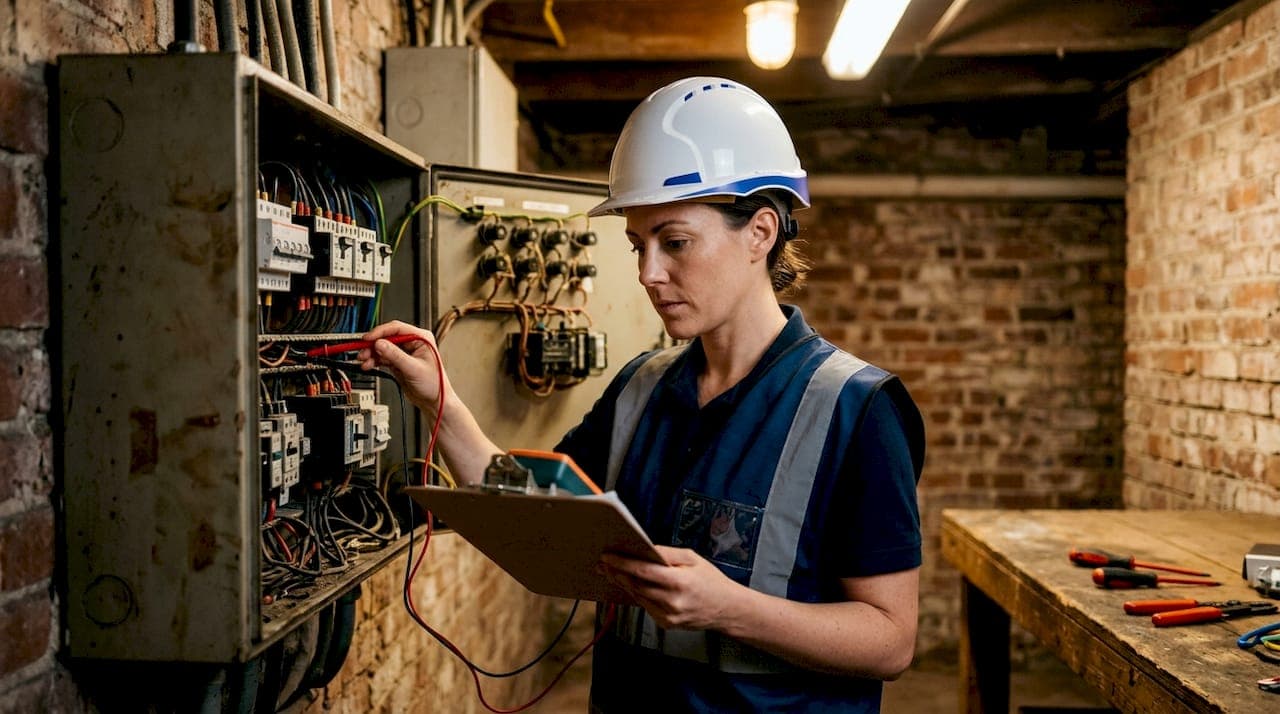
A building electrical audit is a systematic evaluation of a building's electrical infrastructure to verify safety, regulatory compliance, and operational efficiency. The process covers switchboards, wiring, circuit breakers, earthing systems, and protective devices. In Victoria, audits must align with Australian Standard AS/NZS 3000 (the Wiring Rules) and meet requirements set by the Victorian Building Authority. For property owners and facility managers, an electrical audit is not optional paperwork. It is the clearest way to know whether your building's electrical systems are safe, legal, and performing as they should.
What does a building electrical audit actually cover?
A building electrical audit covers far more than a quick visual check. The industry term for the formal process is an electrical safety audit, and it combines physical inspection with functional testing to give a complete picture of system health.
Auditors typically assess the following components:
- Switchboards and busbars: Checking for signs of overheating, corrosion, loose connections, and correct labelling.
- Wiring and cable runs: Identifying damaged insulation, undersized conductors, and non-compliant installation methods.
- Circuit breakers and residual current devices (RCDs): Verifying correct ratings, trip times, and operation under test conditions.
- Earthing and bonding: Confirming continuity and compliance with AS/NZS 3000.
- Motor control gear and lighting circuits: Assessing load balance and condition.
- Protective devices: Checking that surge protection and fault protection meet current standards.
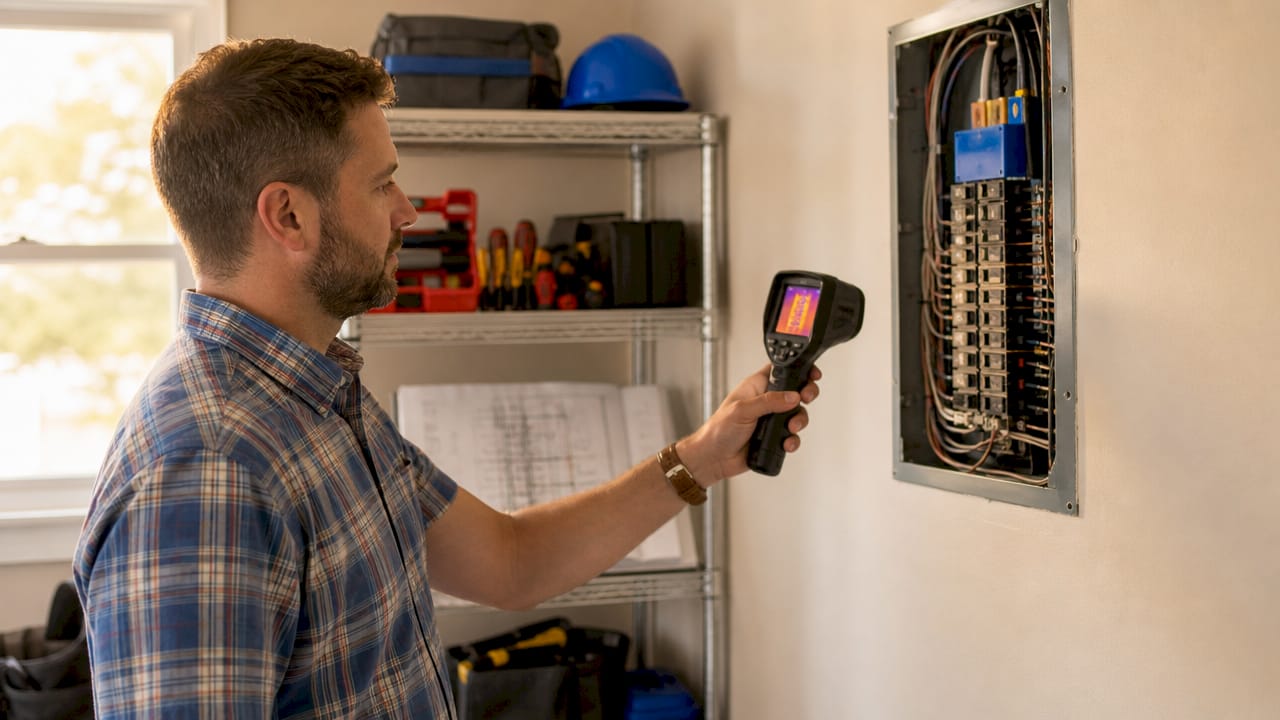
Beyond the visual check, functional testing is where audits earn their value. Thermography, load analysis, and protective device testing reveal faults that no visual inspection can detect. A switchboard can look perfectly fine from the outside while a busbar connection runs dangerously hot under load.
Auditors also review maintenance records, previous inspection reports, and compliance documentation. This document review confirms whether the building has been maintained to standard and flags gaps in the service history.
Pro Tip: Gather your maintenance records, previous electrical reports, and any switchboard diagrams before the auditor arrives. Auditors with complete documentation spend less time reconstructing history and more time finding real faults.
The difference between an audit, a building electrical inspection, and a self-checklist matters. A self-checklist identifies surface issues. A building electrical inspection confirms code compliance at a point in time, typically for a permit. A full electrical safety audit assesses the entire system's condition, performance, and risk profile. Only the audit gives you the strategic information needed to plan maintenance and manage risk.
Why is an electrical audit important for safety and compliance?
An electrical safety audit is a direct risk reduction tool. Organisations that conduct annual electrical safety audits reduce electrical incident rates by up to 60%. That figure reflects what happens when faults are found before they cause fires, equipment failures, or injuries.
The importance of electrical audits extends well beyond incident prevention. In Victoria, the Electricity Safety Act 1998 and regulations administered by Energy Safe Victoria place legal obligations on building owners and operators to maintain safe electrical installations. Non-compliance carries financial penalties and, in the event of an incident, significant legal liability. A documented audit record demonstrates that you have met your duty of care.
Three areas where audits deliver direct value:
- Insurance: Consistent audit records help property owners negotiate insurance premium discounts by demonstrating proactive risk management. Insurers treat documented electrical safety actions as evidence of responsible ownership.
- Asset protection: Audits identify components approaching end of life before they fail. This protects expensive equipment and avoids the cost of emergency replacements.
- Operational continuity: Unplanned electrical failures cause downtime. In aged care, retirement villages, and disability care homes, that downtime carries serious consequences for residents and staff.
A common misconception is that audits are simply compliance exercises. An electrical safety audit is a strategic tool that protects assets and reduces long-term costs by identifying potential faults early. Treating it as a checkbox exercise means you get a report but miss the planning intelligence the audit contains.
Pro Tip: Ask your auditor to prioritise findings by risk level, not just list them. A prioritised report tells you what to fix this month, what to schedule in six months, and what to monitor annually.
Regular electrical health audits enable facilities to accurately budget and plan repairs by identifying what is functioning well and what is likely to fail soon. This is the difference between reactive spending and planned capital expenditure.
How is a building electrical audit conducted?
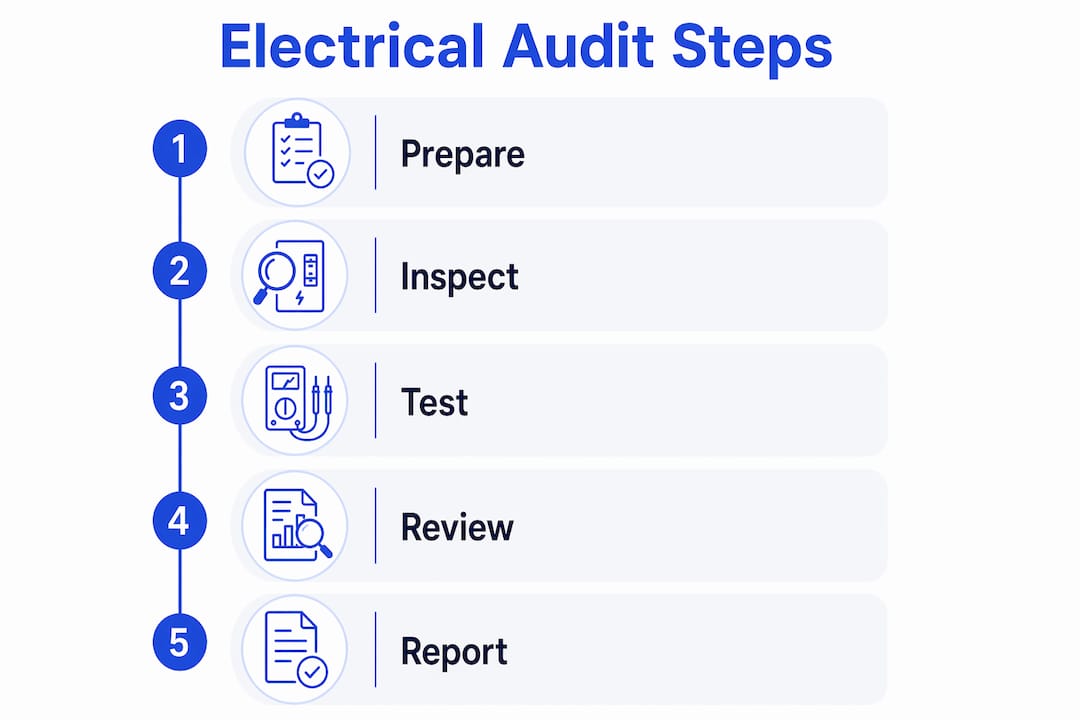
A building electrical audit follows a structured process. The steps below reflect standard practice for commercial and residential buildings in Victoria.
- Scheduling and scoping: The auditor confirms the building type, age, size, and any known issues. This determines the time required and the equipment needed.
- Document review: Maintenance records, previous inspection reports, and as-built drawings are reviewed before the site visit.
- Onsite visual inspection: The auditor physically inspects all accessible electrical infrastructure, from the main switchboard to individual circuits and outlets.
- Functional testing: Load testing, RCD trip time testing, thermographic scanning, and insulation resistance testing are conducted on key components.
- Findings documentation: All faults, deficiencies, and observations are recorded with photographic evidence and referenced against AS/NZS 3000 and applicable Victorian regulations.
- Report and recommendations: The auditor delivers a written report with findings ranked by severity and recommended remediation actions.
Timeframes vary by building complexity. Simple residential electrical inspections typically take between 15–45 minutes for rough-in checks and 10–30 minutes for final inspections. Commercial audits covering multiple switchboards, large plant rooms, and complex distribution systems require significantly longer assessments, often spanning a full day or more.
| Building type | Typical audit duration | Key focus areas |
|---|---|---|
| Residential (single dwelling) | 1–2 hours | Switchboard, wiring, RCDs, earthing |
| Small commercial | 3–5 hours | Distribution boards, lighting, load balance |
| Large commercial or industrial | Full day or multi-day | All systems, thermography, motor control gear |
| Aged care or disability facility | Full day or multi-day | Life safety circuits, emergency lighting, compliance |
Preparation makes a measurable difference. Self-inspection before a formal audit can identify approximately 80% of common failures in advance. Walking through your building and noting obvious issues, missing covers, tripped breakers, and flickering lights gives the auditor a useful starting point and reduces surprises in the final report.
What are the benefits of regular electrical audits for property owners?
Regular electrical audits deliver benefits that go well beyond ticking a compliance box. For property owners and facility managers in Victoria, the practical gains are financial, legal, and operational.
- Reduced fire and shock risk: Audits catch deteriorating wiring, overloaded circuits, and faulty protective devices before they cause incidents. Electrical faults are a leading cause of building fires in Australia.
- Regulatory compliance: Documented audits provide evidence of compliance with the Electricity Safety Act 1998 and Energy Safe Victoria requirements, reducing legal exposure.
- Lower insurance premiums: Audit documentation is a valuable asset when negotiating with insurers. Documented risk management demonstrates responsible ownership and safety prioritisation.
- Planned maintenance budgeting: Knowing which components are approaching failure lets you budget for replacements rather than react to emergencies. Facility managers gain greater control over budgeting and repair schedules by using audit findings to distinguish current performance from likely failures.
- Extended equipment life: Addressing minor faults early prevents the cascade failures that destroy expensive switchgear and distribution equipment.
- Sustainability outcomes: Audits identify energy waste from inefficient circuits, ageing motors, and poor power factor. Fixing these issues reduces electricity consumption and supports sustainability targets.
For aged care providers, retirement villages, and disability care homes, the benefits of electrical audits carry additional weight. These facilities operate under strict duty of care obligations. A documented audit programme is evidence that management takes electrical safety seriously, which matters to regulators, insurers, and families of residents alike.
Key takeaways
A building electrical audit is the most reliable way to confirm that your electrical infrastructure is safe, compliant, and fit for purpose.
| Point | Details |
|---|---|
| Audits go beyond visual checks | Functional testing with thermography and load analysis finds faults that visual inspection misses. |
| Victorian compliance is non-negotiable | Audits must align with AS/NZS 3000 and meet Energy Safe Victoria requirements to satisfy legal obligations. |
| Annual audits cut incident rates | Organisations conducting annual electrical safety audits reduce electrical incident rates by up to 60%. |
| Audit records reduce insurance costs | Documented audit history gives property owners leverage when negotiating insurance premiums. |
| Preparation improves audit outcomes | Gathering maintenance records and conducting a self-inspection before the auditor arrives produces a more useful final report. |
Why I think most facility managers are leaving money on the table
After years of working on electrical systems across Victoria, the pattern I see most often is this: a facility manager calls us after something has gone wrong. A switchboard trips repeatedly. An RCD fails a test. A thermographic scan during a routine job reveals a busbar running at temperatures that should have been caught two years ago.
The reactive approach is always more expensive. Emergency call-outs cost more than scheduled work. Replacing failed switchgear costs more than maintaining it. And the hidden cost, the unplanned downtime, the disruption to residents in an aged care facility, the liability exposure, rarely shows up in a maintenance budget until after the incident.
What I have seen work is treating the audit report as a living document, not a filing cabinet item. The facilities that get the most value from audits are the ones that take the prioritised findings and build them directly into their maintenance schedule and capital budget. They know what they are going to spend in the next 12 months because the audit told them.
The other thing worth saying plainly: not all audits are equal. An audit conducted by a licensed electrician who understands the specific demands of aged care or commercial facilities in Victoria is a different product from a generic checklist exercise. The questions you ask before engaging an auditor matter as much as the audit itself.
— Mike
Electrical audits and maintenance services from Dualflowservices

Dualflowservices provides electrical audit and maintenance services across the Mornington Peninsula and greater Victoria, working with homeowners, business owners, aged care facilities, retirement villages, and disability care homes. Our licensed electricians conduct thorough building electrical inspections and safety audits aligned with AS/NZS 3000 and Victorian regulatory requirements. We deliver prioritised reports that give you a clear picture of your electrical system's condition and a practical plan for what comes next. Whether you need a one-off audit or ongoing scheduled maintenance, contact Dualflowservices to arrange an assessment that fits your building and your obligations.
FAQ
What is a building electrical audit?
A building electrical audit is a systematic assessment of a building's electrical infrastructure, covering switchboards, wiring, protective devices, and earthing, to verify safety, compliance with AS/NZS 3000, and operational performance.
How often should a building electrical audit be conducted?
Most commercial buildings and facilities benefit from an annual electrical safety audit. High-risk facilities such as aged care homes and disability care centres may require more frequent assessments depending on regulatory obligations and system age.
What is the difference between an audit and a building electrical inspection?
A building electrical inspection confirms code compliance at a specific point in time, typically for a permit. A full electrical safety audit assesses the entire system's condition, performance, and risk profile, producing a prioritised maintenance and remediation plan.
How long does a building electrical audit take?
Residential audits typically take 1–2 hours. Small commercial buildings require 3–5 hours. Large commercial, industrial, or aged care facilities often require a full day or multiple days depending on system complexity.
Can a building electrical audit reduce my insurance premiums?
Consistent audit records help property owners negotiate insurance premium discounts by demonstrating proactive risk management. Insurers treat documented electrical safety actions as evidence of responsible ownership.