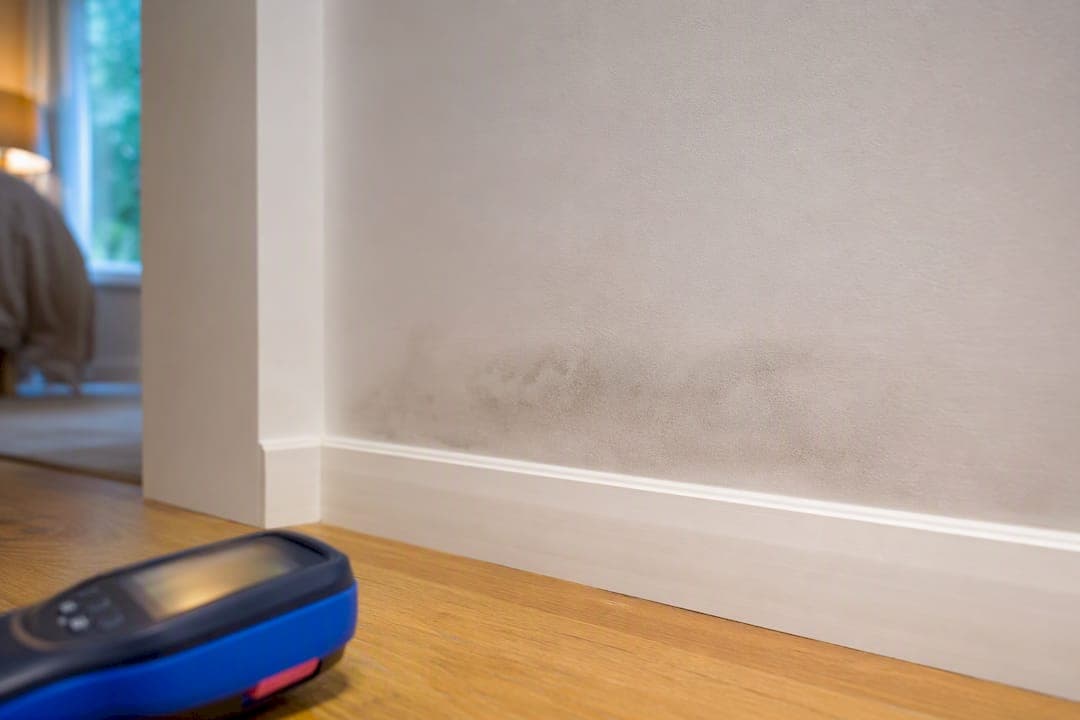
A fresh, spreading stain on a wall usually means an active leak, not old history. Check whether the patch is damp to touch and growing, then act fast: shut off the nearest isolation valve or the main if water is actively coming through, run a water meter test, and move anything valuable away from the area. This guide walks through confirming the leak, narrowing its location without ripping into plaster, and deciding when to call a licensed tradesperson.
TL;DR:
- An active leak usually presents as a damp, expanding stain with a musty smell and ongoing water meter movement, requiring swift action.
- Isolation testing through shutting off fixtures and moisture scans can locate the leak without destructive wall opening, but certain signs demand immediate professional intervention.
- Professionals confirm the source using non-destructive methods before making targeted cuts, fixing the pipe, and thoroughly drying to prevent mold growth.
- Quick air circulation, removing wet materials, and verifying wall dryness are essential within the first 24 hours to prevent long-term damage.
- Effective diagnostics upfront, including photos and meter logs, keep repair costs in check and avoid unnecessary destruction or delayed resolution.
Table of Contents
- Signs of a water leak in a wall: what to check right now
- How do you find a leak without opening the wall?
- When should you call a professional instead of monitoring?
- What does a professional actually do to fix a wall leak?
- Drying out and preventing mould after a wall leak
- How long does it take and what drives the cost?
- What I've learned about wall leaks that homeowners get wrong
- Get a wall leak diagnosed properly, without the guesswork
- Sources
Signs of a water leak in a wall: what to check right now
A few quick checks separate an active leak from an old, dried-out mark. Fresh damage tends to look different from history on the wall.
- Look at the edges. Fresh leaks have soft, expanding borders. Bubbling or peeling paint, a soft or spongy patch, or a stain that has visibly grown since yesterday all point to moisture still moving through the plaster.
- Touch it. A damp, cool patch means water is currently present. A dry, flaky stain that hasn't changed shape in weeks is probably historical.
- Smell for must. A musty, earthy odour usually means damp has been sitting long enough to start breeding mould.
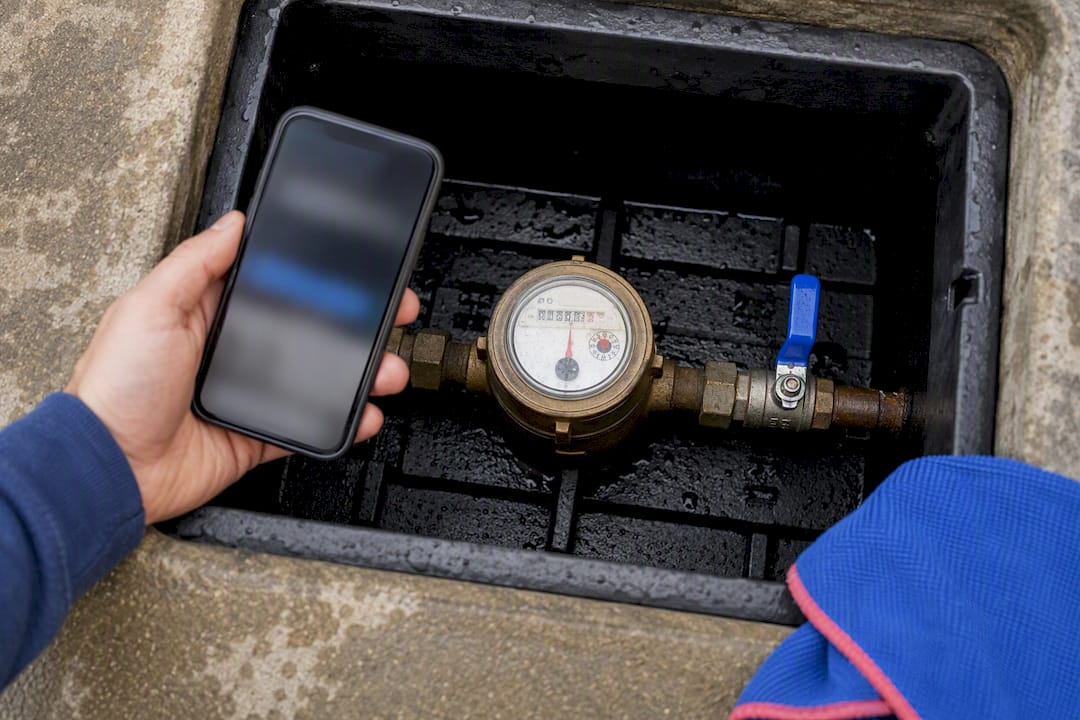
- Run the water meter test. Turn off every tap, appliance and irrigation line, note the meter reading, wait 15 to 20 minutes without using any water, then check it again. Movement confirms a pressurised leak somewhere in the system.
- Listen. With fixtures off, a hiss or trickle inside the wall usually means a supply pipe is still under pressure and actively losing water.
Common signs also include unexplained jumps in your water bill, warped skirting boards, and discolouration that keeps reappearing after painting over it. If none of the active checks trigger, you're likely dealing with an old stain, but it's still worth watching for a week or two before you paint over it.
How do you find a leak without opening the wall?
Water inside a cavity rarely stays where it started. It tracks along studs, pools at the lowest point, and shows up on the surface metres from the actual pipe. Chasing the visible stain with a hammer is how people end up with three holes and still no answer.
Isolation testing narrows things down cheaply. Shut off the valve to one fixture at a time (basin, toilet, washing machine) and watch the meter after each. If the meter stops moving once a specific fixture is isolated, you've found your suspect without touching the wall.
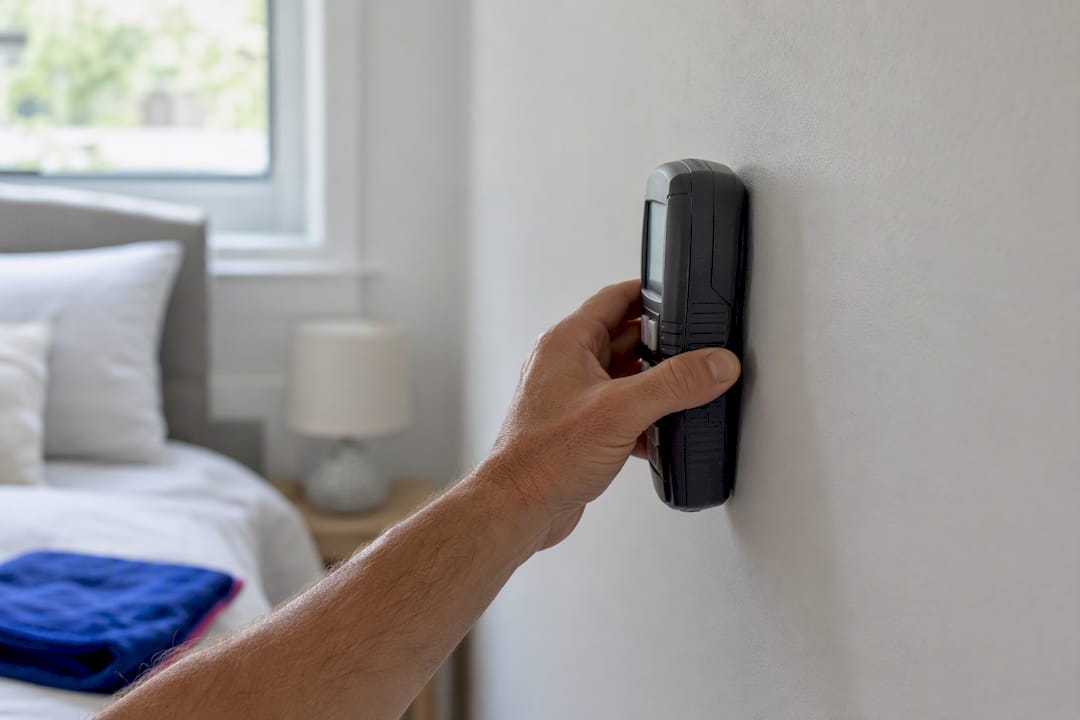
- Moisture-meter scanning: work in a grid across the affected wall and mark readings; a cluster of high readings usually sits closer to the source than a single peak.
- Thermal imaging: useful when there's a temperature difference between the leak water and the wall surface, but it can miss a slow or dormant leak that hasn't built up enough contrast to show.
- Acoustic correlation: listens for the sound signature of pressurised water escaping a pipe; it works best on leaks with a measurable flow rate, less so on a slow seep or condensation.
- Endoscopic inspection: a small camera through a drilled access point confirms what's actually happening inside the cavity before anyone commits to a larger cut.
Choosing a small, targeted access point over blind demolition saves both money and finish work. Photograph every reading, note the meter behaviour, and keep a simple log. A tradesperson diagnosing a water leak behind a wall works faster with that record in hand than starting from scratch.
Pro Tip: Take a photo of the meter reading with a timestamp before and after your isolation test. It sounds basic, but it's the single most useful thing you can hand a plumber before they've even arrived.
When should you call a professional instead of monitoring?
Some signs mean stop testing and pick up the phone. Waiting on these usually makes the repair bigger, not smaller.
- The meter keeps moving with every tap, appliance and irrigation line off.
- Water is actively dripping, or you can hear it running inside the wall.
- Ceilings are bulging, floors near the wall feel soft or warped, or the damp is anywhere near electrical wiring or power points.
- You can see mould growth, or the wall has clearly been wet for an extended period.
- The leak sits near a hot-water system or gas appliance, or your isolation tests haven't narrowed the source.
Visible mould or long-standing saturation isn't a wait-and-see situation. Health guidance on mould exposure treats it as a trigger for remediation, not casual monitoring. Getting a licensed plumber in early, before the damage spreads through insulation and framing, is almost always cheaper than delaying.
What does a professional actually do to fix a wall leak?
A tradesperson diagnosing an in-wall leak generally works through the same sequence, whether it's a home, a strata block, or an aged care facility.
- Isolate. Confirm which fixture or line is implicated using meter and valve tests, similar to what you'd do yourself but with more precise gauges.
- Detect non-destructively. Moisture meters, thermal cameras, acoustic correlators and endoscopes narrow the source before any cutting happens.
- Access. A small, targeted cut goes in at the most likely point rather than an open-ended demolition of the wall.
- Confirm and repair. Once the pipe or fitting is visible, the actual fault (a split joint, corroded section, or failed seal) gets fixed or replaced.
- Dry and remediate. Fans, dehumidifiers and sometimes specialist drying equipment bring the cavity back to a safe moisture level before anything gets patched.
Ask your tradesperson three things before work starts: how big the access cut will be, whether the repair needs a permit (relevant for wet areas under wet-area building rules), and how they'll verify the wall is fully dry before reinstating the finish.
Pro Tip: Ask for the moisture reading before and after drying, in writing. A verbal "it's dry now" isn't proof; a number on a moisture meter is.
Drying out and preventing mould after a wall leak
Getting air moving fast matters more than almost anything else in the first 24 hours.
- Open windows, run fans, and bring in a dehumidifier if the room allows it.
- Remove wet contents, rugs and furniture touching the affected wall.
- Photograph the damage before you touch anything, for insurance and for your tradesperson.
- Check whether wet insulation needs full replacement. Wet insulation loses its performance and rarely dries out properly in place.
- If mould has already taken hold or the cavity was saturated for days, bring in a remediation specialist rather than relying on fans alone.
- Confirm the wall reads dry on a moisture meter before anyone paints or patches over it. Painting over damp plaster just traps the problem.
How long does it take and what drives the cost?
A small, isolated pipe repair with easy access can often be sorted same day. A leak behind tiled or stone wet areas, or one that's spread through multiple wall cavities, can run several days once drying and reinstatement are factored in.
- Wall finish matters a lot. Tile and stone surrounds cost more to reinstate than plasterboard.
- How far the moisture has spread decides whether you're patching one panel or replacing a run of insulation and lining.
- Repiping needs, if the pipe itself is old or corroded beyond a single repair, add both time and cost.
- Access difficulty, particularly in tight cavities or behind fixed cabinetry, extends labour hours.
- Mould remediation, if triggered, is a separate scope on top of the plumbing repair itself.
Accurate diagnostics up front, rather than guesswork, keep the job to its actual scope instead of ballooning once the wall is opened. Bring photos, your meter readings and any moisture-meter logs to the quote; it genuinely speeds up an accurate estimate.
What I've learned about wall leaks that homeowners get wrong
People guess. They see a stain, assume it's the shower hose or "probably just condensation," and paint over it before anyone's confirmed anything. That's the single most expensive mistake I see, because painting over an active leak doesn't fix the leak, it just hides the evidence you'll need later. Run the meter test first. Monitoring is fine for a dry, unchanged mark you're keeping an eye on, but the moment it's damp, growing, or the meter's moving, get a licensed tradesperson in. Minimal access and clear communication about what's actually happening in that cavity beats blind demolition every time.
— Mike
Get a wall leak diagnosed properly, without the guesswork
Emergency call-outs are available across the Mornington Peninsula and surrounding Melbourne suburbs for exactly this problem: a wet wall, an unclear source, and a homeowner who doesn't want three holes punched through their plaster before anyone finds the actual pipe. Plumbers use targeted, non-destructive detection first, then open the smallest possible access point, fix the fault, and coordinate the drying so mould doesn't get a foothold.

Before we arrive, have your water meter readings, a few photos of the stain, and any moisture-meter checks you've already run ready to go. It cuts diagnostic time on site and gets to the fix faster. If a leak is spreading, dripping, or anywhere near your hot water system or wiring, don't wait on it. Book a call-out online to get someone qualified looking at it today.
Sources
- How to Detect A Water Leak
- How to find a water leak in your home in common spots
- EnHealth guidance: potential health effects of mould in the environment
- Water leaks behind walls: detection, access and repair