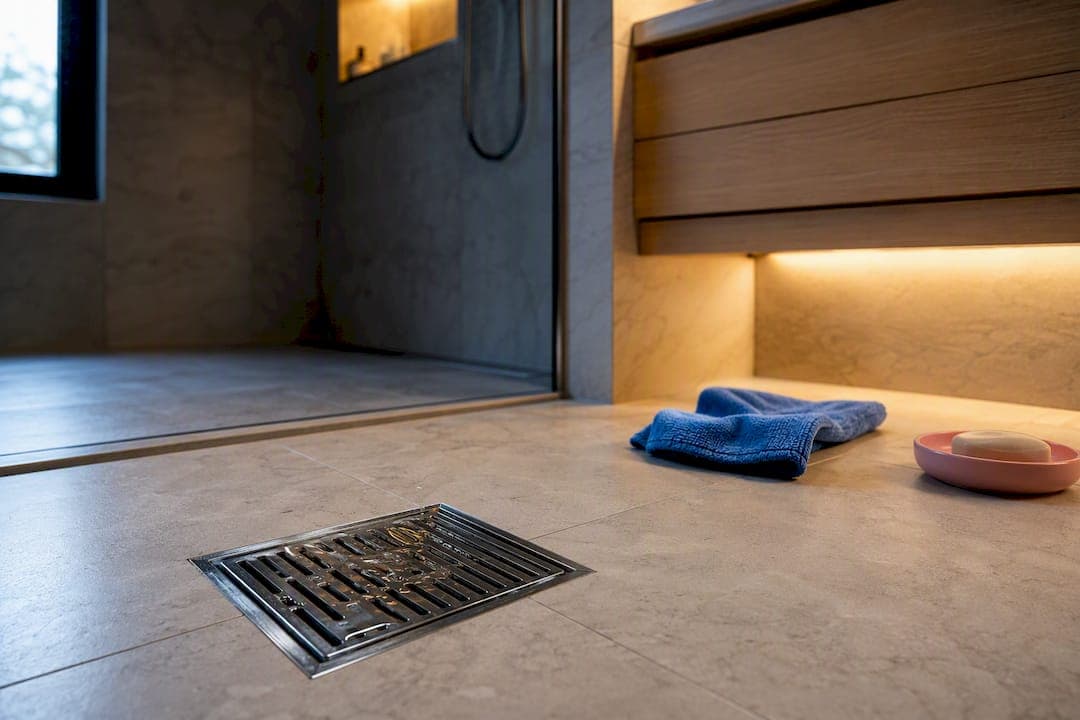
Most sewer smell in bathroom cases come down to one of three things: a dry P-trap, a clogged drain full of biofilm, or a failing toilet seal. Run water in every fixture for 30 to 60 seconds, open a window, and stop using the room if the smell is sharp or spreading. If it could be fuel gas rather than sewer gas, get out and call emergency services immediately.
TL;DR:
- Refill all dry P-traps with water and add a splash of mineral oil to prevent evaporation, especially in infrequently used bathrooms.
- Check for a sewer odor that smells like rotten eggs, as this confirms hydrogen sulphide presence, while fuel smells require immediate evacuation and emergency services.
- Identify whether the smell persists after running water, which indicates a deeper issue such as a clogged drain, blocked vent, or failing seal, rather than a simple dry trap.
- Avoid chemical cleaners and DIY repairs on roof vents or sewer lines, as these require professional equipment and expertise to ensure safety and effectiveness.
- When multiple fixtures are affected or odors recur quickly after refilling traps, professional inspection with camera equipment is essential to diagnose system-wide faults.
Table of Contents
- Three fast checks you can do in under 10 minutes
- What causes a sewer smell in a bathroom?
- Safe, step-by-step DIY fixes to try before calling a plumber
- How to diagnose serious problems and when to get professional help
- How to stop the smell coming back
- What plumbers actually do and what homeowners often miss
- Why the safety step gets skipped, and it shouldn't
- Get a professional fix for a sewer smell that won't go away
- Sources
Three fast checks you can do in under 10 minutes
Before you touch a spanner or ring anyone, spend ten minutes narrowing down the source. This single step saves most homeowners an unnecessary call-out.
- Run every tap, shower, and floor waste for a minute. This refills any P-traps that have dried out from disuse, which is the single most common fix for a random sewer smell in bathroom spaces.
- Walk the room and sniff close to each fixture. Sink, shower drain, toilet base, floor waste. Note where it's strongest and whether it appears only after you flush or run water.
- Check the smell itself. Sewer gas smells like rotten eggs, thanks to hydrogen sulphide. If it smells more like a fuel gas leak, or you're not sure, leave the building and call emergency services rather than investigating further.
Pro Tip: If the smell disappears within a minute of running water into a specific drain, you've found a dry trap. If it lingers after all fixtures have been run, you're likely dealing with something further down the line.
Hydrogen sulphide exposure at low concentrations causes that rotten-egg smell and can irritate airways, according to NSW Health guidance, which is exactly why a strong, sustained odour deserves more than a quick spray of air freshener.
What causes a sewer smell in a bathroom?
Six culprits account for almost every case, and each one gives off slightly different clues.
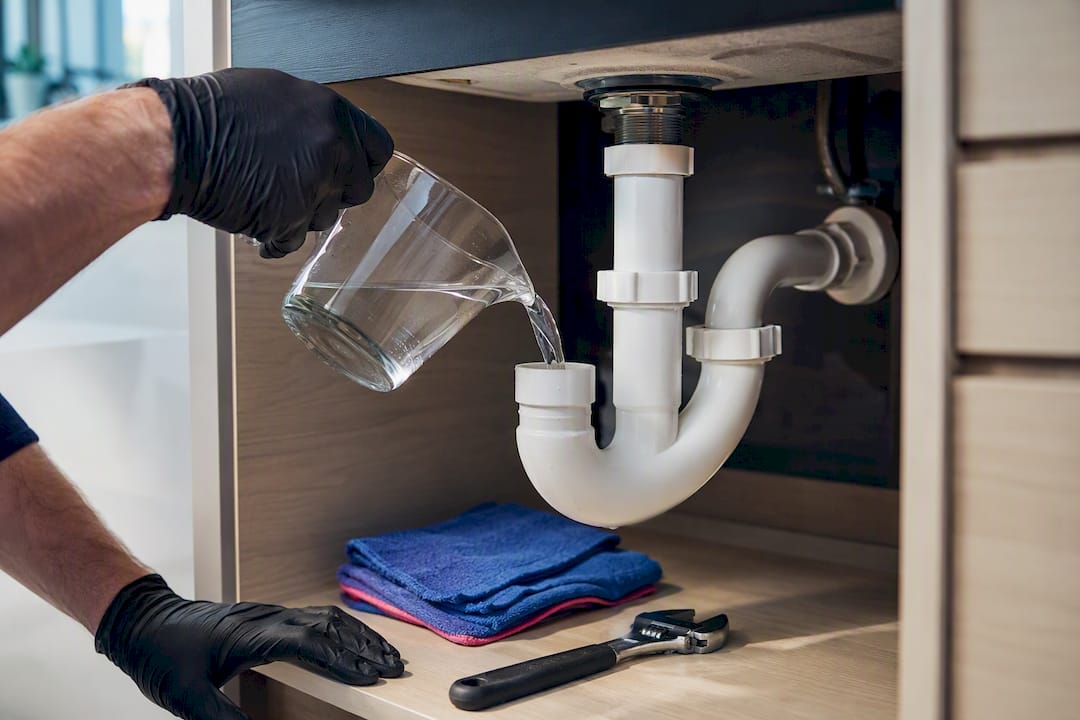
Dry P-traps are the most common cause by far. That curved pipe under every sink, shower, and floor waste holds a small amount of water that blocks gas from the sewer line rising back into the room. Guest bathrooms, spare showers, and floor wastes that rarely see water are the usual suspects. Leave a shower unused for a few weeks, especially over a Melbourne winter when the spare bathroom sits idle, and the trap dries out completely.
Clogged drains and biofilm build up from hair, soap scum, and skin cells lining the inside of pipes. As that layer breaks down, it produces hydrogen sulphide, the same gas that gives sewage its smell. You'll usually notice slower drainage alongside the odour, and the smell tends to get worse, not better, over a week or two.
Blocked vent pipes cause a different pattern entirely. Every drain system relies on a vent running up through the roof to let air in and gas out. When that vent gets blocked, usually by leaves, a bird's nest, or a section knocked loose, multiple fixtures smell at once and you'll often hear gurgling when you drain the bath or flush the toilet.
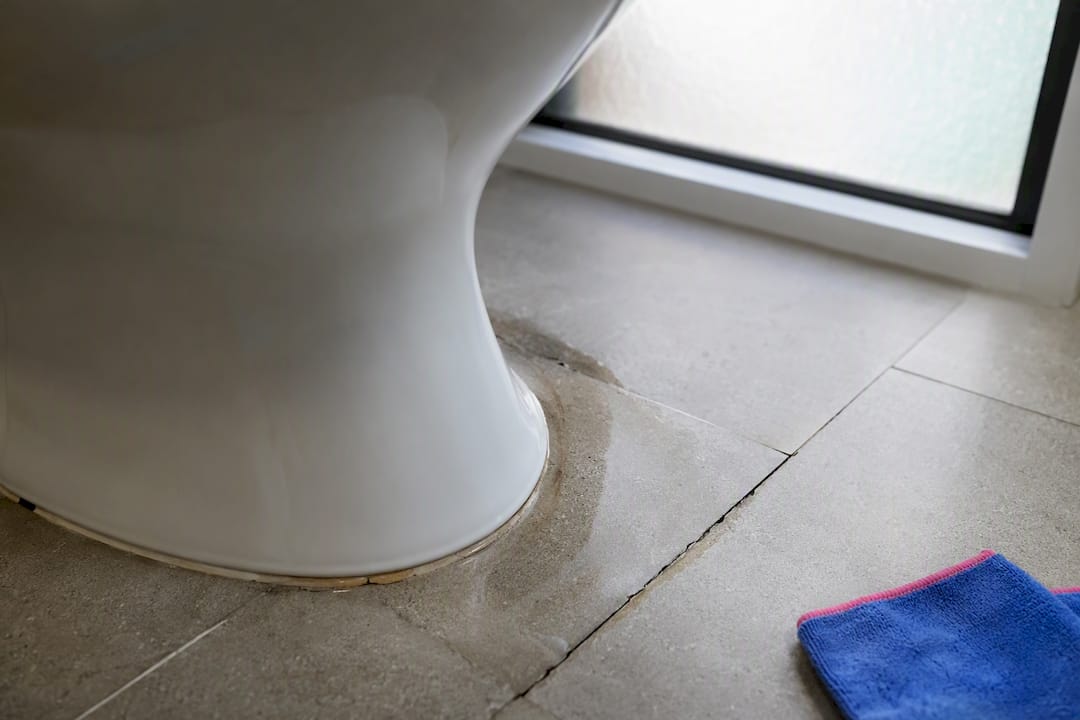
Toilet seal problems point squarely at the wax ring under the bowl. If the smell is strongest right in the toilet base, give the bowl a gentle rock. Movement, cracked grout, or a water stain on the floor around the base are all signs the seal has failed and sewer gas is escaping under the toilet rather than through it.
Cracked pipes and sewer-line issues produce a persistent, whole-house odour rather than a one-fixture problem. Root intrusion, ground movement, or an ageing pipe can crack a line outside your bathroom altogether. Backups, slow drains across the whole house, and damp patches on the ground outside are the tell-tale signs.
The most common causes really do split cleanly between these fixture-level and system-level faults, and working out which category you're in determines whether a small, low-cost fix or a major costly repair is coming.
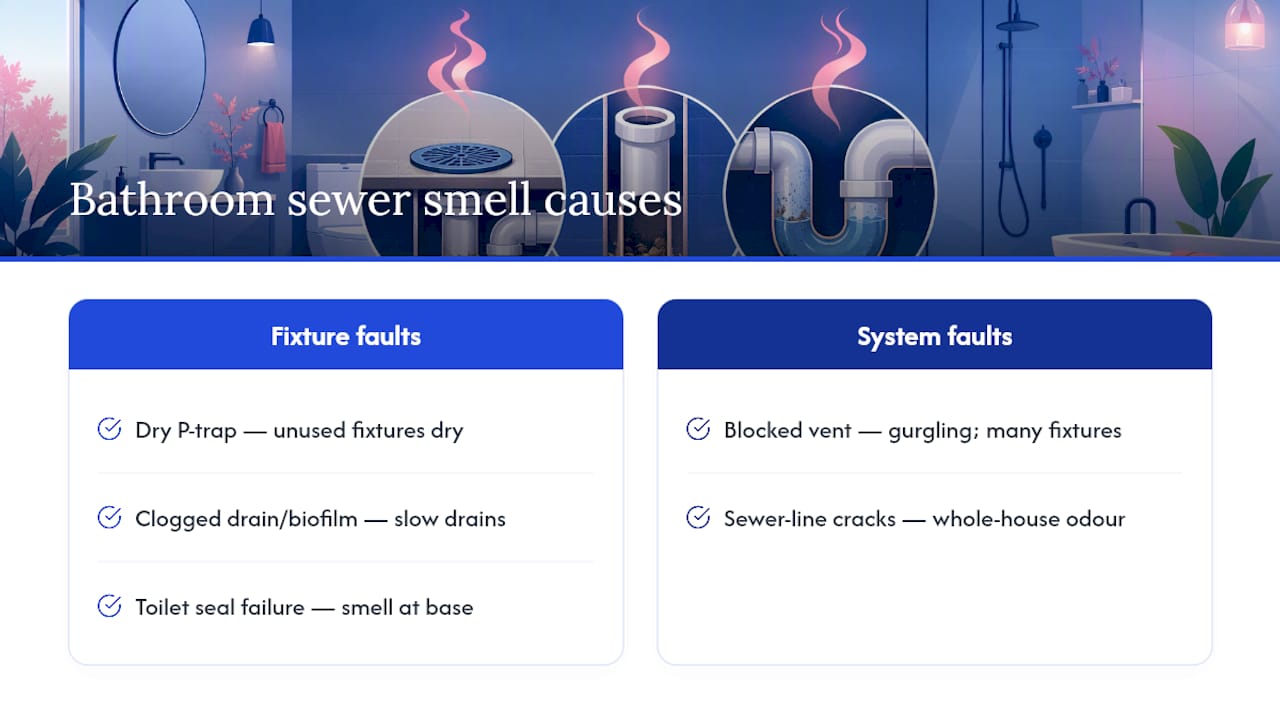
Sewer gas versus fuel gas is the one distinction that changes everything. Sewer gas smells like rotten eggs and tends to be localised to drains and fixtures. A fuel gas leak often smells different again, and if you have any doubt at all, treat it as an emergency, leave the property, and call emergency services before doing anything else.
Safe, step-by-step DIY fixes to try before calling a plumber
Once you've localised the smell, work through these steps in order. Most sewer odour problems get solved somewhere in the first three.
- Refill every trap you found dry. Run water for a full minute in each affected fixture. For floor wastes or showers you rarely use, add a splash of mineral oil on top of the water afterwards. It slows evaporation and can keep the trap wet for months instead of weeks.
- Clear visible debris and biofilm. Pull the stopper out of the sink or shower and physically remove the hair and gunk sitting in the trap. A cheap hand auger or drain snake reaches further down than your fingers ever will.
- Run a baking soda and vinegar flush. Half a cup of baking soda followed by a cup of vinegar, left to fizz for 15 minutes, then flushed with hot water, breaks down mild biofilm without the corrosive risk of heavy-duty drain chemicals. Hazardous chemical cleaners can damage older pipework and make a plumber's job harder later, so this gentler approach is worth trying first.
- Clean the sink overflow and shower drain cover. These are the spots people forget. Biofilm builds up in the overflow channel of a basin just as easily as in the main drain, and it's often the actual source of a smell you'd blamed on the trap.
- Test the toilet base. Rock the bowl gently by hand. Any movement, a soft floor underneath, or discolouration at the base means the wax ring has likely failed. Replacing it is a job most confident DIYers can manage, but it requires lifting the toilet clean off the floor, which is where plenty of people decide to call a plumber instead.
Pro Tip: Never pour bleach and vinegar-based cleaners into the same drain in quick succession. Mixing chemical types, even household ones, can produce fumes you don't want to be breathing in a small bathroom.
Steps you shouldn't attempt yourself: clearing a blocked roof vent from height, digging up a suspected cracked sewer line, or dealing with an actual sewage backup. These sit firmly in professional territory, both for safety and because getting them wrong tends to turn a $300 repair into a $3,000 one.
How to diagnose serious problems and when to get professional help
A handful of signs mean it's time to stop troubleshooting and start dialling.
- The smell returns within a day or two of refilling every trap you can find.
- More than one fixture is affected, especially ones that aren't connected to each other.
- You see an actual backup: water rising in a drain when another fixture is used, or sewage visible anywhere.
- There's continuous gurgling from drains even when nothing is running.
Any one of these points toward a system-level fault rather than a single dry trap, whether that's a blocked vent, a failing seal, or an issue in the sewer line itself. A licensed plumber will typically start with a camera inspection to see exactly what's happening inside the pipe before recommending hydrojetting, a wax-ring replacement, vent clearing, or, in more serious cases, a section of pipe repair.
If you're seeing an actual backup or a persistent strong odour, stop using water-heavy fixtures like the washing machine or a second bathroom, and arrange an inspection urgently rather than waiting it out. A DIY trap refill takes minutes. A vent clear or wax-ring swap is usually a same-day professional job. A sewer-line repair can run from a few hours to a couple of days depending on what the camera finds.
How to stop the smell coming back
A short routine prevents almost every recurring case.
- Weekly: run water through every sink, shower, and floor waste in the house, including ones you never use. Wipe down stoppers and clear the overflow channel while you're at it.
- Monthly: flush drains with the baking soda and vinegar combination, or a commercial enzyme-based cleaner, and watch for any drain that's started running slower than the others.
- Periodically: glance at the roof vent from ground level if you can see it safely (never climb up to inspect it yourself), and get a full plumbing inspection every year or two. Trap primers are worth fitting on floor wastes that dry out repeatedly.
Pro Tip: Set a phone reminder for the first of each month to run water through the spare bathroom. It takes 90 seconds and it's the single habit that prevents the most common cause of recurring odour.
Keep the room ventilated, avoid flushing wipes, cotton buds or anything other than toilet paper, and skip the harsh chemical drain cleaners in favour of mechanical or enzyme methods. A quick guide to bathroom plumbing upgrades covers longer-term fixes like adding trap primers if this keeps happening in the same spot. General landlord maintenance guidance on plumbing upkeep is also worth a read if you're managing a rental property with the same recurring issue.
What plumbers actually do and what homeowners often miss
Most call-outs for a sewer smell in bathroom spaces get fixed with one of three things: a trap refill, a cleared vent, or a new wax ring. The mistake I see most often is homeowners spraying air freshener for weeks instead of running water through the spare shower for sixty seconds.
When you book a plumber, tell them exactly where the smell is strongest, when it started, and whether it's one fixture or several. That detail alone often tells an experienced tradesperson which tool to bring before they've even walked in the door.
Why the safety step gets skipped, and it shouldn't
The advice everyone gives is "check your traps first," and that's genuinely correct most of the time. What gets left out is the one step that actually matters more: working out whether you're smelling sewer gas or something combustible before you start troubleshooting anything else.
I'd argue most bathroom odour guides bury the safety gating too far down the page, after three paragraphs on baking soda. That's backwards. Rotten eggs, localised to a drain, is sewer gas and it's a nuisance problem nine times out of ten. Anything sharper, more chemical, or spreading beyond the bathroom deserves a phone call before a Google search.
Once safety is ruled out, the DIY steps in this guide really do resolve most cases. Where I'd push back on the usual advice is the instinct to reach for stronger and stronger chemical cleaners when the first flush doesn't work. That approach damages older pipework and just delays the plumber's visit you probably needed from the start.
— Mike
Get a professional fix for a sewer smell that won't go away
If you've refilled every trap, run the baking soda flush, and the bathroom still smells like sewage, it's time for someone with a camera and a wet vest, not another bottle of drain cleaner. Emergency call-outs are available across the Mornington Peninsula and surrounding Melbourne suburbs, and a sewer odour that keeps coming back is exactly the kind of job professional plumbers sort out properly the first time, not the fourth.

A typical call-out for a persistent sewer smell starts with locating exactly where the odour is coming from, using a camera inspection where the fault sits below floor level or beyond a drain you can see. From there it might be a vent clear, a wax-ring replacement, or a hydrojetting job on a line clogged with years of biofilm. You'll get a clear explanation of what's wrong and what it costs before any work starts, and a follow-up if the fix needs a second visit. If you're already dealing with a backup or a smell that's spread past one fixture, don't wait on it. Book an inspection with Dualflow Services and get it looked at properly.
Sources
For more detail on the health risks of sewer gas exposure, see NSW Health's hydrogen sulphide fact sheet. For a deeper look at diagnosing fixture-level versus system-level odours, InspectApedia's guide is a solid technical reference, alongside Dualflow Services' own guide to what a plumbing inspection actually covers.
- Combustible gas detection and safety — NSW RFS
- Why does my bathroom smell like sewage? — HowStuffWorks
- Separate plumbing fixtures from plumbing drain system as the source of sewage or septic odors — InspectApedia
- Sewage overflows at home — Better Health Victoria