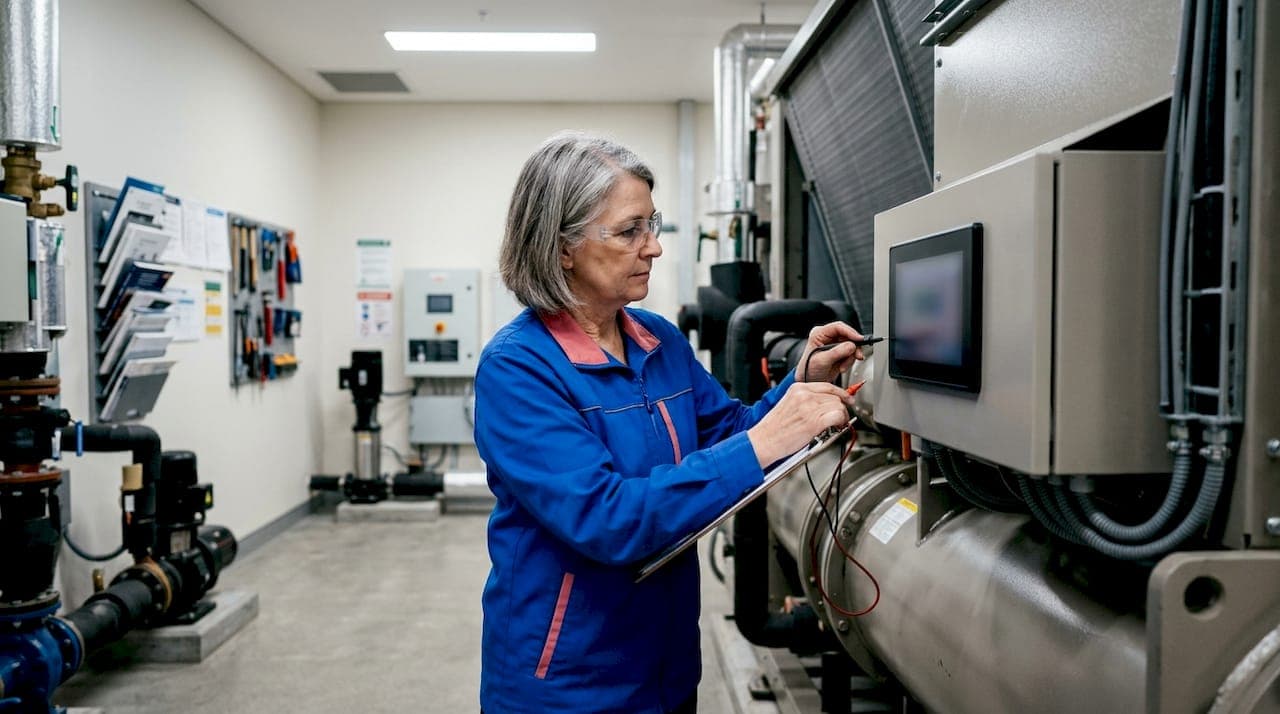
What does it take to maintain cooling systems in aged care?
Getting cooling system maintenance right in aged care is not optional. Residents are physiologically more vulnerable to heat stress than the general population, and a system failure during a Victorian summer can escalate from discomfort to a medical emergency within hours. The core obligations are clear: service HVAC equipment regularly against AS/NZS 3666 and AS 1851 standards, hold indoor temperatures to 22–24°C in summer, and keep documentation audit-ready at all times.
The key practices every facility manager needs in place:
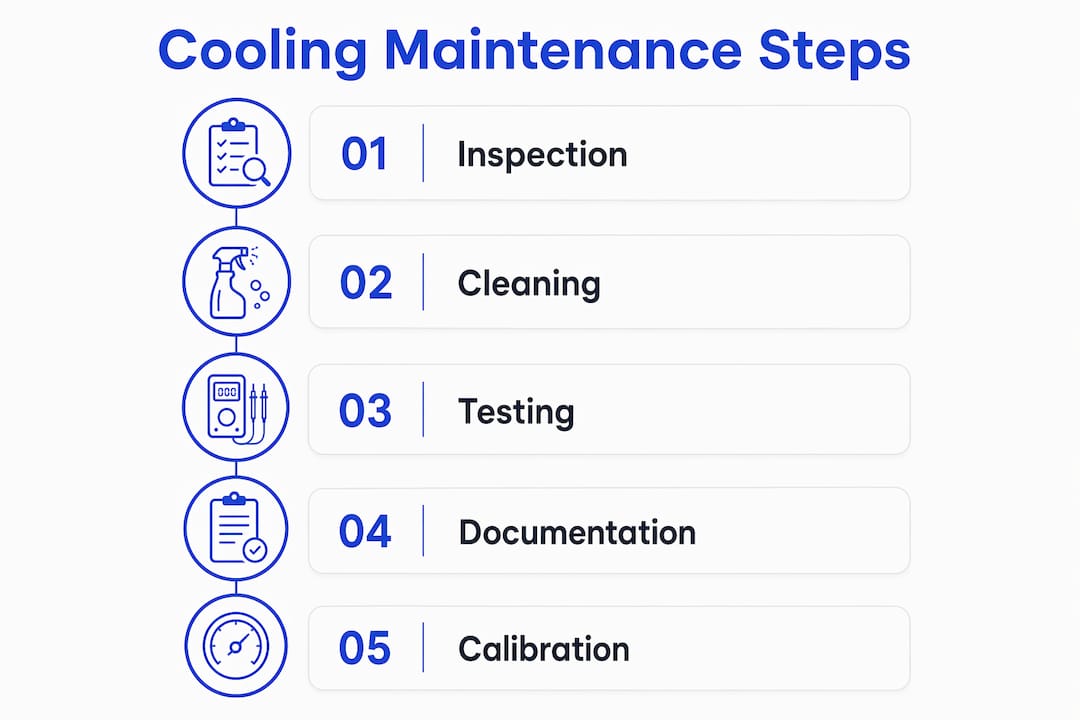
- Schedule preventative HVAC servicing at least twice yearly, aligned with AS 1851 intervals
- Monitor and record indoor temperatures four times daily during hot weather across all resident areas
- Maintain humidity between 40–60% RH to reduce respiratory risk and limit microbial growth
- Inspect and clean coils, filters, and ductwork regularly under AS/NZS 3666 requirements
- Keep a tested emergency response plan for power outages, including generator backup for critical cooling zones
- Provide individual thermostatic controls per resident room to meet varied comfort needs
- Confirm ventilation systems deliver adequate outdoor air exchange rates, particularly in common areas
How should you balance preventative and reactive HVAC maintenance?
Preventative maintenance is the backbone of safe aged care cooling. Reactive repairs alone create gaps that put residents at risk, particularly during peak summer demand when systems are working hardest.
- Schedule filter replacements and coil inspections at intervals specified by AS 1851, not just when faults appear
- Log every maintenance activity with date, technician details, and findings to support compliance audits
- Respond to any fault affecting resident comfort within hours, not days. A failed unit in a resident room is a clinical risk, not a facilities inconvenience
- Maintain individual room temperature controls so nursing staff can adjust conditions without waiting for a technician
- Pre-summer servicing should include checking refrigerant levels, electrical connections, and thermostat calibration
Pro Tip: Align your HVAC service schedule with the Victorian Department of Health's heatwave readiness checklist. Facilities that complete pre-summer assessments are better positioned to pass both clinical and building compliance audits.
Maintenance logs are not just paperwork. They are your primary evidence of due diligence if a resident health incident is linked to a cooling failure. Keep them structured, accessible, and retained for the periods your state health department requires.
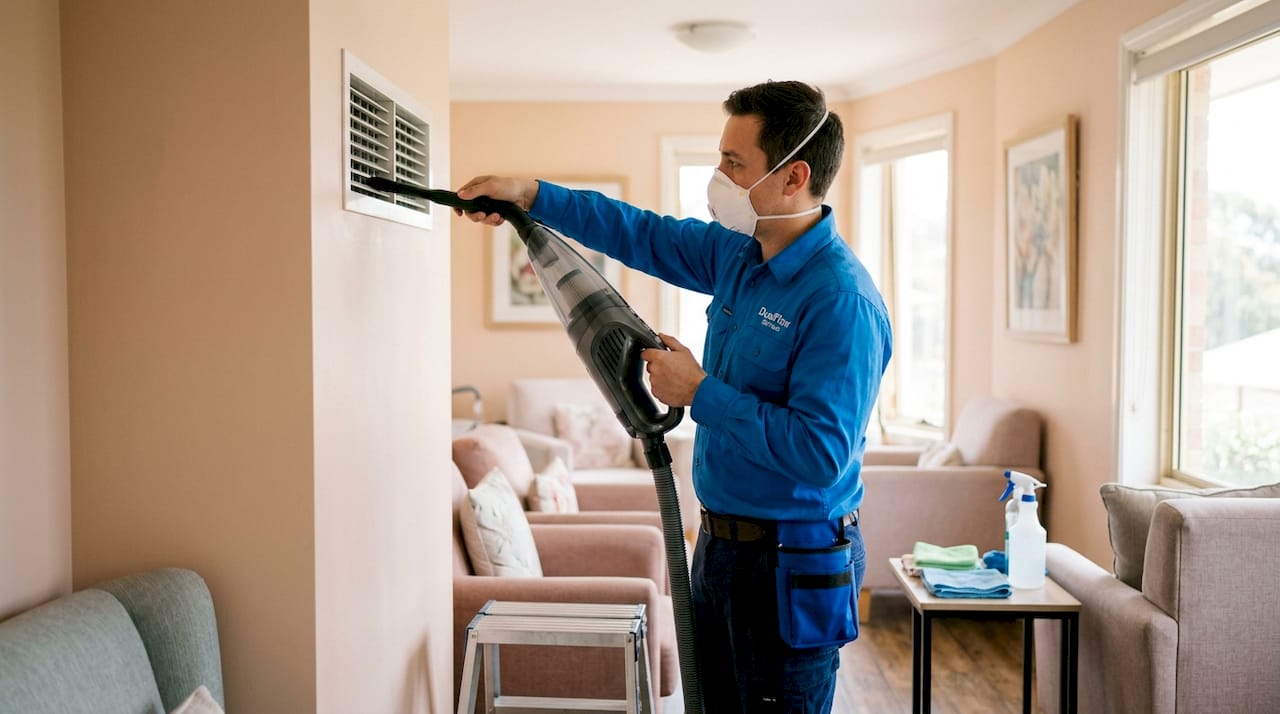
How do you protect indoor air quality and control infection risk?
Aged care HVAC systems carry a specific infection risk that standard commercial buildings do not. Coils, drip trays, and ductwork create conditions where Legionella and other pathogens can establish if cleaning is deferred.
- Clean evaporator coils and condensate drip trays on a schedule that meets AS/NZS 3666 requirements for microbial control
- Inspect ductwork for biofilm, mould, and particulate build-up, particularly in high-humidity zones like bathrooms and laundries
- Consider UV-C air disinfection technology in high-risk areas such as shared corridors and clinical spaces, where airborne transmission risk is elevated
- Maintain humidity at 40–60% RH. Below 40%, respiratory mucous membranes dry out; above 60%, mould and dust mites proliferate
- Apply cleaning protocols from the Aged Care Infection Prevention and Control Guide to ventilation grilles and diffusers in communal areas
- Balance energy efficiency against air exchange rates. Cutting ventilation to save power in a shared lounge is a false economy when one respiratory illness spreads through the wing
Humidity between 40–60% RH is the target band for aged care HVAC. Below this range, residents face increased respiratory irritation; above it, microbial growth accelerates in ductwork and on surfaces.
Fans deserve a specific note. Fans do not cool air; they move it. When indoor temperatures exceed 35°C or humidity is high, a fan blowing directly onto a resident can accelerate heat stress rather than relieve it. Staff training on fan use is part of your infection and safety programme, not an afterthought.
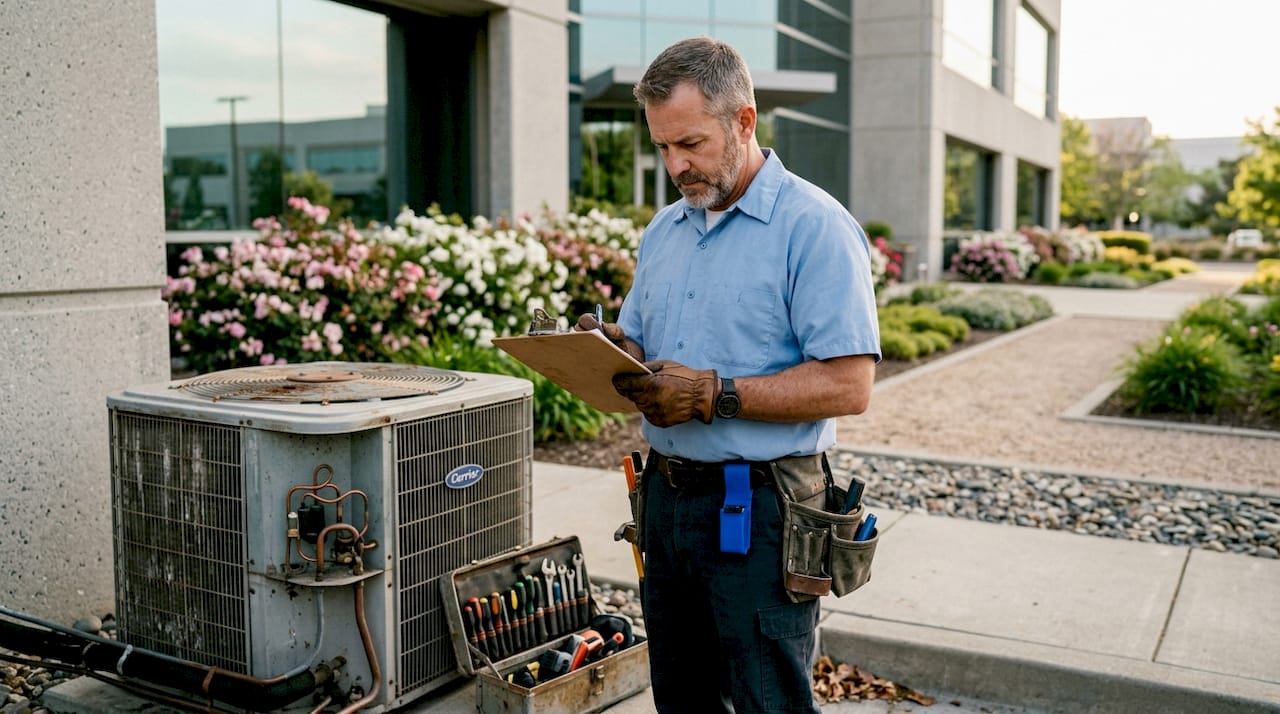
What compliance obligations apply to aged care cooling systems in Victoria?
Victorian aged care facilities operate under a layered compliance framework. Getting across all of it is part of the facility manager's role, not something to delegate entirely to a contractor.
- The National Construction Code Part E2 sets design, installation, and maintenance requirements for all mechanical heating, cooling, and ventilation systems, including the obligation that systems remain maintainable throughout their serviceable life
- AS/NZS 3666 governs air-handling and water systems to control microbial hazards, including Legionella. Compliance is not periodic. It is ongoing
- AS 1851 sets the scheduled maintenance intervals for fire protection systems, which interact directly with HVAC smoke dampers and fire-rated ductwork penetrations
- NCC Section J requires energy-efficient mechanical services, but the code is explicit that comfort cannot be sacrificed for energy savings in aged care settings
- The Victorian Health Building Authority's facility design guidelines apply to public sector facilities and reference all relevant NCC and Australian Standards obligations
- Class 9c buildings under the NCC require smoke-proof compartmentation, with HVAC fire and smoke dampers at every boundary. These dampers must be tested and documented under AS 1851
Documentation is the compliance proof. Inspectors and auditors look for records, not assurances.
How can you improve system efficiency without compromising resident comfort?
Energy efficiency and resident comfort are not competing goals in aged care, but they do require deliberate design and maintenance choices to achieve both simultaneously.
- Demand-controlled ventilation using CO2 sensors adjusts outdoor air supply based on actual occupancy in common areas, cutting energy use during low-occupancy periods without reducing air quality at peak times
- Hold summer temperatures at 22–24°C. This is narrower than standard commercial comfort bands and reflects the higher thermal sensitivity of elderly residents
- Calibrate zone controls and balancing dampers regularly so the system responds quickly to load changes without overshooting
- External shading, awnings, and insulation on sun-facing elevations reduce cooling load before it enters the building. The Victorian Department of Health specifically recommends these measures as part of heatwave readiness
- High-efficiency equipment helps meet NCC Section J targets without cutting airflow or widening temperature bands
Pro Tip: Schedule HVAC calibration during spring and autumn shoulder seasons. Adjusting system balance when outdoor temperatures are mild avoids the thermal shock that can occur when a poorly calibrated system switches between heating and cooling modes at the start of summer or winter.
What should you expect from an HVAC maintenance provider in aged care?
Not every HVAC contractor understands the specific demands of aged care. The difference between a competent general contractor and one with genuine aged care experience shows up in the details.
- Technicians should understand resident health sensitivities and work with minimal disruption to care routines. Noisy or disruptive servicing in a dementia wing has real clinical consequences
- Providers must maintain clear electrical zoning maps identifying which cooling circuits connect to backup generators. Without this, a power outage can silently cut cooling to a resident wing while the generator powers other loads
- All servicing work should follow manufacturer specifications and the relevant Australian Standards, with written records provided to the facility after every visit
- Communication with the facility manager before, during, and after each service visit is not optional. You need to know what was found, what was done, and what requires follow-up
- Providers working in aged care should understand infection control requirements and follow facility protocols on hand hygiene, PPE, and access to resident areas
Dualflowservices works across aged care, retirement villages, and disability care homes on the Mornington Peninsula, covering HVAC, electrical, and plumbing maintenance with the documentation and communication standards these environments require.
Health and safety considerations for residents during maintenance
Maintenance activities themselves carry risk for elderly residents if not managed carefully.
Noise and vibration from servicing work can distress residents with dementia or anxiety. Schedule intrusive tasks during periods when affected residents are in communal areas or during lower-activity times of day. Any work that temporarily interrupts cooling to a resident room requires a plan: portable cooling, relocation, or increased monitoring depending on the outdoor temperature and the resident's clinical status.
Chemical cleaning agents used in coil and duct cleaning must be appropriate for occupied healthcare settings. Confirm with your contractor that products meet the requirements of the Aged Care Infection Prevention and Control Guide and that adequate ventilation is maintained during and after application.
Staff training is part of the safety picture too. All care staff should know how to identify early signs of heat stress in residents, how to operate room thermostats, and when to escalate a temperature concern to the maintenance team. The Victorian Department of Health recommends training all staff on cooling alternatives, equipment use, and heatwave response protocols before each summer season.
Key takeaways
Maintaining safe cooling in aged care requires compliance with AS/NZS 3666 and AS 1851, documented preventative servicing, and individual room temperature control held at 22–24°C in summer.
| Point | Details |
|---|---|
| Temperature target | Hold summer indoor temperatures at 22–24°C, the recommended range for elderly residents to protect them from heat-related illness. |
| Standards compliance | AS/NZS 3666 and AS 1851 set the minimum servicing and air quality obligations for aged care HVAC. |
| Humidity control | Maintain 40–60% RH to limit microbial growth and protect resident respiratory health. |
| Individual room control | Each resident room needs its own thermostatic control to meet varied comfort needs and Aged Care Quality Standards. |
| Emergency planning | Electrical zoning maps must identify cooling circuits tied to backup generators before an outage occurs. |
Need professional HVAC maintenance for your aged care facility?

Dualflowservices provides scheduled maintenance, emergency call-out, and installation services for heating, cooling, and electrical systems across aged care facilities, retirement villages, and disability care homes on the Mornington Peninsula. Our team works to Australian Standards with the documentation and communication your facility needs for compliance and audit readiness.
Before summer arrives, check your electrical safety protocols and book a pre-season HVAC service with a team that understands aged care. Contact Dualflowservices to arrange a site assessment.