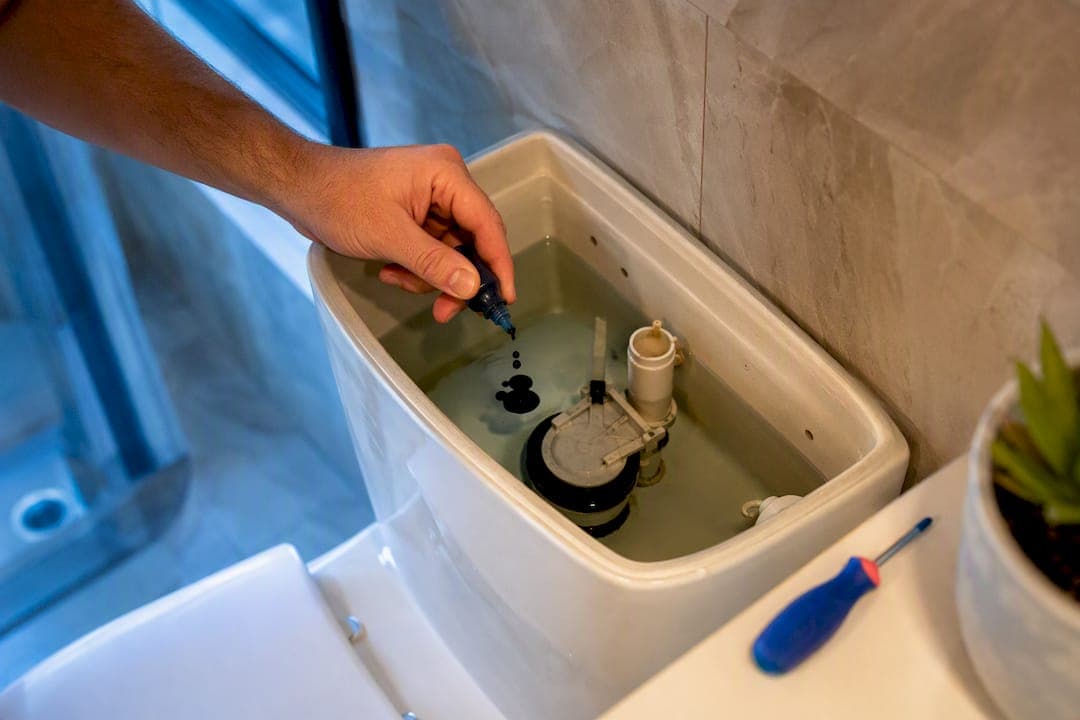
Most leaking toilets come down to five usual suspects: a worn flapper or outlet washer, a faulty fill valve or float, a failed wax ring at the base, loose closet bolts, or a cracked cistern. If water is pooling at the base, stop using the toilet straight away. If the cistern is overflowing or spreading water, shut off the supply valve behind the pan. Simple fixes are often DIY; anything involving the flange, sewer connection, or a cracked bowl usually needs a licensed plumber.
TL;DR:
- A worn flapper or outlet washer is the most common silent leak, often confirmed with a dye test, and may cause periodic refilling without visible drips.
- Issues with the fill valve or float produce faint hissing sounds and frequent short bursts of refill, which are sometimes mistaken for a flapper leak.
- Base leaks usually result in damp patches or pooling water around the toilet's footprint, especially after flushing, and may be caused by a faulty wax ring, loose bolts, or a corroded flange.
- Cracks in porcelain or leaks from supply lines and shut-off valves are identifiable through moisture, corrosion, or slow drips, and often require professional repair.
- Frequent leaks in older toilets are more likely due to degraded rubber seals, older porcelain quality, or corroded components, with hard water accelerating failure rates.
Table of Contents
- Common toilet leak reasons and the symptoms that give them away
- How do you find out where a toilet is actually leaking?
- Step-by-step fixes and when to call a licensed plumber
- Maintenance checklist that stops leaks before they start
- What a licensed plumber actually does on a call-out
- Does hard water cause toilet leaks?
- Are older toilets more likely to leak?
- Can weather or the seasons cause a toilet to leak?
- What damage can a leaking toilet actually cause?
- A quick word on priorities
- Book a repair instead of guessing
- Sources
- FAQ
Common toilet leak reasons and the symptoms that give them away
Every leaking toilet tells you where it's hurting, if you know what to look for. The trick is matching what you see and hear to the part that's actually failing, rather than guessing and replacing parts at random.
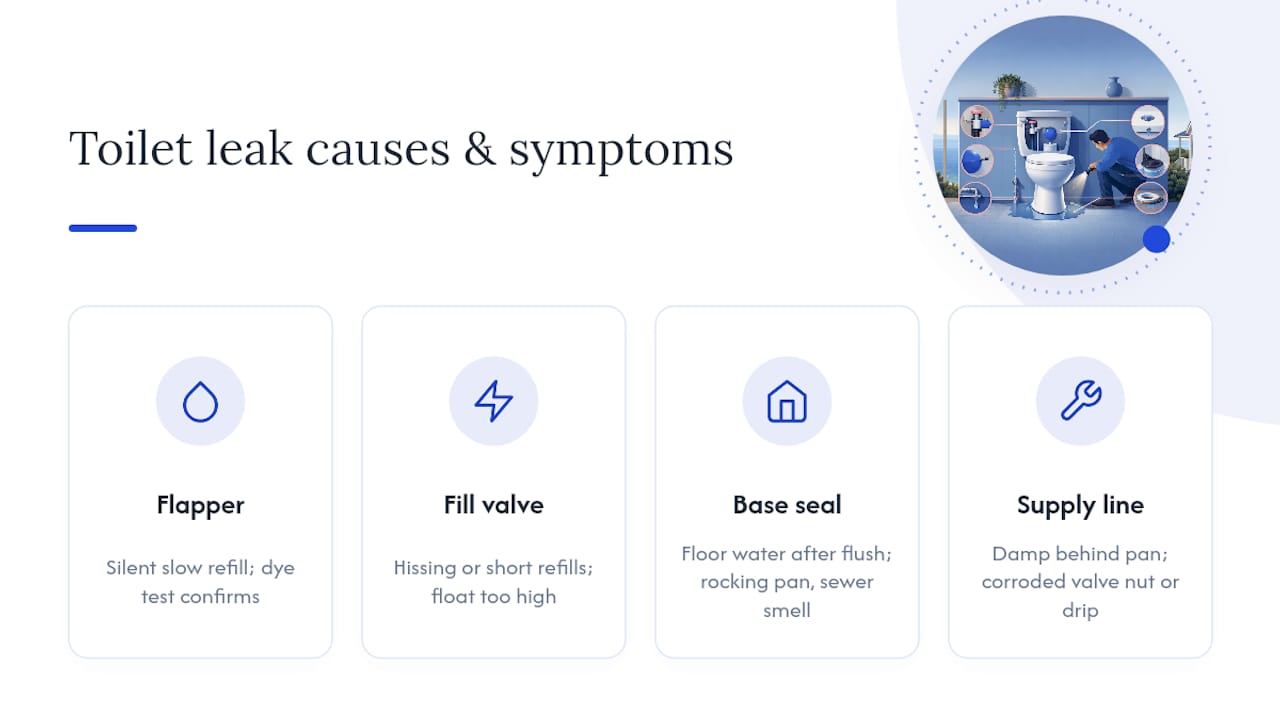
Worn flapper or outlet washer. This is the single most common cause of a leaking toilet, and it's almost always silent. Water seeps slowly from the cistern into the bowl through a perished rubber seal, so you won't hear dripping, you'll just notice the toilet refilling itself every so often with no one having flushed it. Rubber degrades with age, chlorine exposure, and mineral buildup, and most flappers only last a few years before they start letting water through. A dye test confirms this fault almost every time.
Fill valve or float problems. If you hear a faint hiss coming from the cistern, or the toilet keeps refilling itself in short bursts, the fill valve or float is usually to blame. A float set too high causes water to spill into the overflow tube constantly; a worn fill valve washer lets water trickle through even when the cistern is full. This is one of the more common causes of toilet dripping that owners mistake for a flapper issue, since both produce a running or hissing sound.
Wax ring, loose closet bolts, and flange problems. Water appearing on the floor around the base, especially just after a flush, points to the seal between the toilet and the drain pipe. The wax ring compresses and cracks over the years, and once it fails, water pushes past it every time the bowl empties. A rocking pan or a lingering sewer smell in the bathroom are the giveaway signs, and both often mean the closet bolts have loosened or the flange underneath has corroded or cracked. Roto-Rooter's guidance on base leaks treats this as one of the more urgent fault categories, because it sits directly above timber flooring.
Cracked cistern or bowl. Hairline cracks in porcelain are easy to miss, particularly around the base of the cistern or where the bowl meets the floor. Look for a slow, steady pool that reappears no matter how many times you mop it up, and check the underside of the cistern and the back of the bowl with a torch. Porcelain cracks don't heal themselves and rarely stay small for long.
Supply-line and shut-off valve leaks. The flexible hose connecting the wall to the cistern, and the shut-off valve itself, are common weak points. Look behind the pan for damp patches, corrosion around the valve nut, or a slow drip running down the wall.
Tank-to-bowl gasket and cistern fixings. On two-piece toilets, a worn gasket between the cistern and the bowl lets water drip down after every flush. Check the fixing bolts underneath the cistern too. These often work loose over time, especially on older units.
Condensation, not a leak. In cold weather, condensation forms on the outside of the cistern and bowl when cold water inside meets warm, humid bathroom air. It pools at the base and looks exactly like a real leak, so before you call a plumber, dry the outside of the toilet completely and see if the puddle comes back on its own.
How do you find out where a toilet is actually leaking?
Chasing a leak without a plan wastes time and money on parts you didn't need. Work through this order:
- Dry every surface around the toilet completely, including the base, the supply line, and the floor beneath the cistern.
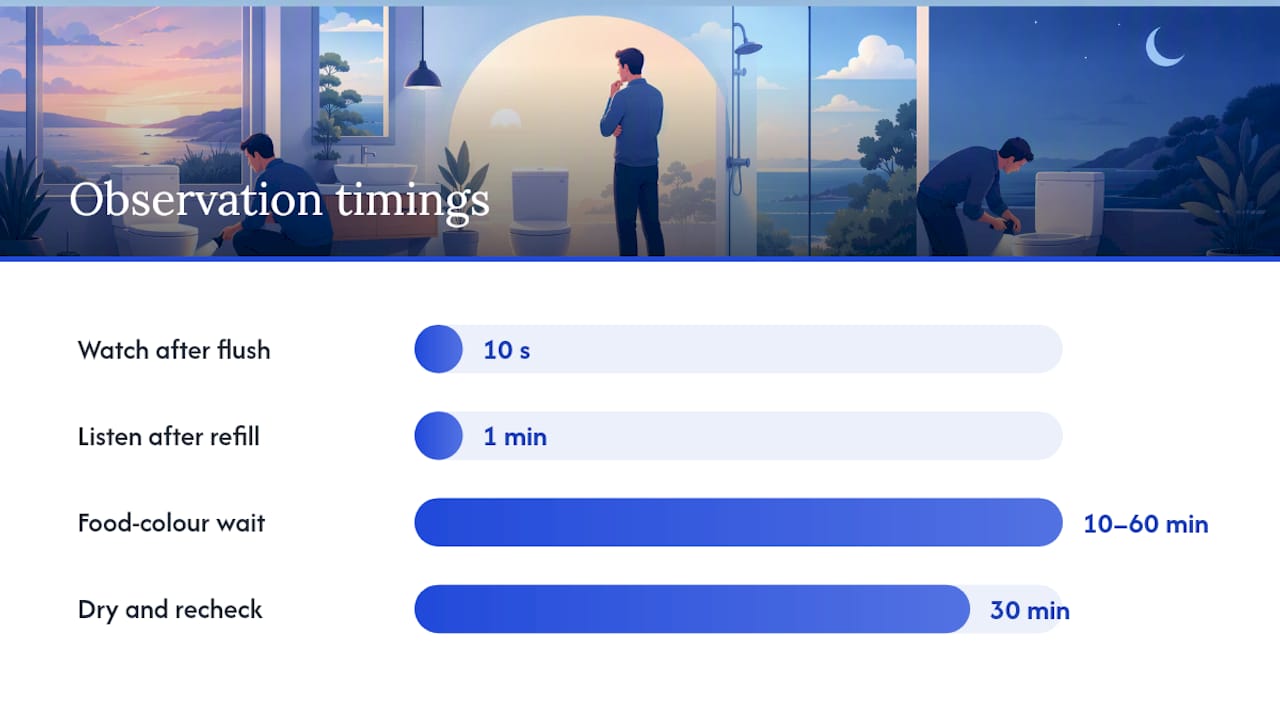
- Flush once and watch closely for the first ten seconds. Note exactly where water appears first.
- Listen for a full minute after the cistern stops refilling. Any hiss or trickle points to the fill valve or a failing outlet seal.
- Add several drops of food colouring to the cistern water and wait between 10 and 60 minutes without flushing.
- Check the bowl. If coloured water has appeared there, the flapper or outlet washer is letting water through and needs replacing.
- To rule out condensation, dry the base again and leave the toilet untouched for 30 minutes. If the puddle stays dry, the earlier pooling was a genuine leak, not condensation.
The food-colouring test is the standard way to catch a silent cistern leak that would otherwise run for months unnoticed, quietly adding litres to your water use every single day.
A base leak behaves differently to a cistern leak. Cistern leaks show up in the bowl or as continuous refilling with no water on the floor. Base leaks appear as damp patches or standing water around the pan's footprint, usually worse right after a flush when the full weight of water pushes through the seal. If the toilet keeps refilling every few minutes with no obvious hiss, or your water bill has crept up with no other explanation, treat it as a strong signal of a hidden leak worth chasing down before it gets expensive.
Step-by-step fixes and when to call a licensed plumber
Some of these jobs take fifteen minutes with a $15 part from the hardware store. Others need a licence, and doing them yourself can void insurance or breach plumbing regulations.
- Flapper or outlet washer: Turn off the supply, flush to empty the cistern, and lift out the old flapper. Clean the seat if there's mineral buildup, or replace the flapper outright. Most jobs take 15 to 30 minutes and the part costs very little.
- Fill valve or float: A float arm can often be bent or the water level adjusted with a screw or clip in a few minutes. A full fill valve replacement is still a manageable DIY job for most people, though older valves with unusual fittings can be fiddly enough to warrant a plumber.
- Supply line and shut-off valve: Swapping a flexible braided hose is one of the easier DIY plumbing issues to fix, done with an adjustable spanner and a new hose in under 20 minutes. Be cautious with the valve itself; if the joint is sealed or corroded onto old galvanised pipe, forcing it can crack the fitting and turn a drip into a flood.
- Wax ring or base leak: This means lifting the entire pan off the flange, scraping away the old wax, and fitting a new ring before resetting the toilet and bolts. It's doable for a confident DIYer, but the risk of damaging the flange or cracking old wax on the way up means many owners hand this one to a professional.
- Cracked cistern or bowl: This is a plumber's job, close to always. Porcelain cracks can't be sealed reliably, and a bowl can fail suddenly under pressure. Shut off the supply immediately, mop up standing water, and book a repair rather than attempting a patch.
- Closet bolts: Tighten evenly, a little at a time, alternating sides. Porcelain cracks easily under excess torque, so stop as soon as the pan feels stable rather than cranking bolts down as far as they'll go.
Pro Tip: Skip the tube of silicone around the base as a first response. Sealing the outside can trap a leak underneath the floor instead of stopping it, so you won't notice the damage until the subfloor is already soft. Some trades avoid caulking the base entirely for exactly this reason, though certain local codes require a caulked seal, so check what applies in your area before deciding either way.
For anyone about to open up the bathroom for a bigger repair, it's worth reading through common bathroom plumbing upgrade options first, since a failing wax ring or corroded flange is often the moment people decide to fix a few other ageing fixtures at once.
Maintenance checklist that stops leaks before they start
A ten-minute check twice a year catches most toilet plumbing issues before they cost you anything.
- Lift the cistern lid and inspect the flapper for stiffness, warping, or a slimy film. Replace it if it looks anything less than supple.
- Listen for a full minute after flushing. Any hiss means the fill valve needs attention now, not next year.
- Check the supply hose and shut-off valve for damp patches or corrosion at the fittings.
- Gently check the pan doesn't rock. Any movement means the closet bolts need tightening or the wax ring has started to fail.
- Wipe away visible white or grey mineral crust around the flush rim and inside the cistern with a mild descaler, rather than scraping or chiselling it off.
Hard water deposits accelerate wear on rubber seals and valve seats, so homes on bore water or in high mineral areas should check more often. Fixing a small leak early is cheap. Letting it run for months against typical Victorian household water bills is not.
What a licensed plumber actually does on a call-out
When Dualflowservices attends a leaking toilet, the first move is always isolation: shut off the supply, contain any contaminated water, and assess whether the fault is a quick fix or a scheduled repair. Flapper and fill valve replacements are usually sorted on the spot. Cracked cisterns, damaged flanges, and subfloor damage get quoted properly rather than patched.
Homeowners can legally handle flapper, float, and hose replacements. Anything touching the sewer connection, the flange, or requiring re-sealing to a waste pipe crosses into work a licensed plumber is required to do, both for safety and to meet plumbing compliance rules.
Does hard water cause toilet leaks?
Hard water accelerates almost every failure mode already covered. Dissolved minerals, mostly calcium and magnesium, build up on rubber flapper seals and fill valve seats, and that crust stops rubber from sitting flush against its seat. Once the seal has a gap, even a tiny one, water seeps through constantly.
Mineral scale also collects inside the fill valve mechanism itself, making floats stick or valves fail to shut fully. That's why homes on bore water or in naturally hard-water regions tend to churn through flappers and fill valves faster than homes on softer municipal supply. The mineral crust you see ringing the inside of the cistern at the waterline is a visible sign the same process is happening on every rubber and plastic part below the surface.
Descaling regularly with a mild vinegar solution or a proprietary descaler, rather than letting scale build for years, keeps seals seating properly for longer. Avoid abrasive scraping on porcelain or on valve components, since scratches give future scale somewhere to grip even harder. If your area has particularly hard water, check flappers and fill valves roughly twice as often as the standard annual routine.
Are older toilets more likely to leak?
Age matters more than most people expect. Rubber components like flappers and washers have a working life measured in years, not decades, and they degrade whether or not the toilet gets heavy use. A toilet that's sat in a rarely used guest bathroom for fifteen years can have a more perished flapper than one flushed daily in a busy family home, because rubber breaks down with time and chemical exposure regardless of use.
Material quality plays an equally large role. Older cisterns and bowls made from lower-grade porcelain or early-generation plastics are more prone to hairline cracking, especially once fixing bolts have been tightened and loosened a few times over the years. Older two-piece toilets also tend to have gaskets and fixings that were never designed to be replaced easily, which means a tank-to-bowl leak on an older unit is more likely to need a full teardown than a quick swap.
Newer toilets generally use more leak-resistant seals and better-moulded porcelain, and dual-flush cisterns built in the last decade tend to have more reliable fill valve designs than the ballcock-style valves common in older homes. If your toilet is pushing past 15 to 20 years old and has started showing any of the symptoms covered earlier, budget for the cistern internals to need replacing sooner rather than later, since old rubber and old porcelain rarely fail in isolation.
Can weather or the seasons cause a toilet to leak?
Temperature swings genuinely affect toilet leak causes, though not always in the way people assume. Cold weather is the biggest factor, mostly through condensation rather than actual leaking; a cold cistern in a humid bathroom sweats heavily, and that puddle at the base gets mistaken for a real leak more often than any other cause on this list.
Real weather-driven failures do happen too. Sharp temperature drops can cause supply lines and fittings to contract slightly, loosening connections that were already borderline and turning a barely-there drip into a visible one. In homes with exposed pipework, near-freezing overnight temperatures occasionally stress fittings enough to start a leak that wasn't there the week before, though burst pipes from hard freezes are far less common than in colder climates overseas.
Warmer, humid months bring a different pressure: higher ambient moisture in bathrooms slows evaporation, so small existing leaks that would dry up between checks in winter now sit as damp patches for longer, giving mould more time to take hold. Ground movement after heavy rain, particularly on properties with reactive clay soils, can also shift toilet flanges slightly and start a base leak that has nothing to do with worn parts at all. If you notice a leak appearing right after a run of heavy rain or a cold snap, check the flange and supply fittings before assuming a part has simply worn out.
What damage can a leaking toilet actually cause?
Water waste is the least of your problems if a leak runs unchecked for long enough. A base leak sitting on timber subfloor for weeks can soften and rot the flooring beneath the toilet, and by the time you can feel the floor flex underfoot, the repair has grown from a $15 wax ring to a subfloor replacement job.
Persistent moisture around the base also creates ideal conditions for mould, particularly in bathrooms with limited ventilation. Mould doesn't need a flood to establish itself, a slow drip running for a fortnight is more than enough, and once it's growing inside wall linings or under vinyl flooring it's far harder to deal with than a surface clean.
Sewer smell is another warning sign worth taking seriously rather than masking with air freshener. A persistent odour usually means the wax ring seal has failed enough that sewer gas is escaping past it, and that's both unpleasant and a sign the leak is likely worse than the visible puddle suggests. If you're worried water has already tracked into a ceiling below or a nearby wall, it's worth reading through the steps for confirming a ceiling leak from a bathroom or checking for a wall leak without cutting in, since toilet leaks are one of the more common sources of both.
A quick word on priorities
The costliest mistake isn't misdiagnosing the leak, it's overtightening bolts trying to force a fix, or caulking over a base leak to hide it while it rots the subfloor underneath. Act on visible pooling or odour straight away. A $20 wax ring now almost always beats a flooring repair later.
— Mike
Book a repair instead of guessing
A specialized local service offers emergency call-outs, scheduled repairs, and ongoing maintenance for plumbing and hot water systems across homes, aged care facilities, retirement villages, and businesses in the Mornington Peninsula and surrounding Melbourne suburbs, available 24/7/365. That matters most on a leaking toilet at 11pm on a Sunday, when a DIY fix has gone sideways or the damage looks bigger than a flapper and a screwdriver can handle.

A typical call-out starts with isolating the supply and containing any water damage, then a straight choice: a quick fix on the spot, like a flapper or supply hose swap, or a proper quote for anything involving the flange, the cistern, or subfloor damage. Because plumbing, electrical, and heating and cooling services are offered together, a leak that's already reached a ceiling or a nearby power point doesn't mean juggling three different tradies. If your toilet's leaking now, book a call-out or check availability through the Dualflowservices website and get it sorted before it becomes a bigger job.
Sources
For deeper diagnosis, water-bill context, and trusted trade guidance: ESC Victoria water bills, Perth First Plumbing cistern guide, and Roto-Rooter base leak guidance.
- Workshop Bunnings discussion — special dye to detect toilet leak
- ESC Victoria — average household water bills, Victoria
- Roto-Rooter — what to do if my toilet leaks at the base
- The Plumbing Directory — toilet leaking at base
FAQ
What is the most common cause of a leaking toilet?
A worn flapper or outlet washer is the single most common cause, letting cistern water seep silently into the bowl. It's usually confirmed with a food-colouring dye test rather than by sight, since this type of leak rarely shows any visible dripping.
Can I still use my toilet if it's leaking?
It depends on where the leak is. A cistern leak that's only refilling itself or dripping internally is generally safe to keep using while you organise a fix, but a leak pooling at the base should stop use immediately, since it usually means a failed seal that's letting wastewater escape onto the floor.
How do I get my toilet to stop leaking from the bottom?
Base leaks are most often fixed by replacing the wax ring and checking the closet bolts and flange for damage, as outlined in Roto-Rooter's base leak guidance. If the flange is corroded or the floor beneath feels soft, that's a job for a licensed plumber rather than a DIY wax ring swap.
My toilet bowl is dripping. What could be causing this?
Dripping between the cistern and bowl usually points to a worn tank-to-bowl gasket or loose cistern fixing bolts, both of which tend to worsen right after a flush. If the drip only appears in cold weather and the toilet's exterior is damp all over rather than at one specific joint, check for condensation before assuming it's a genuine leak.