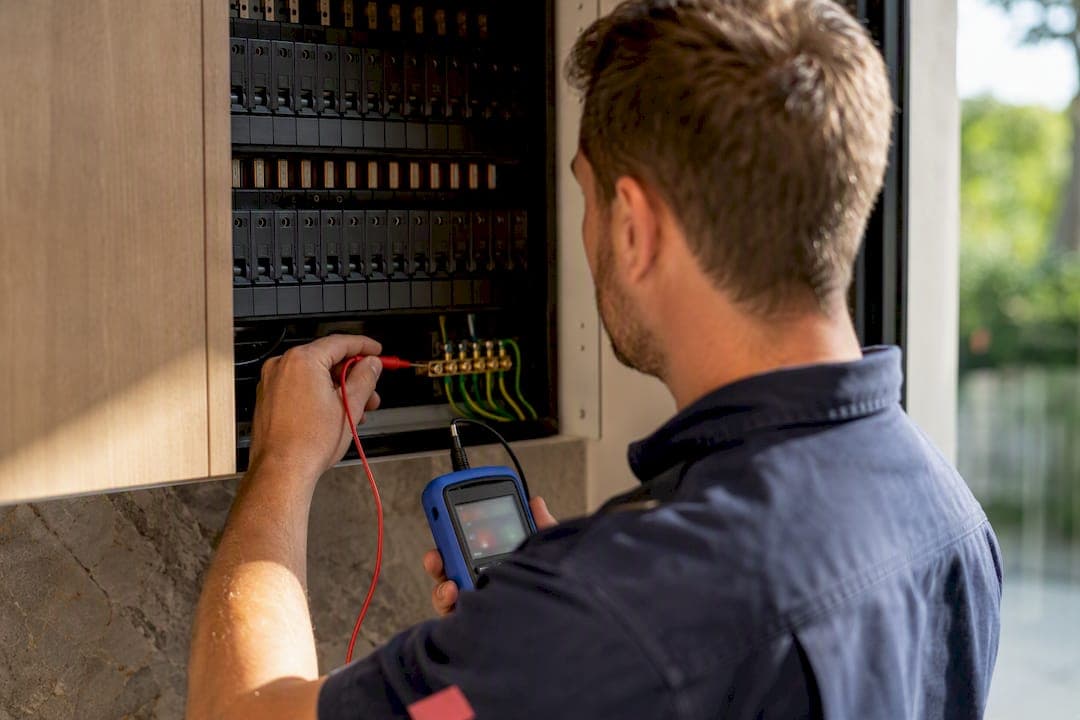
Yes, a properly installed whole-house surge protector is one of the most cost-effective ways to cut the risk of damage to hardwired appliances and household electronics. Before you buy anything, check your switchboard's condition and earthing, then book a licensed electrician for a site inspection. Done right, it covers every circuit in the house and slows the ageing surges caused in your gear.
TL;DR:
- Properly installed Type 2 surge protectors at the switchboard can reliably reduce damage from grid surges and internal appliance spikes when earthing is correct and the device is maintained.
- Surge protection devices with a low voltage protection level, high joule rating, fast response time, and a visible status indicator are best suited for long-term effectiveness.
- Installation costs typically range from a few hundred dollars to over a thousand, depending on switchboard condition, earthing, and additional upgrades needed, with ongoing maintenance essential.
- Poor earthing and an aging or undersized switchboard significantly diminish surge protector performance and should be addressed through professional testing before device installation.
- Surge protectors cannot safely handle a direct lightning strike, and degrading components require regular checks to ensure continued protection.
Table of Contents
- What is home surge protection and how does it work?
- Which SPD type does your home actually need?
- What specs and ratings actually matter?
- What can and can't whole-house surge protection actually stop?
- What does surge protector installation cost, and is it worth it?
- Why earthing and switchboard condition decide whether it works
- How do you choose the right surge protection setup?
- What happens during a professional surge protection inspection?
- The part homeowners underrate about surge protection
- Book a surge protection inspection with Dualflowservices
- Sources
- FAQ
What is home surge protection and how does it work?
A surge protection device, sometimes labelled a TVSS (transient voltage surge suppressor), sits between your electrical supply and your household circuits and diverts excess voltage to earth before it reaches your appliances. Most SPDs rely on a component called a metal oxide varistor (MOV), which stays inactive during normal voltage and only conducts when it detects a spike above a set threshold, shunting that extra energy safely away.
Surges happen more often than most people assume. A lightning strike a few streets away can induce a surge through the grid without ever touching your roof. Utility switching, faults on the network, and even large appliances cycling on and off inside your own home (think air conditioners, pool pumps, or fridge compressors) all generate smaller transient spikes that add up over time.
That last point matters more than people think: a lot of surge damage isn't from a dramatic lightning event at all. It's the slow wear from hundreds of minor internal spikes, gradually shortening the lifespan of televisions, induction cooktops, and smart home hubs.
This is where point-of-use protection, like a power board with a surge rating, falls short on its own. A plug-in unit only protects what's plugged into it. It does nothing for your hardwired oven, ducted heating and cooling system, hot water unit, or solar inverter, all of which sit on circuits a power board never touches.
- Grid-side surges: switching events and lightning-induced spikes travelling through the supply network
- Internal surges: motors and compressors inside the home creating smaller, repeated spikes
- Direct strikes: rare but severe, and the hardest event for any SPD to fully absorb
Whole-house surge protection for appliances that are hardwired into your switchboard needs a device installed at the switchboard itself, not just at the wall socket.
Which SPD type does your home actually need?
Surge protection devices are grouped by where they sit in the electrical chain, and the terminology (Type 1, Type 2, Type 3) trips up a lot of homeowners shopping without an electrician's guidance.
Type 1 devices are installed at the service entrance, typically where overhead lines meet the property, and are mostly relevant for buildings with exposed external wiring or standalone lightning rods. Most suburban homes don't need one.
Type 2 is the standard choice for whole-house protection, fitted at the main switchboard or distribution board. It catches surges arriving through the grid and internal surges generated by your own appliances before they spread through the house wiring. This is the device most people mean when they ask about a whole house surge protector.
Type 3 devices are point-of-use, the plug-in power boards and individual surge outlets you already know. They're not a replacement for Type 2 protection, but a useful final layer for particularly sensitive gear.
- Type 1: service entrance, mainly for properties with direct exposure to overhead supply lines
- Type 2: switchboard level, the baseline for whole-house surge protection
- Type 3: point-of-use, extra protection for computers, TVs, and home theatre systems
Pairing a Type 2 device with Type 3 units on your most valuable electronics gives you staged protection that balances cost against coverage better than either layer alone.
What specs and ratings actually matter?
Not every SPD on the shelf is built the same, and the numbers on the box tell you more than the marketing does. Four figures matter most: the voltage protection level (Up), the energy or joule rating, the nominal and maximum discharge current (In and Imax), and response time.
The voltage protection level tells you the peak voltage the device lets through before it starts diverting energy. Lower is generally better, but it needs to be matched sensibly to your equipment rather than chased as an absolute number. The joule rating indicates how much energy the device can absorb over its working life. Response time, measured in nanoseconds, determines how quickly the SPD reacts once a surge begins.
- Voltage protection level (Up): the clamping voltage the device allows through
- Joule/energy rating: total absorption capacity before wear becomes significant
- In/Imax: nominal and maximum surge current the device can handle
- Response time: how fast the MOV engages, typically in nanoseconds
Pro Tip: Ask for a device with a visible status indicator or a replaceable cartridge. MOVs degrade a little with every surge they absorb, and a unit with no way to check its condition can quietly stop protecting your home long before you notice.
Quality buying guides recommend checking clamping voltage, joule rating, and response time before comparing price, because a cheaper unit with a poor joule rating can fail after a handful of significant events.
What can and can't whole-house surge protection actually stop?
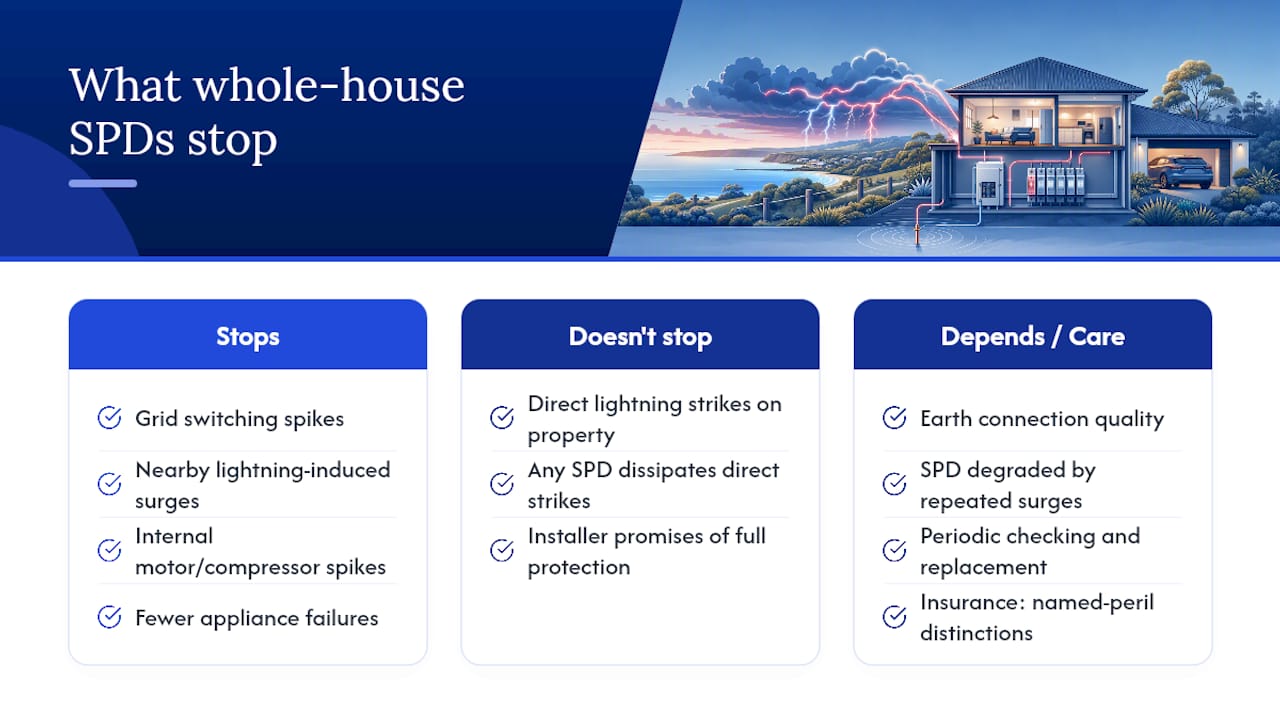
Whole-house surge protection handles the events that cause most of the everyday damage: grid switching spikes, lightning-induced surges from nearby strikes, and the internal spikes your own appliances generate every time a compressor or motor starts.
What it can't reliably do is absorb a direct lightning strike on the property. No SPD, no matter how well rated, is designed to dissipate that kind of energy safely, and any installer promising otherwise is overselling the product. Effectiveness also depends heavily on conditions outside the device itself: a poor earth connection or an SPD that's already been degraded by repeated surges will underperform no matter how good its rating sheet looks.
Set against those limits, the long-term upside is real. Homes with a working Type 2 device typically see fewer appliance failures tied to electrical spikes, which means fewer replacement purchases and longer service life from expensive items like induction cooktops, ducted systems, and home entertainment gear.
The trade-off is ongoing attention. SPDs aren't a install-and-forget product. They need periodic checking, and a degraded unit that isn't replaced offers a false sense of security while doing very little. Insurance adds another wrinkle: PDS documents typically distinguish between lightning or storm-related surge damage, often covered as a named peril, and damage from internal wiring faults or wear, which is often excluded. Keeping your installation certificate matters more than most homeowners realise.
What does surge protector installation cost, and is it worth it?
Whole-house surge protection cost varies with the scope of the job, not just the device itself. Basic plug-in point-of-use units cost relatively little but only protect what's plugged into them. A properly installed, hardwired Type 2 device at the switchboard is where most of the real spending happens.
Complete installations, including labour, commonly range from a few hundred dollars up to $1,000 or more, depending on switchboard condition, earthing quality, and whether any upgrade work is needed alongside the SPD itself.
- Basic Type 3 power boards: low cost, limited to whatever is plugged into them
- Hardwired Type 2 whole-house systems: the bulk of surge protector installation cost, but cover every circuit
- Switchboard or earthing upgrades: additional cost if the existing setup doesn't meet current standards
- Solar and EV charger protection: often needs its own consideration given the value of the equipment involved
Most SPDs are rated to last a good number of years under normal conditions, but that lifespan shortens with every significant surge event they absorb. A device that's taken a heavy hit during a storm season may need replacing well before its expected age, which is exactly why a visible indicator or cartridge system matters.
The ROI case is straightforward: weigh the surge protector installation cost against the price of replacing a single ducted heating unit, oven, or home theatre setup after a bad storm. For most households, one avoided replacement covers the installation many times over.
Why earthing and switchboard condition decide whether it works
None of the specs on an SPD box matter if the earthing behind it is poor. A high-quality earth connection is essential for surge protection to function at all because the device's entire job is diverting excess energy safely into the ground. Without a low-impedance path to earth, that energy has nowhere reliable to go.
The single most overlooked technical step is measuring earth resistance and checking bonding to the distributor neutral. A licensed electrician tests this directly rather than assuming an older switchboard's earthing is adequate just because the lights work fine.
Switchboard readiness is the second half of the equation. Space constraints, an undersized or ageing main breaker, and general wear can all limit what's safely installable, which is why a proper switchboard audit often comes before any surge device goes in.
All of this work in Australia sits under AS/NZS 3000:2018, the Wiring Rules, which set the baseline requirements any licensed contractor must comply with when installing electrical equipment, SPDs included.
A professional inspection generally follows this sequence:
- Visual switchboard assessment — space, breaker condition, and any signs of prior electrical stress
- Earth resistance testing — confirming a low-impedance path before anything else is installed
- Device selection and fitting — matching the SPD's rating to the property's supply and appliance load
- Compliance sign-off — documentation confirming the work meets AS/NZS 3000
Pro Tip: Keep the compliance certificate somewhere accessible, not just in a drawer. If you ever need to make an insurance claim tied to surge damage, that document is often the fastest way to show the loss wasn't caused by a wiring fault the policy excludes.
Regular follow-up electrical inspections after the initial install help catch any earthing or switchboard issues that develop later, particularly in older homes where conditions shift over time.
How do you choose the right surge protection setup?
Before calling anyone, run a quick property check. Note the age of your switchboard, whether you've got solar panels or an EV charger, whether your current earthing has ever been tested, and which appliances would hurt most financially if they failed.
- Switchboard age and general condition
- Presence of solar inverters, EV chargers, or other high-value hardwired equipment
- Whether the property's earthing has ever been formally tested
- Which appliances would be the costliest to replace if damaged
Then bring the right questions to your electrician rather than just asking for "a surge protector."
- What's the joule rating and voltage protection level of the device you're recommending, and why does it suit this property?
- Does the switchboard and earthing meet AS/NZS 3000 as it stands, or is upgrade work needed first?
- What's the expected lifespan of this device, and how will I know when it needs replacing?
- Will I receive a compliance certificate or documentation I can keep for insurance purposes?
A few answers should raise a flag straight away. Anyone who skips the earthing check entirely, promises absolute protection against a direct lightning strike, or won't provide any paperwork on completion isn't giving you the full picture. A reputable installer tests earthing first, sets expectations honestly, and hands over documentation without being asked twice. It's worth keeping a broader home electrical safety checklist on hand too, since surge protection is only one part of a property's overall electrical health.
What happens during a professional surge protection inspection?
A thorough inspection starts before any device gets fitted. The electrician checks the switchboard's physical condition, tests earth resistance and bonding, and confirms the main breaker can handle the additional load a Type 2 SPD introduces.
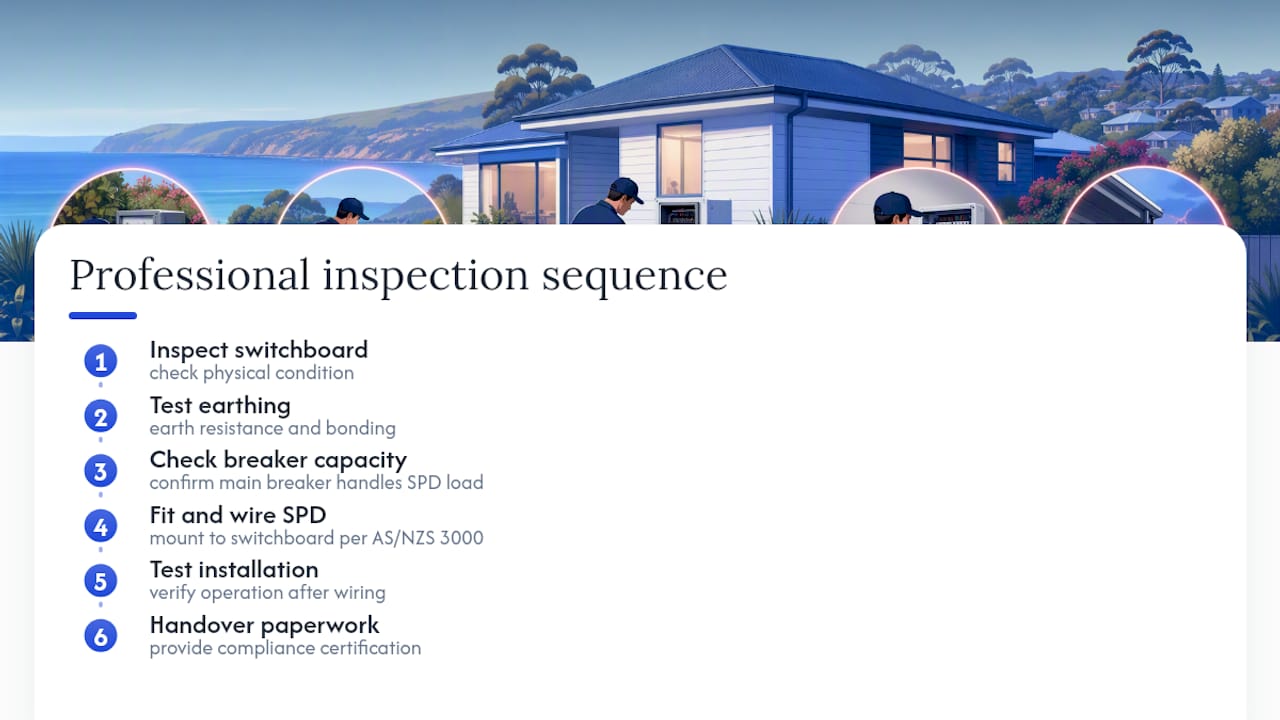
From there, the process moves to supply and install: fitting the device to the switchboard, wiring it in line with AS/NZS 3000, and testing the installation before handing over compliance paperwork. Site inspections frequently uncover earthing or switchboard weaknesses that, once addressed, make the SPD noticeably more effective than it would have been otherwise. That inspection step is often the most valuable part of the whole job, not the device itself.
Working with a licensed electrician rather than attempting a DIY fit matters for more than compliance. Licensed work typically comes with warranty backing, and a documented, certified installation supports any future insurance claim tied to surge damage far better than an undocumented one does. For a full picture of what a compliant inspection covers, it's worth reading up on what an electrical safety inspection actually involves before you book one.
The part homeowners underrate about surge protection
Most advice on this topic obsesses over which device to buy, joule ratings, brand names, price comparisons, as if the box on the shelf is the whole story. It isn't. The earthing and switchboard behind that device do more to determine whether it actually works than the device specs themselves.
I'd go further: a homeowner who spends on switchboard and earthing remediation first, then fits a mid-range Type 2 device, ends up better protected than one who buys the most expensive SPD on the market and bolts it onto a tired, undersized board. The conventional advice skips straight to product comparison and treats the installation conditions as an afterthought, when they're actually the deciding factor.
If you're weighing this up, prioritise the inspection before the purchase. Get earthing tested, get an honest read on your switchboard's condition, and only then talk devices. Everything else, joules, response time, indicator lights, matters far less if that groundwork isn't solid.
— Mike
Book a surge protection inspection with Dualflowservices
Getting whole-house surge protection right comes down to what happens before the device goes in, not just which brand you pick. Licensed electricians test your earthing and switchboard condition first, so the SPD you end up with actually performs the way its rating sheet promises.
A typical visit covers a full site inspection, earth resistance testing, a straightforward quote based on what your property actually needs, and installation carried out to AS/NZS 3000 with compliance paperwork provided at the end. That paperwork isn't a formality. It's the documentation that backs you up if you ever need to make an insurance claim tied to surge damage. If a storm season has already caused damage or you're planning ahead for the next one, it's also worth reading this guide to disaster recovery services for the practical next steps after major weather events.
If you're on the Mornington Peninsula or nearby Melbourne suburbs and want a straight answer on what your home needs, request a quote from Dualflowservices and book a site inspection.
Sources
Compliance work references AS/NZS 3000:2018 as the governing wiring standard. Insurance interactions are outlined in insurer PDS documentation on named perils, and device specifications are drawn from independent surge protection buying guidance.
- What Appliances Need Surge Protectors? | Quick Electricity Blog
- Complete surge protection cost guide: Home systems | EA Electrics
FAQ
Do whole-house surge protectors actually work?
Yes, when installed correctly with a solid earthing connection and matched to the property's switchboard, a Type 2 whole-house SPD reliably diverts grid and internal surges away from household circuits. Its effectiveness drops sharply if the earthing is poor or the device has already degraded from repeated surge events.
What is home surge protection?
Home surge protection uses a device, usually a Type 2 SPD fitted at the switchboard, to divert excess voltage away from your household wiring during a surge event. It protects hardwired appliances and circuits that a plug-in power board never reaches.
What are the downsides of using surge protectors?
Surge protectors don't stop everything. A direct lightning strike can overwhelm any SPD, and the devices themselves degrade a little with each surge they absorb, meaning they need periodic checking or replacement rather than a single set-and-forget install.
Do you need surge protection in Australia?
Most homes with modern electronics, solar systems, or significant hardwired appliances benefit from whole-house surge protection, particularly given how common grid switching events and storm activity are across the country. A licensed electrician can assess your specific switchboard and earthing before recommending the right setup.