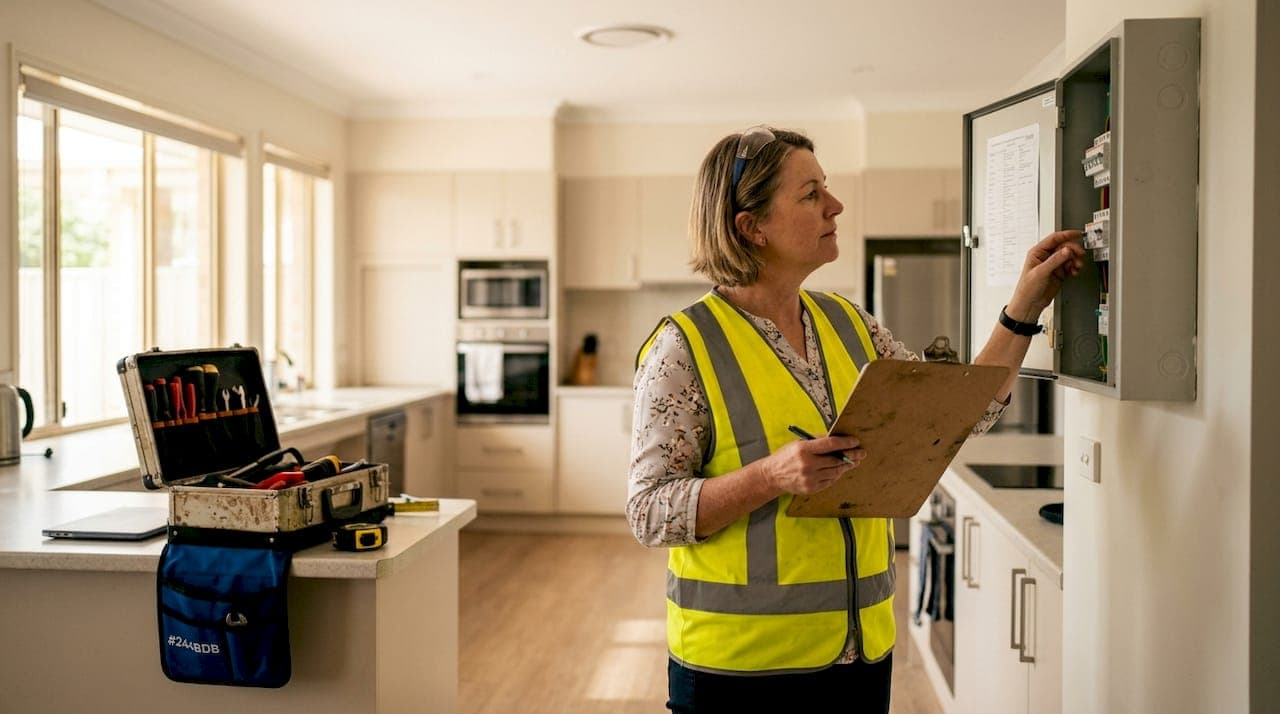
Electrical safety standards for disability care homes are specialised protocols designed to protect vulnerable residents through systematic inspection, testing, and risk control. These standards go well beyond general commercial electrical codes. Disability care environments carry unique risks: residents may have limited mobility, reduced awareness of hazards, or dependence on powered medical equipment. The National Disability Insurance Scheme (NDIS) guidelines, BS7671 Section 710, and Electrical Installation Condition Reports (EICRs) form the regulatory backbone that facility managers must understand and apply. Getting these standards right is the difference between a safe home and a preventable tragedy.
1. What are electrical safety standards for disability care homes?
Electrical safety standards for disability care homes are a set of legally recognised requirements covering the design, installation, inspection, and maintenance of electrical systems in care environments. The industry term for this framework is "electrical installation compliance," and it draws from several overlapping codes.
BS7671 Section 710 sets specific requirements for medical locations, including disability care homes. The April 2026 amendment to this section introduces critical new legal requirements focused on equipotential bonding and updated audit templates. That update matters because it closes gaps that older installations commonly have.

NDIS guidelines in Australia add another layer, requiring that electrical work in funded homes meets both the National Construction Code and relevant Australian Standards. Facility managers must treat these frameworks as complementary, not interchangeable.
2. What is an EICR and why does your care home need one?
An Electrical Installation Condition Report (EICR) is a formal assessment of a building's fixed electrical installation. It identifies faults, deterioration, and non-compliance before they cause fires or shocks.
EICRs are required every 5 years for care homes, with more frequent inspections required for high-risk or older buildings. That five-year baseline is a minimum, not a target. A building with ageing wiring, high equipment loads, or a history of faults should be inspected more often.
EICRs evaluate the condition of wiring, switchboards, earthing, and bonding. They produce a coded outcome: C1 means danger present and requires immediate action, C2 means potentially dangerous, and C3 means improvement recommended. Any C1 or C2 finding must be rectified before the facility can be considered compliant.
Pro Tip: Request a copy of the previous EICR before commissioning a new one. Comparing reports over time reveals patterns of recurring faults that a single inspection might not flag.
3. How to prevent electrical hazards in disability homes
Electrical hazard prevention in disability homes requires measures that go beyond standard residential practice. Residents may use wheelchairs, hoists, or powered beds, all of which create specific electrical risks.
Installing RCDs on all circuits, using tamper-resistant outlets, and managing cords and cables are the three most critical prevention measures. Each addresses a different failure mode: RCDs cut power within milliseconds of a fault, tamper-resistant outlets block accidental contact, and cord management eliminates trip and entanglement hazards.
Key prevention measures for disability care settings include:
- Residual Current Devices (RCDs) on every circuit, including those serving medical equipment
- Tamper-resistant power points in resident rooms and common areas
- Cable management systems to route cords away from walkways and mobility aids
- Height-appropriate power points positioned for wheelchair users without requiring awkward reaches
- Waterproofing in bathrooms and wet areas where personal care equipment is used
Power points and switches placed for ease of resident use in consultation with occupational therapists reduce physical strain and improve independent access. That collaboration is not optional in a well-run facility. It is the step that separates a compliant installation from one that genuinely serves residents.
Pro Tip: Walk through the facility with a wheelchair at resident height. You will spot power points, switches, and cords that are invisible hazards from a standing position.
4. Portable appliance testing (PAT) and emergency lighting
PAT testing is the systematic inspection and electrical testing of portable equipment. In disability care homes, this covers a wide range of items: electric hoists, powered wheelchairs, heating pads, televisions, kitchen appliances, and any resident-owned devices brought into the facility.
Critical medical equipment may need testing every six months, while typical appliances may follow annual cycles. The key principle is that testing intervals must reflect actual usage intensity and criticality, not a fixed calendar. A hoist used multiple times daily carries far more risk than a bedside lamp.
Emergency lighting is a separate but equally critical system. Electrical faults cause nearly 55,000 fires annually in residential and care facilities. When a fire occurs, emergency lighting is what allows residents and staff to evacuate safely.
The required testing schedule for emergency lighting is:
- Monthly functional test: Activate the system briefly to confirm all luminaires illuminate.
- Annual full-duration test: Run the system for its full rated duration (typically three hours) to confirm battery capacity.
- Post-maintenance check: Test after any electrical work that could affect the circuit.
- Documentation: Record every test result with date, tester name, and outcome.
Audit-ready compliance documentation is scrutinised by regulators. Incomplete records of emergency lighting tests have directly influenced enforcement decisions and care home ratings.
5. How to choose qualified electrical contractors for care homes
Choosing the wrong electrical contractor is one of the most common compliance failures in disability care homes. General commercial electricians may be highly competent in their field but lack the specific knowledge that care environments demand.
Contractors unfamiliar with disability care environments create compliance and safety risks. The risks are not theoretical. An electrician who does not understand NDIS documentation requirements, medical-grade earthing, or the need to minimise disruption to residents can create problems that take months to resolve.
When selecting a contractor, facility managers should assess:
- Licence and registration with the relevant state electrical authority (in Victoria, Consumer Affairs Victoria)
- Experience in care settings, including aged care, disability homes, or medical facilities
- Working with Children or NDIS Worker Screening checks, as required by your state
- Familiarity with NDIS funding documentation, including quoting formats that satisfy plan managers
- Capacity for after-hours work to avoid disrupting residents during the day
- References from comparable facilities, not just residential or commercial clients
Hiring contractors experienced in the NDIS system reduces funding delays and ensures compliance with scheme-specific documentation and technical standards. That experience pays for itself quickly when audits arrive.
6. What is a planned preventative maintenance (PPM) strategy for electrical safety?
A planned preventative maintenance (PPM) programme is a scheduled system of inspections, testing, and servicing designed to find and fix electrical faults before they cause harm. For disability care homes, PPM is the operational backbone of electrical compliance.
A well-structured PPM programme covers fixed installations, portable appliances, emergency systems, and staff training. Equipment maintenance schedules must reflect actual usage intensity and criticality rather than fixed periodic cycles. That means reviewing your schedule annually and adjusting it as equipment changes or usage patterns shift.
The core components of a PPM strategy are:
| PPM Component | Recommended Action |
|---|---|
| Fixed installation inspection | EICR every five years, or more frequently for high-risk buildings |
| Portable appliance testing | Every six months for critical equipment, annually for low-risk items |
| Emergency lighting | Monthly functional test, annual full-duration test |
| RCD testing | Push-test monthly, full electrical test annually |
| Staff training | Annual refresher on reporting faults and electrical safety procedures |
Electrical safety compliance must be embedded in overall care strategies, not treated as a box-ticking exercise. The facilities that perform best in regulatory audits are those where the facility manager treats the PPM log as a living document, not an annual filing task.
Collaboration with occupational therapists during PPM reviews ensures that any changes to electrical installations maintain accessibility for residents. A new power point location or a relocated light switch can affect a resident's independence significantly.
Pro Tip: Assign a named staff member to own the PPM log. When responsibility is shared across a team, tasks slip. One person with clear accountability produces far better outcomes.
Key takeaways
Electrical safety compliance in disability care homes requires a structured programme of inspections, testing, qualified contractors, and documented maintenance that reflects the specific risks of care environments.
| Point | Details |
|---|---|
| EICRs are non-negotiable | Fixed installations must be inspected every five years, or more often for older or high-risk buildings. |
| RCDs and tamper-resistant outlets are baseline requirements | Every circuit in a disability care home must have RCD protection and appropriate outlet types. |
| PAT testing intervals must match equipment risk | Critical medical equipment needs six-monthly testing; low-risk appliances can follow an annual cycle. |
| Contractor selection is a compliance decision | Only use licensed electricians with verified experience in disability care or NDIS-funded environments. |
| Documentation drives audit outcomes | Regulators assess the completeness of your compliance records, not just the work itself. |
Why electrical safety is the care standard nobody talks about enough
I have spent years working with disability care facilities across Victoria, and the pattern I see most often is this: facility managers treat electrical safety as a once-a-year task rather than an ongoing care responsibility. They book an EICR, file the report, and consider the job done until the next inspection cycle.
That approach misses the point entirely. Electrical safety is a continuous enabler of care quality. When a hoist fails because its PAT testing was overdue, a resident loses independence. When emergency lighting batteries are flat during an evacuation drill, staff lose confidence. These are not abstract compliance failures. They are direct impacts on the people your facility exists to serve.
The facilities I have seen handle this well share one trait: they treat the PPM log the same way they treat a resident care plan. It is reviewed regularly, updated when circumstances change, and owned by a specific person. The electrical contractor is treated as a specialist member of the care team, not a tradesperson who shows up once every five years.
The April 2026 amendments to BS7671 Section 710 are a genuine inflection point for the sector. Facilities that have been coasting on older compliance frameworks now face new requirements around equipotential bonding and audit documentation. The managers who act now will find the transition straightforward. Those who wait will face both the cost of urgent remediation and the reputational risk of a failed audit.
Electrical safety is not a burden on care operations. It is what makes safe, independent, dignified care possible.
— Mike
Dualflowservices: electrical compliance for disability care homes
Disability care homes on the Mornington Peninsula have specific electrical compliance obligations, and meeting them requires a contractor who understands the care environment, not just the wiring.
Dualflowservices provides electrical compliance services tailored for disability care homes, including EICRs, PAT testing, emergency lighting maintenance, RCD installation, and scheduled preventative maintenance programmes. Every job is completed by licensed electricians with experience in care settings, and all documentation is produced in audit-ready format. Whether you need a one-off inspection or an ongoing maintenance agreement, Dualflowservices works around your residents and your schedule. Contact the team to arrange a compliance assessment for your facility.
FAQ
How often do disability care homes need an EICR?
EICRs are required every five years as a baseline, with more frequent inspections required for older buildings or those with identified high-risk conditions.
What does BS7671 Section 710 require for care homes?
BS7671 Section 710 sets specific electrical standards for medical locations, including disability care homes. The April 2026 amendment introduces updated requirements for equipotential bonding and compliance documentation.
How often should portable appliances be tested in a care home?
Testing frequency depends on equipment criticality. Critical medical equipment requires six-monthly testing, while standard appliances typically follow an annual cycle.
What qualifications should an electrician have to work in a disability care home?
The electrician must hold a current state electrical licence, have verified experience in care or NDIS-funded settings, and hold the relevant worker screening clearance required by your state.
Why does documentation matter for electrical compliance?
Regulators scrutinise the completeness and currency of compliance records when assessing care homes. Incomplete or outdated records can directly affect enforcement outcomes and facility ratings.