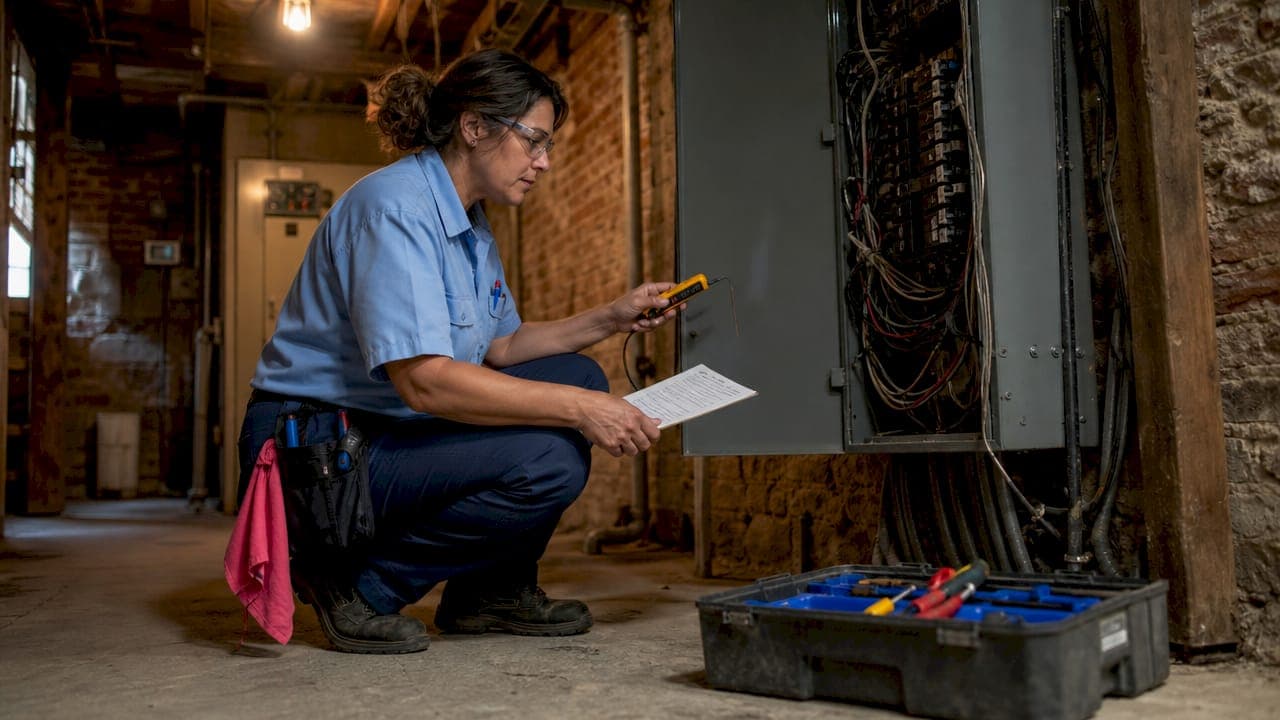
An electrical safety audit in a care facility is a structured evaluation of all electrical systems, installations, and records to verify compliance with Australian safety standards and protect vulnerable residents. Facility managers operating under the Aged Care Act 2024 and AS/NZS 3000 (the Australian Wiring Rules) face tightening obligations that go well beyond a basic inspection. The formal industry term is an electrical installation condition report, though "electrical safety audit" is widely used in aged care settings to describe the broader compliance process. Getting this right means your facility meets its legal duty, keeps residents safe, and avoids the operational disruption of a failed inspection. Dualflowservices works with aged care and disability care facilities across the Mornington Peninsula to deliver exactly this kind of structured, standards-based audit support.
What does an electrical safety audit in a care facility involve?
An electrical safety audit is a moral and legal duty focused on resident safety and dignity, not just a compliance checkbox. That distinction matters because it shapes how you approach every stage of the process. A facility that treats the audit as a paperwork exercise will almost always find gaps that a safety-focused approach would have caught first.
The audit covers physical inspection of electrical installations, verification of test and tag records under AS/NZS 3760, review of emergency power systems, and confirmation that documentation is accurate and retrievable. Under the Aged Care Act 2024, operational standards include dignity and emergency response requirements that go beyond the National Construction Code's technical minimums. A facility can conform to the NCC and still fail aged care operational compliance. That dual compliance burden is the defining challenge for facility managers in 2026.
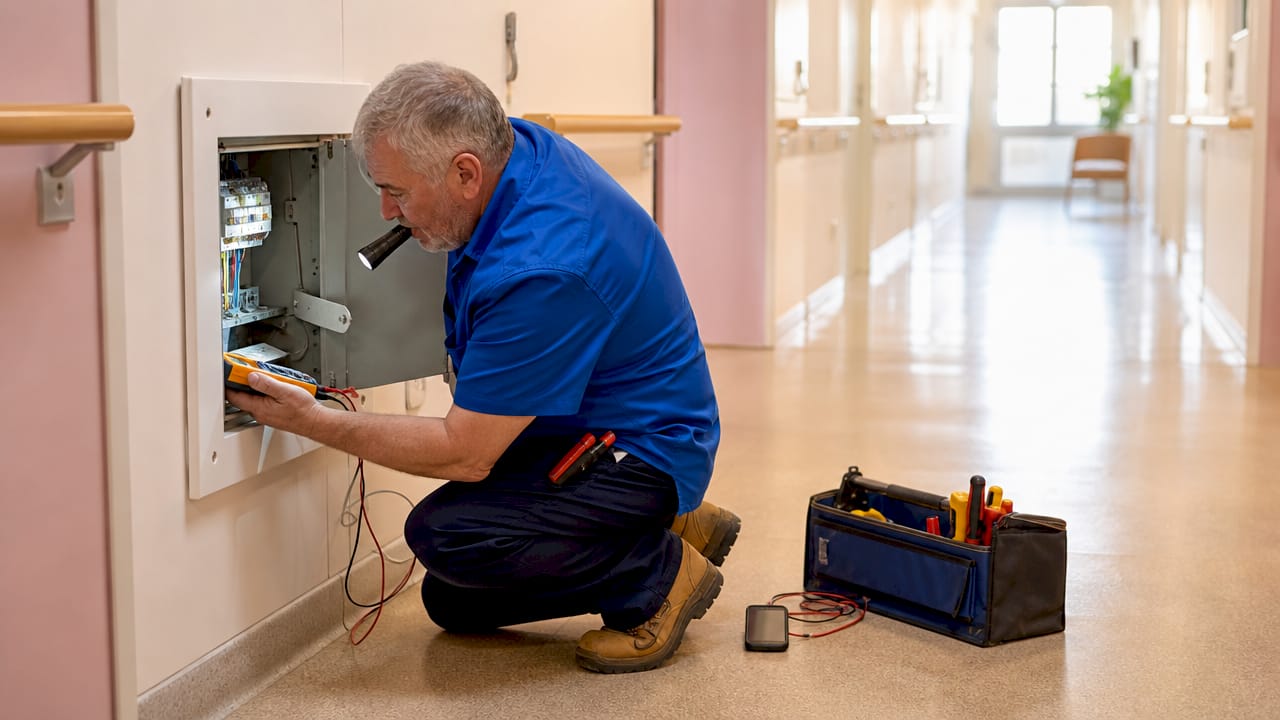
High-risk environments like aged care typically require audits more frequently than the standard five-year cycle recommended for general electrical installations. Annual or biannual reviews are common practice in facilities with 24/7 care obligations, medical equipment loads, and residents who cannot self-evacuate.
How to prepare for an electrical safety audit in a care facility
Preparation determines the outcome of any compliance audit. Facilities that scramble to locate records on the day of inspection signal poor governance to auditors. The goal is to arrive at the audit date with every document organised, every access point clear, and every known defect already logged or rectified.
Start with these preparation steps:
- Gather historical records. Collect past test and tag reports, electrical installation condition reports, maintenance logs, and any incident reports involving electrical faults. Auditors will check whether records are current and complete, not just whether they exist.
- Prepare an asset register. List every piece of electrical equipment, its location, last test date, and next due date. This is the backbone of your electrical compliance checklist for care facilities.
- Clear physical access. Switchboards, distribution boards, and electrical panels must be unobstructed. Auditors who find locked rooms or stacked furniture in front of panels will flag this immediately.
- Verify labelling and signage. Every circuit, isolator, and emergency switch must be clearly labelled. Missing or faded labels are among the most common audit findings.
- Commission a pre-audit review. Engage a licensed electrical contractor to walk the facility before the official audit. This internal check surfaces defects you can fix before they become formal non-compliances.
- Confirm contractor credentials. Any electrician conducting work or testing must hold a current licence and appropriate insurance. Keep copies of these on file.
Pro Tip: Block 30 minutes for a focused asset triage walk with your maintenance coordinator before any pre-audit review. Identify equipment that looks worn, has missing tags, or sits in areas that have been recently renovated. These are the spots auditors will scrutinise most.
Photographic records add significant weight to your documentation. A timestamped photo of a compliant switchboard is far more convincing than a handwritten note.
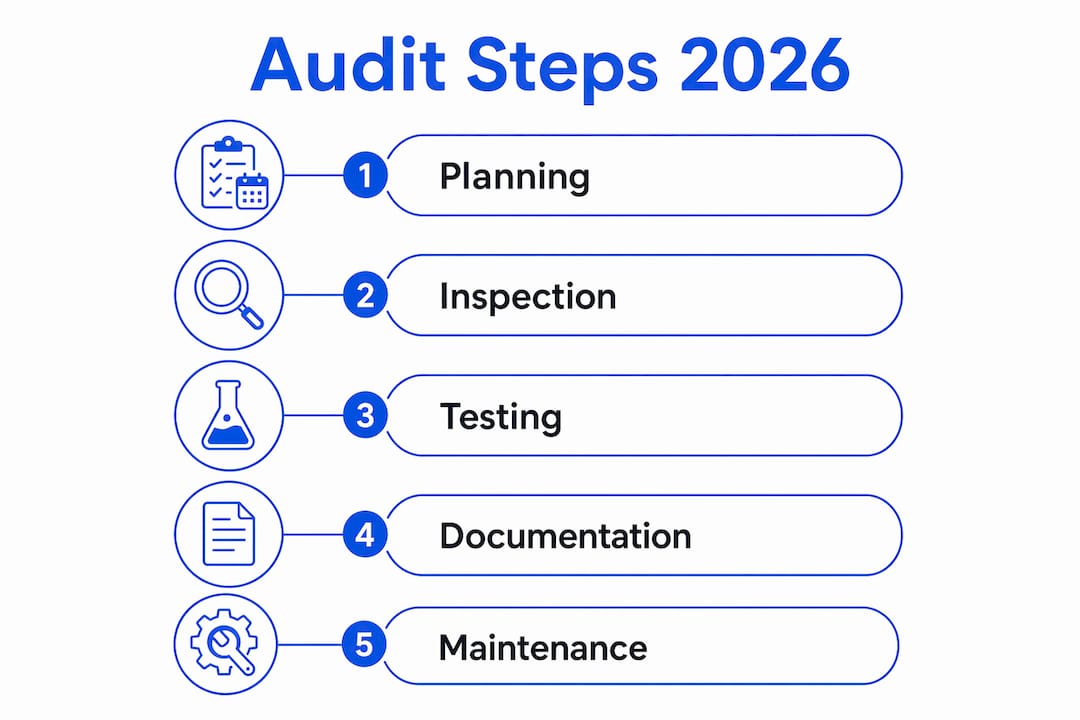
How to conduct an electrical safety audit: step by step
Executing the audit itself follows a logical sequence from the incoming supply through to portable appliances. Skipping steps or working out of order creates gaps that auditors will find.
-
Inspect the main switchboard and distribution boards. Check for signs of overheating, corrosion, loose connections, and unlabelled circuits. Confirm that residual current devices (RCDs) are present, correctly rated, and tested. RCDs are the primary protection against electrocution in a care environment.
-
Test RCD trip times. Use a calibrated RCD tester to verify that each device trips within the time specified under AS/NZS 3000. Record every result. A passing visual inspection without functional testing is not sufficient for compliance.
-
Assess emergency lighting and exit signs. Activate each emergency luminaire and confirm it illuminates for the required duration. Check battery condition and replace any units that fail the duration test. Emergency lighting failures put residents at direct risk during a power outage.
-
Verify emergency power systems. A 2026 OIG audit found that 73% of nursing homes have inadequate emergency power, with 53% suffering poor generator maintenance. That figure reflects a systemic failure in the sector. Test your generator under load, confirm automatic transfer switch operation, and check fuel levels and service records.
-
Review portable appliance testing records. Under AS/NZS 3760, all portable electrical equipment must be tested and tagged at intervals determined by the environment and risk level. Cross-reference your asset register against physical tags on every item. Missing tags or expired test dates are immediate findings.
-
Inspect wiring and cabling. Look for exposed conductors, damaged insulation, cables run under floor coverings, and any temporary wiring that has become permanent. Renovations frequently cause undocumented electrical changes, including hidden temporary wiring and overloaded circuits. These are among the most common reasons facilities fail.
-
Check power outlet condition and loading. Overloaded double adaptors, damaged outlet faces, and outlets in wet areas without appropriate IP ratings all represent compliance failures. In aged care bathrooms and clinical areas, outlet specifications must meet the relevant zone requirements.
-
Document findings in real time. Use a standardised audit template and record each finding as you go. Note the location, the defect, the applicable standard, and the recommended rectification. Auditors expect structured, legible records, not retrospective summaries.
Pro Tip: Photograph every defect at the time of discovery. A photo with a date stamp and location reference is the most defensible evidence you can provide, both to auditors and to contractors completing rectification work.
Common mistakes that cause audit failures in care facilities
Most audit failures are predictable. The same issues appear across facilities of all sizes, and nearly all of them stem from treating the audit as an event rather than a continuous state of readiness.
- Treating audits as one-off events. Facilities that only review electrical systems in the weeks before a scheduled audit accumulate defects between cycles. Auditors conducting unannounced inspections will find the real condition of your facility, not the prepared version.
- Poor emergency power maintenance. Generator failures during a power outage in a care facility are life-threatening. Inadequate generator upkeep is one of the most serious and most common findings in the sector.
- Fragmented or missing documentation. Records stored across multiple spreadsheets, paper files, and email threads cannot be retrieved quickly under audit pressure. Auditors who cannot access evidence on demand treat it as evidence that does not exist.
- Ignoring visible defects. Corrosion on switchboard components, scorch marks near outlets, and cables with damaged insulation are all visible during a routine walk. Facilities that log these defects but do not rectify them within a reasonable timeframe face escalating compliance risk.
- Undocumented modifications. Any electrical work carried out during a renovation must be documented and tested before the area returns to service. Pre-audit walkthroughs must focus on uncovering hidden modifications and overloaded circuits, which are common reasons for non-compliance.
- Misaligned compliance focus. Meeting the National Construction Code minimum does not satisfy the Aged Care Act's operational standards. Facilities that focus only on technical compliance miss the dignity and emergency response obligations that regulators now scrutinise.
How to maintain ongoing electrical compliance between audits
Continuous audit readiness is the standard that regulators now expect. Electrical safety obligations have shifted from good practice to strict, auditable requirements. Evidence must be accurate, current, and retrievable on demand.
The following systems support a permanent state of readiness:
- Centralise all records digitally. A computerised maintenance management system (CMMS) gives you instant access to test reports, service records, and contractor certificates during an unannounced audit. Practitioners who rely on paper-based systems consistently struggle under audit pressure.
- Implement rolling maintenance schedules. Set recurring tasks for RCD testing, emergency lighting checks, generator servicing, and portable appliance testing. Assign service level agreements (SLAs) to each task so defects are rectified within defined timeframes.
- Use risk-based prioritisation for test and tag. Equipment in clinical areas, wet zones, and high-use locations requires more frequent testing than office equipment. Your asset register should reflect this tiering.
- Train staff on electrical safety procedures. Facility staff are often the first to notice a damaged outlet or a tripped RCD. Clear reporting procedures mean defects get logged and addressed before they become audit findings.
- Verify contractor licences and insurance at every engagement. Keep copies of current licences and public liability certificates in your CMMS. Auditors check contractor credentials as part of the compliance review.
- Automate expiry alerts. Set calendar reminders or CMMS triggers for upcoming test and tag expiry dates, contractor licence renewals, and scheduled inspection intervals. Missing a renewal date is an avoidable finding.
The table below summarises a practical compliance maintenance schedule for a typical aged care facility:
| Task | Recommended frequency |
|---|---|
| RCD functional testing | Every 3 months |
| Emergency lighting duration test | Every 6 months |
| Generator load test | Every 6 months |
| Portable appliance test and tag (clinical areas) | Every 12 months |
| Full electrical installation condition report | Every 1–3 years (risk-based) |
| Contractor licence and insurance verification | At every engagement |
Facilities that build these tasks into their maintenance calendar stop treating compliance as a crisis and start treating it as an operational standard.
Key takeaways
A structured electrical safety audit, backed by continuous documentation and risk-based maintenance, is the most reliable way to meet the Aged Care Act 2024's dual compliance obligations and protect residents from electrical hazards.
| Point | Details |
|---|---|
| Dual compliance obligation | Meeting the NCC alone is not enough; the Aged Care Act 2024 requires additional operational safety standards. |
| Preparation is the audit | Organised records, clear access, and a pre-audit contractor review determine most audit outcomes before the inspector arrives. |
| Emergency power is critical | Generator maintenance and automatic transfer switch testing must be documented and current at all times. |
| Continuous readiness over event-based audits | Unannounced inspections require facilities to maintain audit-ready documentation every day, not just before scheduled reviews. |
| Digital centralisation of records | A CMMS gives auditors instant access to evidence and removes the risk of fragmented or missing documentation. |
What I've learned from electrical audits in aged care settings
The facilities that consistently pass audits are not the ones with the newest electrical infrastructure. They are the ones where the facility manager treats documentation as a live system, not a filing task. I have seen facilities with ageing switchboards sail through an audit because every test record, every contractor certificate, and every defect log was retrievable within two minutes. I have also seen newer facilities fail because nobody could locate the last RCD test report.
The 2026 regulatory environment has removed the margin for complacency. Auditors are no longer satisfied with evidence that work was done at some point. They want proof that it was done on time, by a licensed contractor, and that any defect identified was rectified within an agreed timeframe. That shift changes how facility managers need to think about their maintenance programmes.
The technician shortage across regional Victoria is a real constraint. Parts delays and limited contractor availability mean that some defects cannot be fixed immediately. The answer is not to ignore them. Compensating controls, such as isolating a faulty circuit and documenting the interim measure, demonstrate active risk management. Auditors respond to that approach far better than they respond to silence.
My honest view is that the facilities doing this well have stopped waiting for an audit to tell them what is wrong. They run their own internal checks, they know their asset register, and they have a trusted electrical contractor they call before problems escalate. That relationship is worth building before you need it urgently.
— Mike
Electrical compliance support from Dualflowservices
Aged care and disability care facilities across the Mornington Peninsula trust Dualflowservices for electrical safety audits and ongoing compliance management. The team understands both the technical requirements of AS/NZS 3000 and AS/NZS 3760, and the operational standards the Aged Care Act 2024 demands.
Dualflowservices provides full electrical installation condition reports, test and tag management, RCD testing, emergency lighting checks, and scheduled maintenance programmes tailored to care facility environments. Whether you are preparing for a scheduled audit or want to establish a continuous compliance system, the team can assess your current position and build a plan that keeps your facility audit-ready year-round. Contact Dualflowservices to arrange a consultation.
FAQ
What is an electrical safety audit in a care facility?
An electrical safety audit is a structured inspection of all electrical systems, records, and equipment in a care facility to verify compliance with AS/NZS 3000, AS/NZS 3760, and the Aged Care Act 2024. It covers switchboards, RCDs, emergency lighting, portable appliances, and documentation integrity.
Why is aged care electrical compliance required by law?
The Aged Care Act 2024 sets operational safety standards that go beyond the National Construction Code, requiring facilities to demonstrate active risk management and resident protection. Electrical compliance is a legal obligation and a duty of care to vulnerable residents who cannot self-evacuate in an emergency.
How often should a care facility conduct an electrical safety audit?
High-risk environments like aged care facilities typically require a full electrical installation condition report every one to three years, with more frequent checks on RCDs, emergency lighting, and portable appliances. Risk level, equipment age, and recent renovations all influence the appropriate frequency.
What records must a care facility keep for electrical compliance?
Facilities must maintain current test and tag reports under AS/NZS 3760, RCD test results, emergency lighting test records, generator service logs, contractor licence copies, and a complete asset register. All records must be accurate, current, and retrievable on demand during an unannounced audit.
What are the most common reasons care facilities fail electrical audits?
The most common failures include obstructed or unlabelled switchboards, missing or expired test and tag records, inadequate emergency power documentation, undocumented electrical modifications from renovations, and fragmented record-keeping that prevents instant evidence retrieval.